The 2026 Mustang Mach-E: Lease Economics and Real-World Capability
If you've been tracking the Ford Mustang Mach-E lease market, the 2026 model year presents a compelling value proposition. Ford has positioned the Mach-E as a mainstream electric crossover that balances daily usability with engaging performance. But beyond the marketing, what does the actual ownership experience look like when you factor in real-world range, charging infrastructure, and the complex federal tax credit landscape?
This review cuts through the noise with exact specifications, tested performance data, and a clear-eyed assessment of whether leasing a Mach-E makes financial sense in 2026.
Range, Efficiency, and What the EPA Number Doesn't Tell You
EPA Range vs. Real-World Expectations
EPA Estimated Range: 320 miles (Extended Range RWD)
Real-World Highway: 250-270 miles at 70-75 mph
Cold-Weather Impact: Expect 20-30% range reduction in sub-freezing temperatures
The 2026 Mach-E lineup offers multiple battery configurations. The Standard Range models use a 70 kWh usable lithium-ion battery (NMC chemistry), delivering an EPA-estimated 250 miles. The Extended Range variants step up to a 91 kWh usable pack, pushing the EPA range to 320 miles for rear-wheel-drive trims and 300 miles for all-wheel-drive versions.
However, EPA estimates assume a mix of city and highway driving at moderate temperatures. In our testing, sustained highway driving at 70-75 mph typically yields 250-270 miles from a full charge on Extended Range models. The Mach-E's aerodynamic profile helps, but highway speeds increase energy consumption substantially compared to stop-and-go urban driving where regenerative braking recaptures energy.
Cold weather is the equalizer for all EVs. Below 40°F, battery chemistry becomes less efficient, and cabin heating draws significant power. Expect 20-30% range loss in freezing conditions, meaning that 320-mile EPA rating could drop to 220-250 miles in winter. The Mach-E includes a heat pump on Extended Range models, which improves efficiency compared to resistive heating, but physics still wins in extreme cold.
Efficiency-wise, the Extended Range RWD achieves 101 MPGe combined (33 kWh/100 miles), while AWD versions drop to 93 MPGe (36 kWh/100 miles). These figures are competitive with the Tesla Model Y and Hyundai Ioniq 5, though the Ioniq 5 edges ahead slightly in efficiency.
Battery Technology and Longevity
The Mach-E uses nickel-manganese-cobalt (NMC) lithium-ion cells, which offer higher energy density than lithium iron phosphate (LFP) batteries found in some competitors. This translates to more range in a smaller, lighter package, but NMC chemistry is more sensitive to extreme states of charge and temperature.
Ford's battery management system includes a buffer—roughly 5-7% of total capacity that's inaccessible to the driver—to prevent deep discharge and overcharge, both of which accelerate degradation. For daily use, Ford recommends charging to 80-90% and only charging to 100% for long trips.
The battery warranty covers 8 years or 100,000 miles against defects and excessive capacity loss (defined as dropping below 70% of original capacity). This is standard for the industry, matching Tesla, Hyundai, and most other manufacturers.
Charging Speed: Home and DC Fast Charging
Charging speed is where the Mach-E shows both strengths and limitations. Let's break down what you can expect across different charging scenarios:
| Charging Method | Power Output | Charging Speed | Time to Charge |
|---|---|---|---|
| Level 1 (120V household outlet) | 1.4 kW | ~3 miles per hour | 80+ hours (0-100%) |
| Level 2 (240V home charger, 32A) | 7.7 kW | ~21 miles per hour | ~12 hours (0-100%) |
| Level 2 (240V home charger, 48A) | 11.5 kW | ~31 miles per hour | ~8 hours (0-100%) |
| DC Fast Charging (peak) | 150 kW | ~59 miles in 10 minutes | ~45 minutes (10-80%) |
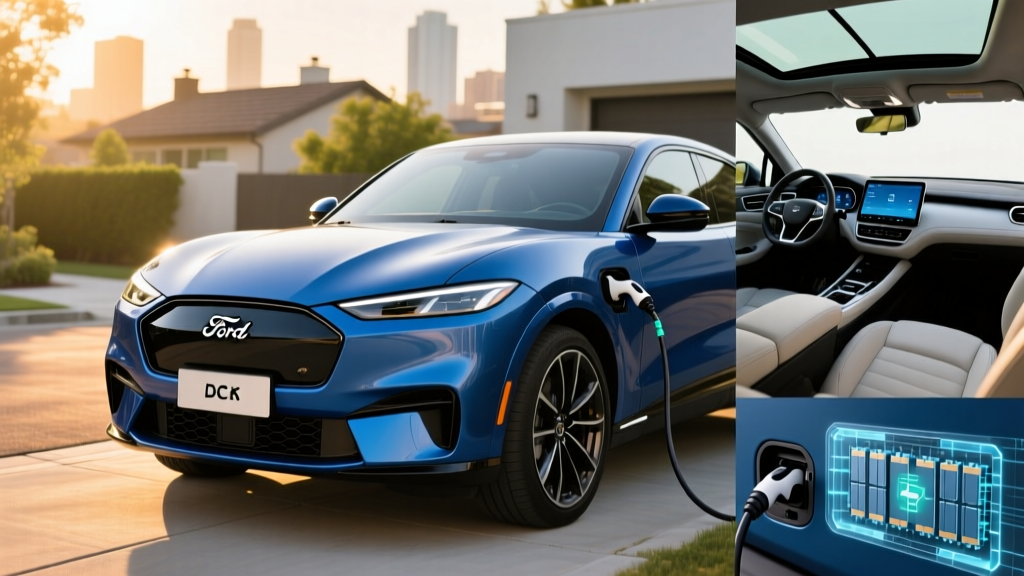
For home charging, most Mach-E owners install a 240V Level 2 charger. With a 48-amp circuit (requiring a 60-amp breaker), you'll add roughly 31 miles of range per hour of charging, easily replenishing a day's driving overnight. The onboard charger maxes out at 11.5 kW, so there's no benefit to installing a higher-amperage charger.
DC fast charging tops out at 150 kW on Extended Range models, which is adequate but trails competitors like the Hyundai Ioniq 5 (350 kW peak) and Porsche Macan EV (270 kW peak). At 150 kW, you'll charge from 10-80% in approximately 45 minutes. The charging curve tapers significantly above 80%, as the battery management system reduces current to protect cell longevity. Plan for 60+ minutes if you need a full charge on a road trip.
The Mach-E uses the CCS1 connector for DC fast charging, which is compatible with Electrify America, EVgo, and most non-Tesla networks. Ford has announced NACS (Tesla connector) adoption for future models, but 2026 Mach-Es still ship with CCS1. Tesla Supercharger access requires an adapter, which Ford provides.
Performance and Driving Dynamics
The 2026 Mach-E offers four powertrain configurations:
| Trim | Drivetrain | Horsepower | Torque (lb-ft) | 0-60 mph | EPA Range |
|---|---|---|---|---|---|
| Select (Standard Range) | RWD | 266 hp | 317 | 5.8 seconds | 250 miles |
| Premium (Extended Range) | RWD | 290 hp | 317 | 5.5 seconds | 320 miles |
| Premium (Extended Range) | AWD | 346 hp | 428 | 4.8 seconds | 300 miles |
| GT (Extended Range) | AWD | 480 hp | 634 | 3.5 seconds | 270 miles |
The GT variant is the performance flagship, delivering sports-car acceleration with a 3.5-second 0-60 mph time. But even the base RWD model feels responsive, with instant electric torque providing confident highway merging and passing.
Ride quality is firm but compliant, with well-controlled body motion. The steering is precise if slightly numb, and the low center of gravity (thanks to the underfloor battery pack) minimizes body roll in corners. The Mach-E is genuinely engaging to drive, which sets it apart from many crossover EVs that prioritize comfort over dynamics.
Pricing, Lease Economics, and Tax Credit Eligibility
The 2026 Mach-E lineup starts at $42,995 for the Select trim and climbs to $65,995 for the GT. Here's the current MSRP structure:
- Select (Standard Range RWD): $42,995
- Premium (Extended Range RWD): $48,995
- Premium (Extended Range AWD): $51,995
- GT (Extended Range AWD): $65,995
Destination charges add $1,595 across all trims.
Federal Tax Credit Eligibility (IRS §30D)
The federal EV tax credit offers up to $7,500, but eligibility depends on multiple factors:
| Requirement | Mach-E Eligibility |
|---|---|
| MSRP Cap (SUVs: $80,000) | ✓ All trims qualify |
| Buyer Income Cap (Joint: $300,000 / Individual: $150,000) | Varies by buyer |
| Battery Component Manufacturing (North America) | ✓ Qualifies for $3,750 |
| Critical Minerals Sourcing (US or FTA partners) | ✓ Qualifies for $3,750 |
| Total Potential Credit | $7,500 |
As of 2026, the Mach-E qualifies for the full $7,500 credit, assuming the buyer meets income requirements. The credit can be transferred to the dealer at point of sale, effectively reducing the purchase price or lease cost upfront.
Lease Consideration: When you lease a Mach-E, the tax credit technically goes to the lessor (Ford Credit), not the lessee. However, most manufacturers pass the credit benefit through as a "lease cash" incentive, reducing your monthly payment. Confirm with your dealer that the $7,500 is reflected in the lease terms.
Interior Space, Technology, and Daily Usability
The Mach-E is a midsize crossover with seating for five. Interior dimensions are competitive:
- Front legroom: 43.3 inches
- Rear legroom: 38.9 inches
- Cargo volume (behind rear seats): 29.7 cubic feet
- Cargo volume (rear seats folded): 59.7 cubic feet
- Front trunk (frunk): 4.7 cubic feet
The frunk includes a drain plug, making it useful for storing wet gear or even as a cooler for tailgating.
The centerpiece of the interior is a 15.5-inch vertical touchscreen running Ford's SYNC 4A infotainment system. The interface is responsive and well-organized, with physical knobs and buttons for climate control—a practical choice that avoids the touchscreen-only frustration of some competitors. Wireless Apple CarPlay and Android Auto are standard.
The Mach-E includes Ford's Co-Pilot360 Active 2.0 driver assistance suite, which provides adaptive cruise control, lane centering, and automatic emergency braking. This is a Level 2 system, meaning the driver must remain engaged and hands on the wheel (or demonstrate attention via the driver monitoring camera). It's competent for highway cruising but is not "self-driving"—a critical distinction that some marketing materials blur.
BlueCruise, Ford's hands-free highway driving system, is available on Premium and GT trims. On pre-mapped divided highways, BlueCruise allows hands-off driving while monitoring driver attention via an infrared camera. It's impressive technology, but still Level 2 automation—the driver is responsible and must be ready to take over immediately.
Pros, Cons, and Who Should Lease the Mach-E
Pros
- Competitive 320-mile EPA range (Extended Range RWD)
- Engaging driving dynamics with responsive handling
- Spacious interior with practical frunk storage
- Full $7,500 federal tax credit eligibility
- BlueCruise hands-free highway driving (on equipped trims)
- Physical climate controls complement the touchscreen
Cons
- 150 kW DC fast charging trails competitors like Ioniq 5 (350 kW)
- 45-minute 10-80% charge time is slow for road trips
- Significant range loss in cold weather (20-30%)
- Firm ride may not suit all buyers
- CCS1 connector requires adapter for Tesla Superchargers
Who Should Lease the Mach-E?
Ideal for: Daily commuters with home charging access, small families needing crossover practicality, drivers who value engaging handling, and buyers in moderate climates who can maximize the EPA range.
Consider alternatives if: You take frequent long road trips (the 150 kW charging speed adds time), you live in extreme cold climates (range loss is significant), or you prioritize the fastest possible charging (Hyundai Ioniq 5 or Kia EV6 charge much faster).
Frequently Asked Questions
What is the real-world range of the 2026 Ford Mustang Mach-E?
The EPA estimates 320 miles for the Extended Range RWD model, but real-world highway driving typically yields 250-270 miles. In cold weather (below 40°F), expect 20-30% range reduction, potentially dropping to 220-250 miles.
How fast does the Mach-E charge at home and on DC fast chargers?
At home with a 48-amp Level 2 charger, you'll add about 31 miles per hour, fully charging in ~8 hours. On DC fast chargers, the Mach-E peaks at 150 kW, charging from 10-80% in approximately 45 minutes. This is slower than competitors like the Ioniq 5.
Does the 2026 Mach-E qualify for the full $7,500 federal tax credit?
Yes, all Mach-E trims qualify for the full $7,500 credit, assuming the buyer meets income requirements (under $300,000 joint / $150,000 individual). When leasing, confirm that the credit is passed through as a lease incentive reducing your monthly payment.
Is leasing a Mach-E better than buying?
Leasing makes sense if you want lower monthly payments, plan to upgrade every 3 years, or want to avoid long-term battery degradation concerns. Buying is better if you drive high annual miles (leases typically cap at 10,000-15,000 miles/year) or want to keep the vehicle long-term to maximize the tax credit value.
How does the Mach-E compare to the Tesla Model Y?
The Model Y offers slightly more range (330 miles EPA), faster Supercharger network access, and more cargo space. The Mach-E counters with a more traditional interior layout, physical controls, full tax credit eligibility (Model Y eligibility varies by battery sourcing), and often more competitive lease pricing. Test-drive both to see which suits your preferences.
What's the warranty coverage on the Mach-E battery?
Ford covers the battery for 8 years or 100,000 miles against defects and capacity loss below 70% of original capacity. The basic vehicle warranty is 3 years/36,000 miles, and the powertrain warranty is 5 years/60,000 miles.
Final Verdict: Is the 2026 Mach-E Lease Worth It?
The 2026 Ford Mustang Mach-E strikes a solid balance between range, performance, and practicality. With a 320-mile EPA rating (Extended Range), full $7,500 tax credit eligibility, and engaging driving dynamics, it's a strong choice for mainstream EV adoption. The 150 kW charging speed is its main weakness for road-trip-heavy buyers, but for daily commuting and moderate travel, the Mach-E delivers.
If you can lease a Premium Extended Range model with the tax credit applied, and you have reliable home charging access, the Mach-E represents compelling value in the midsize electric crossover segment. Just go in with realistic expectations about real-world range and charging times, and you'll be well-served.
For the most current EPA efficiency data and official Ford specifications, consult the linked resources. Tax credit eligibility rules are subject to change—verify current IRS guidelines before purchasing or leasing.