Quick Verdict: Is a Mustang Mach-E Lease Right for You?
The 2026 Ford Mustang Mach-E occupies a rare middle ground in the electric crossover segment: it delivers competitive range (up to 320 miles EPA), respectable DC fast-charging speeds, and a starting MSRP that keeps most trims under the federal tax-credit cap. For shoppers searching for a Mustang Mach-E lease, the numbers pencil out well — monthly lease payments often undercut loan payments, and Ford Credit's promotional lease rates have historically subsidized the Mach-E aggressively to move metal. But before you sign, you need to understand the real-world range trade-offs, charging-curve realities, and exactly how the §30D tax credit interacts with a lease structure.
This review covers every spec a data-driven buyer needs: battery chemistry, sustained vs. peak charge rates, cold-weather range loss, cargo dimensions, and a clear breakdown of what a Mach-E actually costs after incentives.
| Spec | Select (RWD) | Premium (AWD) | GT (AWD) |
|---|---|---|---|
| EPA Range | ~250 mi | ~290 mi | ~280 mi |
| Battery (usable kWh) | 72 kWh (LFP) | 91 kWh (NMC) | 91 kWh (NMC) |
| Max DC Charge Rate | 150 kW | 150 kW | 150 kW |
| 10–80% DCFC Time | ~36 min | ~41 min | ~41 min |
| Level 2 Home Rate | 10.5 kW (~30 mi/hr) | 10.5 kW (~30 mi/hr) | 10.5 kW (~30 mi/hr) |
| 0–60 mph | ~6.1 sec | ~5.1 sec | ~3.5 sec |
| Horsepower | 266 hp | 346 hp | 480 hp |
| MPGe (combined) | ~101 MPGe | ~93 MPGe | ~84 MPGe |
| Base MSRP | $37,995 | $43,995 | $54,995 |
Source: fueleconomy.gov and Ford Motor Company specification sheets. Figures reflect the latest available model-year data; verify with your dealer for the exact build.
Real-World Range vs. the EPA Sticker
EPA Estimate: Up to 320 miles (Premium RWD Extended Range) / 290 miles (Premium AWD) / 250 miles (Select RWD Standard Range)
Real-World Expectation: Plan for ~240–270 miles on a highway road trip at 70 mph in moderate weather. In freezing temperatures (below 32°F / 0°C), expect a 20–30% reduction — bringing a 290-mile AWD model down to roughly 200–230 miles of usable range.
The Mach-E's EPA figures are competitive within its class, but the gap between sticker and reality deserves scrutiny. The Extended Range battery pack (91 kWh usable, NMC chemistry) powers the longest-range variants, while the Standard Range pack (72 kWh usable, LFP chemistry) equips the base Select trim.
Why LFP matters on the Select trim: Lithium iron phosphate batteries sacrifice some energy density (hence the lower range) but offer longer cycle life, better thermal stability, and can be charged to 100% daily without the degradation concerns that apply to NMC packs. If your commute is under 40 miles round-trip and you want a battery that will outlast the lease, the LFP Select is quietly the smarter engineering choice — even if the range number is smaller.
Highway efficiency is where the Mach-E loses ground to sleeker sedans. Its crossover profile creates more drag than a Tesla Model 3 or Hyundai Ioniq 6, so sustained 75+ mph driving will consume more kWh per mile. According to EPA data at fueleconomy.gov, the AWD Premium model achieves roughly 93 MPGe combined — translating to about 36 kWh per 100 miles.
Charging Speed: DC Fast, Level 2, and the Curve Reality
The Mach-E's charging architecture tops out at 150 kW on DC fast chargers — adequate but not class-leading. Competitors like the Hyundai Ioniq 5 and Kia EV6 peak at 235–240 kW thanks to 800-volt platforms, while the Mach-E runs a conventional 400-volt system.
| Charging Level | Power | Speed (Approx.) |
|---|---|---|
| Level 1 (120V household) | 1.2–1.4 kW | ~3–4 miles per hour |
| Level 2 (240V home / public) | 10.5 kW max | ~30 miles per hour |
| DC Fast Charge (CCS/NACS) | 150 kW peak | 10–80% in ~36–41 min |
The charge-curve reality: That 150 kW peak only holds roughly between 10–50% state of charge. Above 60%, the rate tapers progressively — dropping to ~80 kW by 70% SoC and ~40 kW above 85%. This means the last 20% of a charge takes nearly as long as the first 60%. On road trips, the optimal strategy is to charge from 10% to 80% and drive on, rather than topping off to 100%.
Preconditioning matters: The Mach-E's battery thermal management system will precondition the pack for faster charging when you navigate to a DC fast charger via the built-in navigation. Without preconditioning (for instance, arriving at a charger after cold-soaking), peak charge rates can drop to 80–100 kW, extending your 10–80% time to 50+ minutes. Always navigate to your charger when possible.
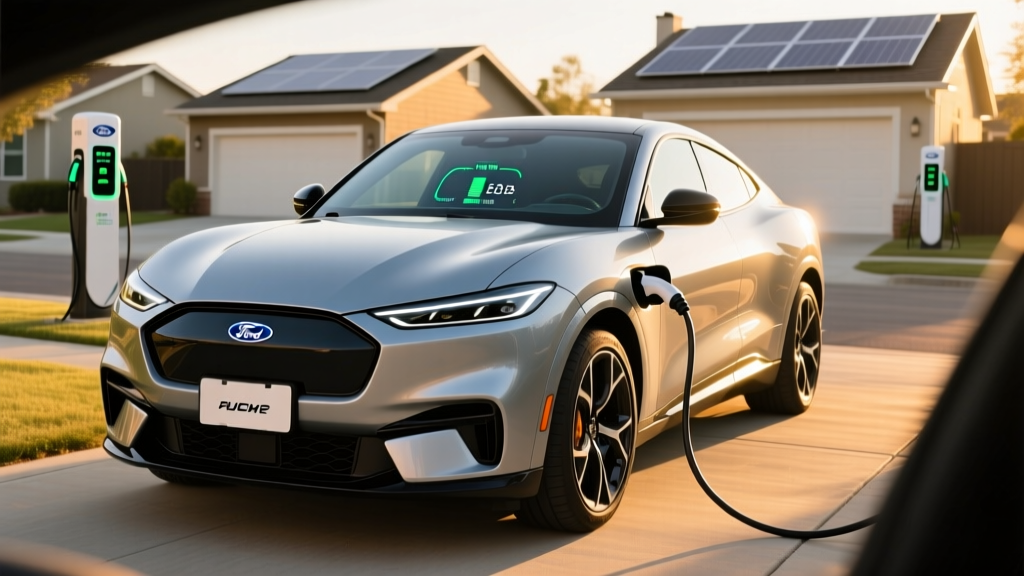
At home on a 48-amp Level 2 circuit (the most common residential installation using a hardwired wall connector), the Mach-E accepts its full 10.5 kW, adding roughly 30 miles of range per hour. A full overnight charge from 10% to 90% takes about 8 hours — easily manageable for daily drivers.
Ford has equipped 2026 Mach-E models with the NACS (North American Charging Standard) port, providing native access to Tesla Supercharger stations via Ford's charging network integration. CCS adapters are also available for Electrify America and other networks.
Performance, Drivetrain, and Daily Driving
The GT variant's 3.5-second 0–60 time grabs headlines, but the volume sellers — Select and Premium — offer more practical performance profiles. The Select RWD's 266 hp and 6.1-second sprint are brisk enough for confident highway merging, while the Premium AWD's 346 hp and dual-motor layout provide all-weather traction with a 5.1-second 0–60.
Ride quality is a Mach-E strength. Ford tuned the suspension to be compliant without being floaty — it soaks up expansion joints better than the firmer Tesla Model Y. The cabin is well-isolated from road noise at highway speed, and the available BlueCruise hands-free driving system (a Level 2 SAE driver-assist — you must remain attentive) works on over 130,000 miles of pre-mapped divided highways.
SAE Level Reminder: Ford BlueCruise is a Level 2 system. It controls steering, acceleration, and braking on approved highways, but the driver must remain engaged and ready to take over at any moment. It is not "self-driving." Camera-based driver monitoring ensures your eyes stay on the road.
Pricing, Trim Levels, and the Lease Equation
| Trim | Base MSRP | Under §30D MSRP Cap? | Max Federal Credit |
|---|---|---|---|
| Select (RWD, Std Range) | $37,995 | Yes (SUV cap: $80,000) | Up to $7,500 |
| Premium (RWD, Ext Range) | $42,495 | Yes | Up to $7,500 |
| Premium (AWD, Ext Range) | $43,995 | Yes | Up to $7,500 |
| GT (AWD, Ext Range) | $54,995 | Yes | Up to $7,500 |
| Rally (AWD, Ext Range) | $57,995 | Yes | Up to $7,500 |
How the §30D credit works on a lease: This is where a Mach-E lease gets interesting. Under current IRS rules, when you lease (rather than purchase) an EV, the federal tax credit technically goes to the lessor (Ford Credit). However, most automakers — Ford included — have historically passed this credit through as a "lease cash" reduction, effectively lowering your monthly payment or capitalized cost by the full $7,500.
Lease credit advantage: When the credit is applied as lease cash, it bypasses the buyer-side income caps ($150K single / $300K joint for purchases) and the battery-sourcing requirements that can reduce or eliminate the purchase credit. This means some lessees who wouldn't qualify for the credit on a purchase can still benefit from it on a lease. Always confirm the current lease cash amount with your dealer — it varies by month and region.
Typical lease structure (illustrative): A 2026 Mach-E Premium AWD at $43,995 MSRP with $7,500 in lease cash applied, 36-month term, 10,500 miles/year, and $3,500 due at signing could land in the range of $350–$450/month depending on your credit tier and regional incentives. Exact figures vary — get written quotes from multiple Ford dealers.
Cargo, Passenger Space, and Practicality
The Mach-E's crossover packaging delivers solid utility:
- Rear cargo (behind second row): 29.7 cu ft
- Total cargo (rear seats folded): 59.7 cu ft
- Front trunk (frunk): 4.7 cu ft — drainable, useful for wet gear or groceries
- Rear legroom: 38.9 inches
- Front headroom: 40.4 inches
The frunk is a genuine differentiator vs. some competitors that eliminated theirs. The drain plug makes it practical for tailgating or storing muddy hiking boots. Rear-seat space accommodates adults comfortably on longer trips, though the sloping roofline cuts into headroom for passengers over 6'2".
Battery Warranty and Long-Term Considerations
Ford covers the Mach-E's high-voltage battery and electric powertrain components with an 8-year / 100,000-mile warranty (whichever comes first). The warranty guarantees that the battery will retain a minimum capacity threshold — typically 70% of original capacity — over the coverage period.
For lessees on a standard 36-month lease, battery degradation is essentially a non-issue. Even the most aggressive degradation curves show less than 5% capacity loss in the first three years under normal use. If you're considering a longer 48-month lease or eventual buyout, the 8-year warranty provides a substantial buffer.
The LFP-equipped Select trim has an additional longevity advantage: LFP cells typically exhibit slower degradation than NMC cells over equivalent charge cycles. If maximum battery lifespan is a priority, the Standard Range model's chemistry works in its favor.
Tech, Infotainment, and Standout Features
The Mach-E's 15.5-inch vertical touchscreen running SYNC 4A is one of the larger displays in the segment, and it handles well with responsive touch inputs and wireless Apple CarPlay / Android Auto. Over-the-air (OTA) updates have added features post-launch, including improved BlueCruise functionality and charging-preconditioning refinements.
Standout features:
- BlueCruise hands-free highway driving (available on Premium, GT, and Rally; optional on Select)
- Phone-as-a-key (unlock and start via Bluetooth with your smartphone)
- Available panoramic fixed-glass roof
- Drainable frunk with 4.7 cu ft of space
- Pro Power Onboard (available) — use the Mach-E as a 120V power source for tools or camping
Notable drawbacks:
- No rear wiper (visibility in rain can be compromised)
- Touch-sensitive volume slider instead of a physical knob — a persistent complaint
- 150 kW DC fast-charging peak falls behind Hyundai/Kia's 800V architecture
- Firm ride on GT trim with larger 20-inch wheels
Pros
- Competitive EPA range up to 320 miles (Extended Range RWD)
- BlueCruise is among the best Level 2 highway assist systems available
- Spacious cabin with practical frunk and 59.7 cu ft max cargo
- LFP battery option on Select trim for daily-charge durability
- All trims fall under the §30D MSRP cap for SUVs
- NACS port provides native Tesla Supercharger access
Cons
- 150 kW peak DC charging is slower than 800V competitors
- No rear wiper is a real-world annoyance
- Cold-weather range loss of 20–30% is significant for northern climates
- Touch-sensitive controls frustrate some drivers
- Insurance premiums run 15–25% higher than comparable gas crossovers
Who the Mustang Mach-E Suits Best
Choose the Mach-E if:
- You want a practical family electric crossover with strong driver-assist tech for highway commuting
- You value ride comfort and cabin quietness over sportscar-level handling
- You can charge at home (Level 2) and want 250–300 miles of daily range buffer
- Leasing allows you to capture the $7,500 lease cash without income-cap concerns
Look elsewhere if:
- Fastest possible DC charging is a priority (consider Ioniq 5 or EV6 with 800V)
- You regularly drive 300+ miles in freezing weather without charging access
- You need third-row seating (consider the Kia EV9 or Rivian R1S)
For the commuter who logs 20–50 miles daily, has Level 2 home charging, and takes 2–3 road trips per year, the Mach-E Premium AWD hits a sweet spot of range, comfort, and price. Families will appreciate the cargo volume and rear-seat space. Road-trippers should plan charging stops around the 150 kW charge curve — it's manageable but not the fastest in the segment.
Frequently Asked Questions
What is the real-world range of the 2026 Mustang Mach-E?
The EPA rates the Mach-E up to 320 miles (Premium RWD Extended Range). In real-world highway driving at 70 mph in moderate temperatures, expect roughly 250–275 miles. In sub-freezing conditions, range can drop 20–30%, bringing a 290-mile AWD model to around 200–230 miles.
How fast does the Mach-E charge at home and on DC fast chargers?
On a Level 2 home charger (10.5 kW), the Mach-E adds about 30 miles of range per hour, with a full overnight charge taking ~8 hours. On DC fast chargers, it peaks at 150 kW and charges from 10–80% in approximately 36–41 minutes, though the rate tapers significantly above 60% SoC.
How much does a Mustang Mach-E cost after tax credits?
Base MSRP starts at $37,995 (Select) and tops out at $57,995 (Rally). When leased, the $7,500 federal credit is typically applied as lease cash, reducing your monthly payment. On a purchase, eligibility depends on your income (≤$150K single / ≤$300K joint), the vehicle's battery sourcing, and MSRP caps. All Mach-E trims fall under the $80,000 SUV MSRP cap.
Is the Mach-E worth it vs. the Tesla Model Y or Hyundai Ioniq 5?
The Mach-E trades the Model Y's superior charging network and efficiency for better ride quality, a more traditional cabin layout, and competitive BlueCruise tech. Versus the Ioniq 5, the Mach-E offers slightly more range on AWD trims but slower DC charging (150 kW vs. ~235 kW on the Ioniq 5's 800V system). Your priority — charging speed, ride comfort, or software ecosystem — should drive the decision.
Does the Mustang Mach-E qualify for the federal EV tax credit?
All 2026 Mach-E trims meet the §30D MSRP cap for SUVs ($80,000). For purchases, the full $7,500 credit depends on battery critical-mineral and component sourcing requirements, which vary by model year and production batch — verify with your dealer and consult IRS.gov. On a lease, the credit is typically passed through as lease cash without buyer income restrictions.
What is the Mach-E's battery warranty?
Ford covers the high-voltage battery and electric drivetrain components for 8 years or 100,000 miles, whichever comes first. The warranty guarantees minimum 70% capacity retention over the coverage period.