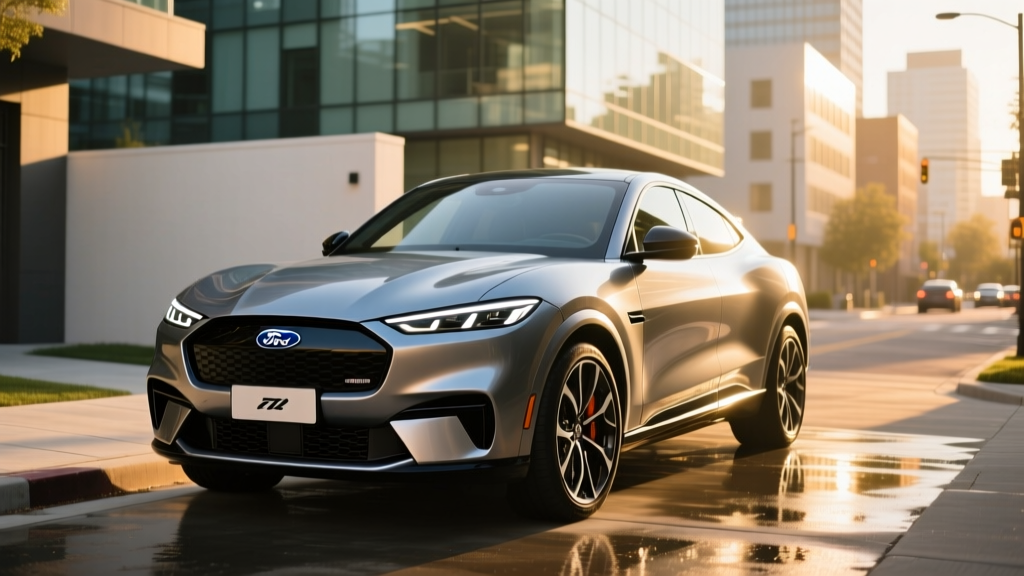
The Ford Mustang Mach-E remains one of the most compelling electric crossovers on the market, blending Mustang-inspired styling with practical daily usability. For buyers weighing ownership options, Ford Mustang Mach-E lease offers present an attractive path to driving a well-equipped EV without the long-term commitment or depreciation risk. But before signing any lease, you need to understand what you're actually getting: real-world range, charging behavior, tax credit pass-through, and how the Mach-E stacks up against the Tesla Model Y, Hyundai Ioniq 5, and Chevrolet Blazer EV.
This review covers the 2026 Ford Mustang Mach-E lineup with exact specs, pricing, and the data points that matter when evaluating a lease versus a purchase.
Quick Specs: 2026 Ford Mustang Mach-E at a Glance
| Spec | Select (RWD) | Premium (AWD) | GT (AWD) |
|---|---|---|---|
| EPA Range | ~250 mi (Standard Range) | ~320 mi (Extended Range) | ~280 mi (Extended Range) |
| Battery (Usable) | ~70 kWh (LFP) | ~91 kWh (NMC) | ~91 kWh (NMC) |
| Horsepower | 266 hp | 346 hp | 480 hp |
| 0-60 mph | ~6.1 sec | ~5.1 sec | ~3.5 sec |
| Max DC Fast Charge | ~135 kW | ~150 kW | ~150 kW |
| 10-80% DC Time | ~38 min | ~41 min | ~41 min |
| Level 2 Home Charge | ~10.5 kW (~30 mi/hr) | ~10.5 kW (~30 mi/hr) | ~10.5 kW (~30 mi/hr) |
| MPGe (Combined) | ~105 MPGe | ~101 MPGe | ~84 MPGe |
| Base MSRP | ~$39,995 | ~$48,995 | ~$59,995 |
| Drivetrain | RWD (single motor) | AWD (dual motor) | AWD (dual motor) |
Source: fueleconomy.gov and Ford Motor Company official specifications. Real-world results may vary.
Real-World Range: What to Actually Expect
The Mach-E Premium AWD with Extended Range battery carries an EPA estimate of ~320 miles. In real-world highway driving at 70-75 mph, expect ~260-280 miles before needing a charge. In cold weather (below 30°F), that figure can drop to ~210-240 miles due to battery chemistry limitations and cabin heating demands.
The Standard Range RWD Select trim's EPA ~250 miles translates to roughly ~200-220 miles on the highway, and ~165-190 miles in deep winter conditions.
The Mach-E's Extended Range battery uses NMC (nickel manganese cobalt) chemistry, which offers higher energy density but is more sensitive to cold-weather range loss compared to LFP. The Standard Range battery uses LFP (lithium iron phosphate) chemistry, which trades energy density for durability, longer cycle life, and tolerance for regular 100% charging — making it a strong match for daily commuters who charge at home nightly.
For context, the Hyundai Ioniq 5 Long Range AWD achieves an EPA 290 miles with slightly better highway efficiency, while the Tesla Model Y Long Range AWD posts an EPA 310 miles with a marginally more efficient drivetrain. The Mach-E's range is competitive but not class-leading.
Charging Speed and Home Setup
Charging speed is where the Mach-E reveals both strengths and limitations. The Extended Range models peak at approximately 150 kW on DC fast chargers, which is respectable but trails the Hyundai Ioniq 5's 800V architecture that can sustain over 230 kW. Here's what the charge curve actually looks like in practice:
| Charge Level | Power (kW) | Miles Added per Hour | Notes |
|---|---|---|---|
| Level 1 (120V household) | ~1.4 kW | ~3-4 mi/hr | Emergency/trickle only |
| Level 2 (240V home, 48A) | ~10.5 kW | ~30 mi/hr | Full overnight charge in ~9-10 hrs (Extended Range) |
| DC Fast Charge (peak) | ~150 kW (Ext. Range) / ~135 kW (Std. Range) | ~200+ mi/hr at peak | 10-80% in ~38-41 min; tapers significantly above 80% |
The 10-80% DC fast charge time of approximately 38-41 minutes is adequate for road trips but noticeably slower than the Ioniq 5's ~18-minute 10-80% sprint. Ford uses the NACS (Tesla-style) charge port on the 2026 Mach-E, granting native access to Tesla Supercharger stations without an adapter — a significant practical advantage for road-trippers and those in areas where Supercharger coverage outpaces CCS networks.
For home charging, the Mach-E's onboard charger accepts up to 10.5 kW on Level 2. A full home charging installation (48A hardwired Level 2 charger with a 60A circuit) typically costs between $800-$2,000 depending on your electrical panel's capacity and the run length from panel to garage. Homes with older 100A panels may require a panel upgrade ($1,500-$3,000+) to support dedicated EV charging.
Lease Pricing, Tax Credits, and Total Cost
This is where Ford Mustang Mach-E lease offers get interesting — and where careful analysis matters. Ford periodically offers lease deals that can make the Mach-E significantly more affordable than its MSRP suggests, but the mechanics of how the federal tax credit interacts with a lease are critical to understand.
| Trim | Base MSRP | §30D Credit Eligible? | Est. After Credit |
|---|---|---|---|
| Select RWD (Std. Range) | ~$39,995 | Yes (if sourcing + income rules met) | ~$32,495 |
| Premium AWD (Ext. Range) | ~$48,995 | Yes (if sourcing + income rules met) | ~$41,495 |
| GT AWD (Ext. Range) | ~$59,995 | Partial — exceeds SUV MSRP cap* | Varies |
*Under IRS §30D rules, the MSRP cap for SUVs is $80,000. The GT trim falls under this cap. However, battery component and critical mineral sourcing requirements may reduce or eliminate the credit depending on the specific build. Always verify eligibility at irs.gov or with a tax professional.
When you purchase a qualifying EV, you claim the §30D credit (up to $7,500) on your federal tax return — subject to income caps ($150K single / $300K joint), MSRP limits, and battery sourcing rules. You can also transfer the credit to the dealer as a point-of-sale discount.
When you lease, the tax credit technically goes to the lessor (the financing company), not to you. However, many manufacturers — including Ford — pass the credit value through as a lease capital cost reduction, effectively lowering your monthly payment. Always confirm with the dealer that the lease offer explicitly includes the $7,500 credit pass-through before signing.
Typical Mach-E lease structures (36 months, 10,500 miles/year) have ranged from approximately $299-$499/month depending on trim, incentives, and credit tier, with $2,500-$4,000 due at signing. These offers fluctuate monthly, so timing matters. Compare the total lease cost (monthly × term + due at signing + disposition fee) against a purchase with the tax credit applied to determine which truly costs less over three years.
Interior, Tech, and Daily Usability
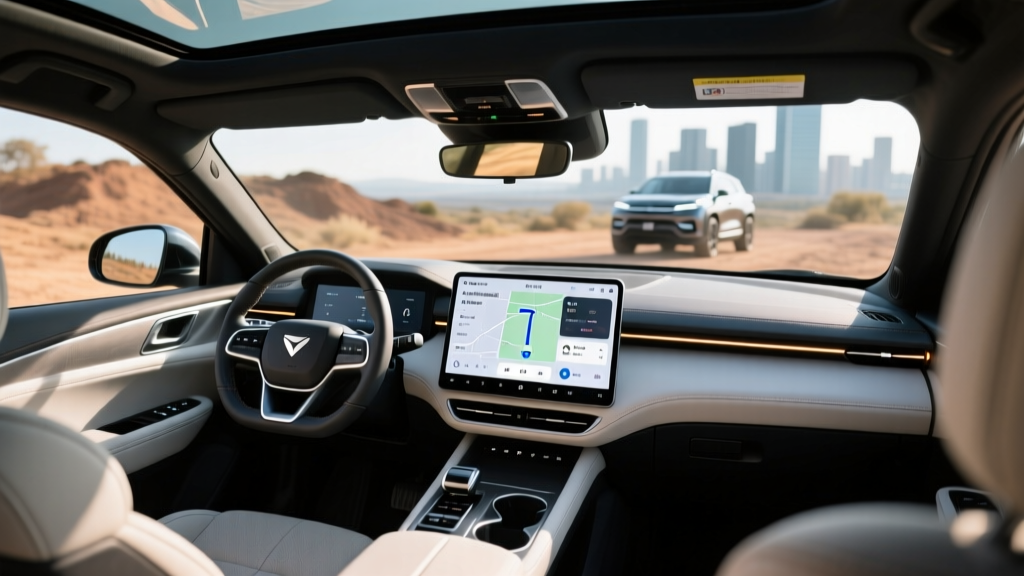
The Mach-E's cabin prioritizes a clean, modern aesthetic dominated by a large 15.5-inch vertical touchscreen running Ford's SYNC 4A system. The interface is responsive, supports wireless Apple CarPlay and Android Auto, and handles over-the-air (OTA) updates that have added features and improved performance since launch. A 10.2-inch digital instrument cluster sits behind the steering wheel, displaying speed, range, and driver-assist status.
Interior space is competitive for the segment:
- Front legroom: ~43.3 inches
- Rear legroom: ~38.1 inches
- Cargo behind rear seats: ~29.7 cu ft
- Cargo with rear seats folded: ~59.7 cu ft
- Front trunk (frunk): ~4.7 cu ft (drainable, useful for wet gear or groceries)
The frunk is a practical advantage over the Tesla Model Y (which has a smaller frunk) and the Blazer EV (no frunk). Rear-seat comfort is adequate for adults on shorter trips but the seat cushion is somewhat flat, which taller passengers notice on longer drives.
Driver Assistance: Ford BlueCruise
Ford BlueCruise is a Level 2 driver-assistance system per SAE classification. It provides hands-free driving on pre-mapped divided highways (over 130,000 miles of qualified roads in the US and Canada) but requires continuous driver attention. A driver-facing camera monitors eye gaze. You must remain prepared to take over at any moment. This is not autonomous driving — it is an advanced cruise control and lane-centering system.
BlueCruise performs well on interstate highways, handling lane changes (with turn signal activation on newer versions) and maintaining smooth following distances. It is comparable to GM's Super Cruise in hands-free highway capability but lacks the automated lane-change confidence of some competitors. In city driving and on unmapped roads, the Mach-E reverts to standard adaptive cruise and lane-keeping assist.
Pros, Cons, and the Competition
✅ Pros
- NACS port = native Tesla Supercharger access
- Competitive real-world range (Premium Ext. Range)
- Strong lease incentives frequently available
- Spacious cargo area + drainable frunk
- BlueCruise hands-free highway driving included (trial)
- OTA updates continue to improve the vehicle
- LFP option on Standard Range for daily-charge durability
❌ Cons
- DC fast charging slower than Ioniq 5 / EV6 (no 800V)
- Rear seat cushion could be more supportive
- GT trim's efficiency drops significantly (84 MPGe)
- Some panel-gap and build-quality inconsistency reported
- BlueCruise subscription required after trial period
- Infotainment can be slow to respond on cold starts
Mach-E vs. Key Competitors
Against the Tesla Model Y Long Range (EPA ~310 mi, ~150 kW DC, extensive Supercharger network), the Mach-E offers a more traditional crossover interior and competitive range but trails in charging speed and software polish. The Model Y's Supercharger advantage is diminished now that the Mach-E uses NACS and can access the same network.
The Hyundai Ioniq 5 (EPA ~290 mi AWD, ~230+ kW DC, 10-80% in ~18 min) decisively outperforms the Mach-E in fast-charging speed thanks to its 800V architecture. If road-trip charging speed is a priority, the Ioniq 5 is the stronger pick.
The Chevrolet Blazer EV 2LT AWD (EPA ~279 mi, ~190 kW DC) undercuts on price and offers a roomier rear seat but lacks a frunk and has had more reported software issues since launch.
Who Should Lease the Mach-E?
Decision Framework
Choose the Mach-E if:
- You want a well-rounded electric crossover with native Supercharger access
- You primarily commute and charge at home (Level 2 overnight)
- You value a frunk and hatchback cargo flexibility
- Lease incentives bring the monthly cost below competing EVs
- You want hands-free highway driving without a Tesla
Look elsewhere if:
- You frequently road-trip and need the fastest possible DC charging (consider Ioniq 5)
- You need three rows of seating (consider Kia EV9)
- You want maximum range per dollar (consider Model RWD or Ioniq 5 RWD)
The Mach-E is best suited for daily commuters and small families who charge primarily at home and take occasional road trips. The Premium AWD Extended Range trim hits the sweet spot: 320 EPA miles, dual-motor traction for inclement weather, and enough cargo space for family gear. If your commute is under 50 miles round-trip and you have reliable home charging, even the Standard Range Select trim covers your needs with room to spare — and the LFP battery's durability means less long-term degradation concern.
Warranty and Long-Term Battery Outlook
Ford backs the Mach-E's battery and electric powertrain with an 8-year/100,000-mile warranty, consistent with the industry standard for EVs. The warranty covers battery capacity falling below 70% of original capacity during the warranty period. Based on data from earlier model-year Mach-Es, battery degradation has been modest — most owners report retaining 90-95% capacity after 30,000-50,000 miles, though NMC batteries do lose more capacity in the first year than LFP.
The bumper-to-bumper warranty is 3 years/36,000 miles, which is shorter than Hyundai's 5-year/60,000-mile coverage. For lessees on a 36-month term, the bumper-to-bumper coverage aligns with the lease duration, meaning most warranty issues would be covered before the lease ends.
Frequently Asked Questions
What is the real-world range of the Ford Mustang Mach-E?
The Premium AWD Extended Range achieves an EPA ~320 miles. Real-world highway driving yields approximately 260-280 miles, and cold-weather driving (below 30°F) can reduce that to 210-240 miles. The Standard Range RWD posts an EPA ~250 miles with real-world highway range of approximately 200-220 miles.
How fast does the Mach-E charge at home and on the road?
On a home Level 2 charger (240V, 48A), the Mach-E charges at ~10.5 kW, adding approximately 30 miles of range per hour — enough for a full overnight charge. On DC fast chargers, Extended Range models peak at ~150 kW with a 10-80% time of approximately 38-41 minutes. Standard Range models peak at ~135 kW.
Does the Mach-E qualify for the federal EV tax credit?
The Mach-E generally qualifies for up to $7,500 under IRS §30D, subject to buyer income limits ($150K single / $300K joint for new vehicles), battery component sourcing requirements, and critical mineral sourcing rules. When leasing, the credit goes to the lessor but is typically passed through as a capitalized cost reduction. Always verify current eligibility at irs.gov.
Is leasing the Mach-E better than buying?
Leasing makes sense if Ford is offering strong incentives (often $5,000-$7,500 in lease cash), you want lower monthly payments, and you prefer upgrading every 3 years. Buying makes more sense if you plan to keep the vehicle 5+ years, drive more than 12,000 miles annually, and want to build equity. Compare total 3-year costs including the tax credit, insurance, and home charging installation.
Is the Mach-E worth it over a Tesla Model Y?
The Mach-E offers a more conventional crossover experience, a drainable frunk, competitive range, and now native Supercharger access via NACS. The Model Y still edges ahead in charging efficiency, software integration, and cargo volume. If you prefer Ford's driving dynamics and interior layout and the lease numbers work, the Mach-E is a strong alternative.
What are the biggest drawbacks of the Mach-E?
The primary limitations are its DC fast-charging speed (~150 kW peak vs. 230+ kW for 800V competitors), a rear seat that could use more cushion support, and the GT trim's significant efficiency penalty. Software responsiveness on cold starts and BlueCruise's subscription cost after the trial period are also worth factoring in.
Safety data sourced from NHTSA and IIHS. The Mach-E earned IIHS Top Safety Pick recognition in prior model years. Always check current-year ratings before purchasing.