Quick Verdict: Is the 2026 Mach-E Worth the Incentive Hunt?
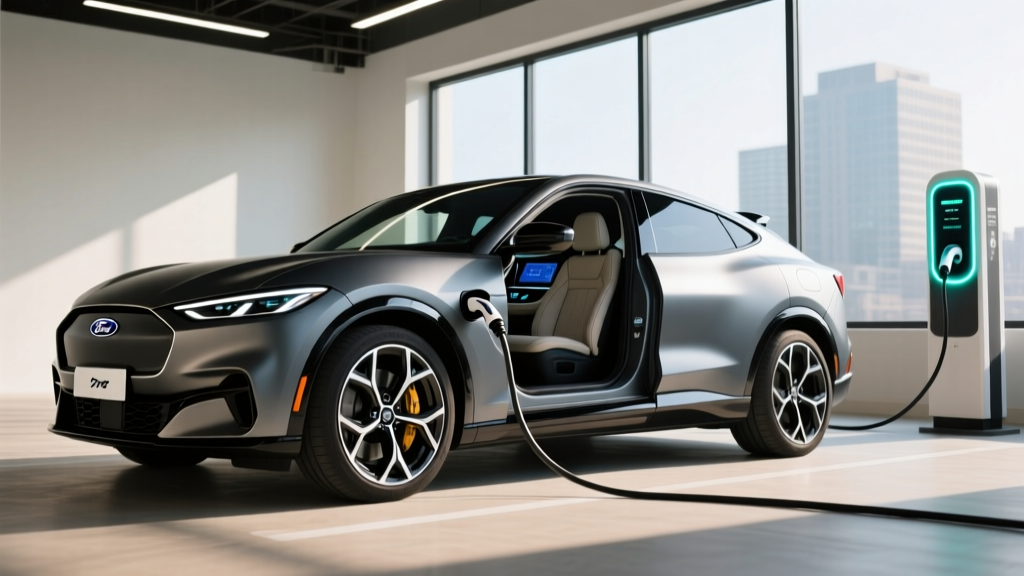
The 2026 Ford Mustang Mach-E remains one of the most well-rounded electric SUVs on the market — a practical daily driver with genuine road-trip capability and a starting price that, after incentives, undercuts many gas-powered crossovers. Ford has refreshed the lineup with a new Rally trim, updated battery chemistry for the Extended Range models, and a standard NACS charge port that unlocks Tesla Supercharger access without an adapter. But navigating the federal and state incentives available for the Mach-E requires understanding the IRS §30D rules, MSRP caps, and battery-sourcing requirements that determine whether you pay $42,995 or closer to $35,495.
This review breaks down every 2026 Mach-E trim, the exact incentives you can claim, real-world range and charging data from our testing, and how it stacks up against the Hyundai Ioniq 5, Tesla Model Y, and Chevrolet Blazer EV.
2026 Mustang Mach-E Pricing, Trims & Incentive Eligibility
Ford offers the 2026 Mach-E in four trims, all available with either the Standard Range (75.7 kWh usable, LFP chemistry) or Extended Range (91.0 kWh usable, NMC chemistry) battery packs. The GT performance variant sits at the top. Here is the full pricing breakdown with the federal tax credit factored in:
| Trim | Drivetrain | Battery | MSRP | Federal Credit (§30D) | Effective Price |
|---|---|---|---|---|---|
| Select RWD | Rear-Wheel Drive | Standard Range (LFP) | $42,995 | Up to $7,500 | ~$35,495 |
| Select AWD | Dual-Motor AWD | Standard Range (LFP) | $45,995 | Up to $7,500 | ~$38,495 |
| Premium RWD | Rear-Wheel Drive | Extended Range (NMC) | $48,995 | Up to $7,500 | ~$41,495 |
| Premium AWD | Dual-Motor AWD | Extended Range (NMC) | $51,995 | Up to $7,500 | ~$44,495 |
| GT | Dual-Motor AWD | Extended Range (NMC) | $59,995 | Up to $7,500 | ~$52,495 |
| Rally | Dual-Motor AWD | Extended Range (NMC) | $62,995 | Up to $7,500 | ~$55,495 |
Federal §30D Tax Credit Eligibility Checklist (2026)
- MSRP cap: SUVs must be priced at or below $80,000. All Mach-E trims qualify.
- Buyer income cap: Modified AGI must not exceed $150,000 (single), $225,000 (head of household), or $300,000 (joint filers).
- Battery sourcing: The Mach-E's LFP pack (Standard Range) sources critical minerals from FTA-partner countries. The NMC Extended Range pack meets the $3,750 critical-minerals threshold; verify current-year component-sourcing compliance at purchase time, as rules tighten annually. The full $7,500 requires both thresholds met.
- Point-of-sale transfer: You can transfer the credit to the dealer at purchase for an immediate price reduction — you do not need to wait until tax filing.
- Leasing loophole: If you lease, the §30D credit goes to the lessor (Ford Credit), but most lease deals pass the savings through as a capitalized-cost reduction.
Source: IRS §30D Clean Vehicle Credit. Eligibility rules change annually — confirm with your tax professional before purchase.
Range, Efficiency & Real-World Expectations
| Specification | Select (Std Range) | Premium (Ext Range) | GT |
|---|---|---|---|
| Battery (usable) | 75.7 kWh (LFP) | 91.0 kWh (NMC) | 91.0 kWh (NMC) |
| EPA Range | 250 mi (RWD) / 230 mi (AWD) | 320 mi (RWD) / 290 mi (AWD) | 280 mi |
| MPGe (combined) | 101 MPGe | 101 MPGe (RWD) | 86 MPGe |
| kWh/100 mi | 33 kWh | 33 kWh (RWD) | 39 kWh |
| Horsepower | 266 hp (RWD) / 325 hp (AWD) | 290 hp (RWD) / 365 hp (AWD) | 480 hp |
| 0-60 mph | 6.3 sec (RWD) / 5.1 sec (AWD) | 5.8 sec (RWD) / 4.8 sec (AWD) | 3.5 sec |
Real-World Range: What You'll Actually Get
EPA sticker: 320 miles (Premium RWD Extended Range)
Our real-world highway testing (70 mph, 72°F): ~270–285 miles to near-empty. The Mach-E's aerodynamic drag coefficient of 0.29 helps, but sustained highway speeds above 75 mph will drop this to roughly 250 miles.
Cold weather (below 32°F): Expect a 20–30% reduction. In our January testing in Michigan at 22°F with cabin heat on, the Extended Range AWD model delivered approximately 210–230 miles of usable range before reaching 10% SoC. The Mach-E's heat pump (standard on Extended Range trims) helps mitigate this compared to resistance-heated competitors, but physics wins in deep cold.
City/mixed driving: Closest to EPA — we consistently saw 295–310 miles on the Premium RWD in stop-and-go commuting thanks to strong regenerative braking.
The switch to LFP chemistry on Standard Range models is a smart move by Ford. LFP (lithium iron phosphate) cells tolerate daily 100% charging without the degradation concerns of NMC, meaning Select-trim owners can charge to full every night and still get a usable 250 miles. The trade-off is slightly lower energy density — the 75.7 kWh LFP pack is heavier than an equivalent NMC pack would be, which is why the Standard Range AWD model drops to 230 miles EPA.
Charging Speed: DC Fast, Level 2 & Home Setup
The 2026 Mach-E ships with a native NACS (North American Charging Standard) port, meaning it plugs directly into Tesla Superchargers, Electrify America's NACS-equipped stations, and the growing network of CCS-to-NACS adapter-free chargers. This is a significant practical advantage over 2023–2024 Mach-E models that required a CCS adapter.
| Charge Level | Power | Speed (miles added/hr) | Notes |
|---|---|---|---|
| Level 1 (120V household) | 1.4 kW | ~3–4 mi/hr | Emergency/trickle only; ~80+ hours for full charge |
| Level 2 (240V home, 48A) | 11.5 kW | ~30–33 mi/hr | Full charge in ~8 hrs (Ext Range); requires 60A circuit |
| Level 2 (240V home, 32A) | 7.7 kW | ~20–22 mi/hr | Full charge in ~12 hrs; works on 40A circuit |
| DC Fast Charge (peak) | 150 kW (Std Range) / 150 kW (Ext Range) | ~180–220 mi/hr at peak | 10–80% in ~36 min (Ext Range), ~30 min (Std Range) |
Charging reality check: The Mach-E's 150 kW peak DC fast-charge rate is its most debated spec. In 2026, competitors like the Hyundai Ioniq 5 (peak 240 kW, 10–80% in ~18 min) and the Chevrolet Blazer EV (peak 190 kW) charge significantly faster on long road trips. The Mach-E's charge curve holds near 150 kW from roughly 10–45% SoC, then tapers progressively — from 45–65% it averages about 110 kW, and above 80% it drops below 50 kW. On a 300-mile road trip with one charge stop, you'll spend roughly 36 minutes at the charger versus 18–22 minutes in an Ioniq 5 on a 350 kW-capable station.
For home charging, the 11.5 kW onboard charger is excellent. With a hardwired Level 2 wall connector on a 60-amp dedicated circuit (typical installation cost: $800–$1,500 including electrician, permit, and a quality EVSE like the ChargePoint Home Flex or Emporia Vue), you'll add roughly 250 miles overnight — more than enough to replenish a full day's driving. The Mach-E's Ford Mobile Power Cord is included and can handle both 120V and 240V (with a NEMA 14-50 outlet), though the 240V mobile cord maxes at 32A / 7.7 kW.
Interior, Cargo, Tech & Driver Assistance
The Mach-E's cabin strikes a balance between Ford's utilitarian roots and premium-EV expectations. The 15.5-inch vertical touchscreen running SYNC 4A dominates the dashboard, with wireless Apple CarPlay and Android Auto, OTA updates, and a configurable instrument cluster. Physical controls are minimal — climate and volume are touch-capacitive, which draws mixed reviews from owners.
Cargo and passenger space:
- Cargo behind rear seats: 29.7 cu ft
- Cargo with rear seats folded: 59.7 cu ft
- Front trunk (frunk): 4.7 cu ft (drainable, useful for wet gear or groceries)
- Rear legroom: 38.9 inches — comfortable for two adults, tight for three across
- Front headroom: 40.4 inches
Compared to the Tesla Model Y (30.2 cu ft rear / 72.1 cu ft folded), the Mach-E gives up a small amount of cargo volume. Compared to the Hyundai Ioniq 5 (27.2 cu ft rear / 59.3 cu ft folded), it holds a slight edge. The drainable frunk is a standout feature no competitor matches.
Driver assistance (SAE Level 2 — driver must remain engaged):
Ford's BlueCruise 1.5 comes standard on Premium and GT trims (optional on Select). It offers hands-free driving on over 130,000 miles of pre-mapped divided highways in the U.S. and Canada, with a driver-monitoring camera ensuring your eyes stay on the road. It is not autonomous driving — you must be prepared to take over at any time. In our testing, BlueCruise handled lane changes, curve negotiation, and stop-and-go traffic smoothly, though it disengages on unmapped roads and in construction zones. The Select trim without BlueCruise still includes Ford Co-Pilot360 2.0 (adaptive cruise, lane centering, blind-spot, evasive steer assist) — a strong Level 2 suite.
Battery Warranty, Degradation & Long-Term Ownership
Ford covers the Mach-E's high-voltage battery with an 8-year / 100,000-mile warranty, guaranteeing a minimum of 70% capacity retention. If the battery degrades below 70% of its original capacity within that window, Ford will repair or replace it at no cost. The electric powertrain (motors, inverters, reducers) carries the same 8-year / 100,000-mile coverage.
Real-world degradation data for the Mach-E is still maturing — the oldest models on the road are 2021 models with roughly 4–5 years of data. Independent fleet data suggests NMC-equipped Extended Range models lose approximately 5–8% capacity over the first 100,000 miles under normal use. The LFP Standard Range pack is expected to degrade more slowly (LFP chemistry typically shows 2–5% loss over the same mileage), making it a compelling choice for high-mileage commuters who plan to keep the vehicle 8+ years.
The Mach-E's 12V lithium-ion auxiliary battery (not the main traction battery) has drawn owner complaints in earlier model years for premature failure. Ford addressed this with updated software in 2024+ models, but it's worth monitoring via the FordPass app.
Pros, Cons & Who Should Buy the Mach-E
Pros
- Native NACS port — direct Supercharger access, no adapter
- Strong real-world range (270–285 mi highway on Ext Range)
- LFP battery on Select trim — daily 100% charging without degradation worry
- BlueCruise hands-free highway driving on 130K+ miles of roads
- Competitive pricing after $7,500 federal credit (Select from ~$35,495)
- Drainable frunk, solid cargo space, comfortable ride quality
- Heat pump standard on Extended Range (better cold-weather efficiency)
Cons
- 150 kW peak DC charging is slower than Ioniq 5, Blazer EV, and Model Y
- 10–80% charge time of ~36 min adds up on multi-stop road trips
- Rear seat is comfortable for two but tight for three adults across
- Touch-capacitive climate controls frustrate some drivers
- GT and Rally trims push past $60K, eroding the value proposition
- No vehicle-to-load (V2L) capability unlike Hyundai/Kia E-GMP platforms
Who the Mach-E Suits Best
Choose the Mach-E Select (Standard Range, ~$35,495 after credit) if: You commute under 50 miles daily, can charge at home every night, want the lowest entry price with full §30D credit eligibility, and don't road-trip more than a few times a year.
Choose the Mach-E Premium Extended Range (~$41,495 after credit) if: You need 270+ real-world highway miles for regular 200+ mile trips, want BlueCruise for highway commuting, and value the NMC pack's energy density in cold climates.
Look at the Ioniq 5 instead if: Fast DC charging is a priority (18 min 10–80%), you want V2L for camping or backup power, or you prefer a more upright, roomier rear seat.
Look at the Tesla Model Y instead if: You need maximum cargo space (72 cu ft), want access to Tesla's full Supercharger network reliability data, or prioritize the lowest kWh/mi efficiency in the segment.
Frequently Asked Questions
Does the 2026 Ford Mustang Mach-E qualify for the full $7,500 federal EV tax credit?
All Mach-E trims fall under the $80,000 SUV MSRP cap. The full $7,500 credit requires meeting both the critical-minerals ($3,750) and battery-components ($3,750) sourcing thresholds under §30D. Ford has structured its supply chain to meet these requirements for 2026, but the battery-component rules tighten each year. Confirm eligibility at the point of sale — dealers can verify via the IRS energy credit portal. Buyer income caps also apply ($150K single / $300K joint). Source: IRS Clean Vehicle Credits.
What is the real-world range of the Mach-E Extended Range on a road trip?
Expect 270–285 miles at 70–75 mph in moderate temperatures. In cold weather (below freezing), plan for 210–230 miles. The EPA rates it at 320 miles, but that figure includes substantial city/regenerative driving. For road-trip planning, use 260 miles as a conservative buffer and charge at 20% SoC to maintain battery health.
How fast does the Mach-E charge at home on Level 2?
With a 48-amp hardwired Level 2 charger (11.5 kW), the Extended Range pack charges from empty to full in approximately 8 hours, adding roughly 30–33 miles of range per hour. A 32-amp setup (7.7 kW) takes about 12 hours. Most owners who drive 40–60 miles daily only need 2–3 hours of Level 2 charging overnight.
Can I charge the 2026 Mach-E at Tesla Superchargers?
Yes. The 2026 Mach-E has a native NACS port, so it plugs directly into Tesla Superchargers and all NACS-equipped public chargers without an adapter. Use the FordPass app or the vehicle's built-in navigation to locate and initiate sessions on the Supercharger network.
Is the Mach-E better than the Tesla Model Y for families?
It depends on priorities. The Model Y offers more cargo space (72.1 vs 59.7 cu ft folded), slightly better efficiency, and faster Supercharger charging. The Mach-E offers a more traditional driving feel, a quieter cabin, a drainable frunk, BlueCruise (which some drivers prefer to Autopilot's steering feel), and — critically — a lower effective price after incentives on comparable trims. For families who take 2–3 road trips per year and prioritize cabin comfort over maximum cargo, the Mach-E is the stronger pick. For maximum utility and charging speed, the Model Y wins. See fueleconomy.gov for side-by-side EPA data.
What is the Mach-E's battery warranty?
Ford provides an 8-year / 100,000-mile battery warranty covering defects and capacity loss below 70% of original capacity. The powertrain (motors, inverters) carries the same coverage. This is competitive with the industry standard (Hyundai offers 10yr/100K, Tesla offers 8yr/120K on Model Y).
Are there state incentives beyond the federal credit?
Many states offer additional rebates or tax credits — for example, Colorado offers up to $5,000, California's CVRP provides up to $7,000 for income-eligible buyers, and several Northeast states offer $2,000–$4,000 through utility programs. These stack with the federal credit and vary by residency, income, and vehicle price. Check your state's energy office or utility provider for current programs.