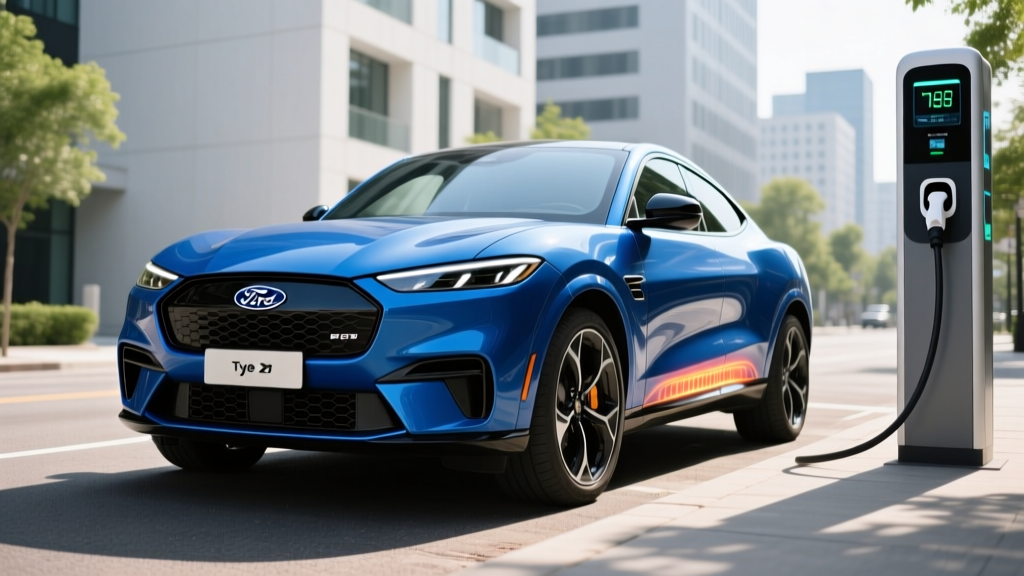
The Ford Mustang Mach-E GT occupies a specific niche in the electric crossover market: a performance-oriented EV that doesn't completely abandon daily practicality. For 2026, Ford continues to refine the formula with incremental software and packaging updates, but the core proposition remains the same — a dual-motor, all-wheel-drive electric SUV that can sprint to 60 mph in the mid-three-second range while still offering usable cargo space and a compliant ride. But does the GT badge justify its premium over the standard Mach-E, and how does it stack up against rivals like the Tesla Model Y Performance, Hyundai Ioniq 5 N, and Kia EV6 GT? This review breaks down every spec that matters to a real buyer.
Ford Mustang Mach-E GT: At-a-Glance Specs
| Specification | 2026 Mustang Mach-E GT |
|---|---|
| EPA Range (Extended Range AWD) | 280 miles |
| Battery (Usable / Gross) | 91 kWh usable / ~98 kWh gross (NMC lithium-ion) |
| Drivetrain | Dual-motor AWD |
| Horsepower / Torque | 480 hp / 634 lb-ft (600 lb-ft standard, 634 with eGear package) |
| 0–60 mph | 3.3 seconds (with eGear Performance Package) |
| Max DC Fast Charge Rate | 150 kW peak |
| 10–80% DC Charge Time | ~41 minutes (estimated) |
| Level 2 Home Charging Rate | 10.5 kW (~30 miles per hour) |
| MPGe (City / Hwy / Combined) | 101 / 89 / 95 MPGe |
| Energy Consumption | 35 kWh per 100 miles |
| Cargo Volume (Behind Rear Seats) | 29.7 cu ft |
| Cargo Volume (Rear Seats Folded) | 59.7 cu ft |
| Front Trunk (Frunk) | 4.7 cu ft (drainable, with washable liner) |
| Rear Legroom | 38.1 inches |
| Battery Warranty | 8 years / 100,000 miles |
| Base MSRP (GT) | $59,995 |
| As-Tested Price (GT w/ eGear + Premium) | ~$65,500 |
Range and Efficiency: What the EPA Sticker Doesn't Tell You
The 2026 Mustang Mach-E GT with the Extended Range battery carries an EPA-estimated 280 miles of range. That figure applies to the combined city/highway driving cycle, and it's a meaningful step down from the non-GT Extended Range AWD Mach-E, which achieves up to 320 miles on the same battery pack. The GT's performance tuning — stickier summer tires, more aggressive regen calibration, and the energy cost of its higher-output motors — accounts for the deficit.
EPA estimate: 280 miles. In practice, expect 230–255 miles on highway-heavy road trips at sustained 70–80 mph speeds. In cold weather (below 32°F), range can drop to 190–220 miles due to battery heating demands and cabin climate load. City driving with frequent regenerative braking opportunities will return figures closer to or slightly above the EPA sticker. The Mach-E GT's heat pump (standard on Extended Range models) helps mitigate cold-weather losses compared to EVs without active thermal management, but physics still wins in sub-freezing conditions.
Efficiency comes in at 95 MPGe combined, or 35 kWh per 100 miles, according to fueleconomy.gov. That's respectable for a 480-hp AWD performance SUV, but it trails the Tesla Model Y Performance (111 MPGe combined) and the Hyundai Ioniq 5 (non-N, RWD: 132 MPGe). If maximizing miles per kWh is your top priority, the GT trim isn't the optimal choice within the Mach-E lineup.
Charging Speed: DC Fast and Home Level 2 Breakdown
The Mach-E GT uses the same charging hardware as the rest of the Extended Range Mach-E family, and this is where Ford's EV still shows its age relative to newer competitors built on 800-volt architectures.
| Charging Level | Power / Rate | Estimated Time or Miles Added |
|---|---|---|
| Level 1 (120V household outlet) | ~1.4 kW | ~3–4 miles per hour |
| Level 2 (240V, Ford Mobile Charger or Wall Connect) | 10.5 kW | ~30 miles per hour; full charge in ~10 hours |
| DC Fast Charge (CCS/NACS) | 150 kW peak | 10–80% in ~41 minutes |
The charging curve matters more than the peak number. The Mach-E GT can hit 150 kW briefly at a low state of charge (around 10–20%), but the rate tapers progressively as the battery fills. From 50–80%, expect sustained rates closer to 60–80 kW. That means the second half of a DC fast-charging session takes disproportionately longer. On a road trip, plan your stops strategically: a 10–60% top-up is significantly faster than pushing from 60–80%.
For context, the Hyundai Ioniq 5 N and Kia EV6 GT both use 800V architectures that support up to 240–350 kW peak charging, enabling 10–80% in roughly 18 minutes on a capable charger. The Mach-E GT's 400V platform means longer wait times at DC fast chargers — a tangible trade-off for road-trippers.
For the 2026 model year, Ford has completed the transition to the NACS (Tesla-style) charge port as standard equipment on all new Mach-E models. This grants native access to the Tesla Supercharger network (now rebranded for non-Tesla EVs) without an adapter — a significant practical advantage for charging infrastructure access, particularly in regions where Superchargers outnumber CCS stations.
At home, the Ford Charge Station Pro (an 80-amp hardwired Level 2 unit) can deliver the full 10.5 kW the Mach-E can accept. Expect to pay $500–$800 for the unit plus $600–$2,000 for professional installation depending on your electrical panel's capacity and the run length from panel to garage. If your home has a 200-amp panel with available capacity, installation stays on the lower end. A panel upgrade to 200A or 400A can add $1,500–$4,000+.
Performance: Where the GT Badge Earns Its Keep
The Mach-E GT's dual-motor all-wheel-drive powertrain produces 480 horsepower. Torque is rated at 600 lb-ft standard, but with the optional eGear Performance Package (which includes a MagneRide adaptive suspension upgrade, performance brake package, and a specific drive calibration), torque rises to 634 lb-ft and the 0–60 mph time drops to a claimed 3.3 seconds.
Without the eGear package, the GT still runs 0–60 in approximately 3.5 seconds — quick enough to surprise most sports cars at a stoplight. The instant torque delivery from the electric motors means there's no waiting for a transmission to downshift or turbos to spool. Power arrives immediately and linearly.
The GT's MagneRide dampers (included with eGear, optional on base GT) provide a genuinely well-tuned ride. In comfort-oriented drive modes, the Mach-E GT absorbs highway imperfections with composure that belies its 20-inch wheels and low-profile tires. Switch to Unbridled Extend mode and the dampers firm up noticeably, body roll tightens, and throttle response sharpens — but this is still a 4,900-pound crossover, not a track car. Ford's engineering team clearly prioritized grand-touring comfort over Nürburgring lap times, which is the right call for the segment.
Braking is adequate but not exceptional. The regenerative braking system offers one-pedal driving capability with strong deceleration, but when the friction brakes engage, pedal feel is somewhat numb — a common EV complaint attributable to blending regen and mechanical braking. The upgraded brakes in the eGear package improve fade resistance during repeated hard stops.
Interior, Tech, and Daily Livability
The Mach-E GT's cabin is a mix of genuine strengths and persistent frustrations. The 15.5-inch vertically oriented touchscreen running Ford's SYNC 4A system dominates the dashboard. It's responsive, supports wireless Apple CarPlay and Android Auto, and includes built-in navigation. The interface is logical once you learn its layout, but climate controls are buried in the touchscreen — a recurring complaint among owners who prefer physical knobs.
The GT trim adds unique interior touches: perforated ActiveX seating surfaces with GT badging, a flat-bottom steering wheel, aluminum pedals, and optional Recaro sport seats (part of the GT Performance Package) that provide excellent lateral support during spirited driving while remaining comfortable on long trips.
Cargo and passenger space:
- 29.7 cu ft behind the rear seats — competitive with the Model Y (30.2 cu ft) and significantly more than the Ioniq 5 N (27.2 cu ft)
- 59.7 cu ft with rear seats folded flat
- 4.7 cu ft front trunk (frunk) with a drainable, washable liner — useful for groceries, charging cables, or wet gear
- 38.1 inches of rear legroom — adequate for adults, though the Tesla Model Y offers slightly more at 41.6 inches
Driver assistance: The Mach-E GT comes with Ford Co-Pilot360 2.0 as standard, which includes adaptive cruise control with stop-and-go, lane-centering, evasive steering assist, and blind-spot monitoring. The available BlueCruise system enables hands-free driving on pre-mapped divided highways (over 130,000 miles of compatible roads in the US and Canada). BlueCruise is a solid Level 2 system — smooth lane changes, reliable speed management — but it requires driver attention monitoring via an infrared camera. This is not self-driving; it's a supervised driver-assist feature per NHTSA's SAE Level 2 classification. Expect a subscription fee after the initial trial period (typically $75/month or $800/year).
Pricing, Trims, and Federal Tax Credit Eligibility
The 2026 Ford Mustang Mach-E GT starts at a base MSRP of $59,995 (including destination charge). Adding the eGear Performance Package, BlueCruise subscription, premium paint, and other options can push an as-tested price to approximately $65,000–$66,000.
| Trim | Base MSRP | Federal Tax Credit Eligibility |
|---|---|---|
| Mach-E GT (Extended Range AWD) | $59,995 | Eligible for up to $7,500 (§30D) — subject to income and sourcing rules |
| Mach-E GT w/ eGear Package | ~$64,495 | Same eligibility — MSRP under $80,000 SUV cap |
Federal tax credit details (IRS §30D): The Mach-E GT qualifies as an SUV under IRS vehicle classification, meaning it falls under the $80,000 MSRP cap (higher than the $55,000 cap for sedans). The base GT at $59,995 clears this threshold, and even a fully optioned GT stays under $80,000. However, eligibility is not automatic. Per IRS guidelines, buyers must also meet:
- Income limits: Modified adjusted gross income (MAGI) must not exceed $150,000 (single), $225,000 (head of household), or $300,000 (joint filers)
- Battery sourcing requirements: A percentage of critical minerals and battery components must be sourced from the US or free-trade-agreement countries. The exact credit amount ($3,750 or $7,500) depends on whether the vehicle meets the critical minerals requirement, the battery components requirement, or both. Ford assembles the Mach-E in Cuautitlán, Mexico, and battery cell sourcing has been evolving — verify current-year eligibility on the IRS qualified vehicles list before purchasing
- Point-of-sale transfer: As of 2024, buyers can transfer the credit to the dealer at the point of sale, reducing the purchase price directly rather than waiting to claim it on a tax return
Always confirm eligibility with your tax professional and the dealer's credit verification at the time of purchase. Rules and qualified-vehicle lists update periodically.
Mach-E GT vs. Key Competitors
The performance EV crossover segment is crowded. Here's how the Mach-E GT stacks up on the metrics that matter:
| Spec | Ford Mach-E GT | Tesla Model Y Performance | Hyundai Ioniq 5 N |
|---|---|---|---|
| EPA Range | 280 mi | 277 mi | 221 mi |
| 0–60 mph | 3.3 sec | 3.5 sec | 3.25 sec |
| Horsepower | 480 hp | 510 hp | 641 hp (N Grin Boost) |
| Peak DC Charge | 150 kW | 250 kW | 240 kW (800V) |
| 10–80% DC Time | ~41 min | ~27 min | ~18 min |
| Cargo (rear seats up) | 29.7 cu ft | 30.2 cu ft | 27.2 cu ft |
| Base MSRP | $59,995 | $52,490 | $66,100 |
| Charge Port (2026) | NACS (native) | NACS (native) | CCS (adapter for NACS) |
The Mach-E GT's competitive position: It sits between the Model Y Performance (faster charging, lower price, more Supercharger convenience) and the Ioniq 5 N (more power, dramatically faster charging, track-focused engineering at a higher price). The Mach-E GT's advantages are its ride quality, cabin refinement at highway speeds, the drainable frunk, and BlueCruise's highway competence. Its weaknesses are the 400V charging architecture and a touchscreen-heavy interior that lacks physical climate controls.
Pros, Cons, and Who Should Buy the Mach-E GT
Pros
- 3.3-second 0–60 with eGear — genuine sports-car acceleration
- MagneRide adaptive suspension balances comfort and sportiness well
- NACS charge port provides native Supercharger access
- Drainable, washable frunk is genuinely useful
- BlueCruise hands-free highway driving is well-executed
- Competitive cargo space for the segment
- Qualifies for up to $7,500 federal tax credit (verify sourcing eligibility)
Cons
- 150 kW peak DC charging is slow for 2026 — 41 min 10–80% trails rivals
- No physical climate controls — everything routed through touchscreen
- Range drops to ~230 mi highway, ~200 mi in cold weather
- Rear legroom is tighter than Model Y
- BlueCruise requires ongoing subscription after trial
- Brake pedal feel is numb due to regen blending
- Built in Mexico — some buyers prefer US-assembled
Best suited for: The Mach-E GT is ideal for a buyer who wants a daily-driver performance EV that prioritizes ride comfort and highway refinement over outright track capability. It works well as a primary family vehicle for households with Level 2 home charging access, moderate daily commutes (under 60 miles round trip), and occasional road trips where 30–40 minute DC charging stops are acceptable. It's less ideal for frequent long-distance road trippers (the slow charging is a real friction point) or buyers who prioritize maximum range over performance.
Consider instead if: You regularly drive 300+ miles between charging stops (look at the non-GT Extended Range for 320 miles), you want the fastest possible DC charging (Ioniq 5 N or EV6 GT), or you want the lowest price in a performance EV crossover (Model Y Performance undercuts by ~$7,500).
Ownership Costs and Warranty
Ford covers the Mach-E GT's high-voltage battery and electric powertrain components for 8 years or 100,000 miles, whichever comes first. The battery warranty guarantees that the pack will retain at least 70% of its original capacity during the warranty period — a standard threshold in the industry. The basic vehicle warranty is 3 years / 36,000 miles.
Real-world battery degradation data from early Mach-E owners (2021–2023 models) suggests modest capacity loss of approximately 3–6% over the first 50,000 miles, with NMC chemistry showing typical degradation curves. Ford's battery thermal management system (liquid cooling and heating) helps manage degradation over the long term. There have been no widespread battery replacement issues reported for the Mach-E platform, unlike some early-model-year EVs from other manufacturers.
Insurance premiums for the Mach-E GT tend to run 15–25% higher than equivalent non-performance crossovers, reflecting the vehicle's power output, repair costs for aluminum and composite body panels, and the GT's higher MSRP. Get a quote before committing — annual premiums of $2,200–$3,000 are typical depending on your driving record and location.
Maintenance costs are minimal: no oil changes, no transmission fluid, no spark plugs. Budget for cabin air filter replacement (~$50–$100 annually), tire rotation, and eventual tire replacement. The GT's 20-inch summer performance tires (typically Michelin Pilot Sport All-Season 4) run approximately $250–$350 per tire and may need replacement every 25,000–35,000 miles given the vehicle's weight and torque output.
Frequently Asked Questions
What is the real-world range of the 2026 Mach-E GT?
The EPA rates it at 280 miles combined. In real-world highway driving at 70–80 mph, expect 230–255 miles. In cold weather (below freezing), plan for 190–220 miles. City driving with regenerative braking can match or slightly exceed the EPA figure.
How fast does the Mach-E GT charge at home and on the road?
At home on a Level 2 (240V) charger, the Mach-E GT accepts up to 10.5 kW, adding about 30 miles of range per hour — a full charge takes roughly 10 hours overnight. On a DC fast charger, it peaks at 150 kW and takes approximately 41 minutes to go from 10% to 80%. This is slower than 800V competitors like the Ioniq 5 N (18 minutes 10–80%).
Does the 2026 Mach-E GT qualify for the $7,500 federal EV tax credit?
It can, but eligibility depends on multiple factors. The GT's MSRP ($59,995 base) is under the $80,000 SUV cap. Your income must fall under IRS limits ($150K single / $300K joint). The vehicle must also meet battery critical-mineral and component sourcing requirements, which determine whether you receive $3,750 or the full $7,500. Verify on the IRS qualified vehicle list at time of purchase, as sourcing compliance can change between model years and production batches.
Is the Mach-E GT worth buying over a Tesla Model Y Performance?
It depends on your priorities. The Model Y Performance costs ~$7,500 less, charges faster (250 kW peak), and has access to the most mature Supercharger network natively. The Mach-E GT counters with a more comfortable ride, a quieter cabin at highway speed, a drainable frunk, and BlueCruise. If ride quality and cabin refinement matter more to you than charging speed and price, the GT makes a compelling case. If charging speed and value are paramount, the Model Y Performance wins.
What are the biggest drawbacks of the Mach-E GT?
The 150 kW peak DC charging speed is the most significant limitation for a 2026 performance EV — it adds real time to road trips compared to 800V competitors. The touchscreen-only climate controls frustrate many owners. And the GT's 280-mile EPA range, while adequate for most daily use, means road-trip charging stops come more frequently than in longer-range EVs.
How does BlueCruise compare to Tesla Autopilot or GM Super Cruise?
BlueCruise is Ford's Level 2 hands-free system, operational on mapped divided highways. It's comparable to GM Super Cruise in concept (hands-off, eyes-on with driver monitoring) and generally considered slightly smoother in lane-centering than Tesla Autopilot on highways. However, Tesla's Autopilot/FSD Supervised covers more road types (though FSD still requires full driver attention). All three are Level 2 systems — none are self-driving. BlueCruise requires a subscription after the complimentary trial period.