Quick Verdict: The Mach-E GT's Performance Punch
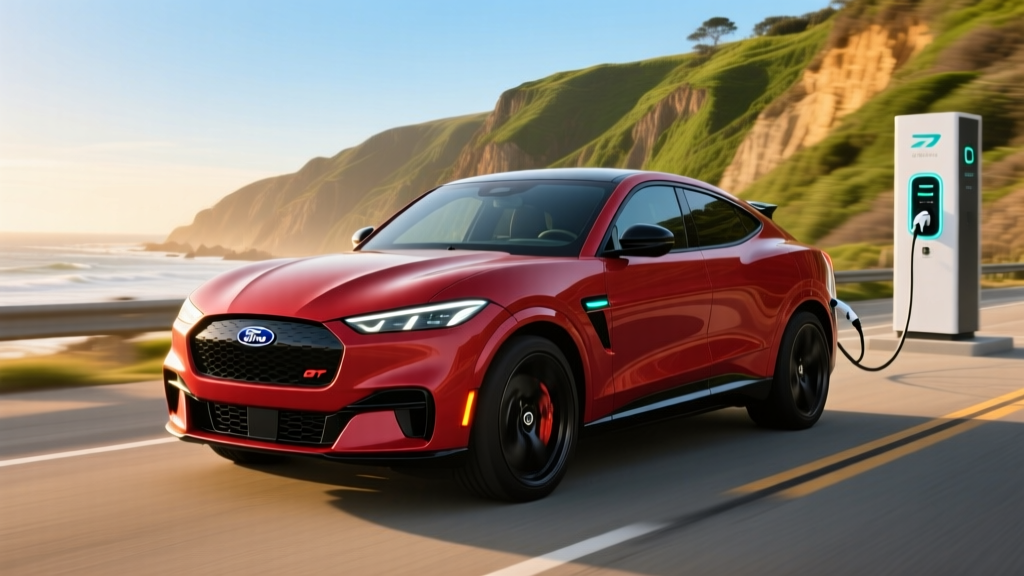
The Ford Mustang Mach-E GT has always been Ford's answer to the Tesla Model Y Performance — a dual-motor, all-wheel-drive electric crossover that channels Mustang-badged aggression into a practical family hauler. For 2026, the GT trim continues to headline the Mach-E lineup with a factory-quoted 0-60 mph time of 3.3 seconds and 480 horsepower, making it one of the quickest SUVs in its price bracket. But straight-line speed is only part of the ownership equation. This review breaks down the real-world range you can actually expect, the GT's DC fast-charging behavior (including where the curve tapers), interior practicality, and whether the federal EV tax credit still applies under current IRS §30D rules.
If you're cross-shopping the Mach-E GT against the Tesla Model Y Performance, Hyundai Ioniq 5 N, or Kia EV6 GT, the details below will help you decide which performance EV actually fits your daily driving and charging situation.
Ford Mustang Mach-E GT: Key Specs at a Glance
| Specification | 2026 Mustang Mach-E GT (Extended Range) |
|---|---|
| Drivetrain | Dual-motor AWD |
| Horsepower | 480 hp (590 hp w/ Performance Upgrade) |
| Torque | 634 lb-ft (775 lb-ft w/ Performance Upgrade) |
| 0-60 mph | 3.3 seconds (3.0s w/ Performance Upgrade) |
| Battery (usable) | 91 kWh, NMC lithium-ion |
| EPA Range | 280 miles |
| MPGe (combined) | 84 MPGe |
| Efficiency | 40 kWh/100 mi |
| Max DC Fast Charge | 150 kW (peak) |
| 10-80% DC Charge Time | ~36 minutes |
| Level 2 Home Charge Rate | 10.5 kW (~30 mi/hr) |
| Connector | NACS (native Tesla Supercharger access) |
| Cargo (rear seats up) | 29.7 cu ft |
| Cargo (rear seats folded) | 59.7 cu ft |
| Front Trunk (Frunk) | 4.7 cu ft |
| Rear Legroom | 38.9 inches |
| Battery Warranty | 8 years / 100,000 miles |
| Base MSRP | $59,995 |
Real-World Range: What to Expect Beyond the EPA Sticker
Real-World Highway (70-75 mph): ~235-250 miles
Cold Weather (below 32°F): ~200-220 miles
Mixed Commute (city + suburban): ~260-275 miles
The Mach-E GT's 280-mile EPA estimate reflects the performance-oriented tuning and 20-inch wheels that come standard on the GT. According to fueleconomy.gov, the GT posts 84 MPGe combined, which translates to roughly 40 kWh per 100 miles driven. That efficiency figure is respectable for a 480-hp dual-motor AWD crossover, but it's noticeably thirstier than the Select or Premium trims with smaller batteries and less power.
In real-world highway driving at sustained speeds of 70-75 mph, expect range to drop to approximately 235-250 miles. The GT's aggressive torque delivery and heavier curb weight (~4,900 lbs) work against efficiency at high speed. Cold weather compounds this — battery heating demands and cabin climate load can pull range down to the 200-220 mile bracket in sub-freezing conditions. If your commute is primarily city and suburban with frequent regenerative braking opportunities, you'll land closer to the EPA sticker, around 260-275 miles.
The GT uses Ford's NMC (nickel manganese cobalt) chemistry in its Extended Range pack. NMC offers higher energy density than LFP, which is why Ford reserves it for the performance and long-range trims. The trade-off is that NMC batteries are more sensitive to sustained high states of charge — Ford recommends daily charging to 90% and saving 100% for road trips to preserve long-term battery health.
Charging Speed: DC Fast Charge Curve and Home Setup
Charging speed is where the Mach-E GT reveals one of its most discussed limitations. The GT peaks at 150 kW on DC fast chargers, which trails competitors like the Hyundai Ioniq 5 (peaking at 240 kW on 800V architecture) and the Tesla Model Y (up to 250 kW on V3 Superchargers). Here's what that means in practice:
| Charging Level | Power / Rate | Time / Miles Added |
|---|---|---|
| Level 1 (120V household) | ~1.4 kW | ~4 miles per hour |
| Level 2 (240V, 48A home charger) | 10.5 kW | ~30 miles per hour; full charge in ~9 hours |
| DC Fast Charge (peak) | 150 kW | 10-80% in ~36 minutes |
| DC Fast Charge (sustained avg) | ~95-110 kW | Average over full 10-80% session |
The 150 kW peak is only sustained briefly between roughly 15-30% state of charge. Above 50%, the charge rate tapers significantly — dropping to around 80-90 kW, and falling further above 80%. This is normal charge-curve behavior for NMC packs, but it means the average speed across a 10-80% session is closer to 95-110 kW. On a road trip, plan for roughly 36-minute stops at 150 kW-capable stations.
For 2026, the Mach-E comes equipped with a native NACS (North American Charging Standard) port, giving direct access to Tesla's Supercharger network — now the largest and most reliable DC fast-charging network in the U.S. For home charging, Ford's connected charge station or any quality Level 2 unit on a 60-amp circuit (48A continuous) will deliver 10.5 kW, replenishing the GT's battery from empty to full overnight in roughly 9 hours. Most owners who charge nightly from 30-80% will see a full top-up in under 5 hours.
Performance: The 0-60 Story and Driving Dynamics
The headline number — 3.3 seconds to 60 mph — is achieved with the GT's standard dual-motor AWD setup producing 480 hp and 634 lb-ft of torque. Opt for the available Performance Upgrade (which adds Ford's e-calibrated sport tuning and unlocks 590 hp and 775 lb-ft), and the 0-60 drops to an estimated 3.0 seconds. That puts the Mach-E GT in the same acceleration territory as a Porsche Cayenne S E-Hybrid, at roughly a third of the price.
But the GT's character goes beyond drag-strip numbers. Ford's MagneRide adaptive dampers (standard on the GT) provide genuinely well-controlled body motion, and the steering is weighted appropriately for a performance crossover. The GT feels planted through highway sweepers and composed on broken pavement — a balance many competitors miss. Brembo front brakes with regenerative blending handle stopping duties, and the one-pedal driving mode is among the smoothest in the segment.
The trade-off for this performance is ride firmness. The GT's 20-inch wheels and sport-tuned suspension transmit more road imperfections than the Premium trim. If your daily commute involves rough urban streets, test-drive both trims before committing.
Pricing, Tax Credit Eligibility, and Ownership Costs
The 2026 Mustang Mach-E GT starts at a base MSRP of $59,995, including destination. Adding the Performance Upgrade package, adaptive cruise with Ford BlueCruise, and premium paint can push the as-tested price to approximately $65,000-$67,000.
| Trim / Configuration | MSRP | Est. After §30D Credit |
|---|---|---|
| GT (base) | $59,995 | $52,495* |
| GT w/ Performance Upgrade | ~$63,995 | ~$56,495* |
| GT fully loaded (as-tested) | ~$66,500 | ~$59,000* |
*Tax credit estimates assume full $7,500 eligibility under IRS §30D. Actual eligibility depends on buyer income, battery sourcing, and MSRP caps. Consult a tax professional and review current rules at irs.gov.
Under current §30D rules, the Mach-E GT qualifies for the federal clean vehicle credit — but with important caveats:
- MSRP cap: SUVs must be priced at or below $80,000. The GT clears this threshold comfortably.
- Income cap: Adjusted gross income must not exceed $300,000 (joint filers), $225,000 (head of household), or $150,000 (single). These thresholds have remained stable through 2026.
- Battery sourcing: The full $7,500 credit requires meeting both critical-mineral and battery-component sourcing requirements. Ford has worked to qualify the Mach-E's supply chain, but the split-credit scenario ($3,750 if only one requirement is met) remains possible depending on the production batch. Verify VIN-specific eligibility at fueleconomy.gov.
- Point-of-sale transfer: You can elect to transfer the credit to the dealer at purchase, reducing your out-of-pocket cost immediately rather than waiting for tax filing.
On the ownership-cost side, the Mach-E GT's 8-year/100,000-mile battery and powertrain warranty matches the industry standard. Insurance premiums for the GT run 15-25% higher than the Select trim due to its performance output — budget roughly $1,800-$2,400 annually depending on your state and driving record.
Interior, Tech, and Daily Practicality
The Mach-E GT's cabin seats five with 38.9 inches of rear legroom — adequate for adults on longer trips, though it trails the Hyundai Ioniq 5's more spacious rear seat. Cargo volume stands at 29.7 cu ft behind the rear seats and 59.7 cu ft with them folded, plus a 4.7 cu ft front trunk (frunk) with a drain plug — useful for wet gear or tailgating.
Ford's SYNC 4A infotainment system runs on a 15.5-inch vertical touchscreen that dominates the dash. The interface is responsive, supports wireless Apple CarPlay and Android Auto, and includes a physical volume knob at the base of the screen — a practical choice that many EV competitors have abandoned. The GT adds a 10.2-inch digital instrument cluster, a B&O premium audio system, and ambient interior lighting.
On the driver-assistance front, Ford's BlueCruise hands-free highway driving system is available on the GT. BlueCruise is an SAE Level 2 system — it handles steering, acceleration, and braking on pre-qualified divided highways, but requires the driver to remain attentive and ready to take over at all times. A driver-monitoring camera ensures compliance. BlueCruise is competent on long interstate stretches, but it is not autonomous driving and does not handle city streets, construction zones, or unmapped roads.
Pros and Cons: The Honest Assessment
Pros
- 3.3-second 0-60 mph (3.0s with Performance Upgrade) at a sub-$65K price point
- Native NACS port — full Tesla Supercharger network access without adapters
- MagneRide adaptive dampers deliver composed handling and ride quality
- SYNC 4A with 15.5-inch screen is intuitive and retains wireless CarPlay/Android Auto
- Strong cargo versatility with usable frunk and flat-folding rear seats
- Qualifies for up to $7,500 federal tax credit (subject to §30D sourcing rules)
Cons
- 150 kW peak DC fast-charge rate trails key competitors (Ioniq 5 N: 240 kW)
- 280-mile EPA range is modest for the price — real-world highway range drops to ~235-250 mi
- GT ride firmness may fatigue on rough urban commutes
- Insurance premiums run 15-25% higher than non-GT trims
- BlueCruise requires a subscription after the initial trial period
- 200-220 mile cold-weather range demands careful winter road-trip planning
Who Should Buy the Mach-E GT?
Choose the Mach-E GT if:
- You want sub-3.5-second 0-60 performance without spending Porsche or Tesla Plaid money
- You value access to the Tesla Supercharger network via native NACS
- Your daily commute is under 200 miles round-trip and you charge at home nightly
- You prefer a traditional crossover layout with a usable frunk and flat cargo floor
Look elsewhere if:
- You frequently road-trip 300+ miles and need the fastest possible DC charging — consider the Ioniq 5 N or EV6 GT
- Maximum range is a priority — the Mach-E Premium RWD (320 mi EPA) or Tesla Model Y Long Range (330+ mi) are better fits
- Ride comfort matters more than outright acceleration — the Premium trim offers a softer setup
Frequently Asked Questions
What is the real-world range of the Ford Mustang Mach-E GT?
The EPA rates the 2026 Mach-E GT at 280 miles. In real-world highway driving at 70-75 mph, expect approximately 235-250 miles. Cold weather (below 32°F) can reduce range to 200-220 miles. Mixed city and suburban driving with regenerative braking returns closer to 260-275 miles.
How fast does the Mach-E GT charge at home and on DC fast chargers?
On a Level 2 home charger (240V, 48A), the GT charges at 10.5 kW, adding roughly 30 miles of range per hour and reaching a full charge in about 9 hours. On DC fast chargers, the GT peaks at 150 kW and charges from 10-80% in approximately 36 minutes. The charge rate tapers above 50% state of charge, with sustained averages around 95-110 kW across a full session.
Does the 2026 Mustang Mach-E GT qualify for the federal EV tax credit?
The Mach-E GT qualifies for up to $7,500 under IRS §30D, provided the buyer meets income caps ($300K joint / $150K single), the vehicle MSRP is under $80,000 (it is at ~$60K), and the battery meets critical-mineral and component sourcing requirements. The credit can be transferred to the dealer at the point of sale. Always verify VIN-specific eligibility at fueleconomy.gov and consult a tax professional.
Is the Mach-E GT worth buying over the Tesla Model Y Performance or Ioniq 5 N?
The Mach-E GT offers strong value at $59,995 with native NACS Supercharger access, MagneRide suspension, and a comfortable interior. The Tesla Model Y Performance charges faster (250 kW) and has longer range but a starker interior. The Hyundai Ioniq 5 N charges fastest in the segment (240 kW, 800V) and offers track-focused dynamics, but its range is similarly modest. Your choice should hinge on charging speed priority, interior preference, and which dealer network you trust for service.
What is the battery warranty on the Mach-E GT?
Ford covers the Mach-E GT's high-voltage battery and electric powertrain components for 8 years or 100,000 miles, whichever comes first. The warranty guarantees the battery will retain a minimum level of capacity (typically around 70% of original capacity) over that period. Ford's NMC battery chemistry benefits from active thermal management, which helps mitigate degradation over time.
How does the Mach-E GT's 0-60 compare to other performance EVs?
The GT's 3.3-second 0-60 mph time (3.0s with the Performance Upgrade) puts it in elite company. The Tesla Model Y Performance hits 60 in approximately 3.5 seconds, the Hyundai Ioniq 5 N in 3.25 seconds, and the Kia EV6 GT in 3.4 seconds. The Mach-E GT with Performance Upgrade is among the quickest vehicles in the sub-$70K electric crossover segment.