Quick Verdict: A Sporty Electric Crossover Worth Financing
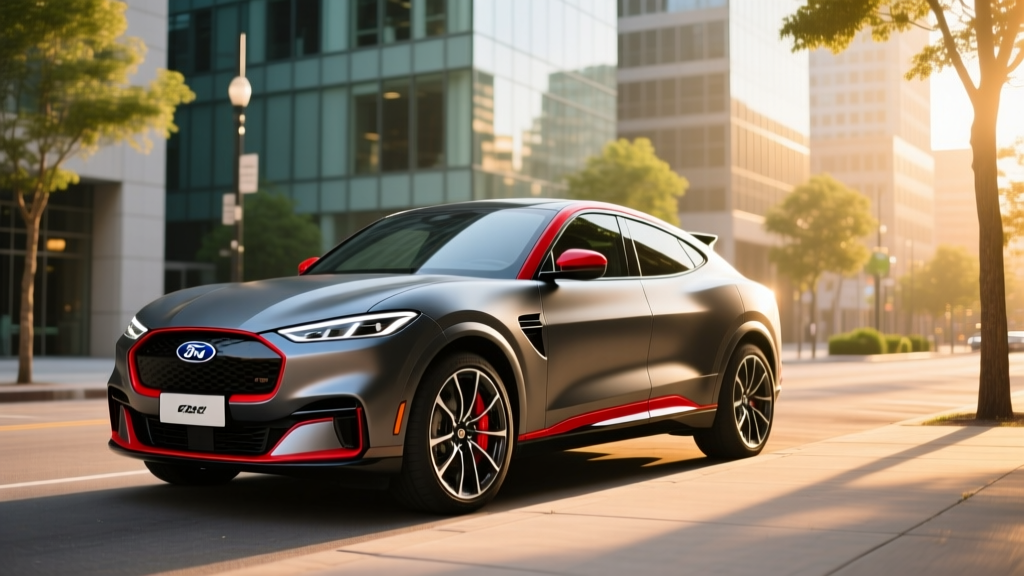
The 2026 Ford Mustang Mach-E remains one of the most compelling electric crossovers for buyers who want sporty dynamics, practical range, and access to the Tesla Supercharger network via its native NACS charge port. With EPA ranges stretching to 320 miles, DC fast-charging up to 150 kW, and a starting MSRP near $39,995, the Mach-E occupies a competitive sweet spot between the Tesla Model Y and Hyundai Ioniq 5. For buyers researching Ford Mustang Mach-E finance options, understanding the interplay between trim pricing, federal tax credit eligibility under IRS §30D, and real-world ownership costs is essential before signing a loan or lease agreement.
| Spec | Select (RWD) | Premium (AWD) | GT (AWD) |
|---|---|---|---|
| EPA Range | ~250 mi | ~290 mi | ~280 mi (extended) |
| Battery (usable) | 70 kWh (LFP) | 91 kWh (NMC) | 91 kWh (NMC) |
| DC Fast Charge (peak) | 115 kW | 150 kW | 150 kW |
| 10–80% DC Time | ~36 min | ~33 min | ~33 min |
| Level 2 Rate | 10.5 kW (~30 mi/hr) | 10.5 kW (~30 mi/hr) | 10.5 kW (~30 mi/hr) |
| 0–60 mph | ~6.3 sec | ~5.1 sec | ~3.5 sec |
| Horsepower | 266 hp | 346 hp | 480 hp |
| Drivetrain | RWD single motor | AWD dual motor | AWD dual motor |
| Base MSRP | $39,995 | $45,995 | $55,995 |
Range, Efficiency, and Real-World Expectations
Ford equips the Mach-E Select with a 70 kWh usable LFP (lithium iron phosphate) battery, while Premium and GT trims step up to a 91 kWh NMC (nickel manganese cobalt) pack. LFP chemistry offers a longer cycle life and can be charged to 100% daily without degradation concerns, though it trades some energy density for that durability. NMC packs deliver more range per pound but benefit from daily charge limits around 80–90% for longevity.
EPA Range vs. Real-World Reality
EPA sticker: Up to 320 miles (Premium RWD with extended range).
Real-world highway (70 mph, moderate climate): Expect 260–285 miles from the extended-range pack. Aerodynamic drag at sustained highway speeds reduces efficiency by roughly 10–15% versus the EPA combined cycle.
Cold-weather impact (below 32°F): Plan for a 20–30% range reduction, bringing a 290-mile EPA rating down to approximately 200–230 miles. The Mach-E's heat pump helps mitigate cabin heating draw, but battery chemistry inherently slows in freezing temperatures.
Efficiency: Approximately 101 MPGe combined / 33 kWh per 100 miles for the extended-range RWD, per fueleconomy.gov.
Charging Speed: DC Fast, Level 2, and the NACS Advantage
For the 2026 model year, the Mach-E ships with a native NACS (North American Charging Standard) port, eliminating the need for a CCS-to-NACS adapter and granting direct access to Tesla's Supercharger network — over 25,000 stalls nationwide. This is a significant practical advantage for road-trip charging reliability.
| Charging Level | Power / Rate | Miles Added per Hour | Notes |
|---|---|---|---|
| Level 1 (120V household) | ~1.4 kW | ~3–4 mi/hr | Emergency/trickle only |
| Level 2 (240V home) | 10.5 kW | ~30 mi/hr | Full charge in ~9 hr (91 kWh) |
| DC Fast Charge | Up to 150 kW (peak) | ~180 mi in 20 min (peak) | 10–80% in ~33 min; tapers above 80% |
The 150 kW peak rate on extended-range trims means you'll see maximum charge speed only between roughly 10–40% State of Charge. Above 60%, the charge curve tapers significantly — a common battery-management strategy to protect cell health. On a road trip, plan your stops around the 10–80% window for the most efficient use of time. Preconditioning the battery (navigating to a charger in the infotainment system) warms the pack for faster electron acceptance, especially in cold weather.
Performance and Driving Dynamics
The Mach-E GT's 3.5-second 0–60 mph time puts it in genuine sports-car territory, while even the base Select RWD's 6.3-second sprint is brisk for daily driving. Ford's MagneRide adaptive dampers on the GT trim deliver a surprisingly compliant ride given the performance envelope.
- Select RWD: 266 hp, single rear motor — adequate for commuting, best efficiency
- Premium AWD: 346 hp, dual motor — the best balance of range, grip, and power
- GT AWD: 480 hp, dual motor — performance flagship, sacrifices ~40 miles of range vs. Premium
All trims feature one-pedal driving with adjustable regenerative braking intensity. The low center of gravity (battery pack under the floor) gives the Mach-E composed cornering that belies its crossover ride height.
Ford Mustang Mach-E Finance: Pricing, Loans, and Tax Credits
Understanding the full cost picture is critical when structuring your Ford Mustang Mach-E finance plan. Here's how pricing breaks down across trims before and after potential incentives.
| Trim | Base MSRP | Federal Credit (§30D) | Effective Price* |
|---|---|---|---|
| Select (Standard Range RWD) | $39,995 | Up to $7,500 | ~$32,495 |
| Premium (Extended Range AWD) | $45,995 | Up to $7,500 | ~$38,495 |
| GT (Extended Range AWD) | $55,995 | Up to $7,500 | ~$48,495 |
*Effective price assumes full §30D credit eligibility. Actual credit depends on battery sourcing, buyer income, and MSRP caps.
Federal Tax Credit Eligibility (§30D) — Key Rules for 2026
The IRS §30D Clean Vehicle Credit can reduce your tax liability by up to $7,500, and as of 2024, it can be transferred to the dealer as a point-of-sale discount — effectively lowering your financed amount. However, eligibility is not automatic. Per IRS guidelines, you must meet all of the following:
- MSRP cap: SUVs/crossovers must not exceed $80,000 (all Mach-E trims qualify)
- Buyer income cap: Modified AGI ≤ $150,000 (single) / $300,000 (joint) / $225,000 (head of household)
- Battery sourcing: A percentage of critical minerals and battery components must be sourced from the US or free-trade-agreement countries — this requirement tightens annually and may reduce the credit to $3,750 if only one of two sourcing thresholds is met
- Final assembly: Vehicle must be assembled in North America (the Mach-E is built in Cuautitlán, Mexico — verify current-year eligibility on fueleconomy.gov)
Finance tip: If you take the credit as a point-of-sale reduction, your loan principal drops by $7,500 (or $3,750), directly lowering monthly payments. Consult a tax professional to confirm your eligibility before finalizing your loan structure.
Typical Finance Scenarios
Assuming a $45,995 Premium AWD with a $7,500 credit (effective price ~$38,495), zero down, and a 6.5% APR over 72 months, expect monthly payments near $645. Putting 10% down (~$3,850) brings that to roughly $580/month. Ford Credit periodically offers promotional APRs (as low as 1.9–3.9% for well-qualified buyers) which can substantially reduce total interest paid. Lease deals may also be attractive if you prefer lower monthly payments and plan to upgrade in 36 months — but note that the §30D credit on a lease goes to the lessor (Ford), who may or may not pass it through as a capitalized-cost reduction.
Interior, Cargo, and Technology
The Mach-E's cabin is driver-focused with a large 15.5-inch vertical touchscreen running Ford's SYNC 4A system. Wireless Apple CarPlay and Android Auto are standard, along with a 10.2-inch digital instrument cluster. The panoramic fixed-glass roof creates an airy feel without the mechanical complexity of a sunroof.
- Cargo volume: 29.7 cu ft behind rear seats; 59.7 cu ft with seats folded
- Front trunk (frunk): 4.7 cu ft with a drain plug — useful for wet gear or tailgating
- Rear legroom: 38.1 inches — competitive with the Model Y and Ioniq 5
- Towing: Up to 2,300 lbs (AWD trims with the tow package) — light-duty only
Driver assistance: Ford Co-Pilot360 2.0 is standard (automatic emergency braking, lane-keeping, blind-spot monitoring). Available BlueCruise offers hands-free highway driving on pre-mapped divided highways. This is an SAE Level 2 system — you must remain attentive and keep your eyes on the road. The system uses a driver-monitoring camera to enforce engagement.
Warranty and Long-Term Ownership
Ford provides competitive warranty coverage for the Mach-E's electrified powertrain:
- Battery & electric powertrain: 8 years / 100,000 miles (whichever comes first)
- Bumper-to-bumper: 3 years / 36,000 miles
- Corrosion perforation: 5 years / unlimited miles
The battery warranty guarantees that capacity will not fall below 70% of original during the coverage period. Real-world data from early Mach-E owners (2021–2023 models) suggests degradation of roughly 5–8% over the first 60,000 miles for NMC packs, which is well within warranty thresholds. LFP packs in the Select trim are expected to show even slower degradation given the chemistry's inherent stability, though long-term fleet data is still accumulating.
Pros, Cons, and Who Should Buy
Pros
- Native NACS port — direct Supercharger access, no adapter
- Up to 320 mi EPA range (extended RWD)
- GT trim offers 3.5-sec 0–60 performance
- LFP battery option for daily 100% charging without degradation worry
- Competitive cargo space (29.7 cu ft) and frunk
- BlueCruise hands-free driving on mapped highways
Cons
- DC fast-charge peak (150 kW) trails Ioniq 5's 240 kW
- Mexico assembly may affect §30D credit eligibility — verify yearly
- Rear-seat headroom is tighter for tall passengers vs. some rivals
- Insurance premiums run 15–25% higher than equivalent gas crossovers
- No 800V architecture — charge curve tapers steeply above 80%
Who the Mach-E Suits Best
- Daily commuters (20–60 mi round trip): Select RWD with LFP battery — charge nightly at home, minimal degradation
- Family road-trippers: Premium extended-range AWD — best range + Supercharger access for cross-country drives
- Performance enthusiasts: GT — 480 hp, adaptive suspension, one-pedal driving thrills
- Not ideal for: Heavy towing needs (max 2,300 lbs) or buyers in extreme cold without garage charging
How It Compares: Mach-E vs. Key Competitors
| Attribute | Mach-E Premium AWD | Tesla Model Y LR AWD | Hyundai Ioniq 5 AWD |
|---|---|---|---|
| EPA Range | ~290 mi | ~310 mi | ~260 mi |
| DC Fast Charge (peak) | 150 kW | 250 kW | 240 kW (800V) |
| 10–80% Time | ~33 min | ~22 min | ~18 min |
| Starting MSRP | $45,995 | $47,990 | $49,500 |
| Charge Network | NACS (Supercharger) | Supercharger (native) | NACS (Supercharger via adapter or native) |
| Cargo (rear seats up) | 29.7 cu ft | 30.2 cu ft | 27.2 cu ft |
The Mach-E trades peak charging speed for a lower entry price and Ford's dealer-service infrastructure. If 20-minute DC stops are a priority, the Ioniq 5's 800V architecture wins. If Supercharger seamlessness matters most, the Model Y or Mach-E (with native NACS) are equally strong.
Frequently Asked Questions
What is the real-world range of the 2026 Ford Mustang Mach-E?
The EPA rates the extended-range RWD at up to 320 miles. In real-world highway driving at 70 mph, expect 260–285 miles. In freezing temperatures, that drops to approximately 200–230 miles due to increased cabin heating demand and reduced battery efficiency.
How fast does the Mach-E charge at home and on the road?
At home on a 240V Level 2 charger (10.5 kW), the Mach-E adds about 30 miles per hour — a full overnight charge for most commutes. On DC fast chargers, the extended-range pack peaks at 150 kW, reaching 10–80% in approximately 33 minutes. The standard-range LFP pack peaks at 115 kW with a 10–80% time around 36 minutes.
How much does the Mach-E cost after federal tax credits?
If you qualify for the full $7,500 §30D credit, the Select drops from $39,995 to roughly $32,495 and the Premium from $45,995 to ~$38,495. Eligibility depends on your income (≤$150K single / $300K joint), battery-sourcing compliance, and North American assembly requirements. Always verify on fueleconomy.gov and with a tax professional before purchase.
Does the 2026 Mach-E qualify for the federal EV tax credit?
The Mach-E meets the MSRP cap ($80,000 for SUVs) and is assembled in North America (Mexico). However, the battery-sourcing requirements under §30D tighten each year, and the credit may be reduced to $3,750 if only one of the two sourcing thresholds (critical minerals or battery components) is met. Check the latest eligibility list on fueleconomy.gov before purchasing.
Is the Mach-E worth buying versus the Tesla Model Y or Ioniq 5?
Choose the Mach-E if you value Ford's dealer network, a sporty driving feel, native NACS Supercharger access, and a slightly lower price than the Model Y. Choose the Ioniq 5 if ultra-fast 800V DC charging (18-minute 10–80%) is your priority. Choose the Model Y if you want maximum Supercharger integration and Tesla's software ecosystem. All three are strong — the decision comes down to which trade-offs matter most for your driving pattern.
What are the biggest pros and cons of the Mach-E?
Top pros: native NACS port, up to 320-mile EPA range, LFP battery option for worry-free daily charging, GT performance, and competitive cargo space. Top cons: 150 kW peak charging trails rivals, Mexico assembly may complicate tax credit eligibility, and insurance costs run higher than gas equivalents.