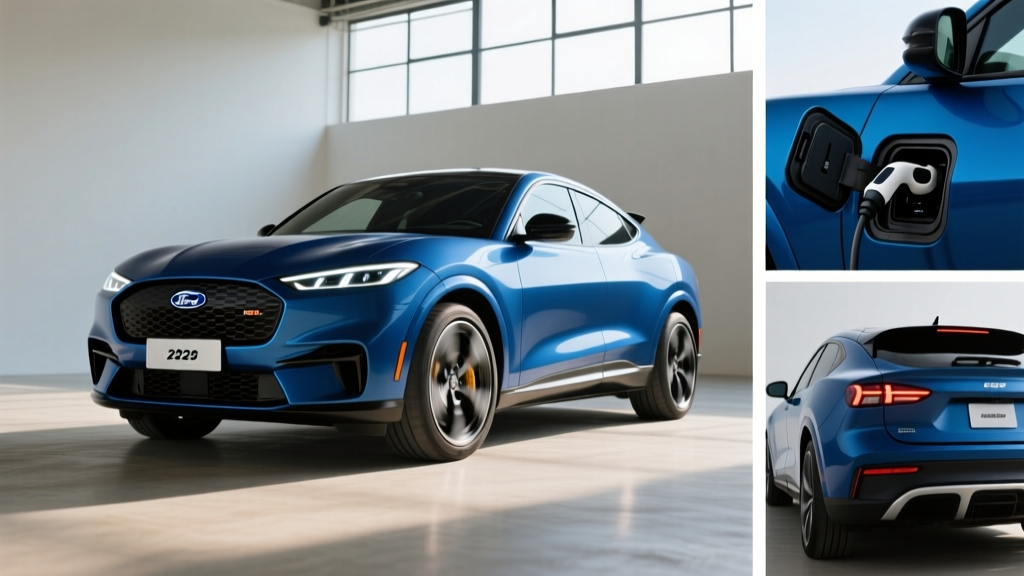
The Ford Mustang Mach-E has spent years proving that an electric crossover wearing a pony badge can hold its own against Tesla's Model Y, Hyundai's Ioniq 5, and a growing field of rivals. For the 2026 model year, Ford has refined the formula with a refreshed battery pack, NACS (Tesla Supercharger) native compatibility across the lineup, and updated BlueCruise hands-free driving zones. But specs on paper only tell half the story. This review breaks down the real-world range, charging behavior, ownership costs, and tax-credit math that actually matter when you're signing the paperwork.
Quick Verdict: Who the Mach-E Is For
The 2026 Mustang Mach-E is a practical, well-rounded electric crossover for buyers who want a mainstream dealer network, proven Supercharger access, and a driving experience that leans sporty without sacrificing daily comfort. It's strongest as a commuter and family hauler with road-trip capability thanks to the NACS port. Buyers prioritizing maximum cargo space, ultra-fast 800V charging, or the lowest possible price should cross-shop the Ioniq 5, Kia EV6, and Tesla Model Y before committing.
Range and Efficiency: EPA Numbers vs. the Real World
The Extended Range AWD model carries an EPA estimate of 320 miles. In mixed highway driving at 70 mph, expect ~265–285 miles. In sub-freezing winter conditions (below 30°F), plan for ~220–250 miles depending on cabin heating use and terrain. The Standard Range RWD model's EPA 250-mile rating drops to roughly 210–225 miles highway and ~180–200 miles in cold weather.
The 2026 Mach-E lineup offers two battery sizes. The Standard Range models use a 75.7 kWh usable lithium-ion pack with NMC (nickel manganese cobalt) chemistry, while Extended Range models step up to a 91.0 kWh usable NMC pack. Ford has not adopted LFP (lithium iron phosphate) for the Mach-E, meaning you get higher energy density but should follow best practices for long-term health — keeping daily charge between 20–80% and only charging to 100% before road trips.
Efficiency varies by drivetrain. According to fueleconomy.gov, the Extended Range RWD achieves a combined 101 MPGe (33 kWh/100 mi), while the AWD variant drops to 93 MPGe (36 kWh/100 mi). The GT Performance trim sits at 84 MPGe (40 kWh/100 mi). These figures are competitive with the Model Y Long Range but trail the Ioniq 5's class-leading efficiency.
| Trim | Battery (kWh usable) | Drivetrain | EPA Range | Combined MPGe | kWh/100 mi |
|---|---|---|---|---|---|
| Select SR | 75.7 | RWD | 250 mi | 100 | 34 |
| Premium ER | 91.0 | RWD | 320 mi | 101 | 33 |
| Premium ER | 91.0 | AWD | 300 mi | 93 | 36 |
| GT | 91.0 | AWD | 280 mi | 84 | 40 |
Charging Speed: DC Fast, Level 2, and the Supercharger Advantage
The 2026 Mach-E comes equipped with a native NACS charge port, giving it plug-and-play access to Tesla's Supercharger network — over 20,000 stalls across North America — without an adapter. This is arguably the single biggest practical advantage Ford gained by switching from CCS1.
On DC fast charging, the Mach-E peaks at 150 kW on Extended Range models (Standard Range peaks at 115 kW). That translates to a 10–80% charge in approximately 36 minutes for the ER pack. The charge curve is moderate: you'll sustain near-peak rates up to roughly 50% SoC before tapering begins. This is noticeably slower than the Hyundai Ioniq 5's 800V architecture (240 kW peak, ~18 min 10–80%), but adequate for road-trip comfort breaks.
| Level | Power / Rate | Speed (miles added) | Notes |
|---|---|---|---|
| Level 1 (120V) | ~1.4 kW | ~3–4 mi/hr | Emergency/trickle only |
| Level 2 (240V, 48A) | 11.5 kW | ~30 mi/hr | Full overnight charge in ~8–9 hrs (ER) |
| DC Fast (NACS) | 150 kW peak (ER) | ~150 mi in 20 min | 10–80% in ~36 min; tapers above 50% |
For home Level 2 charging, Ford's Mobile Power Cord with a 240V NEMA 14-50 outlet delivers up to 11.5 kW, adding roughly 30 miles of range per hour. A full charge on the Extended Range pack takes about 8.5 hours — easily done overnight. Installation of a dedicated 50-amp circuit typically runs $800–$2,000 depending on your panel's proximity to the garage and whether an upgrade to 200A service is needed.
Performance and Driving Dynamics
The Mach-E has always punched above its weight in the fun-to-drive department, and the 2026 model carries that forward.
| Trim | Horsepower | Torque (lb-ft) | 0–60 mph | Drivetrain |
|---|---|---|---|---|
| Select SR RWD | 266 hp | 317 | 6.3 sec | RWD (single motor) |
| Premium ER RWD | 290 hp | 317 | 5.8 sec | RWD (single motor) |
| Premium ER AWD | 365 hp | 428 | 4.8 sec | AWD (dual motor) |
| GT | 480 hp | 634 | 3.5 sec | AWD (dual motor) |
On the road, the dual-motor AWD models deliver confident passing power and a low center of gravity that keeps body roll in check through corners. The GT's 3.5-second sprint to 60 is genuinely thrilling, though it comes at the cost of range and ride comfort — the GT's sport-tuned suspension transmits more road imperfections than the Premium trims. One-pedal driving mode is well-calibrated, allowing true single-pedal operation in most city and suburban driving. Regenerative braking strength is adjustable through the SYNC screen if you prefer a more traditional coasting feel.
Interior, Cargo, and Technology
Step inside and the Mach-E presents a minimalist cabin dominated by a 15.5-inch portrait touchscreen running SYNC 4A. The interface is responsive, supports wireless Apple CarPlay and Android Auto, and handles over-the-air updates seamlessly. A 10.2-inch digital instrument cluster sits behind the wheel, showing range, speed, and driver-assist status.
Passenger space is generous for the segment: 43.3 inches of front legroom and 38.1 inches in the rear accommodate adults comfortably on longer drives. Cargo volume behind the rear seats measures 29.7 cubic feet, expanding to 59.7 cu ft with the rear seats folded. The front trunk (frunk) adds 4.7 cu ft of lockable storage — useful for charging cables or a small bag. Compared to the Tesla Model Y (30.2/74.1 cu ft), the Mach-E gives up some maximum cargo capacity, which matters if you regularly haul bulky items.
Standout technology includes:
- BlueCruise 1.5 — hands-free driving on over 130,000 miles of pre-mapped divided highways (SAE Level 2 — driver must remain attentive and eyes on road)
- Phone-as-a-Key — unlock and start via smartphone with no fob needed
- Intelligent Range — predictive range estimation that factors in weather, terrain, and driving habits
- Available Active Park Assist 2.0 for hands-free parallel and perpendicular parking
BlueCruise is an SAE Level 2 driver-assistance system. It is not self-driving. The driver must remain engaged, keep eyes on the road (monitored by an infrared camera), and be ready to take over at any time. It does not handle construction zones, unmapped roads, or severe weather autonomously.
Pricing, Trims, and Federal Tax Credit Eligibility
The 2026 Mach-E lineup starts at $39,995 MSRP for the Select SR RWD (before destination), climbing to $59,995 for the GT. Here's the full breakdown:
| Trim | Base MSRP | Est. §30D Credit | Effective Price* |
|---|---|---|---|
| Select SR RWD | $39,995 | Up to $3,750 | ~$36,245 |
| Premium ER RWD | $46,995 | Up to $3,750 | ~$43,245 |
| Premium ER AWD | $49,995 | Up to $3,750 | ~$46,245 |
| GT AWD | $59,995 | Up to $3,750 | ~$56,245 |
*Effective price assumes full credit eligibility. Actual credit depends on battery component and critical-mineral sourcing. Destination charge (~$1,895) not included.
Federal EV Tax Credit: What You Need to Know
Under IRS §30D rules, the Mach-E may qualify for a partial or full federal tax credit of up to $7,500 (split into two $3,750 halves: battery components and critical minerals). However, eligibility hinges on several factors that change as supply chains evolve. Per IRS guidelines:
- MSRP cap: SUVs/crossovers must be under $80,000 — all Mach-E trims qualify
- Income cap: Modified AGI must not exceed $150,000 (single), $225,000 (head of household), or $300,000 (joint filing)
- Battery sourcing: The two $3,750 credit halves depend on where battery components are manufactured and where critical minerals are sourced — Ford's supply chain has been shifting, and the exact credit amount varies by build date and pack origin
- Point-of-sale transfer: You can transfer the credit to the dealer at purchase to reduce your out-of-pocket cost, rather than waiting to claim it on your tax return
As of early 2026, most Mach-E builds qualify for at least $3,750 (one half of the credit), with some build configurations reaching the full $7,500 depending on the battery pack's sourcing certification. Always verify the specific VIN's eligibility on fueleconomy.gov before purchasing, and consult a tax professional for your individual situation.
Warranty and Long-Term Ownership
Ford backs the Mach-E with a competitive warranty package:
- Battery: 8 years / 100,000 miles (whichever comes first), covering defects and capacity loss below 70% of original capacity
- Electric powertrain components: 8 years / 100,000 miles
- Bumper-to-bumper: 3 years / 36,000 miles
- Corrosion perforation: 5 years / unlimited miles
The 70% capacity retention threshold is industry-standard and matches competitors like Hyundai and Tesla. In practice, NMC packs in liquid-cooled systems like the Mach-E's have shown degradation curves of roughly 5–10% over the first 100,000 miles, based on data from early 2021–2022 Mach-E owners. This means a 320-mile ER model might realistically offer 290–305 miles after 100,000 miles of use — well within the warranty's protection threshold.
Insurance costs for the Mach-E run 10–20% higher than an equivalent gas-powered Escape or Bronco Sport, reflecting the higher repair costs associated with EV battery packs and aluminum body panels. Get quotes before purchasing — they vary significantly by state and driver profile.
Mach-E vs. the Competition
- Native NACS port — full Supercharger network access
- Engaging driving dynamics, especially GT trim
- BlueCruise hands-free highway driving
- Ford dealer network for service/parts
- Competitive real-world range (up to 320 mi EPA)
- Spacious rear seats and practical frunk
- DC fast charging (150 kW) slower than 800V rivals
- Cargo volume trails Model Y significantly
- Tax credit amount varies by battery sourcing
- No LFP battery option for worry-free 100% daily charging
- Higher insurance costs vs. gas crossovers
- GT ride quality firm on rough roads
Stacked against the Tesla Model Y Long Range ($44,990, 310 mi EPA, 250 kW charging), the Mach-E offers a more traditional dealership experience and arguably better build quality, but gives up ~100 kW of peak DC charging speed and 5+ cubic feet of cargo space. Against the Hyundai Ioniq 5 ($42,600, 303 mi EPA, 240 kW charging via 800V), the Mach-E's main advantage is Supercharger access and the Ford brand, while the Ioniq 5 charges dramatically faster and offers a slightly more distinctive design. The Kia EV6 shares the Ioniq 5's 800V platform and is worth a test drive for anyone prioritizing charging speed.
Choose the Mach-E if: You want native Supercharger access, value a traditional dealer service experience, enjoy sporty handling, and don't regularly need maximum cargo space.
Look elsewhere if: You prioritize the fastest possible DC charging (Ioniq 5/EV6), need maximum cargo room (Model Y), want an LFP battery for daily 100% charging without degradation concern, or need the absolute lowest price of entry.
Frequently Asked Questions
What is the real-world range of the Ford Mustang Mach-E?
The Extended Range AWD model's EPA estimate is 320 miles, but real-world highway driving at 70 mph typically yields 265–285 miles. In winter conditions below 30°F, expect 220–250 miles. The Standard Range RWD delivers roughly 210–225 miles on the highway and 180–200 miles in cold weather.
How fast does the Mach-E charge at home and on DC fast chargers?
On a Level 2 home charger at 11.5 kW, the Mach-E adds about 30 miles of range per hour, fully charging the Extended Range pack overnight in ~8.5 hours. On DC fast charging, the ER model peaks at 150 kW and charges from 10–80% in approximately 36 minutes. The Standard Range model peaks at 115 kW.
Does the 2026 Mach-E qualify for the federal EV tax credit?
Yes, but the amount varies. Under IRS §30D, the Mach-E is eligible for up to $7,500, split into two $3,750 halves based on battery component manufacturing and critical mineral sourcing. All trims fall under the $80,000 MSRP cap for SUVs. Buyer income must not exceed $150K (single) / $300K (joint). As of early 2026, most builds qualify for at least $3,750. Verify your specific VIN at fueleconomy.gov before purchase.
Is the Mach-E worth buying over the Tesla Model Y or Hyundai Ioniq 5?
It depends on your priorities. The Mach-E excels with native Supercharger access, engaging handling, and a broad Ford dealer network. The Model Y offers more cargo space and a slightly longer range. The Ioniq 5 charges significantly faster thanks to 800V architecture. Test-drive all three — the Mach-E often wins on driving feel, while the Ioniq 5 wins on charging convenience for road trips.
What is the battery warranty on the Mach-E?
Ford covers the high-voltage battery for 8 years or 100,000 miles against defects and capacity loss below 70% of original capacity. Real-world data from early Mach-E owners suggests 5–10% degradation over the first 100,000 miles with normal use and proper charging habits (20–80% daily, 100% only for trips).
Can the Mach-E tow?
Yes, when equipped with the available Class II trailer tow package, the Mach-E is rated for up to 2,300 pounds (AWD models). This is sufficient for a small utility trailer, a couple of dirt bikes, or a light pop-up camper — but not a full-size boat or travel trailer. Towing will reduce range by approximately 30–50% depending on weight and aerodynamics.