Is the Ford Mustang Mach-E Actually Discontinued?
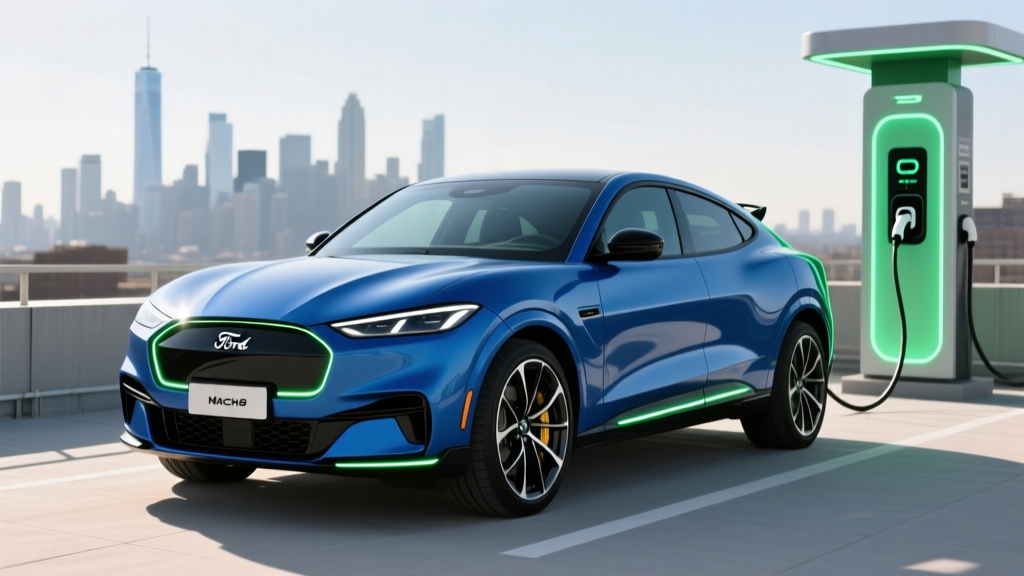
If you've searched "Mach-E discontinued" lately, you're not alone. Forum threads and YouTube headlines have been swirling about Ford killing off its electric crossover. Here's the reality as of early 2026: the Ford Mustang Mach-E is not discontinued. It remains in production at Ford's Cuautitlán plant in Mexico and is actively sold in the U.S. market for the 2025 and 2026 model years.
What is true is that Ford has dramatically scaled back its EV ambitions. The company restructured its EV division in late 2024, canceled a planned next-generation electric SUV, and pivoted toward hybrids and extended-range EVs. The Mach-E survived the cull, but its long-term future beyond 2027 is uncertain. If you're considering one today, it's very much a current, buyable vehicle — just don't expect a radical redesign soon.
2026 Mach-E Specs at a Glance
| Spec | Select (RWD) | Premium AWD | GT | GT Perf. Upgrade |
|---|---|---|---|---|
| EPA Range | 250 mi | 290 mi | 280 mi | 265 mi |
| Battery (usable) | 72 kWh (LFP) | 91 kWh (NMC) | 91 kWh (NMC) | 91 kWh (NMC) |
| Horsepower | 266 hp | 365 hp | 480 hp | 480 hp |
| Torque | 387 lb-ft | 430 lb-ft | 600 lb-ft | 700 lb-ft |
| 0-60 mph | 6.3 sec | 5.1 sec | 3.8 sec | 3.5 sec |
| Drivetrain | RWD (single motor) | AWD (dual motor) | AWD (dual motor) | AWD (dual motor) |
| Max DC Charge Rate | 115 kW | 150 kW | 150 kW | 150 kW |
| 10-80% DCFC Time | ~38 min | ~41 min | ~41 min | ~41 min |
| Base MSRP | $39,995 | $46,995 | $57,995 | $62,995 |
Real-World Range: What to Actually Expect
The EPA rates the extended-range AWD Premium at 290 miles. In real-world mixed driving, expect 250-270 miles. Sustained highway speeds (75+ mph) reduce that to roughly 230-245 miles. In cold weather (below 32°F), plan for a 20-30% reduction, putting winter highway range around 185-210 miles on the extended battery.
The standard-range LFP models are more affected by cold due to the chemistry's lower low-temperature performance, often losing 30-35% range in freezing conditions.
Ford offers two battery packs. The standard-range pack uses LFP (lithium iron phosphate) chemistry at 72 kWh usable. LFP is heavier and less energy-dense but offers longer cycle life and can be charged to 100% daily without degradation concerns — ideal for commuters with home charging. The extended-range pack uses NMC (nickel manganese cobalt) at 91 kWh usable, delivering more range but requiring an 80% daily charge limit for long-term battery health.
Efficiency on the extended-range AWD is rated at 99 MPGe combined, which translates to roughly 34 kWh per 100 miles. That's midpack for the segment — the Hyundai Ioniq 5 and Tesla Model Y both edge it out on efficiency.
Charging Speed: The Mach-E's Weakest Link
This is where the discontinuation rumors gain some credibility-by-proxy: the Mach-E's charging speeds are firmly last-generation.
| Charging Level | Power | Speed / Time | Notes |
|---|---|---|---|
| Level 1 (120V) | ~1.4 kW | ~3-4 mi/hr | Emergency/trickle only |
| Level 2 (240V, 32A) | 7.7 kW | ~22 mi/hr | Ford Mobile Charger included |
| Level 2 (240V, 48A) | 10.5 kW | ~30 mi/hr | Ford Charge Station Pro (home) |
| DC Fast (Std Range) | 115 kW peak | 10-80% in ~38 min | Limited by LFP pack |
| DC Fast (Ext Range) | 150 kW peak | 10-80% in ~41 min | Tapers sharply above 80% |
The 150 kW peak on extended-range models sounds adequate, but the charge curve is aggressive. The Mach-E hits peak rate only briefly between 15-30% SoC, then steadily tapers. Average rate over a 10-80% session is closer to 95-105 kW. For comparison, the Hyundai Ioniq 5 with its 800V architecture sustains 230+ kW and does 10-80% in 18 minutes.
On the plus side, the Mach-E uses the NACS (Tesla) charge port as of the 2025 model year, giving it native access to Tesla Supercharger stations — by far the most reliable DC fast-charging network in the U.S. No adapter needed.
For home charging, the Ford Charge Station Pro delivers 10.5 kW on a 48-amp circuit, adding roughly 30 miles of range per hour. A full overnight charge (8 hours) restores about 240 miles — more than enough for daily driving. Installation costs for a 240V/48A circuit typically run $800-$2,500 depending on panel proximity and whether your electrical panel needs an upgrade to 200A service.
Pricing, Trims & Federal Tax Credit Eligibility
The 2026 Mach-E lineup starts at $39,995 for the Select trim with the standard-range LFP battery and RWD. The volume seller is the Premium AWD at $46,995. The GT starts at $57,995, and the GT with Performance Upgrade (MagneRide suspension, larger brakes, 700 lb-ft torque) tops out at $62,995 before options.
The Mach-E's tax credit status is complicated. Under current IRS §30D rules, eligibility depends on three factors:
- MSRP cap: SUVs must be under $80,000 — all Mach-E trims qualify.
- Buyer income cap: AGI must not exceed $150,000 (single) / $300,000 (joint).
- Battery sourcing: Critical minerals and battery components must meet escalating domestic-content thresholds. The standard-range LFP battery (sourced primarily from CATL in China) may not qualify for the full $7,500 credit in 2026 due to Foreign Entity of Concern (FEOC) restrictions on battery components. The extended-range NMC pack has a better chance of partial or full eligibility.
The credit can be transferred to the dealer at point of sale as an immediate price reduction. Always verify current-year eligibility with your tax professional and the IRS Clean Vehicle report before purchasing.
| Trim | MSRP | Est. Credit | Effective Price |
|---|---|---|---|
| Select RWD (LFP) | $39,995 | $0-$3,750* | $36,245-$39,995 |
| Premium AWD (NMC) | $46,995 | $3,750-$7,500* | $39,495-$43,245 |
| GT (NMC) | $57,995 | $3,750-$7,500* | $50,495-$54,245 |
| GT Perf. Upgrade | $62,995 | $3,750-$7,500* | $55,495-$59,245 |
*Credit amounts are estimates based on 2026 FEOC sourcing rules. Actual eligibility varies by VIN and production batch. Confirm via the IRS Clean Vehicle portal.
Interior, Cargo & Tech
The Mach-E's cabin is a mixed bag — impressive in some dimensions, disappointing in others.
- Cargo (rear seats up): 29.7 cu ft
- Cargo (rear seats folded): 59.7 cu ft
- Front trunk (frunk): 4.7 cu ft (drainable — useful for wet gear)
- Rear legroom: 38.1 inches
- Front headroom: 40.4 inches
Cargo space trails the Tesla Model Y (30.2 cu ft rear up, 76.2 cu ft folded) and Hyundai Ioniq 5 (27.2 / 59.3 cu ft but with a more usable box shape). The Mach-E's sloping roofline cuts into usable height for taller items.
The infotainment runs on Ford's SYNC 4A system with a 15.5-inch vertical touchscreen — visually striking but occasionally laggy. Wireless Apple CarPlay and Android Auto are standard. The digital instrument cluster is a compact 10.2-inch screen behind the wheel.
On the driver-assist front, Ford BlueCruise (hands-free highway driving on pre-mapped divided highways) is available as a subscription. It's an SAE Level 2 system — you must remain attentive and ready to take over instantly. BlueCruise covers over 130,000 miles of qualified highways and is genuinely useful on long interstate stretches, but it's not autonomous driving.
Warranty & Long-Term Ownership
Ford covers the Mach-E with:
- Bumper-to-bumper: 3 years / 36,000 miles
- Powertrain: 5 years / 60,000 miles
- EV battery: 8 years / 100,000 miles (retains ≥70% capacity)
The 8-year/100,000-mile battery warranty with a 70% retention threshold is industry-standard, matching most competitors. Real-world degradation data from Mach-E owners suggests 5-8% capacity loss over the first 60,000 miles for NMC packs, with LFP packs showing slightly less degradation thanks to the chemistry's inherent stability. A full battery replacement outside warranty, should you ever need one, would likely cost $15,000-$22,000 based on current Ford parts pricing.
Pros, Cons & Verdict: Should You Buy One?
- Native NACS port — full Supercharger access
- Engaging driving dynamics, especially GT
- LFP option for daily 100% charging
- Competitive pricing before incentives
- Drainable frunk is practical
- DC fast charging is slow vs. 800V rivals
- Cargo space trails Model Y
- BlueCruise requires paid subscription
- Tax credit uncertain on LFP trims
- Uncertain product future post-2027
Good fit if: You want a sporty electric crossover with Supercharger access, primarily drive under 200 miles daily, and can charge at home. The GT is one of the most fun EVs under $60K.
Look elsewhere if: You take frequent road trips (the slow DC charging will frustrate), need maximum cargo space (Model Y wins), or want the longest possible range (Ioniq 5 Long Range or Model Y Long Range are better).
Frequently Asked Questions
Is the Ford Mustang Mach-E discontinued in 2026?
No. The Mach-E is still in production and on sale for the 2026 model year. Ford has reduced its EV investment and canceled some future electric models, but the current Mach-E continues. Its long-term future beyond 2027 is less certain.
What is the real-world range of the Mach-E?
The EPA rates the extended-range AWD at 290 miles, but real-world mixed driving yields 250-270 miles. Highway-only driving at 75 mph drops to 230-245 miles. In freezing weather, expect 185-210 miles on the extended battery.
How fast does the Mach-E charge?
Extended-range models peak at 150 kW DC fast charging, achieving 10-80% in approximately 41 minutes. Standard-range LFP models peak at 115 kW. At home on a 48A Level 2 charger, expect about 30 miles of range per hour.
Does the Mach-E qualify for the $7,500 federal tax credit?
It depends on the trim and your income. All trims fall under the $80,000 SUV MSRP cap. Buyer income must be under $150K single / $300K joint. The LFP standard-range battery may not meet 2026 FEOC battery-component sourcing rules, potentially reducing or eliminating the credit on Select trims. Extended-range NMC trims are more likely to qualify for partial or full credit. Always verify with the IRS portal and a tax professional.
Is the Mach-E worth buying over the Tesla Model Y or Hyundai Ioniq 5?
The Mach-E offers the best driving dynamics in the segment and native Supercharger access via NACS. However, the Model Y offers more cargo space and better efficiency, while the Ioniq 5 charges dramatically faster (18 min 10-80%). If driving engagement matters most, the Mach-E wins. If charging speed or cargo space are priorities, look at the competitors.