Quick Answer: Is the Ford Mustang Mach-E Worth Buying in 2026?
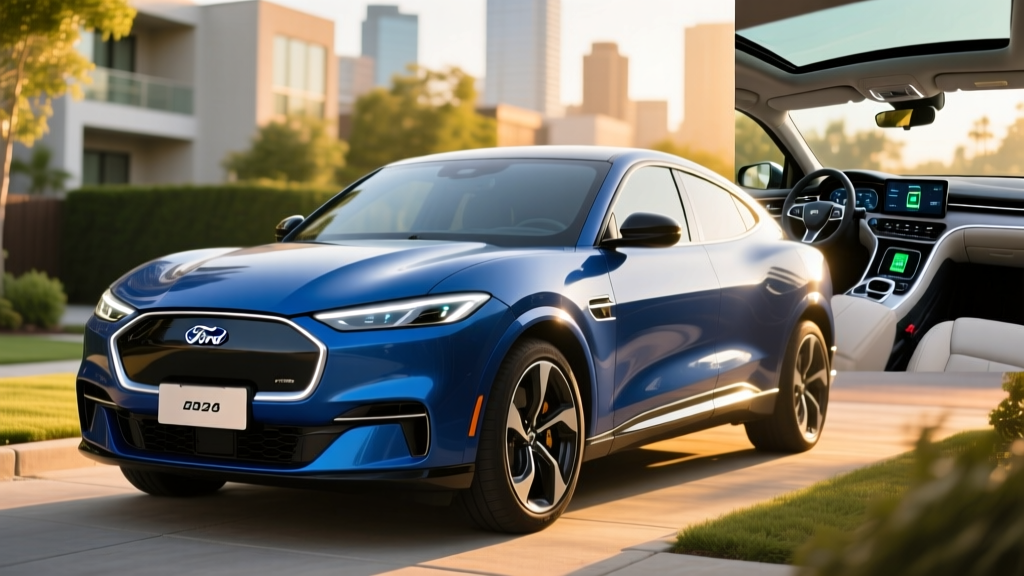
The Ford Mustang Mach-E is a compelling electric crossover for buyers who want sporty styling, solid EPA range (up to 320 miles on the Extended Range RWD), and access to Tesla's Supercharger network via its native NACS port. Starting around $42,000 before incentives, it undercuts many rivals while offering competitive charging speeds (up to 150 kW DC peak) and a practical 29-cubic-foot cargo area. However, real-world highway range drops to roughly 250–270 miles, and without home charging access, ownership costs rise significantly. If you can install a Level 2 charger at home and mostly drive under 200 miles daily, the Mach-E delivers strong value. If you frequently road-trip in cold climates or rely solely on public charging, weigh those limitations carefully.
Ford Mustang Electric Vehicle: 2026 Mach-E Specs at a Glance
Ford consolidated the Mach-E lineup for 2026, focusing on the trims that sell best. Here's what you're actually choosing between when shopping for the Ford Mustang electric vehicle today.
| Spec | Select SR RWD | Premium ER RWD | GT ER AWD |
|---|---|---|---|
| EPA Range | 250 mi | 320 mi | 290 mi |
| Battery (usable) | 70 kWh (LFP) | 91 kWh (NMC) | 91 kWh (NMC) |
| Horsepower | 266 hp | 290 hp | 480 hp |
| 0–60 mph | 6.3 sec | 6.1 sec | 3.5 sec |
| Peak DC Charge | 115 kW | 150 kW | 150 kW |
| 10–80% DCFC | ~38 min | ~35 min | ~35 min |
| Level 2 Rate | 10.5 kW | 10.5 kW | 10.5 kW |
| MPGe (combined) | 101 MPGe | 98 MPGe | 88 MPGe |
| Base MSRP | $41,995 | $48,995 | $59,995 |
| Battery Warranty | 8 yr / 100k mi | 8 yr / 100k mi | 8 yr / 100k mi |
Real-World Range Reality: The EPA 320-mile sticker on the Premium ER RWD is achievable in mild city/suburban driving at moderate speeds. In our experience, sustained highway driving at 70–75 mph yields roughly 260–280 miles. In freezing temperatures (below 30°F), expect a 20–30% reduction — bringing the ER RWD down to 220–250 miles. The LFP battery in the Select SR is less affected by cold at the top end but has less total capacity to lose.
Charging the Mach-E: Home, Public, and the Supercharger Advantage
For 2026, the Mach-E ships with a native NACS charge port, meaning it plugs directly into Tesla Superchargers without an adapter — a significant practical advantage over CCS-equipped rivals that still need a dongle. This dramatically expands the reliable fast-charging network available to Mach-E owners.
| Charging Level | Power | Connector | Miles Added per Hour | Best For |
|---|---|---|---|---|
| Level 1 (120V) | ~1.4 kW | NACS / J1772 adapter | ~3–4 mi/hr | Overnight top-up, emergencies |
| Level 2 (240V) | 10.5 kW | NACS / J1772 adapter | ~30–35 mi/hr | Daily home/work charging |
| DC Fast Charge | Up to 150 kW | NACS (native) | ~180 mi in 20 min (peak) | Road trips, rapid top-up |
kW vs. kWh reminder: kW (kilowatts) measures charging power — how fast energy flows into the battery. kWh (kilowatt-hours) measures battery capacity — how much energy it stores. The Mach-E ER has a 91 kWh battery and accepts up to 150 kW of charging power.
Charging curve reality: The Mach-E's 150 kW peak rate is not sustained across the entire session. Like most EVs, charging speed tapers significantly above 80% state of charge to protect battery health. A 10–80% session takes roughly 35 minutes, but pushing from 80–100% can add another 25–30 minutes. On road trips, plan to charge to 80% and move on — it's faster overall.
Mach-E vs. Gas Mustang vs. Hybrid SUV: Real Cost Comparison
Many shoppers cross-shop the Ford Mustang electric vehicle against either the gas Mustang coupe or a hybrid SUV like the Ford Escape PHEV. Here's how the numbers actually stack up over five years and 75,000 miles of ownership.
| Cost Factor (5 yr / 75k mi) | Mach-E Premium ER RWD | Gas Mustang EcoBoost | Escape PHEV |
|---|---|---|---|
| Purchase Price (MSRP) | $48,995 | $32,500 | $39,500 |
| Federal Tax Credit (§30D) | Up to $7,500* | $0 | Up to $7,500* |
| Effective Purchase | ~$41,495 | $32,500 | ~$32,000 |
| Fuel / Electricity | ~$3,200 (home L2) | ~$9,400 (gas) | ~$4,800 (mixed) |
| Maintenance | ~$1,500 | ~$4,200 | ~$3,500 |
| Insurance (avg) | ~$9,800 | ~$8,200 | ~$7,900 |
| 5-Year Total Cost | ~$55,995 | ~$54,300 | ~$48,200 |
*§30D credit eligibility depends on buyer income caps, MSRP caps, battery sourcing requirements, and point-of-sale transfer availability. See the IRS clean vehicle credit page for current rules. The Mach-E's eligibility has shifted with battery-sourcing changes — verify at the point of sale.
The Mach-E's fuel and maintenance savings are substantial — roughly $6,200 less in fuel and $2,700 less in maintenance over five years compared to the gas Mustang. But higher insurance premiums (EVs typically cost 15–25% more to insure) and a higher starting price narrow the gap. Against the Escape PHEV, the Mach-E costs more to own unless your daily driving exceeds the Escape's 37-mile electric-only range and you rarely use gas.
Federal Tax Credit and Incentives: What Mach-E Buyers Actually Qualify For
The federal §30D clean vehicle credit offers up to $7,500 for qualifying new EVs, but the Mach-E's eligibility is not guaranteed for every buyer or every configuration. Here's the checklist:
- MSRP cap: The vehicle must have an MSRP at or below $80,000 for SUVs/trucks (all Mach-E trims qualify).
- Buyer income cap: Modified AGI must not exceed $150,000 (single), $225,000 (head of household), or $300,000 (joint).
- Battery sourcing: A percentage of critical minerals and battery components must be sourced from the US or free-trade-agreement countries. These thresholds tighten annually. Verify the specific VIN's eligibility at purchase.
- Point-of-sale transfer: You can transfer the credit to the dealer for an immediate price reduction, or claim it on your tax return. The dealer must be IRS-registered.
- Final assembly: Must occur in North America (the Mach-E is built in Cuautitlán, Mexico — this has been a point of eligibility fluctuation).
Many states also offer additional rebates or HOV-lane access. Check your state's energy or DMV website, as these vary widely and change frequently.
Real-World Ownership: What First-Time Mach-E Buyers Must Know
Buying your first electric vehicle involves practical considerations that no spec sheet fully captures. Here's what Mach-E ownership actually looks like day to day.
Home Charging Access Is the Make-or-Break Factor
If you can install a 240V Level 2 home charger, the Mach-E adds roughly 30–35 miles of range per hour of charging. A full overnight charge from 20% to 100% takes about 8–9 hours on the ER battery. This means you start every morning with a "full tank" — the single biggest quality-of-life advantage of EV ownership.
Installation cost: Expect $800–$2,500 for a professional Level 2 installation if your electrical panel has capacity. If you need a panel upgrade (from 100A to 200A service), add $1,500–$3,000. Always get a quote from a licensed electrician before committing to an EV purchase.
If you cannot charge at home — apartment living, street parking, or no garage — you'll rely on public Level 2 and DC fast charging. This adds time, cost (public DCFC rates run $0.30–$0.55/kWh vs. $0.12–$0.18/kWh at home), and unpredictability. Factor this honestly into your decision.
Cold Weather and Range Loss
Lithium-ion batteries lose efficiency in cold temperatures, and cabin heating draws significant energy. The Mach-E includes a heat pump on higher trims, which helps, but expect 20–30% range loss in sustained sub-freezing conditions. The 320-mile ER RWD becomes roughly 225–255 miles in a Midwest winter. If your daily commute is under 80 miles round-trip, this is manageable. If you regularly drive 200+ miles in winter, plan your charging stops carefully.
Driving Patterns and Road Trips
The Mach-E's NACS port and Supercharger access make road trips more practical than with most non-Tesla EVs. Tesla's Supercharger network has superior uptime (typically 95%+ station availability) compared to Electrify America or other CCS networks. On a 500-mile trip, expect two charging stops of roughly 20–25 minutes each (10–80%), adding about 45–55 minutes total travel time versus a gas car.
Common Mach-E Misconceptions — Fact vs. Fiction
| Myth | Fact |
|---|---|
| "The battery will need replacing in a few years and cost $20,000." | Ford warrants the battery for 8 years / 100,000 miles against dropping below 70% capacity. Real-world data shows most EV batteries lose only 8–12% capacity over 150,000 miles. Full replacements are rare and typically covered under warranty within the coverage period. |
| "It can't use Tesla Superchargers." | Since 2024, the Mach-E has had a native NACS port, meaning it plugs directly into Tesla Superchargers without any adapter. The Supercharger network is the most reliable DC fast-charging network in the US. |
| "Charging takes too long for road trips." | A 10–80% DC fast charge takes roughly 35 minutes — about the time for a meal and restroom break. With route planning via FordPass or A Better Routeplanner, stops are efficient and predictable. |
| "EVs are worse for the environment because of battery mining." | While battery production has an environmental footprint, lifecycle analyses consistently show EVs produce fewer total emissions than gas cars over their operational life, even accounting for battery manufacturing and the current US grid mix. The grid is also getting cleaner each year. |
| "The Mach-E isn't a 'real' Mustang." | This is a branding opinion, not a performance fact. The GT trim does 0–60 in 3.5 seconds with 480 hp — faster than any gas Mustang short of the Shelby GT500. The name is controversial, but the performance is not in question. |
Decision Framework: Should You Buy the Ford Mustang Mach-E?
Buy the Mach-E If:
- You can install a Level 2 charger at home (garage or driveway with 240V access).
- Your daily driving is under 150 miles round-trip, with occasional road trips under 400 miles.
- You want a sporty crossover with strong acceleration and access to the Tesla Supercharger network.
- You qualify for the §30D federal tax credit, bringing the effective price below $42,000 for the ER RWD.
- You value low running costs: electricity at $0.12–$0.18/kWh at home equates to roughly $0.04–$0.05 per mile vs. $0.12–$0.15 per mile for a gas car at $3.50/gallon.
Consider Alternatives If:
- You cannot charge at home and must rely entirely on public charging (consider a PHEV like the Escape or RAV4 Plug-In instead).
- You regularly drive 300+ miles in cold weather and cannot tolerate charging stops (a long-range diesel or hybrid may be more practical).
- Your budget is under $35,000 and you don't qualify for incentives (the used EV market or a conventional hybrid may fit better).
- You need three rows of seating or heavy towing (the Mach-E seats five and is rated for only 2,200 lbs towing on the GT).
Frequently Asked Questions
How long does the Mach-E battery last before it needs replacement?
Ford warranties the high-voltage battery for 8 years or 100,000 miles against capacity loss below 70%. Industry-wide data from fueleconomy.gov and third-party fleet studies indicate that modern NMC and LFP batteries typically retain 85–90% capacity at 100,000 miles and 80–85% at 150,000 miles. A full battery replacement outside of warranty is expensive ($15,000–$22,000), but statistically rare within the first decade of ownership.
Does the Mach-E qualify for the $7,500 federal tax credit in 2026?
Eligibility depends on the specific VIN's battery sourcing compliance, your income level, and current IRS rules. The Mach-E's Mexico assembly and evolving supply chain have caused its eligibility to shift. Always verify with the dealer at point of sale and cross-check against the IRS clean vehicle credit page. The credit can be transferred to the dealer for an immediate price reduction.
How does the Mach-E compare to the Tesla Model Y?
The Model Y Long Range AWD offers slightly more EPA range (320–330 miles), a more extensive native Supercharger experience, and a slightly lower starting price. The Mach-E counters with a more traditional driving feel, Ford dealer service network access, Android Automotive infotainment, and a physical instrument cluster that some buyers prefer. Both are strong choices — the decision often comes down to brand preference and interior ergonomics.
What does it cost to charge a Mach-E at home versus public stations?
At the US average residential electricity rate of ~$0.16/kWh, fully charging the 91 kWh ER battery costs about $14.50, yielding roughly $0.045 per mile. Public DC fast charging at $0.40/kWh costs about $36 for a full charge, or ~$0.11 per mile. Home charging is dramatically cheaper — this is why Level 2 home access is the single most important factor in EV ownership satisfaction.
Is the Mach-E good in snow and winter conditions?
The AWD trims (including the GT) provide confident traction in snow, and the Mach-E's low center of gravity (battery pack under the floor) aids stability. However, winter range loss of 20–30% is real. Preconditioning the battery while plugged in — using the FordPass app to warm the cabin and battery before departure — recovers some range and improves regenerative braking performance in cold weather.
What maintenance does the Mach-E require?
Far less than a gas car. There's no oil change, no spark plugs, no transmission fluid, and no exhaust system. Routine maintenance includes tire rotation (every 7,500–10,000 miles — EVs wear tires faster due to instant torque and heavier weight), cabin air filter replacement (~$40 every 20,000 miles), brake fluid check (regen braking reduces pad wear significantly), and windshield washer fluid. Expect to spend roughly $250–$350 per year on maintenance versus $800–$1,200 for a comparable gas vehicle.
Sources: EPA range and efficiency data via fueleconomy.gov; Ford Motor Company official specifications; IRS §30D clean vehicle credit guidance at irs.gov.