The Quick Answer: Is the Mustang Mach-E the Right Electric Car for You?
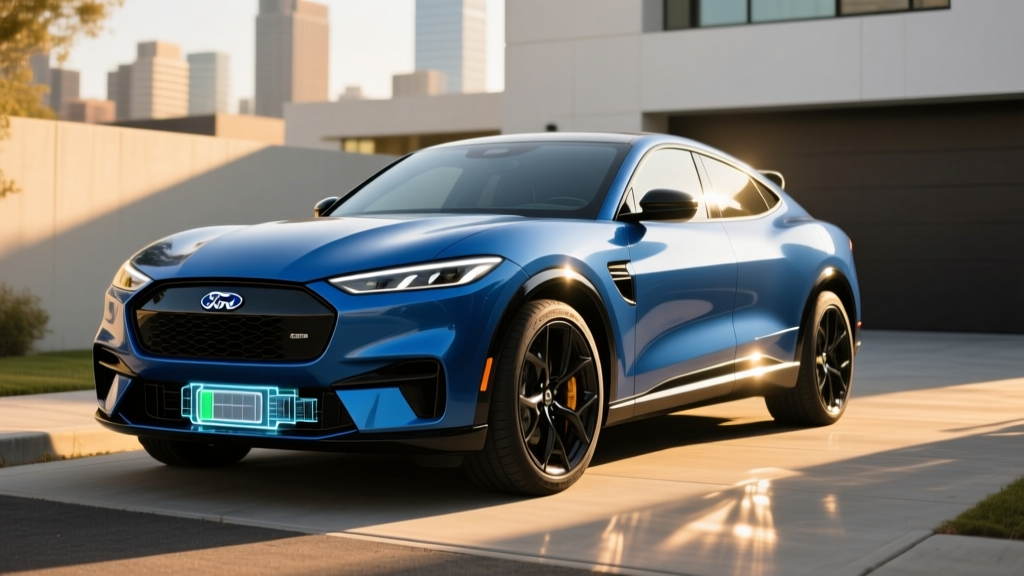
The 2026 Ford Mustang Mach-E is a compelling mustang electric car for buyers who want sporty styling, 250–320 miles of EPA range, and practical SUV cargo space — starting at approximately $42,995 before incentives. It charges at up to 150 kW on DC fast chargers (10–80% in roughly 35 minutes) and qualifies for the full $7,500 federal tax credit under current §30D rules for eligible buyers, bringing the effective starting price near $35,495. However, real-world highway and cold-weather range drops 15–30% below EPA estimates, and buyers without reliable home charging access should carefully evaluate local public-charging infrastructure before committing.
Range, Battery, and Real-World Efficiency
The 2026 Mustang Mach-E is offered with two battery packs across multiple trims. Understanding the difference between kW (power, or how fast energy flows) and kWh (energy capacity, or how much the battery holds) is essential when comparing configurations.
| Spec | Standard Range (SR) | Extended Range (ER) | GT |
|---|---|---|---|
| Battery Capacity (usable) | 72 kWh (LFP) | 91 kWh (NMC) | 91 kWh (NMC) |
| EPA Range | 250 mi | 320 mi (RWD) / 290 mi (AWD) | 280 mi |
| Drivetrain | RWD / AWD | RWD / AWD | AWD |
| Horsepower | 266 hp (RWD) | 290 hp (RWD) / 346 hp (AWD) | 480 hp |
| 0–60 mph | 6.1 sec (RWD) | 5.8 sec (RWD) / 5.1 sec (AWD) | 3.5 sec |
| MPGe (combined) | 101 MPGe | 104 MPGe (RWD) | 84 MPGe |
| Base MSRP | $42,995 | $48,995 | $59,995 |
Real-World Range vs. EPA Sticker
The EPA range figures assume a mix of city and highway driving at moderate temperatures. In real-world conditions:
- Highway driving at 75 mph: Expect 15–20% less than EPA — roughly 260 miles from the ER RWD, 200 miles from the SR.
- Cold weather (below 32°F): Range can drop 20–30% without preconditioning. The Mach-E's heat pump (standard on ER trims) helps, but a 320-mile ER pack may deliver 225–255 miles in freezing conditions.
- City/regenerative driving: You may slightly exceed EPA estimates thanks to regen braking recovering energy in stop-and-go traffic.
Bottom line: plan road trips around 200–240 miles of usable range for the ER model to maintain a comfortable buffer.
Charging Speed and Infrastructure
The Mach-E uses the NACS (North American Charging Standard) connector as of the 2025 model year, giving it native access to Tesla Supercharger stations — a major advantage over competitors still relying on CCS adapters.
| Charging Level | Power (kW) | Miles Added Per Hour | Use Case |
|---|---|---|---|
| Level 1 (120V household) | ~1.4 kW | ~4–5 mi/hr | Overnight top-off, emergencies |
| Level 2 (240V home/work) | 10.5 kW (max onboard) | ~33–37 mi/hr | Daily home charging, full overnight charge |
| DC Fast Charge (peak) | 150 kW (ER) / 115 kW (SR) | ~180+ mi in 20 min (ER) | Road trips, highway corridors |
Charging curve reality: The Mach-E ER peaks at 150 kW only between roughly 10–35% state of charge (SoC). Above 50%, the rate tapers significantly — by 80%, it drops to around 60–70 kW. A 10–80% session takes approximately 35 minutes on a capable 150+ kW charger. Charging from 80–100% adds another 25+ minutes, which is why road-trip strategy should target 10–80% stops.
Home charging setup: A Level 2 home charger is nearly essential for convenient daily ownership. Ford's connected charge station delivers up to 10.5 kW (48 amps). Expect installation costs of $800–$2,000 if your electrical panel has capacity, or $2,500–$5,000+ if a panel upgrade to 200 amps is needed. Always get a quote from a licensed electrician before purchasing.
Mustang Mach-E vs. Gas Mustang vs. Gas SUV: Cost Comparison
Buyers cross-shopping the Mach-E often compare it against the traditional gas Mustang coupe or a gas-powered compact SUV. Here's a data-driven breakdown.
| Cost Factor | Mach-E ER RWD | 2026 Mustang EcoBoost | 2026 Ford Bronco Sport (AWD) |
|---|---|---|---|
| Base MSRP | $48,995 | $32,515 | $33,500 |
| Federal Tax Credit (§30D) | Up to $7,500* | $0 | $0 |
| Effective Starting Price | ~$41,495* | $32,515 | $33,500 |
| Fuel/Energy Cost (15k mi/yr) | ~$540/yr (electricity) | ~$1,875/yr (gas) | ~$2,100/yr (gas) |
| 5-Year Fuel/Energy Cost | ~$2,700 | ~$9,375 | ~$10,500 |
| Annual Maintenance (est.) | ~$300/yr | ~$600/yr | ~$650/yr |
| 5-Year Maintenance | ~$1,500 | ~$3,000 | ~$3,250 |
| 5-Year Total Operating Cost | ~$4,200 | ~$12,375 | ~$13,750 |
*§30D tax credit eligibility depends on buyer income caps ($150k single / $300k joint), vehicle MSRP caps ($80k for SUVs), battery critical-mineral and component sourcing requirements, and point-of-sale transfer availability. Verify current eligibility at IRS.gov and fueleconomy.gov.
The Mach-E carries a higher upfront price but saves $8,000–$9,500 in fuel and maintenance over five years compared to the gas alternatives. The break-even point versus the EcoBoost Mustang occurs around year 4–5 when factoring in the tax credit, and sooner if your electricity rates are low or you charge primarily on solar.
Federal Tax Credit: What You Actually Qualify For
The §30D Clean Vehicle Credit can reduce your tax burden by up to $7,500, but eligibility is not universal. Here's the current checklist for the 2026 tax year:
- Income caps: Modified AGI must not exceed $150,000 (single), $225,000 (head of household), or $300,000 (married filing jointly).
- MSRP cap: The Mach-E qualifies as an SUV with an $80,000 MSRP ceiling — all trims clear this.
- Battery sourcing: At least a specified percentage of critical minerals must be sourced from the U.S. or FTA partners, and battery components must be manufactured or assembled in North America. These thresholds tighten annually.
- Point-of-sale transfer: You can transfer the credit to the dealer at purchase for an immediate price reduction, rather than waiting to claim it on your tax return.
- One credit per buyer per year: You cannot claim the new-vehicle credit if you've already used it for another new EV purchase in the same tax year.
Always confirm eligibility with a tax professional and verify the specific VIN on the IRS qualified-vehicles list before purchasing, as battery-sourcing compliance can change with production batches.
Common Misconceptions About the Mach-E
| Myth | Fact |
|---|---|
| "The battery will need replacement in 5 years." | Ford warranties the battery for 8 years / 100,000 miles with a 70% capacity retention threshold. Real-world data from early Mach-E owners shows only 5–8% degradation at 60,000 miles. Replacement (if ever needed out of warranty) costs approximately $15,000–$20,000. |
| "It's not a real Mustang." | The Mach-E is a 4-door electric crossover wearing the Mustang badge. It shares no mechanical DNA with the coupe but delivers competitive performance (GT: 3.5s 0–60). Whether that matters is personal preference. |
| "You can't take it on road trips." | With NACS access to Tesla Superchargers and 320 miles of range, the Mach-E ER handles road trips well. Plan 20–35 minute charging stops every 180–220 miles of highway driving. |
| "Charging at home is expensive to install." | A basic Level 2 installation with adequate panel capacity typically costs $800–$2,000. Many utilities offer rebates of $250–$1,000 for charger installation, offsetting costs substantially. |
| "EVs cost more to insure." | Mach-E insurance premiums average 10–20% higher than comparable gas SUVs due to repair costs and parts pricing. Shop quotes from multiple carriers — some insurers now offer EV-specific discounts. |
Ownership Practicalities: What First-Time EV Buyers Should Know
Home Charging Access Is the Single Biggest Factor
If you can install a Level 2 charger at home (garage, carport, or driveway with panel access), EV ownership is effortless — you wake up with a "full tank" every morning. If you live in an apartment, condo, or street-park without charging access, rely on public infrastructure research. Check PlugShare or ChargePoint maps for reliable DC fast chargers within 5–10 minutes of your home and workplace.
Driving Patterns Matter
The Mach-E excels for commuters driving 20–60 miles daily with home charging. For frequent 300+ mile road trippers, the charging stops add 30–60 minutes per trip compared to gas. If you regularly tow (the Mach-E is rated for 1,500 lbs on SR, 2,200 lbs on ER), expect range to drop 30–50%.
Climate Considerations
Cold-climate buyers (Upper Midwest, Northeast) should prioritize the Extended Range battery and use the Mach-E's preconditioning feature — scheduling departure times while plugged in warms the battery and cabin using grid power, preserving range. Even with a heat pump, expect 20–30% range loss on sub-freezing days.
BlueCruise: Level 2, Not Self-Driving
Ford's BlueCruise hands-free highway driving assist is available on prequalified divided highways (over 130,000 miles mapped). It is a SAE Level 2 system — the driver must remain attentive and a camera monitors eye gaze. It is not autonomous (Level 4) and does not handle city streets, construction zones, or adverse weather independently.
Decision Framework: Should You Buy the Mustang Mach-E?
Choose the Mach-E Standard Range if:
- Your daily commute is under 50 miles round-trip and you have reliable home Level 2 charging.
- You want the lowest entry price and rarely take trips over 150 miles.
- You prefer LFP battery chemistry for its longer cycle life and tolerance for daily 100% charging.
Choose the Mach-E Extended Range if:
- You regularly drive 200+ miles between charges or take monthly road trips.
- You live in a cold climate and need the range buffer for winter losses.
- You want the highest resale value and maximum versatility.
Choose the Mach-E GT if:
- Performance is your priority (3.5s 0–60, 480 hp, MagneRide suspension).
- You're cross-shopping the Tesla Model Y Performance or Porsche Macan EV.
- You accept the range trade-off (280 mi EPA) for the power upgrade.
Look elsewhere if:
- You cannot install home charging and lack convenient public DC fast chargers nearby.
- You need 3-row seating or 300+ miles of real-world highway range (consider the Rivian R1S, Hyundai Ioniq 9, or a PHEV like the Chrysler Pacifica Hybrid).
- You want a traditional Mustang coupe experience — the Mach-E is a crossover, not a sports car.
FAQ
Does the 2026 Mustang Mach-E qualify for the full $7,500 federal tax credit?
The Mach-E currently qualifies for up to $7,500 under §30D for eligible buyers meeting income caps, but battery sourcing requirements tighten annually. Verify the specific VIN's eligibility on the IRS qualified vehicles list and confirm with your tax professional before purchase. The credit can be transferred to the dealer at point of sale for an immediate price reduction.
How long does the Mach-E battery last, and what does replacement cost?
Ford warranties the high-voltage battery for 8 years or 100,000 miles (whichever comes first) against falling below 70% capacity. Industry data from 2021–2024 Mach-E fleets shows typical degradation of 5–8% over 60,000 miles. Out-of-warranty replacement, if ever needed, is estimated at $15,000–$20,000 including labor — but most EV batteries outlast the vehicle's useful life.
Can the Mach-E use Tesla Superchargers?
Yes. Starting with the 2025 model year, the Mach-E is equipped with the native NACS charge port, granting direct access to Tesla's Supercharger network without an adapter. This is one of the Mach-E's strongest competitive advantages for road-trip charging reliability.
What does it cost to charge a Mach-E at home versus filling a gas Mustang?
At the U.S. average residential electricity rate of ~$0.17/kWh, fully charging the 91 kWh ER battery costs about $15.50, yielding roughly 290 real-world miles — or about $0.053/mile. A gas Mustang EcoBoost at 24 MPG combined with gas at $3.25/gallon costs about $0.135/mile. Over 15,000 annual miles, that's ~$800 in electricity versus ~$2,030 in gasoline — a savings of over $1,200 per year.
Is the Mach-E a good first EV for someone switching from gas?
Yes, provided you have home charging access. The Mach-E offers familiar SUV ergonomics, strong range (especially the ER model), NACS Supercharger access, and Ford dealer service support. The transition is smoothest for buyers whose daily driving falls within 60–70% of the battery's real-world range, leaving buffer for detours, weather, and climate control usage.
How does insurance cost compare to a gas vehicle?
Mach-E insurance averages 10–20% higher than a comparable gas-powered Ford Edge or Bronco Sport, primarily due to higher repair costs for battery-adjacent damage and specialized parts. Average annual premiums range from $1,800–$2,600 depending on your state, driving record, and coverage level. Get quotes from at least three insurers, including some that offer EV-specific policies.