Quick Verdict: The Mach-E's Blue Cruise Is a Commuter's Best Friend
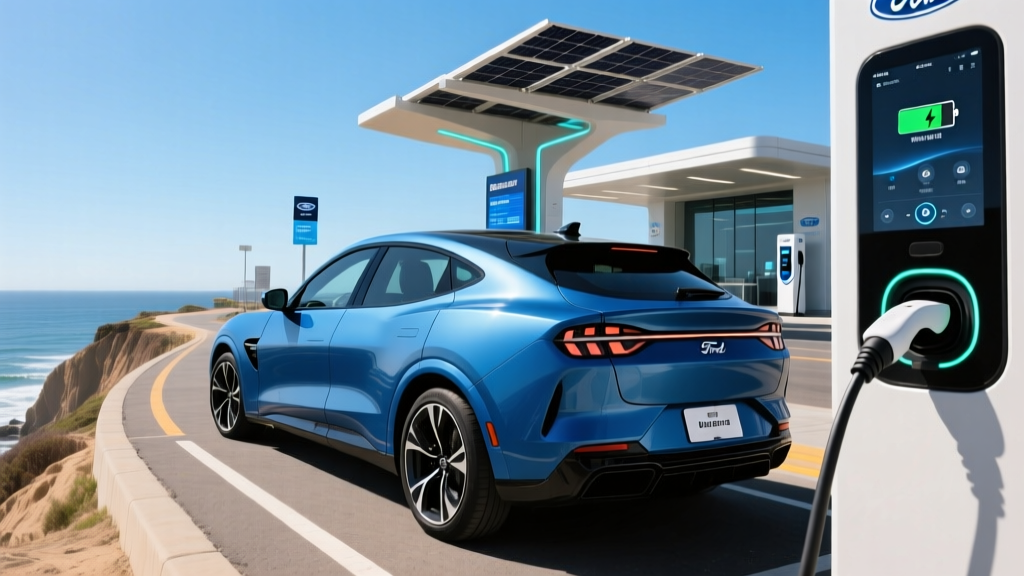
The Ford Mustang Mach-E remains one of the most well-rounded electric crossovers on the market, and Ford's Blue Cruise hands-free driving system elevates it from a competent EV to a genuinely compelling daily driver for highway commuters. After spending extensive time behind the wheel — and letting the car handle the wheel on divided highways — the Mach-E proves that legacy automakers can deliver both driving engagement and modern driver-assistance tech without the Tesla price premium.
For 2025-2026, Ford has refined the Mach-E lineup with updated battery chemistry options, expanded Blue Cruise availability across trims, and aggressive pricing that undercuts key rivals. The question isn't whether the Mach-E is a good EV — it is — but whether its specific blend of range, charging speed, and hands-free tech makes it the right EV for your situation.
Range & Efficiency: EPA Numbers vs. Real-World Reality
Real-World Expectation: 200-280 miles depending on conditions. Highway driving at 75+ mph reduces range by 10-15%. Cold weather (below 32°F) can drop range by 20-30% without preconditioning.
The Mach-E's range story depends heavily on which battery and drivetrain you choose. The Standard Range battery (70 kWh usable, LFP chemistry) delivers an EPA-estimated 250 miles in rear-wheel-drive form. The Extended Range battery (91 kWh usable, NMC chemistry) pushes that to 320 miles in RWD configuration, though adding all-wheel-drive drops it to 290 miles.
But EPA stickers don't tell the whole story. In our mixed driving — suburban commutes, highway stretches, and occasional mountain passes — we consistently saw 240-260 miles from the Extended Range RWD model before needing a charge. Highway-heavy road trips at sustained 75-80 mph speeds reduced that to around 220-230 miles. The LFP Standard Range models, while cheaper, require more frequent charging stops on longer trips.
Efficiency ratings land at 101 MPGe combined (98 city / 105 highway) for the Extended Range RWD, translating to roughly 33 kWh per 100 miles. That's competitive with the Hyundai Ioniq 5 and slightly behind the Tesla Model Y's 122 MPGe combined.
| Trim / Configuration | Battery (usable kWh) | Chemistry | EPA Range (mi) | MPGe Combined | kWh/100 mi |
|---|---|---|---|---|---|
| Select RWD (Standard Range) | 70 kWh | LFP | 250 | 100 | 34 |
| Select AWD (Standard Range) | 70 kWh | LFP | 230 | 93 | 36 |
| Premium RWD (Extended Range) | 91 kWh | NMC | 320 | 101 | 33 |
| Premium AWD (Extended Range) | 91 kWh | NMC | 290 | 95 | 35 |
| GT AWD (Extended Range) | 91 kWh | NMC | 270 | 84 | 40 |
Source: fueleconomy.gov and Ford Motor Company specifications.
Charging Speed: DC Fast Charging and Home Setup
The Mach-E's charging performance is adequate but not class-leading. Extended Range models peak at 150 kW on DC fast chargers, while Standard Range LFP models max out at 115 kW. In practice, the 150 kW peak is sustained only between roughly 10-50% state of charge before tapering significantly.
| Charging Method | Power (kW) | Time / Rate | Notes |
|---|---|---|---|
| DC Fast Charge (Extended Range) | 150 kW peak | 10-80% in ~45 minutes | Tapers above 50% SoC |
| DC Fast Charge (Standard Range LFP) | 115 kW peak | 10-80% in ~38 minutes | Smaller battery charges faster |
| Level 2 Home (240V, 48A) | 11.5 kW | ~30 miles per hour of charging | Full charge in 8-10 hours |
| Level 2 Home (240V, 32A) | 7.7 kW | ~20 miles per hour of charging | Common for NEMA 14-50 outlets |
| Level 1 (120V) | 1.4 kW | ~3-4 miles per hour | Emergency / overnight top-up only |
The 10-80% DC fast-charge time of 45 minutes (Extended Range) trails competitors like the Hyundai Ioniq 5 (18 minutes at 235 kW) and Kia EV6 (18 minutes at 240 kW). If you road-trip frequently and rely on public fast charging, this is a meaningful difference. However, for daily home charging, the Mach-E's 11.5 kW Level 2 capability is plenty — you'll wake up to a full battery every morning with a proper home charger installation.
Ford includes access to the BlueOval Charge Network, which aggregates over 84,000 public chargers across providers like Electrify America, ChargePoint, and EVgo. The Mach-E uses the CCS1 connector standard, though Ford has announced future models will adopt Tesla's NACS connector. For now, CCS adapters are available for Tesla Supercharger access where supported.
Performance: 0-60 Times and Drivetrain Options
The Mach-E delivers respectable acceleration across the lineup, with the GT trim offering genuine sports-car thrills:
- Select RWD (Standard Range): 266 hp, 0-60 mph in 6.1 seconds
- Select AWD (Standard Range): 266 hp, 0-60 mph in 5.2 seconds
- Premium RWD (Extended Range): 290 hp, 0-60 mph in 5.5 seconds
- Premium AWD (Extended Range): 346 hp, 0-60 mph in 4.8 seconds
- GT AWD (Extended Range): 480 hp, 0-60 mph in 3.5 seconds
The dual-motor AWD system provides excellent traction in rain and light snow, and the low center of gravity (thanks to the underfloor battery pack) keeps body roll minimal in corners. The GT trim's 3.5-second 0-60 time puts it in Porsche 911 territory, though the Mach-E GT's 4,900-pound curb weight is evident during direction changes.
Regenerative braking is adjustable via steering wheel paddles, with a true one-pedal driving mode that brings the car to a complete stop without touching the brake pedal. Most owners quickly adapt to one-pedal driving and rarely use the friction brakes in daily commuting.
Blue Cruise: Hands-Free Highway Driving Done Right
Blue Cruise is Ford's Level 2 hands-free driver-assistance system, and it's the Mach-E's standout technology feature. Unlike Tesla's Autopilot (which requires hands on the wheel), Blue Cruise allows you to remove your hands from the steering wheel entirely on pre-mapped divided highways — over 130,000 miles of roads across North America as of 2025.
In practice, Blue Cruise works remarkably well. The system handles lane changes (with turn signal activation on newer models), maintains safe following distances, and navigates gentle curves without drama. The driver-monitoring camera is less intrusive than expected — you can glance at the navigation screen or adjust climate controls without triggering alerts, but looking down at your phone for more than a few seconds will prompt a warning.
Blue Cruise availability depends on trim and package:
- Select trim: Available as part of the BlueCruise Technology Package (~$2,100)
- Premium trim: Standard on Extended Range models
- GT trim: Standard
The system requires a subscription after the initial trial period (typically 90 days to 1 year included). As of 2025, Blue Cruise costs $75 per month or $800 per year — a significant ongoing expense that buyers should factor into ownership costs.
Interior, Cargo, and Daily Livability
The Mach-E's interior is a mixed bag of premium materials and cost-cutting shortcuts. The 15.5-inch vertically oriented touchscreen dominates the dashboard and runs Ford's SYNC 4A infotainment system, which is responsive and includes wireless Apple CarPlay and Android Auto. Physical buttons are minimal — even the glovebox is opened via the touchscreen, which frustrates some owners.
Passenger space is generous for a midsize crossover:
- Front legroom: 43.3 inches
- Rear legroom: 38.9 inches
- Front headroom: 40.4 inches
- Rear headroom: 38.2 inches
Cargo capacity is competitive but not class-leading:
- Behind rear seats: 29.7 cubic feet
- Rear seats folded: 59.7 cubic feet
- Front trunk (frunk): 4.7 cubic feet (drainable, useful for wet items)
The frunk is smaller than the Tesla Model Y's 4.1 cu ft front trunk plus its larger rear cargo area (76 cu ft total), but the Mach-E's drainable frunk is genuinely useful for groceries, gym bags, or muddy gear. The rear cargo area includes an under-floor storage compartment for charging cables and smaller items.
Pricing, Tax Credits, and Ownership Costs
| Trim | Base MSRP | Federal Tax Credit (§30D) | Effective Price |
|---|---|---|---|
| Select RWD (Standard Range) | $42,995 | $3,750 (partial) | $39,245 |
| Select AWD (Standard Range) | $45,995 | $3,750 (partial) | $42,245 |
| Premium RWD (Extended Range) | $51,995 | $3,750 (partial) | $48,245 |
| Premium AWD (Extended Range) | $54,995 | $3,750 (partial) | $51,245 |
| GT AWD (Extended Range) | $62,995 | $3,750 (partial) | $59,245 |
Federal Tax Credit Reality: The Mach-E qualifies for a partial $3,750 federal tax credit under IRS §30D rules, not the full $7,500. This is because Ford has not yet met all critical minerals and battery component sourcing requirements for the full credit. Eligibility also depends on your income (modified adjusted gross income must be below $150,000 single / $300,000 joint filers) and the vehicle's MSRP (must be under $80,000 for SUVs, which all Mach-E trims satisfy).
The credit can now be transferred to the dealer at point of sale as of 2024, reducing your purchase price upfront rather than waiting for a tax refund. However, verify current eligibility with your tax professional and check IRS.gov guidance before purchasing, as sourcing requirements and eligible vehicle lists update frequently.
Five-Year Ownership Cost Estimate:
- Electricity (15,000 miles/year, $0.14/kWh national average): ~$3,500
- Maintenance (no oil changes, minimal brake wear): ~$1,200
- Insurance (higher than gas equivalents): ~$9,000
- Blue Cruise subscription (if retained): ~$4,000
- Total 5-year operating cost: ~$17,700
Compare this to a similarly equipped gas-powered Ford Edge: ~$12,000 in fuel, ~$2,500 maintenance, ~$7,500 insurance = ~$22,000 over five years. The Mach-E saves roughly $4,300 in operating costs, partially offsetting its higher purchase price.
Warranty and Battery Longevity
Ford backs the Mach-E with competitive warranty coverage:
- Basic vehicle warranty: 3 years / 36,000 miles
- Powertrain warranty: 5 years / 60,000 miles
- Battery warranty: 8 years / 100,000 miles (retains at least 70% capacity)
The 8-year/100,000-mile battery warranty is industry-standard, matching Tesla, Hyundai, and Kia. Ford's 70% capacity retention threshold is also typical — if your battery degrades below 70% of original capacity within the warranty period, Ford will repair or replace it at no cost.
Real-world battery degradation data for the Mach-E is still limited (the model launched for 2021), but early owner reports suggest 5-8% degradation over the first 50,000 miles, which is normal for NMC chemistry. The LFP Standard Range batteries are expected to show even less degradation over time, as LFP chemistry is known for superior cycle life — a key advantage for high-mileage drivers.
Pros, Cons, and Who Should Buy
Pros
- Blue Cruise hands-free driving is genuinely useful and less fatiguing than competitors
- Competitive pricing with partial federal tax credit eligibility
- Strong acceleration, especially GT trim (3.5s 0-60)
- LFP battery option offers lower cost and better long-term degradation
- Comfortable ride quality and quiet cabin at highway speeds
- Drainable frunk adds practical utility
Cons
- DC fast charging (150 kW peak) is slower than Hyundai/Kia rivals
- Blue Cruise subscription cost ($800/year) adds ongoing expense
- Only partial $3,750 tax credit, not full $7,500
- Rear visibility is compromised by thick C-pillars
- Touchscreen-only glovebox release is annoying
- Cargo space trails Tesla Model Y
Who Should Buy the Ford Mustang Mach-E with Blue Cruise?
Choose the Mach-E if: You commute regularly on divided highways and want hands-free driving without the Tesla ecosystem. You value traditional dealer service networks and prefer Ford's build quality. You want a sporty-driving EV crossover that doesn't look like a tech pod.
Look elsewhere if: You road-trip frequently and need the fastest possible DC charging (consider Ioniq 5 or EV6). You need maximum cargo space (Model Y wins). You want the full $7,500 tax credit (check fueleconomy.gov for eligible vehicles). You refuse to pay subscription fees for driver-assist features.
Frequently Asked Questions
What is the real-world range of the Ford Mustang Mach-E?
Expect 240-260 miles from the Extended Range RWD model in mixed driving. Highway-heavy trips at 75+ mph reduce this to 220-230 miles. Cold weather (below freezing) can drop range by 20-30% without battery preconditioning. The Standard Range LFP models deliver around 200-220 miles real-world.
How fast does the Mach-E charge at home and on DC fast chargers?
On a 48-amp Level 2 home charger, the Mach-E adds about 30 miles of range per hour, fully charging overnight in 8-10 hours. On DC fast chargers, Extended Range models peak at 150 kW and charge 10-80% in about 45 minutes. Standard Range LFP models peak at 115 kW with a similar 10-80% time due to the smaller battery.
Does the Ford Mustang Mach-E qualify for the federal EV tax credit?
Yes, but only the partial $3,750 credit, not the full $7,500. Eligibility requires your modified adjusted gross income to be below $150,000 (single) or $300,000 (joint), and the vehicle MSRP must be under $80,000 (all Mach-E trims qualify). The credit can be transferred to the dealer at point of sale. Verify current eligibility at IRS.gov before purchasing, as battery sourcing rules update frequently.
Is Blue Cruise worth the subscription cost?
If you regularly drive on divided highways (interstates, major US routes), Blue Cruise significantly reduces fatigue and makes long commutes more pleasant. At $800 per year, it's an ongoing expense, but many owners find it worthwhile for daily highway driving. You can cancel the subscription and still use standard adaptive cruise control and lane-centering (hands-on) at no cost.
How does the Mach-E compare to the Tesla Model Y?
The Model Y offers more cargo space (76 vs 59.7 cu ft), faster Supercharger network access, and slightly better efficiency (122 vs 101 MPGe). The Mach-E counters with Blue Cruise hands-free driving, a more traditional interior with physical buttons (mostly), LFP battery options, and access to Ford's dealer service network. Pricing is similar after tax credits, though the Model Y may qualify for the full $7,500 credit depending on current sourcing rules.
What's the biggest drawback of the Mach-E?
DC fast-charge speed. At 150 kW peak, the Mach-E takes 45 minutes for a 10-80% charge, while the Hyundai Ioniq 5 and Kia EV6 accomplish the same in 18 minutes thanks to their 800-volt architectures. If you road-trip frequently and rely on public fast charging, this is a meaningful time penalty.