Quick Verdict: The Mach-E That Redefined Ford's EV Ambition
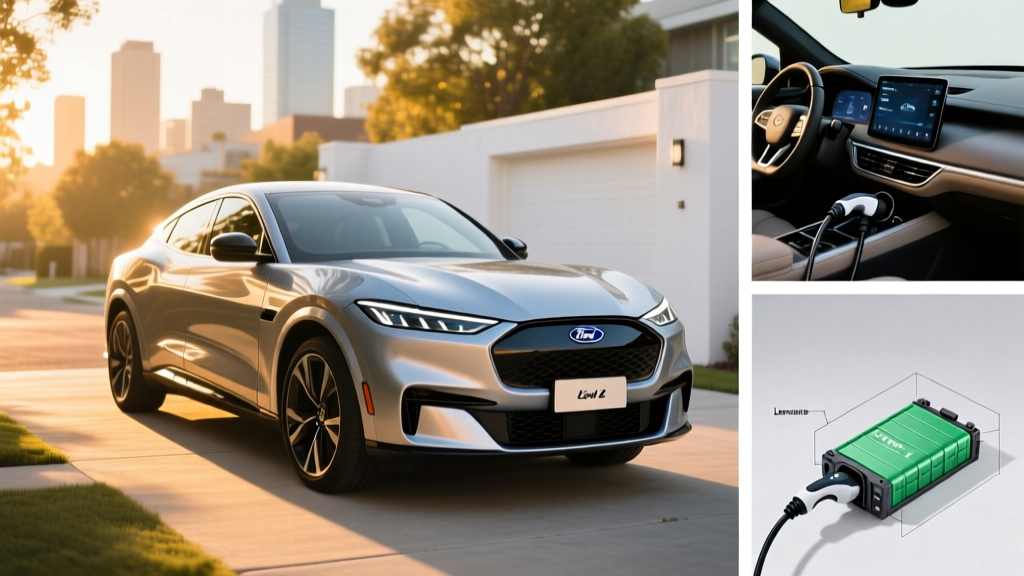
The 2023 Ford Mustang Mach-E arrived as a pivotal mid-cycle refresh for Ford's electric crossover, bringing larger battery packs, faster DC charging, and the debut of the high-performance Rally variant. For buyers shopping the used or certified-pre-owned market in 2026, the 2023 model year represents a sweet spot: Ford had ironed out early software bugs from the 2021 launch, upgraded the Extended Range battery to 91 kWh usable, and added BlueCruise hands-free driving capability. It remains one of the most balanced electric SUVs in its class, though it faces stiff competition from the Tesla Model Y, Hyundai Ioniq 5, and Kia EV6 on charging speed and interior space.
This review covers every trim, battery configuration, and powertrain option available for the 2023 Mach-E, with the exact numbers you need to evaluate one on the used market today.
Range, Efficiency, and Battery Specs by Trim
The 2023 Mach-E offers two battery sizes and three powertrain configurations, yielding a wide spread of EPA range estimates. Ford uses NMC (nickel manganese cobalt) lithium-ion chemistry across all trims — there is no LFP option, meaning you'll want to follow the 80% daily charge guideline to maximize long-term battery health.
| Trim / Config | Battery (Usable kWh) | Drivetrain | EPA Range (mi) | MPGe (Combined) | kWh/100 mi |
|---|---|---|---|---|---|
| Select RWD (Std Range) | 70 kWh | RWD | 230 | 101 | 33 |
| Select/Premium AWD (Std Range) | 70 kWh | AWD | 224 | 98 | 34 |
| Premium RWD (Ext Range) | 91 kWh | RWD | 312 | 104 | 32 |
| Premium AWD (Ext Range) | 91 kWh | AWD | 290 | 99 | 34 |
| GT AWD (Ext Range) | 91 kWh | AWD | 270 | 84 | 40 |
| GT Perf. Upgrade (Ext Range) | 91 kWh | AWD | 260 | 82 | 41 |
Source: fueleconomy.gov, EPA estimates.
The EPA 312-mile figure on the Premium RWD Extended Range is achievable in mild-weather city and suburban driving at moderate speeds. In real-world highway testing at 70-75 mph, expect 250-270 miles before needing to charge. In cold weather (below 30°F), range can drop 20-30%, putting realistic winter highway range at roughly 200-220 miles for the Extended Range RWD. The GT with Performance Upgrade is the thirstiest — plan for 210-230 miles highway in fair weather, less in winter. The Mach-E's heat pump (standard on all 2023 trims) helps mitigate cold-weather losses compared to EVs without one, but physics still wins.
Charging Speed: DC Fast Charge and Home Level 2
One of the 2023 Mach-E's most important upgrades over the 2021-2022 models was a bump in DC fast-charge capability. Extended Range models now accept up to 150 kW peak at a DC fast charger, while Standard Range models peak at approximately 115 kW. That's competitive but not class-leading — the Hyundai Ioniq 5 and Kia EV6 peak above 230 kW on their 800V architectures.
| Charge Type | Standard Range (70 kWh) | Extended Range (91 kWh) |
|---|---|---|
| DC Fast Charge (Peak kW) | 115 kW | 150 kW |
| 10-80% DC Fast Charge Time | ~37 minutes | ~45 minutes |
| Level 2 Home (240V, kW) | 10.5 kW (32A) | 10.5 kW (32A) |
| Miles Added Per Hour (Level 2) | ~28 mi/hr | ~28 mi/hr |
| Level 1 (120V, 12A) | ~3 mi/hr | ~3 mi/hr |
Charging curve reality: The 150 kW peak on Extended Range models is sustained roughly from 10-50% State of Charge (SoC). After 50%, the rate tapers progressively — dropping to around 80 kW near 65% SoC and below 50 kW past 80%. That 45-minute 10-80% time assumes ideal conditions: a preconditioned battery (use the Mach-E's built-in navigation-based preconditioning by setting a charger as your destination) and a capable 150+ kW station. At a 50 kW charger, plan on 80+ minutes for the same session.
The Mach-E uses the CCS1 connector standard for 2023 models. Ford began transitioning to NACS (Tesla's connector) for the 2025 model year, but all 2023 Mach-Es shipped with CCS. Adapters for Tesla Supercharger access became available through Ford in 2024, enabling 2023 owners to access the Supercharger network with a CCS-to-NACS adapter.
Performance: 0-60 Times and Powertrain Details
The 2023 Mach-E lineup spans practical commuter to genuine performance machine. Here's what each configuration delivers:
- Select RWD (Standard Range): 266 hp, 317 lb-ft torque, 0-60 in ~6.1 seconds
- Select/Premium AWD (Standard Range): 266 hp, 417 lb-ft, 0-60 in ~5.2 seconds
- Premium RWD (Extended Range): 290 hp, 317 lb-ft, 0-60 in ~5.8 seconds
- Premium AWD (Extended Range): 346 hp, 428 lb-ft, 0-60 in ~4.8 seconds
- GT AWD (Extended Range): 480 hp, 600 lb-ft, 0-60 in ~3.5 seconds
- GT with Performance Upgrade: 480 hp, 634 lb-ft, 0-60 in ~3.3 seconds
The dual-motor AWD models use a permanent-magnet synchronous motor on the rear axle and an AC induction motor on the front. The GT's Performance Upgrade (a $5,000 option in 2023) adds MagneRide dampers, a Brembo brake package with larger front rotors, and the additional 34 lb-ft of torque. It also drops the EPA range by 10 miles compared to the standard GT.
For most buyers, the Premium AWD Extended Range hits the best balance: 346 hp is more than adequate for highway merging and passing, and you keep the 290-mile EPA range that the GT sacrifices for performance.
Pricing, Trims, and Federal Tax Credit Eligibility
When new, the 2023 Mach-E started at $42,995 for the Select RWD Standard Range and climbed to $65,995 for the GT with Performance Upgrade (including destination). On the used and CPO market in 2026, prices have settled considerably, making this a strong value proposition.
| Trim | Config | Original MSRP (incl. destination) |
|---|---|---|
| Select | RWD, Std Range | $42,995 |
| Select | AWD, Std Range | $46,295 |
| Premium | RWD, Ext Range | $50,995 |
| Premium | AWD, Ext Range | $54,295 |
| GT | AWD, Ext Range | $60,995 |
| GT + Perf. Upgrade | AWD, Ext Range | $65,995 |
The 2023 Mach-E was eligible for the full $7,500 new vehicle federal tax credit when purchased new, subject to the buyer's income caps ($150K single / $300K joint) and the vehicle being under the $80,000 MSRP cap for SUVs. All trims qualified on price.
For used 2023 Mach-E purchases in 2026, the IRS §25E used EV credit applies: up to $4,000 or 30% of the sale price (whichever is less), with income caps of $75K single / $150K joint. The vehicle must be purchased from a licensed dealer, be at least two model years old (2023 qualifies), and the sale price must be $25,000 or less to maximize the credit. Check current rules at IRS.gov and consult a tax professional, as sourcing and eligibility requirements can change.
Interior Space, Cargo, and Daily Practicality
The Mach-E is classified as a midsize SUV, and its interior dimensions reflect that positioning — comfortable for four adults, tight for five on long trips.
- Front legroom: 43.3 inches
- Rear legroom: 38.9 inches
- Front headroom: 40.4 inches (panoramic fixed-glass roof reduces this slightly vs. models with a traditional roof)
- Rear headroom: 38.2 inches
- Cargo behind rear seats: 29.7 cu ft
- Cargo with rear seats folded: 59.7 cu ft
- Front trunk (frunk): 4.7 cu ft, drainable — useful for wet gear or as a cooler for tailgating
The frunk is a genuine differentiator. At 4.7 cu ft with a built-in drain plug, it's practical for muddy hiking boots, ice-filled coolers, or groceries that might leak. The rear cargo area is competitive with the Model Y (30.2 cu ft behind the second row) but falls short of the Hyundai Ioniq 5's 27.2 cu ft — wait, the Mach-E actually offers more rear cargo than the Ioniq 5. Where the Mach-E loses is the lack of a flat-load floor; there's a noticeable step when the rear seats are folded.
The 15.5-inch vertically oriented SYNC 4A touchscreen dominates the dashboard. It supports wireless Apple CarPlay and Android Auto, over-the-air updates, and Ford's Power My Trip route planner that factors in charging stops. The physical volume knob at the bottom of the screen is a welcome usability choice that many competitors have abandoned.
Driver Assistance, Tech, and Safety
The 2023 Mach-E comes standard with Ford Co-Pilot360 2.0, which includes automatic emergency braking with pedestrian detection, blind-spot monitoring, rear cross-traffic alert, lane-keeping assist, and evasive steering assist.
Ford BlueCruise, available on the 2023 Mach-E, is an SAE Level 2 driver-assistance system. It allows hands-free driving on pre-mapped divided highways (over 130,000 miles of Blue Zone roads in the US and Canada as of 2023), but the driver must remain attentive. An infrared camera monitors driver gaze — look away for too long and the system issues escalating warnings before disengaging. This is not autonomous driving. You are the driver at all times.
BlueCruise was a $1,900 option on Premium trims and standard on the GT in 2023. It also includes Active Park Assist 2.0 (automatic parallel and perpendicular parking) and, on equipped models, the ability to receive over-the-air feature updates. Ford added lane-change assist to BlueCruise during the 2023 model year via OTA.
Safety ratings are strong: the 2023 Mach-E earned the IIHS Top Safety Pick designation (with specific headlight trims) and a 5-star overall rating from NHTSA.
Warranty Coverage and Battery Longevity
Ford's warranty for the 2023 Mach-E is competitive with the broader EV market:
- Bumper-to-bumper: 3 years / 36,000 miles
- Powertrain: 5 years / 60,000 miles
- EV battery pack: 8 years / 100,000 miles (retains at least 70% of original capacity)
- BlueCruise: Complimentary for the first 2 years, then subscription-based (~$75/month or $800/year as of 2024 pricing)
The 70% capacity retention threshold over 8 years / 100,000 miles is the industry-standard floor. Some competitors (Hyundai/Kia) offer 10-year/100,000-mile battery warranties, which is worth noting for buyers comparing used options. Real-world degradation data from early 2021-2022 Mach-Es suggests the NMC packs hold up well — most owners report 3-5% degradation in the first 30,000 miles, with the curve flattening after that. Charging habits matter: frequent DC fast charging and regularly sitting at 100% SoC accelerate degradation.
Pros, Cons, and Who Should Buy the 2023 Mach-E
Pros
- Strong real-world range on Extended Range RWD (290-312 EPA mi)
- Engaging driving dynamics, especially GT variants
- Drainable frunk is genuinely useful
- BlueCruise hands-free highway driving is well-executed
- Over-the-air updates improve the vehicle post-purchase
- CCS-to-NACS adapter unlocks Tesla Supercharger access
- Competitive used-market pricing in 2026
Cons
- DC fast charging peaks at 150 kW — slower than Ioniq 5/EV6 (230+ kW)
- 45-minute 10-80% time is mediocre for road trips
- BlueCruise requires paid subscription after 2 years
- Rear cargo step when seats are folded is annoying
- No LFP battery option for buyers who prefer daily 100% charging
- Build quality inconsistencies reported on early 2021-2022 units (improved by 2023)
- Daily commuters (30-60 mi round trip): Any Standard Range trim handles this easily with home Level 2 charging overnight.
- Family haulers: Premium AWD Extended Range offers 290 miles of range, ample space for two car seats, and strong safety ratings.
- Road trippers: The 150 kW charging speed is the weak point. If you frequently drive 300+ mile routes, the Ioniq 5's 230 kW capability saves 15-20 minutes per stop.
- Performance enthusiasts: The GT with Performance Upgrade is a legitimate sports-car alternative at 3.3 seconds to 60 mph — but budget for the range trade-off.
- Towing: Rated at 2,200 lbs (AWD Extended Range) — light-duty only. This is not a tow rig.
Frequently Asked Questions
What is the real-world range of the 2023 Ford Mustang Mach-E?
The best-case real-world range is approximately 270 miles on the highway in mild weather for the Premium RWD Extended Range (EPA 312 mi). In cold weather or at sustained 80 mph speeds, expect 200-230 miles. The Standard Range models realistically deliver 180-200 miles in mixed driving.
How fast does the 2023 Mach-E charge at home and on the road?
At home on a 240V Level 2 charger (32A / 10.5 kW), the Mach-E adds about 28 miles of range per hour — a full overnight charge from 20% to 100% takes roughly 8-9 hours for the Extended Range battery. On DC fast chargers, the Extended Range peaks at 150 kW and takes approximately 45 minutes from 10-80% SoC under ideal conditions. Standard Range peaks at 115 kW with a ~37-minute 10-80% session.
Does the 2023 Mach-E qualify for a federal EV tax credit in 2026?
For used purchases in 2026, the IRS §25E used clean vehicle credit applies: up to $4,000 or 30% of the sale price (whichever is less). Income caps are $75,000 single / $150,000 joint. The vehicle must be purchased from a dealer for $25,000 or less to maximize the credit. When new, the 2023 Mach-E qualified for the full $7,500 §30D credit. Always verify current eligibility at IRS.gov and consult a tax professional.
Is the 2023 Mach-E worth buying vs. the Tesla Model Y or Hyundai Ioniq 5?
It depends on your priorities. The Mach-E offers more traditional SUV styling, a useful frunk, and BlueCruise. The Model Y wins on Supercharger network access (without an adapter), charging speed, and cargo volume. The Ioniq 5 wins decisively on DC fast-charge speed (10-80% in ~18 minutes at 230+ kW) and has a more distinctive design. On the used market in 2026, the Mach-E often undercuts both on price, making it a strong value pick if you primarily charge at home and take occasional road trips.
What connector does the 2023 Mach-E use, and can I charge at Tesla Superchargers?
The 2023 Mach-E has a CCS1 charge port. Ford offers a CCS-to-NACS adapter that enables access to Tesla Superchargers (V3 stalls at up to 150 kW). The adapter was initially provided to Ford EV owners starting in 2024. Confirm adapter availability and compatibility with your specific VIN through Ford's app or a dealer.