Is the Ford Mustang Electric SUV Worth Buying in 2026?
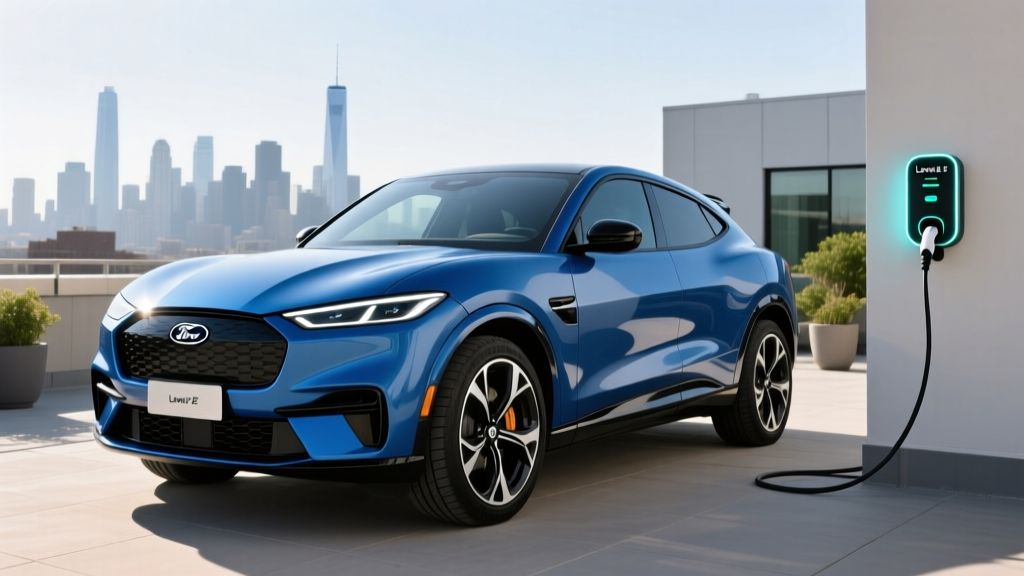
The 2026 Ford Mustang Mach-E — Ford's electric SUV wearing the Mustang badge — delivers up to 320 miles of EPA-estimated range, DC fast charging up to 150 kW (10–80% in ~38 minutes), and a starting MSRP around $39,995. For buyers with Level 2 home charging, it costs roughly $0.04–$0.06 per mile to fuel versus $0.12–$0.15 for a comparable gas crossover. The Mach-E qualifies for partial or full federal tax credits under IRS §30D depending on trim, buyer income, and battery-sourcing compliance. It's a strong pick for daily commuters and road-trippers who can charge at home, though apartment dwellers without charging access should weigh the public-charging reality carefully before committing.
What Exactly Is the Ford Mustang Electric SUV?
When shoppers search for the "Ford Mustang electric SUV," they're looking for the Ford Mustang Mach-E — a battery-electric crossover that borrows the Mustang nameplate but rides on Ford's dedicated Global Electrified Platform. It is not a lifted Mustang coupe; it's a two-row, five-passenger SUV competing directly with the Tesla Model Y, Hyundai Ioniq 5, and Chevrolet Equinox EV.
For the 2026 model year, Ford continues to offer the Mach-E across Select, Premium, California Route 1, and GT trims, with both standard-range (SR) and extended-range (ER) battery options, plus rear-wheel drive (RWD) and all-wheel drive (eAWD) configurations.
| Spec | SR RWD | ER RWD | ER eAWD | GT |
|---|---|---|---|---|
| EPA Range | ~250 mi | ~320 mi | ~290 mi | ~280 mi |
| Battery (usable, kWh) | ~70 kWh (LFP) | ~91 kWh (NMC) | ~91 kWh (NMC) | ~91 kWh (NMC) |
| Horsepower | 266 hp | 290 hp | 346 hp | 480 hp |
| 0–60 mph | ~6.3 s | ~5.8 s | ~5.1 s | ~3.5 s |
| Peak DC Charge Rate | ~115 kW | ~150 kW | ~150 kW | ~150 kW |
| 10–80% DC Fast Charge | ~33 min | ~38 min | ~38 min | ~38 min |
| Level 2 (240V) Charge Rate | ~10.5 kW | ~10.5 kW | ~10.5 kW | ~10.5 kW |
| Starting MSRP | $39,995 | $45,995 | $48,995 | $59,995 |
Sources: fueleconomy.gov, Ford Motor Company. Figures reflect 2026 model-year estimates and may vary by trim and options.
Real-World Range Reality Check
The EPA rates the ER RWD Mach-E at 320 miles, but real-world results depend heavily on conditions:
- Highway driving (70–75 mph): Expect ~250–275 miles in moderate temperatures.
- Cold weather (below 32°F): Range drops 20–30%, yielding roughly 220–250 miles on the ER RWD.
- City / mixed commuting: 300+ miles is achievable with regenerative braking doing heavy lifting.
The Mach-E uses NMC (nickel manganese cobalt) chemistry in extended-range trims, which offers higher energy density than LFP but is more sensitive to sustained 100% state of charge. Ford recommends daily charging to 90% for battery longevity, reserving 100% for road trips.
Mach-E vs Gas Crossover: The Real Cost Breakdown
The most common question from buyers cross-shopping the Ford Mustang electric SUV against a gas-powered Ford Escape or Toyota RAV4 is simple: does the EV actually save money? The answer depends on your electricity rate, annual mileage, and whether you can charge at home.
| Category | 2026 Mach-E ER RWD | 2026 Gas Crossover (28 MPG combined) |
|---|---|---|
| Purchase Price (MSRP) | $45,995 | $34,000 |
| Est. Federal Tax Credit (§30D) | Up to $7,500* | $0 |
| Effective Purchase Price | ~$38,495 | $34,000 |
| Fuel/Energy (5 yr / 75,000 mi) | $4,500 (home, $0.15/kWh) | $10,714 ($3.50/gal, 28 MPG) |
| Maintenance (5 yr) | ~$1,500 | ~$3,800 |
| Insurance (5 yr avg) | ~$9,500 | ~$7,500 |
| Total 5-Year Cost | ~$53,995 | ~$56,014 |
*§30D tax credit eligibility depends on MSRP caps, buyer income thresholds, and battery critical-mineral sourcing requirements. Verify at irs.gov or with a tax professional. Point-of-sale transfer is available through participating dealers.
The Mach-E closes the price gap substantially once the federal credit applies, and fuel/maintenance savings widen the advantage over time. Insurance remains higher for EVs — typically 15–25% more than comparable gas vehicles — so factor that into your budget.
Home Charging, Public Charging, and What You Need to Know
Charging access is the single biggest ownership variable for any EV, including the Ford Mustang electric SUV.
Level 2 Home Charging (Recommended)
The Mach-E supports up to 10.5 kW on Level 2 (240V). Ford supplies the Mobile Power Cord with every Mach-E, which delivers roughly 3–4 miles of range per hour on a standard 240V outlet. For faster home replenishment, the Ford Connected Charge Station (48-amp, hardwired) adds approximately 32 miles of range per hour — enough to fully recharge the ER battery overnight in ~9 hours.
| Item | Low Estimate | High Estimate |
|---|---|---|
| Level 2 Charger Unit | $350 | $700 |
| Electrician Labor (240V circuit) | $500 | $1,500 |
| Electrical Panel Upgrade (if needed) | $0 | $2,500 |
| Permit & Inspection | $50 | $200 |
| Total | $900 | $4,900 |
Most homes with a 200-amp electrical panel won't need an upgrade. Older homes with 100-amp service may require a panel upgrade — consult a licensed electrician for a site assessment before purchasing.
DC Fast Charging on the Road
The Mach-E's peak DC charge rate of 150 kW means it can add roughly 50–60 miles of range in 10 minutes at a capable station. However, the charge curve tapers significantly above 80% state of charge (SoC). That 10–80% time of ~38 minutes stretches to 55+ minutes if you charge to 100%. For road trips, plan stops at 15–20% SoC and charge to 80% for optimal speed.
The Mach-E uses the NACS (North American Charging Standard) connector on 2025+ models, giving it native access to Tesla's Supercharger network — a major practical advantage over CCS-only competitors. Ford's BlueOval Charge Network aggregates access to over 100,000 public chargers across multiple networks.
Federal Tax Credit & Incentives: What You Actually Qualify For
Under current IRS §30D rules, the federal EV tax credit can reduce your effective Mach-E purchase price by up to $7,500 — but eligibility is not automatic. Here's the checklist:
§30D Federal Tax Credit Requirements (2026)
- MSRP Cap: SUVs must have a base MSRP at or below $80,000. All Mach-E trims qualify.
- Income Cap: Adjusted gross income must not exceed $150,000 (single), $225,000 (head of household), or $300,000 (joint filers).
- Battery Sourcing: Up to $3,750 for critical minerals + up to $3,750 for battery component assembly — sourcing requirements tighten annually. Check the latest DOE/Final Assembly and sourcing lists.
- Point-of-Sale Transfer: Eligible buyers can transfer the credit to the dealer at purchase, reducing the cash price upfront rather than waiting for a tax refund.
Many Mach-E configurations currently qualify for $3,750 to $7,500 depending on battery sourcing compliance. Always verify current eligibility at fueleconomy.gov before purchasing, as sourcing lists update frequently.
Common Misconceptions About the Mustang Mach-E
| Myth | Fact |
|---|---|
| "It's not a real Mustang." | It's an electric SUV, not a sports coupe. Ford applied the Mustang brand to signal performance DNA. Judge it as a crossover, not a pony car. |
| "EV batteries need replacing every few years." | Ford warranties the Mach-E battery for 8 years/100,000 miles with a minimum 70% capacity retention. Real-world data from similar packs shows 10–15% degradation over 150,000+ miles. |
| "I'll be stranded without charging." | With 250–320 miles of range and NACS Supercharger access, the Mach-E covers most daily driving (avg. 37 miles/day per FHWA) with multiple days between charges. Road trips require planning but are well-supported. |
| "EVs are worse in cold weather." | Range drops 20–30% in freezing temps — real and worth planning for. But the Mach-E's heat pump (standard on ER trims) recovers efficiency vs. resistive heating. Preconditioning while plugged in mitigates most cold-weather loss. |
| "Public charging is unreliable." | Non-Tesla networks average ~80–85% uptime. With NACS access to Superchargers (which average 97%+ uptime), the Mach-E has one of the best public-charging experiences among non-Tesla EVs. |
Decision Framework: Is the Mach-E the Right EV for You?
Buy the Ford Mustang Mach-E If:
- You have access to Level 2 home charging (garage, driveway, or workplace).
- Your daily commute is under 80 miles round-trip — you'll rarely need public charging.
- You want NACS/Supercharger access without buying a Tesla.
- You qualify for the §30D tax credit, closing the price gap with gas crossovers.
- You value a quiet, smooth ride with strong acceleration (especially the GT at 480 hp).
Consider Alternatives If:
- You live in an apartment or condo without any charging access and public infrastructure is sparse in your area.
- You regularly drive 400+ miles in a single day in freezing weather — a PHEV or larger-battery EV may suit you better.
- You need three rows of seating — look at the Kia EV9 or Rivian R1S.
- Your budget is under $30,000 — consider the Chevy Equinox EV or a used EV with the §25E credit.
First-Time EV Buyer Checklist
If the Mach-E is your first EV, here's what to prepare before delivery day:
- Get a home electrical assessment. A licensed electrician can confirm whether your panel supports a 240V/48-amp circuit or needs an upgrade.
- Install your Level 2 charger before the car arrives. Avoid the common mistake of relying on a 120V outlet (Level 1), which adds only 3–5 miles per hour — insufficient for the Mach-E's battery size.
- Download the FordPass app. It handles remote preconditioning, charge scheduling, and public charger locator — critical tools for optimizing battery health and trip planning.
- Verify your §30D eligibility. Use the IRS tool and confirm with your dealer whether the credit applies and can be transferred at point of sale.
- Set charge limits. Program daily charging to 90% SoC for NMC battery longevity. Use 100% only for planned road trips.
Frequently Asked Questions
How long does the Mach-E battery last?
Ford warranties the high-voltage battery for 8 years or 100,000 miles, guaranteeing at least 70% of original capacity. Industry data from similar NMC packs (e.g., Tesla Model 3, Hyundai Ioniq 5) suggests 10–15% capacity loss over 150,000 miles with proper charging habits. A full battery replacement, if needed out of warranty, currently costs $12,000–$18,000 depending on pack size.
Can I tow with the Mustang Mach-E?
Yes. The Mach-E is rated for up to 1,500 lbs (SR) and 2,300 lbs (ER/GT) when equipped with the optional tow package. Towing reduces range significantly — expect a 30–50% range loss when pulling near max capacity.
Does BlueCruise make the Mach-E self-driving?
No. Ford's BlueCruise is a SAE Level 2 hands-free driver-assist system approved for use on pre-mapped divided highways. The driver must remain attentive and ready to take over at any time. It is not autonomous driving — that requires SAE Level 4, which currently only applies to robotaxi services like Waymo in limited geofenced areas.
What's the real charging cost per mile?
At the US average residential electricity rate of ~$0.16/kWh and the Mach-E ER's efficiency of roughly 3.0 mi/kWh, home charging costs about $0.053 per mile. Public DC fast charging at $0.35–$0.48/kWh costs $0.12–$0.16 per mile — comparable to gas. Home charging is where the savings live.
Should I get the standard-range or extended-range battery?
If your daily driving is under 60 miles and you have reliable home charging, the SR saves ~$6,000 and the 250-mile range is sufficient. If you take regular road trips, live in a cold climate, or simply want range buffer, the ER's 320 miles and better cold-weather performance justify the premium.