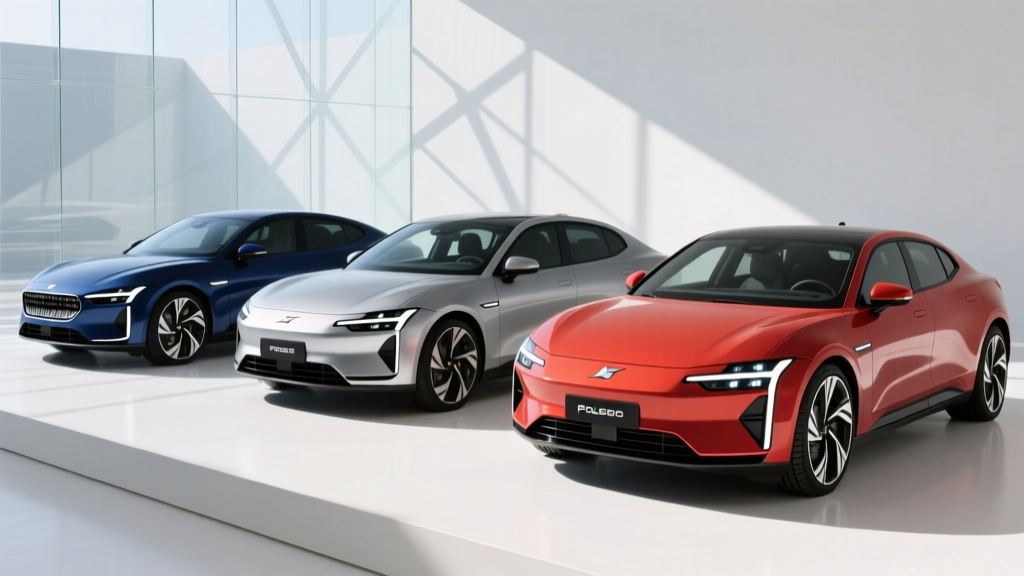
The Quick Answer: Is a Blue Electric Car Like the Mach-E Worth It?
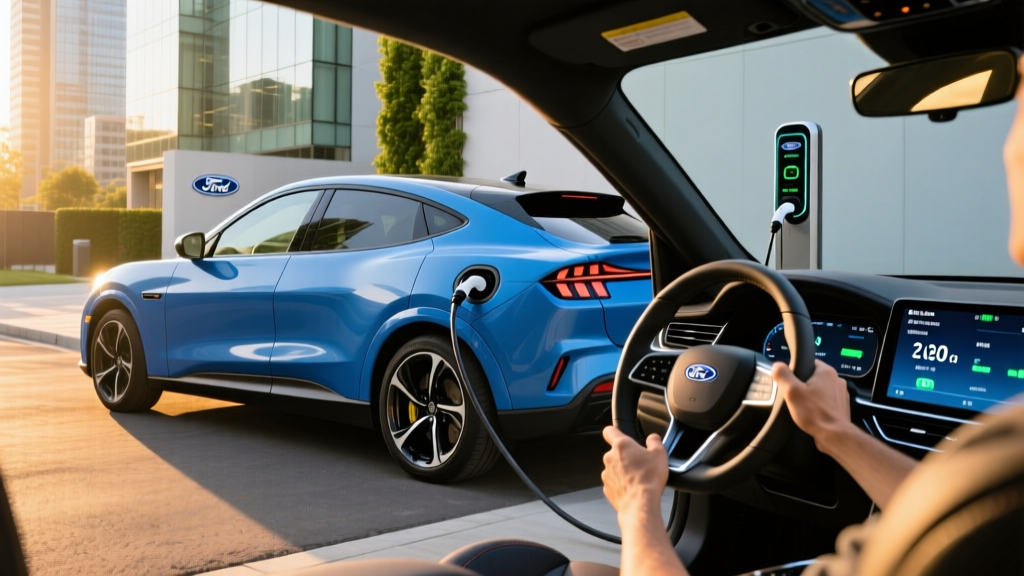
If you're searching for a car electric blue and landing on the Ford Mustang Mach-E, you're looking at one of the most well-rounded mainstream EVs on the market. The 2026 Mach-E Select starts at $39,995 with an EPA-estimated 250 miles of range (Standard Range) or up to 320 miles (Extended RWD). It DC fast-charges at a peak 150 kW, reaching 10–80% in roughly 30 minutes, and qualifies for partial or full federal tax credits depending on your income, sourcing, and point-of-sale election. Compared to a similarly priced gas crossover like the Toyota RAV4, the Mach-E saves an estimated $4,500–$6,000 in fuel and maintenance over five years, but demands reliable home charging access to realize those savings.
What Does a First-Time EV Buyer Actually Need to Know?
Buying your first electric vehicle is less about the car itself and more about your charging infrastructure. Before you fall in love with a Vapor Blue or Glacier Gray Metallic Mach-E, answer three questions:
- Can I charge at home? A Level 2 home charger (240V, 40–48 amps) adds roughly 25–30 miles of range per hour. Installation costs $800–$2,200 depending on whether your electrical panel needs an upgrade. Without home charging, public DC fast charging costs $0.30–$0.50/kWh, which erases much of the fuel savings advantage.
- What's my real-world range? The EPA sticker is a laboratory estimate. Expect 15–25% range loss in sustained highway driving at 70+ mph, and 20–30% loss in sub-freezing temperatures. A 320-mile EPA Extended Range Mach-E realistically delivers 240–270 miles on a cold highway road trip.
- Do I qualify for the §30D tax credit? Under current IRS rules, the credit is up to $7,500 but requires meeting battery component and critical mineral sourcing thresholds, buyer income caps ($150K single / $300K joint), and vehicle MSRP caps ($55K for cars, $80K for SUVs/trucks). The Mach-E's eligibility shifts based on battery sourcing — always verify on IRS.gov before purchasing.
2026 Ford Mustang Mach-E: The Specs That Matter
Ford offers the Mach-E in Select, Premium, GT, and Rally trims. The Extended Range battery uses an NMC (nickel manganese cobalt) chemistry with approximately 91 kWh usable capacity. The Standard Range pack is roughly 72 kWh usable using LFP (lithium iron phosphate) chemistry — which tolerates regular 100% charging better but sacrifices some energy density.
| Specification | Select SR RWD | Premium ER RWD | GT ER AWD | |
|---|---|---|---|---|
| Base MSRP | $39,995 | $48,995 | $56,995 | |
| EPA Range | 250 mi | 320 mi | 280 mi | |
| Battery (usable) | 72 kWh (LFP) | 91 kWh (NMC) | 91 kWh (NMC) | |
| Peak DC Charge Rate | 150 kW | 150 kW | 150 kW | |
| 10–80% DC Fast Charge | ~28 min | ~30 min | ~30 min | |
| Level 2 Rate (kW) | 10.5 kW | 10.5 kW | 10.5 kW | |
| Horsepower | 266 hp | 290 hp | 480 hp | |
| 0–60 mph | 6.1 sec | 5.6 sec | 3.5 sec | |
| MPGe (combined) | 101 MPGe | 101 MPGe | 84 MPGe | |
| Battery Warranty | 8 years / 100,000 miles (≥70% capacity retention) | |||
Real-World Range Reality Check: The EPA-rated 320 miles on the Extended RWD assumes mixed city/highway driving at moderate temperatures. In our experience, sustained 75 mph highway driving yields roughly 265–280 miles. In winter conditions (below 30°F), plan for 220–250 miles of usable range. The charge curve also tapers significantly above 80% SoC — the last 20% can take as long as the first 70%.
EV vs. Gas: What Does the Mach-E Actually Cost to Own?
Let's compare the Mach-E Premium ER RWD ($48,995) against the 2026 Toyota RAV4 XLE AWD (~$33,000 MSRP), a common cross-shop. We'll model 15,000 miles/year, $3.50/gallon gas, and $0.14/kWh home electricity.
| Cost Factor (5-Year) | Mach-E Premium ER | RAV4 XLE AWD |
|---|---|---|
| Purchase Price | $48,995 | $33,000 |
| Fed. Tax Credit (§30D est.) | –$3,750 to –$7,500* | $0 |
| Fuel / Electricity (5 yr) | $3,675 | $8,750 |
| Maintenance (5 yr) | $1,800 | $3,900 |
| Insurance (5 yr est.) | $9,500 | $7,200 |
| Estimated Depreciation | $18,500 | $12,000 |
| 5-Year Total Cost | $58,720–$62,470 | $64,850 |
*Tax credit amount depends on battery sourcing compliance, buyer AGI, and point-of-sale election. Verify current eligibility at IRS.gov.
The Mach-E can break even or come out ahead over five years, but the margin depends heavily on three variables: whether you qualify for the full tax credit, whether you charge primarily at home (cheap) or on public DCFC (expensive), and your local insurance rates, which tend to run 15–30% higher for EVs.
Charging the Mach-E: Home, Public, and the NACS Transition
For 2026, Ford has transitioned the Mach-E to the NACS (North American Charging Standard) port, giving it native access to Tesla Supercharger stations — currently the most reliable DC fast-charging network in North America. This is a significant advantage over CCS-equipped competitors still dependent on Electrify America or EVgo.
| Charging Level | Power (kW) | Miles Added/Hour | Use Case |
|---|---|---|---|
| Level 1 (120V) | ~1.4 kW | ~4–5 mi/hr | Emergency / overnight trickle |
| Level 2 (240V, 48A) | ~10.5 kW | ~28–32 mi/hr | Daily home charging |
| DC Fast (150 kW peak) | 150 kW | ~180 mi in 30 min | Road trips |
Home charging setup cost: Expect $500–$700 for a quality Level 2 EVSE (Ford Mobile Power Cord or a Wall Connector), plus $300–$1,500 for electrician labor depending on run length and whether a panel upgrade to 200A is needed. Total realistic budget: $800–$2,200.
Common EV Misconceptions — Fact vs. Fiction
| Myth | Fact |
|---|---|
| "EV batteries need replacing every 5 years" | Ford warrants the Mach-E battery for 8 years/100,000 miles at ≥70% capacity. Industry data from fueleconomy.gov shows most NMC packs retain 85–90% capacity at 100K miles. |
| "Charging takes too long" | At 150 kW DCFC, 10–80% takes ~30 minutes. Home Level 2 fully replenishes overnight in ~8–9 hours — most owners never visit a gas station or public charger for daily use. |
| "EVs are worse in winter" | Range drops 20–30% in extreme cold, but the Mach-E's heat pump (standard on Premium/GT) recovers waste heat for cabin warming, reducing the penalty vs. resistive heating. Preconditioning while plugged in mitigates most losses. |
| "EVs are more expensive overall" | Higher purchase price is offset by lower fuel, fewer maintenance items (no oil changes, less brake wear from regen), and available tax credits. Break-even typically occurs at year 3–5. |
| "The blue paint color affects resale" | Color has negligible impact on EV resale value. Battery state of health, mileage, and market EV adoption trends dominate depreciation curves. |
Decision Framework: Should You Buy the Mach-E?
Choose the Mustang Mach-E if:
- You have access to Level 2 home charging (garage or driveway with 240V circuit)
- Your daily commute is under 80 miles round-trip (covers 95%+ of drivers on a single charge)
- You want NACS Supercharger access for road trips without adapters
- You value instant torque and a low center of gravity (the GT does 0–60 in 3.5 seconds)
- You qualify for at least a partial §30D credit to close the price gap with gas crossovers
Look elsewhere if:
- You live in an apartment with no charging access and your area has sparse public DCFC infrastructure
- You regularly tow heavy loads (the Mach-E is rated for only 1,500–2,300 lbs depending on trim — a Ford F-150 Lightning or Rivian R1S is better for towing)
- You drive over 400 miles in a single stretch frequently and can't tolerate a 30-minute charge stop
- Your budget is strictly under $35,000 — consider a used Mach-E with the $4,000 used EV credit (§25E) or a Chevrolet Equinox EV at ~$33,000
Choose the right trim:
- Select SR ($39,995): Best for budget-conscious commuters who charge at home and rarely road-trip. The LFP battery is a longevity plus.
- Premium ER RWD ($48,995): The sweet spot — 320 miles EPA, heat pump, BlueCruise capability, and enough range for most road trips with one stop.
- GT ER AWD ($56,995): Performance buyers who want 480 hp and don't mind sacrificing 40 miles of range for acceleration.
Frequently Asked Questions
Is the Ford Mustang Mach-E a real Mustang?
It carries the Mustang badge and styling cues, but it's a purpose-built electric crossover on Ford's Global Electrified Platform. It shares no mechanical components with the gas Mustang. Whether that matters to you is personal — as an EV, it's competent, well-reviewed by IIHS for safety, and practical.
What colors does the 2026 Mach-E come in?
Ford offers several blue options including Vapor Blue (a light, almost silver-blue metallic) and Grabber Blue (a vivid heritage blue available on select trims). Other colors include Glacier Gray Metallic, Star White, Shadow Black, and Rapid Red. Color availability varies by trim year-to-year.
How does the Mach-E compare to the Tesla Model Y?
The Model Y Long Range offers slightly more EPA range (~330 miles) and faster Supercharging (peak 250 kW), but the Mach-E counters with more traditional styling, a physical instrument cluster, Apple CarPlay/Android Auto (which Tesla lacks), and competitive BlueCruise hands-free driving on mapped highways. Pricing is within $3,000–$5,000 depending on trim.
Will the battery last 200,000 miles?
Current NMC degradation data suggests 85–90% capacity retention at 100,000 miles, with projections of 75–80% at 200,000 miles. LFP packs (Select SR) may retain slightly more capacity over time due to chemistry advantages, though real-world long-term data is still maturing. Ford's 8-year/100,000-mile warranty protects against premature degradation below 70%.
What happens if I can't install a home charger?
Public-only charging is viable but expensive and inconvenient. DC fast charging at $0.35–$0.50/kWh costs roughly $0.10–$0.14 per mile — comparable to a 30 MPG gas car at $3.50/gallon. You also lose time: 30-minute charge stops 2–3 times per week. If home charging isn't possible, a PHEV like the Toyota RAV4 Prime may be a better bridge solution.