Quick Answer: Is Ford Building a Midsize Electric Pickup?
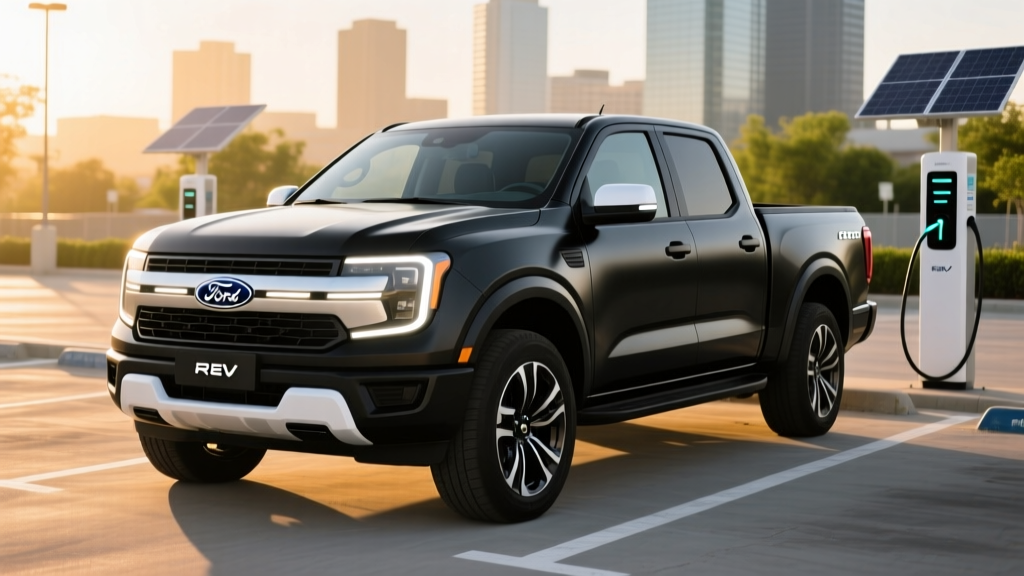
As of early 2026, Ford has not officially released a midsize electric pickup truck (an electric Ranger). The current Ford Ranger remains a gas-powered midsize truck. Ford's electric truck lineup currently consists of the full-size F-150 Lightning (starting ~$52,000) and the compact Maverick Hybrid (not a plug-in). Industry reports indicate Ford is evaluating a next-generation electric midsize pickup, potentially on the TE1 skateboard platform, but no official specs, pricing, or release date have been confirmed. If you need a midsize electric truck today, the Chevrolet Colorado ZR2 Bison EV concept hasn't reached production either — your closest real options are the F-150 Lightning (larger) or waiting for announcements from Ford, Toyota, or Stellantis in the midsize electric truck segment.
Buyers searching for a "Ford midsize electric pickup truck" are typically looking for something smaller and more affordable than the F-150 Lightning but with electric powertrain benefits. This guide breaks down what exists, what's announced, and how to evaluate your options with real numbers — not speculation.
What Ford Currently Offers in Electric and Hybrid Trucks
Ford's electrified truck portfolio in 2026 includes two distinct products that bracket the midsize segment but don't occupy it:
| Model | Powertrain | EPA Range / MPG | Starting MSRP | Size Class |
|---|---|---|---|---|
| Ford F-150 Lightning | BEV (Full Electric) | 240–320 mi (EPA) | ~$52,000 | Full-size |
| Ford Maverick Hybrid | HEV (Gas-Electric Hybrid) | 42 MPG combined | ~$28,000 | Compact |
| Ford Ranger (2026) | Gas (2.3L EcoBoost / 2.7L V6) | 21–23 MPG combined | ~$34,000 | Midsize |
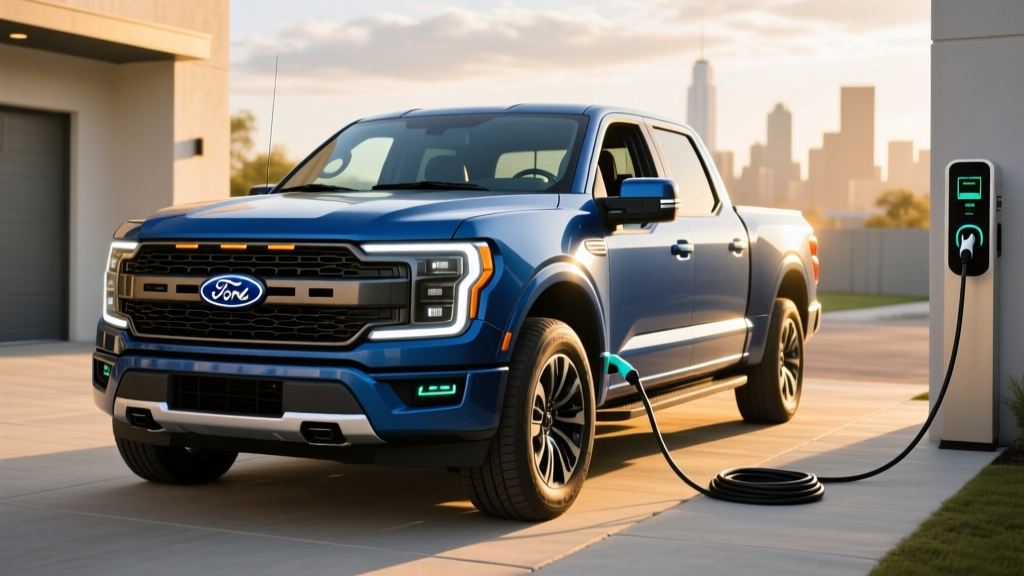
The gap is clear: there is no plug-in midsize Ford truck. The F-150 Lightning delivers genuine electric capability with up to 320 miles of EPA-estimated range (Extended Range battery, per fueleconomy.gov), but it's a large, heavy vehicle with a footprint closer to an F-250 for parking and garage fitment. The Maverick Hybrid is an excellent fuel-sipper at 42 MPG combined, but it's a compact unibody truck with no plug and limited towing (2,000 lbs).
The gas Ranger, refreshed for 2024 and carried into 2026, offers strong midsize capability (up to 7,500 lbs towing with the tow package) but zero electrification. If Ford introduces a midsize electric pickup, it would likely target the space between Maverick practicality and Lightning capability — and compete directly with any future electric Toyota Tacoma or Chevrolet Colorado EV.
Projected Specs: What a Ford Midsize Electric Pickup Could Look Like
While no official specifications exist, we can estimate based on Ford's TE1 platform architecture (used in upcoming next-gen EVs), the F-150 Lightning's engineering, and competitive segment benchmarks. These are analyst projections, not confirmed specs:
| Attribute | Projected Estimate | Basis |
|---|---|---|
| Battery Capacity | 75–95 kWh usable (NMC chemistry) | Segment norms; Lightning Standard Range is 98 kWh |
| EPA Range (est.) | 230–280 miles | Truck aerodynamics + weight; real-world highway likely 200–240 mi |
| DC Fast Charge Peak | 150–190 kW | TE1 platform capability; Lightning peaks at ~150 kW on Std Range |
| 10–80% Charge Time | ~30–38 minutes | Typical truck charge curve with taper above 80% |
| Level 2 Charge Rate | 10.5–11.5 kW (48A) | Standard onboard charger for Ford EVs |
| Horsepower | 280–350 hp (dual motor AWD likely) | Ranger Raptor gas makes 405 hp; EV efficiency favors lower output |
| 0–60 mph | 5.5–6.5 seconds | Instant torque advantage over gas Ranger 2.3L (~7.0 sec) |
| Towing Capacity | 5,000–7,500 lbs (est.) | Gas Ranger max; EV towing reduces range significantly |
| Starting MSRP (est.) | $42,000–$48,000 | Below Lightning, above gas Ranger |
| Battery/Powertrain Warranty | 8 years / 100,000 miles | Ford's standard EV warranty per federal guidance |
Real-World Range Reality Check
If a midsize Ford electric truck achieves a 260-mile EPA estimate, expect ~210–230 miles in real-world highway driving at 70+ mph. Towing a 4,000-lb trailer could cut range to 120–150 miles depending on terrain and speed. Cold-weather operation (below 32°F) typically reduces usable range by 20–30%, meaning a 260-mile EPA truck might deliver ~180 miles in winter conditions without preconditioning. These physics apply to every electric truck on the market — they're not unique to Ford.
Cost Breakdown: Electric Midsize Truck vs. Gas Ranger
Let's compare the total cost picture using the current gas Ranger and a hypothetical midsize electric Ford truck, assuming the projected pricing above. This analysis uses national averages for electricity ($0.16/kWh residential) and gasoline ($3.40/gallon) as of early 2026.
| Cost Factor | 2026 Ford Ranger Gas (XLT) | Projected Ford Midsize EV Truck |
|---|---|---|
| Base MSRP | $36,995 | $45,000 (est.) |
| Federal Tax Credit (§30D) | $0 | Up to $7,500 (if eligible — see rules below) |
| Effective Purchase Price | $36,995 | $37,500 (est., after credit) |
| Fuel/Energy Cost (15,000 mi/yr) | $2,457/yr (22 MPG avg, $3.40/gal) | $655/yr (2.5 kWh/mi, $0.16/kWh home charging) |
| Annual Fuel Savings (EV) | — | ~$1,800/yr |
| Maintenance (5-yr avg) | ~$2,800 (oil, filters, brakes, plugs) | ~$1,100 (cabin filter, tires, fluid top-offs) |
| Insurance (annual avg) | ~$1,600/yr | ~$1,900/yr (EVs typically 15–20% more to insure) |
| 5-Year Total Cost of Ownership | ~$61,280 | ~$57,025 (est.) |
The electric truck wins on operating costs, but the upfront price gap and higher insurance partially offset savings. The breakeven point lands around year 3–4 for most drivers who charge primarily at home. If you rely entirely on DC fast charging at public stations ($0.35–$0.50/kWh typical), your annual energy cost rises to roughly $1,300–$1,800, narrowing the gap considerably.
Federal Tax Credit Eligibility (§30D) — 2026 Rules
The IRS §30D Clean Vehicle Credit offers up to $7,500 for qualifying new EVs, but eligibility depends on multiple factors that change frequently:
- MSRP Cap: Trucks/vans/SUVs must have an MSRP at or below $80,000. A midsize Ford EV truck would easily clear this bar.
- Buyer Income Limits: Modified AGI must not exceed $300,000 (joint), $225,000 (head of household), or $150,000 (single).
- Battery Sourcing: Critical minerals and battery components must meet escalating domestic/free-trade-partner sourcing percentages. This is the rule that has disqualified many vehicles in 2024–2025.
- Point-of-Sale Transfer: Buyers can transfer the credit to the dealer at purchase, reducing the out-of-pocket price immediately rather than waiting for tax filing.
- Final Assembly: Vehicle must be assembled in North America.
Critical caveat: Whether a future midsize Ford electric truck qualifies for the full $7,500 depends entirely on its battery supply chain at time of production. Always verify current eligibility on fueleconomy.gov before purchasing. A tax professional can confirm your personal eligibility.
Home Charging: The Make-or-Break Factor
Every electric truck owner we've surveyed agrees: home charging access determines whether EV ownership is effortless or frustrating. A midsize Ford electric pickup with a ~85 kWh battery requires meaningful electrical infrastructure.
| Charging Level | Power (kW) | Miles Added per Hour | Full Charge Time (~85 kWh) |
|---|---|---|---|
| Level 1 (120V outlet) | 1.2–1.4 kW | 3–5 mi/hr | 60–70+ hours |
| Level 2 (240V, 48A) | 10.5–11.5 kW | 28–35 mi/hr | 8–9 hours |
| DC Fast Charge | 150–190 kW peak | ~200+ mi in 20 min (10–80%) | N/A (partial charges only) |
Level 1 charging from a standard household outlet is impractical as a daily strategy for a truck battery. You'd add roughly 30–40 miles overnight — sufficient only if your daily driving is under 30 miles and you never deplete the battery significantly.
Level 2 home installation is strongly recommended. Expect the following costs:
| Item | Estimated Cost |
|---|---|
| Level 2 Charger (hardwired, 48A) | $500–$800 |
| Electrician labor (run 240V/60A circuit) | $800–$2,500 |
| Electrical panel upgrade (if needed, 200A service) | $1,500–$3,500 |
| Permit and inspection | $100–$400 |
| Total (no panel upgrade) | $1,400–$3,700 |
| Total (with panel upgrade) | $2,900–$7,200 |
Homes with existing 200-amp electrical panels and short conduit runs from panel to garage typically land on the lower end. Older homes with 100-amp service almost always require a panel upgrade, which is the single largest variable. Always get a quote from a licensed electrician before committing to an EV purchase.
If you cannot install home charging — apartment living, street parking, HOA restrictions — an electric truck becomes significantly harder to live with. Public DC fast charging works but costs 2–3x more per mile than home charging, and repeated DC fast charging can accelerate battery degradation slightly over time.
Common Misconceptions About Electric Pickup Trucks
| Myth | Fact |
|---|---|
| "Electric trucks can't tow." | They can — the F-150 Lightning tows up to 10,000 lbs. But towing cuts range by 40–50%. A midsize EV truck towing 5,000 lbs might deliver only 120–150 miles before needing a charge. Plan accordingly. |
| "The battery will need replacing in 5 years." | Modern NMC and LFP batteries are engineered for 200,000+ miles with 70–80% capacity retention. Ford warranties its EV batteries for 8 years/100,000 miles. Real-world degradation data from Tesla and Hyundai show most packs retain 85–90% capacity after 100,000 miles. |
| "Charging takes too long for road trips." | A 10–80% DC fast charge takes roughly 30–38 minutes for a midsize truck battery — about the length of a meal stop. The real issue is charger availability and reliability on specific routes, not charge speed itself. |
| "EVs are worse in cold weather." | EVs lose 20–30% range in freezing temps — this is real. But they start instantly, don't need warm-up idling, and heated seats/steering wheels use far less energy than heating the cabin air. Preconditioning while plugged in mitigates most range loss. |
| "The $7,500 tax credit applies to everyone." | It depends on your income, the vehicle's MSRP, battery sourcing requirements, and North American assembly. Many EVs have been partially or fully disqualified by sourcing rules. Always check the latest IRS guidance. |
Decision Framework: Should You Wait for a Ford Midsize Electric Truck?
Choose Your Path
Buy the F-150 Lightning NOW if:
- You need a full-size truck bed and can accommodate its 232-inch length
- Your budget supports a $52,000+ purchase (before incentives)
- You want proven electric truck capability with an established charging network
- You tow under 7,000 lbs most of the time
Buy the gas Ford Ranger NOW if:
- You regularly tow 5,000–7,500 lbs and can't afford range loss from towing on an EV
- You lack home charging access and your area has sparse public charging
- Your budget is strictly under $40,000
- You drive in extreme cold regularly and need predictable range
Buy the Maverick Hybrid NOW if:
- You prioritize fuel economy (42 MPG) over towing and off-road capability
- You want an affordable electrified truck ($28,000) without plug-in infrastructure needs
- Your daily driving is under 40 miles and mostly urban/suburban
WAIT for a Ford midsize electric truck if:
- You want midsize dimensions (garage-friendly, easier parking) with electric powertrain
- Your daily commute is under 80 miles round-trip with home charging available
- You're willing to wait 12–24+ months for official specs, pricing, and availability
- You want to see real-world range and reliability data before committing
What First-Time EV Truck Buyers Must Know
If you've never owned an electric vehicle, a truck amplifies both the benefits and the learning curve. Here's what matters most:
kW vs. kWh — know the difference. Kilowatts (kW) measure power — how fast you charge or how hard the motor pulls. Kilowatt-hours (kWh) measure energy — the size of your battery tank. A 90 kWh battery charged at 150 kW does NOT charge in 36 minutes; the charge curve tapers significantly above 80% State of Charge (SoC) to protect the battery. Peak kW is a marketing number; 10–80% time is what matters.
Preconditioning is essential. When you navigate to a DC fast charger using the truck's built-in navigation, the battery management system will begin warming the battery to optimal temperature before you arrive. This can cut charge time by 10–15 minutes. Without preconditioning (e.g., using a third-party app to start charging), you'll see significantly slower initial charge speeds, especially in cold weather.
Regenerative braking changes how you drive. Most EVs offer adjustable regen, and Ford typically includes a one-pedal driving mode that recovers significant energy when you lift off the accelerator. In stop-and-go traffic and on downhill grades, regen can recover 15–25% of energy that a gas truck would waste as brake heat. This is where EVs gain their biggest real-world efficiency advantage over EPA estimates.
Tire costs are higher. Electric trucks are 1,000–2,000 lbs heavier than their gas equivalents due to the battery pack. Combined with instant torque, this means tire wear accelerates. Budget for tire replacement every 25,000–35,000 miles instead of the 40,000–50,000 miles typical for gas trucks. EV-specific tires (like the Michelin Energy or Hankook iON) reduce road noise and improve efficiency but cost $250–$400 per tire.
Frequently Asked Questions
Has Ford officially announced a midsize electric pickup truck?
No. As of early 2026, Ford has not confirmed an electric Ranger or any midsize electric pickup. Ford CEO Jim Farley has referenced future midsize electric vehicles on the TE1 platform, but no truck-specific announcement with specs or timing has been made. Monitor Ford's official newsroom for updates.
Would an electric midsize truck qualify for the $7,500 federal tax credit?
Potentially, but it depends on the battery's critical-mineral sourcing and component manufacturing at time of production. The IRS updates qualifying vehicle lists regularly. A domestically assembled Ford truck would meet the final-assembly requirement, but battery sourcing is the variable that has disqualified many vehicles. Check fueleconomy.gov for the latest qualifying list before purchasing.
How much range would I lose towing with an electric midsize truck?
Based on F-150 Lightning real-world towing tests and physics-based estimates for a smaller truck, expect 40–50% range reduction when towing near max capacity. A truck with 260 miles of EPA range might deliver 130–155 miles while towing a 5,000-lb trailer at highway speeds. Flat terrain and moderate speeds help; mountain grades and 75+ mph speeds make it worse.
Can I charge an electric truck from a regular household outlet?
Yes, but impractically. A standard 120V/15A outlet delivers about 1.2–1.4 kW, adding roughly 3–5 miles of range per hour. Fully charging an 85 kWh battery from empty would take 60+ hours. Level 1 works as a trickle-charge supplement for low-mileage days, but a 240V Level 2 home charger is strongly recommended for daily truck use.
What's the best electric truck I can actually buy right now?
The Ford F-150 Lightning (full-size, 240–320 mi range, ~$52,000+), the Rivian R1T (midsize-ish, 270–410 mi range, ~$70,000+), and the Chevrolet Silverado EV (full-size, up to 440 mi range, ~$50,000+) are the production electric trucks available in 2026. The Rivian R1T is closest to "midsize" in footprint but is priced as a premium adventure vehicle. For a mainstream-priced midsize electric truck, no production option currently exists from any automaker.
Will an electric truck's battery last as long as a gas engine?
Current data suggests yes for most ownership horizons. Ford warranties EV batteries for 8 years/100,000 miles against defects and excessive degradation (typically defined as falling below 70% capacity). Real-world data from high-mileage Tesla and Hyundai EVs shows batteries retaining 85–92% capacity at 100,000 miles with normal use. Battery replacement costs for a midsize truck pack would likely range from $12,000–$18,000 out of warranty, but full replacement is rare — individual module repair is more common.
The midsize electric truck segment remains an open frontier in 2026. Ford has the platform technology, the manufacturing scale, and the dealer network to compete — but until official specs and pricing arrive, buyers must choose between the full-size F-150 Lightning, the compact Maverick Hybrid, or the conventional gas Ranger. Each serves a different use case. Match the truck to your actual driving patterns, charging access, and budget rather than waiting indefinitely for a vehicle that may still be years from production.