The Short Answer on Ford's Small EV Truck
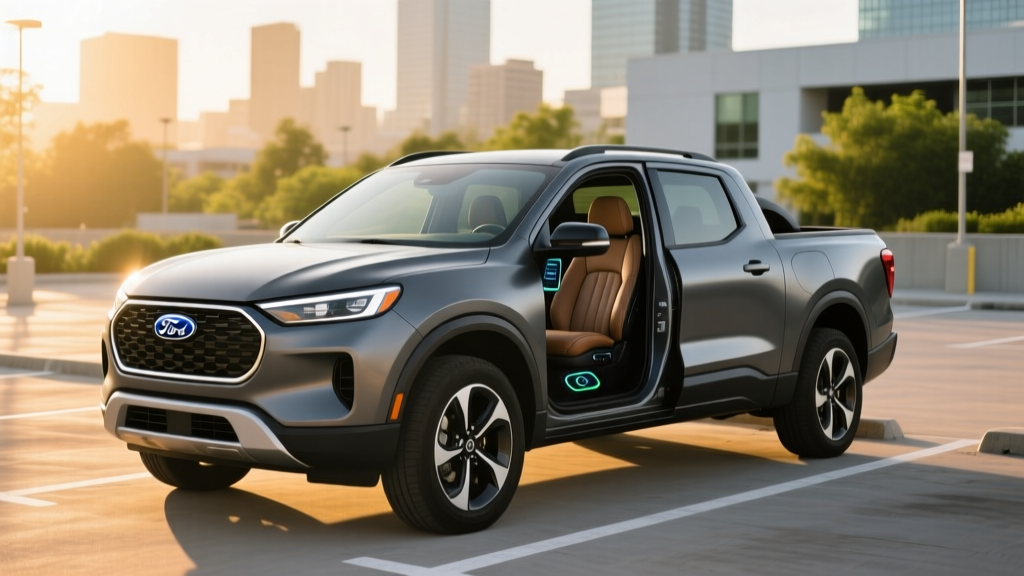
Ford has not yet officially released a fully electric version of its compact Maverick pickup as of early 2026. However, Ford CEO Jim Farley confirmed in 2024 that a next-generation small EV truck is in development, targeting a sub-$30,000 starting price and built on a new flexible EV platform. Industry estimates project an EPA range of 250–300 miles, a ~75–82 kWh battery pack, and DC fast charging at up to 150 kW. If you need a small electric truck today, your only current option is waiting for Ford's official reveal or cross-shopping existing EV trucks like the Ford F-150 Lightning (larger, pricier) or the upcoming Chevrolet Silverado EV in a smaller configuration. This guide breaks down what we know, what to expect, and how a Ford small EV truck stacks up against gas and hybrid compact pickups on cost, capability, and daily usability.
What We Know About the Ford Small EV Truck
Ford's compact truck strategy centers on replacing or complementing the current gas and hybrid Maverick with an all-electric successor. The Maverick has been a runaway sales success since its 2022 launch — over 130,000 units sold in 2024 alone — proving massive demand for a small, affordable, fuel-efficient truck. An EV version would slot into a market gap where no electric compact pickup currently exists in the U.S.
Here is a summary of confirmed and projected specifications based on Ford's official statements and industry analysis:
| Specification | Status | Detail |
|---|---|---|
| Platform | Confirmed | New flexible EV architecture (not a Maverick retrofit) |
| Starting MSRP | Targeted | Sub-$30,000 (before incentives) |
| EPA Range | Estimated | 250–300 miles |
| Battery Capacity | Estimated | ~75–82 kWh usable (likely LFP for base trim) |
| DC Fast Charging | Estimated | Up to 150 kW peak; 10–80% in ~25–30 min |
| Level 2 Charging | Estimated | ~10.5 kW onboard charger |
| Horsepower | Estimated | 200–250 hp (single motor FWD or AWD) |
| Towing Capacity | Estimated | 1,500–2,000 lbs (FWD); up to 3,000 lbs (AWD) |
| Payload | Estimated | ~1,200–1,500 lbs |
| Connector | Confirmed (Ford-wide) | NACS (native Tesla Supercharger access) |
| Production Start | Estimated | Late 2026 or 2027 model year |
Key takeaway: Ford's decision to use a dedicated EV platform rather than adapting the existing Maverick unibody means the electric truck will likely have a flat floor, potential front trunk (frunk), and optimized weight distribution — but it also means a longer development timeline.
Projected Range, Efficiency, and Real-World Expectations
If Ford targets a ~75–82 kWh battery pack with an efficient single-motor FWD configuration, an EPA rating of 250–300 miles is achievable. For reference, the Hyundai Ioniq 5 (84 kWh battery, RWD) achieves 310 miles EPA. A compact truck has more frontal area and weight than a crossover, so expect slightly lower efficiency — roughly 3.0–3.5 miles per kWh.
Real-World Range Reality Check
EPA Estimated: 250–300 miles (projected)
Expect in real-world highway driving (70–75 mph): ~200–240 miles
Cold weather (below 32°F) with cabin heating: ~170–210 miles
Towing near max capacity: ~100–140 miles (towing cuts EV range roughly in half)
These projections align with observed data from current EV trucks like the F-150 Lightning and Rivian R1T, which see 25–35% range reduction at sustained highway speeds and 40–50% reduction while towing.
On efficiency, a Ford small EV truck would likely achieve around 95–110 MPGe combined, translating to roughly $0.04–$0.06 per mile when charging at home on a national average electricity rate of $0.16/kWh (U.S. EIA). That compares to the current gas Maverick AWD at 26 MPG combined, or about $0.13–$0.15 per mile at $3.50/gallon.
Charging: Home Setup and Public Network Access
Ford has committed to the NACS connector across its lineup, meaning a future small EV truck will charge natively at Tesla Superchargers — the most reliable DC fast-charging network in the U.S. with over 25,000 stalls nationally.
| Charging Level | Power (kW) | Miles Added per Hour | Typical Use Case |
|---|---|---|---|
| Level 1 (120V household) | ~1.4 kW | ~4–5 mi/hr | Emergency/overnight trickle |
| Level 2 (240V home, 48A) | ~10.5 kW | ~30–35 mi/hr | Daily home charging; full charge in ~8 hrs |
| DC Fast Charge (peak) | ~150 kW | ~450+ mi/hr (peak) | Road trips; 10–80% in ~25–30 min |
Home charging cost reality: A Level 2 home charger installation (240V, 48-amp circuit) typically costs $800–$2,500 total, including a quality smart charger ($350–$650) and electrician labor. If your electrical panel needs a 200-amp upgrade, add $1,500–$3,500. Most buyers with a modern 200A panel and a garage or driveway outlet within 50 feet of the panel will land in the $1,000–$1,800 range.
Public DC fast-charging cost: Expect $0.35–$0.55/kWh at networks like Electrify America or EVgo, making public charging roughly $0.11–$0.16 per mile — comparable to or slightly more than the gas Maverick. This is why home charging access is essential for EV economics.
Cost of Ownership: EV Truck vs. Gas Maverick vs. Hybrid Maverick
The current Ford Maverick Hybrid achieves an EPA-estimated 42 MPG city / 35 MPG highway / 38 MPG combined — making it one of the most fuel-efficient trucks ever sold. Beating that on operating costs requires cheap home electricity. Here's a 5-year comparison:
| Cost Category | Maverick Hybrid ($28K MSRP) | Maverick Gas AWD ($28K MSRP) | Ford Small EV Truck (~$30K MSRP) |
|---|---|---|---|
| Purchase Price | $28,000 | $28,000 | $30,000 |
| Federal Tax Credit (§30D) | $0 | $0 | Up to $7,500* |
| Home Charger Install | $0 | $0 | $1,200 |
| Fuel/Energy (5 yrs, 75K mi) | $5,920 (38 MPG, $3.50/gal) | $9,615 (26 MPG, $3.50/gal) | $2,700 (home, $0.16/kWh) |
| Maintenance (5 yrs) | $3,200 | $3,800 | $1,500 |
| Insurance (5 yrs) | $7,500 | $7,200 | $8,400 |
| Estimated Depreciation | $12,000 | $11,500 | $14,000 |
| 5-Year Total | $54,620 | $59,315 | $49,300 |
*Federal §30D credit eligibility depends on battery sourcing, buyer income caps ($150K single / $300K joint), and MSRP caps ($80K for trucks). Rules are subject to change — verify at IRS.gov. Point-of-sale transfer is available for 2026.
The EV truck wins on total cost primarily through fuel savings and reduced maintenance (no oil changes, fewer brake replacements due to regenerative braking, no transmission fluid). The Maverick Hybrid is the fallback if you lack home charging access or frequently tow.
Federal Tax Credit and Incentive Eligibility
If the Ford small EV truck qualifies for the full §30D federal tax credit, it could effectively start below $23,000 after the $7,500 credit. However, eligibility is not guaranteed. Here's the 2026 checklist:
- MSRP Cap: Truck must be priced at or below $80,000 — easily met at ~$30K
- Buyer Income Cap: AGI ≤ $150,000 (single), $225,000 (head of household), $300,000 (joint)
- Battery Sourcing: Critical minerals and battery components must meet escalating percentages from U.S. or free-trade-agreement countries — this is the hardest requirement and has disqualified several models
- Final Assembly: Must be assembled in North America
- Point-of-Sale Transfer: You can apply the credit as a down-payment reduction at the dealer, rather than waiting for tax filing
Ford's battery supply chain decisions will determine whether the small EV truck qualifies for the full $7,500, a partial $3,750, or nothing at all. Ford has invested heavily in domestic battery plants (BlueOval SK in Kentucky and Tennessee), which improves the odds, but critical-mineral sourcing remains the wildcard. Always verify current eligibility at fueleconomy.gov before purchasing.
Common Misconceptions About Small Electric Trucks
| Myth | Fact |
|---|---|
| "Small EV trucks can't tow anything useful" | Projected 1,500–3,000 lbs towing covers most light-duty needs (small trailer, jet ski, bike rack). But towing does slash range by ~40–50%. |
| "The battery will need replacing in 5 years" | Modern EV batteries (LFP and NMC) are warrantied for 8 years/100,000 miles at ≥70% capacity retention. Real-world data from Tesla and Hyundai shows ~10–12% degradation at 100K miles. |
| "You can't charge in an apartment" | Public Level 2 chargers at workplaces, grocery stores, and apartments are increasingly common. But relying solely on public DC fast charging is more expensive and less convenient than home charging. |
| "EV trucks are more expensive to insure" | Generally true — EV insurance premiums run 10–20% higher due to repair costs and battery replacement risk. Budget $150–$250/month depending on your state and driving record. |
| "Cold weather makes EVs useless" | Cold reduces range by 20–30% in freezing temps (worse below 0°F). A heat pump (likely standard on Ford's EV truck) mitigates this. Preconditioning while plugged in preserves range. |
Decision Framework: Should You Wait or Buy Now?
Choose Based on Your Situation
Wait for the Ford small EV truck if:
- You have home charging access (garage, driveway, or landlord-installed Level 2)
- Your daily commute is under 80 miles round-trip
- You rarely tow more than 2,000 lbs
- You want the lowest operating cost and qualify for the §30D credit
- You can wait until late 2026 or 2027 for availability
Buy a Maverick Hybrid now if:
- You live in an apartment with no charging access
- You frequently drive 300+ miles without stopping
- You tow regularly (boats, campers, horse trailers)
- You live in an area with limited public charging infrastructure
- You need a truck today and can't wait 12–18 months
Consider the F-150 Lightning if:
- You need full-size truck capability (7,700+ lbs towing, 2,000+ lbs payload)
- You can absorb the higher price ($55,000–$75,000+ MSRP)
- You want an EV truck now with proven SuperCrew cab space and Pro Power Onboard
Frequently Asked Questions
When will the Ford small EV truck be available?
Ford has not announced an exact release date. Industry analysts project a reveal in 2026 with deliveries beginning late 2026 or as a 2027 model year. Ford's Louisville or Hermosillo assembly plants are candidates for production.
Will it use the Maverick name?
Unconfirmed. Ford may leverage the Maverick brand equity or launch it as a new nameplate on the dedicated EV platform. The current gas/hybrid Maverick is expected to continue selling alongside any EV variant.
What battery chemistry will it use?
Ford has invested in both LFP (lithium iron phosphate) and NMC (nickel manganese cobalt) battery production. The base trim will likely use LFP for its lower cost, longer cycle life, and cobalt-free supply chain — though LFP offers slightly lower energy density, meaning a marginally smaller range for the same pack size. Higher trims may use NMC for maximum range.
Can I charge it at Tesla Superchargers?
Yes. Ford was the first legacy automaker to adopt the NACS connector, and all new Ford EVs come with native NACS ports. This means direct access to over 25,000 Tesla Supercharger stalls without an adapter — a significant advantage over CCS-equipped competitors.
What will the bed size and cargo capacity be?
Projected at approximately 4.5 feet (similar to the current Maverick's 4.5-ft bed). The EV platform's flat floor may enable a pass-through or under-bed storage compartment. A frunk (front trunk) adding 3–5 cubic feet of lockable storage is likely.
Is a small EV truck practical for a first-time EV buyer?
Yes, if you have home charging. A compact EV truck used primarily for commuting, errands, and light hauling is one of the most practical EV use cases — you get truck utility with sedan-like operating costs. The key prerequisite is reliable Level 2 home charging. Without it, the Maverick Hybrid remains the more practical choice.