Quick Answer: Ford's Small Electric Truck
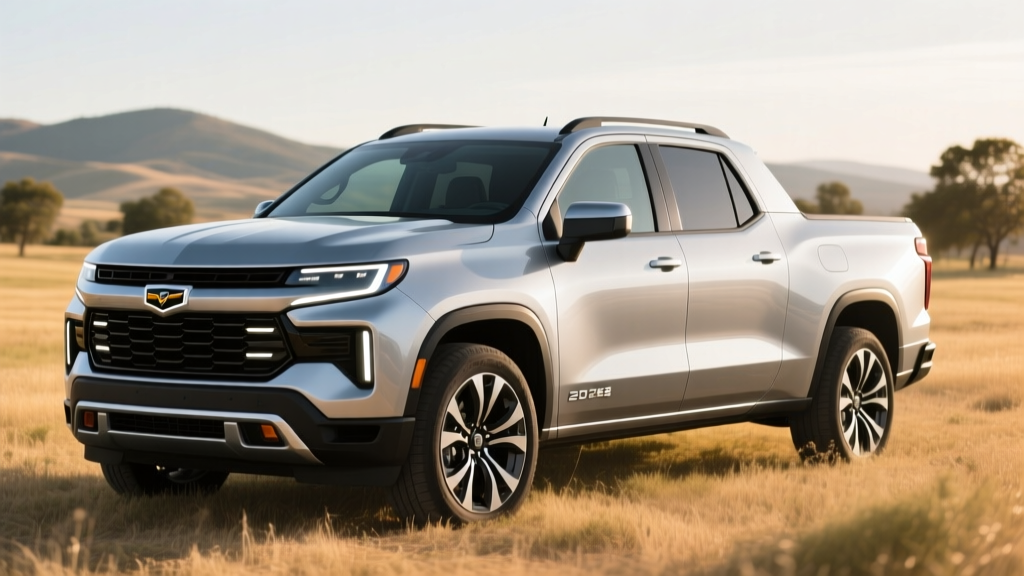
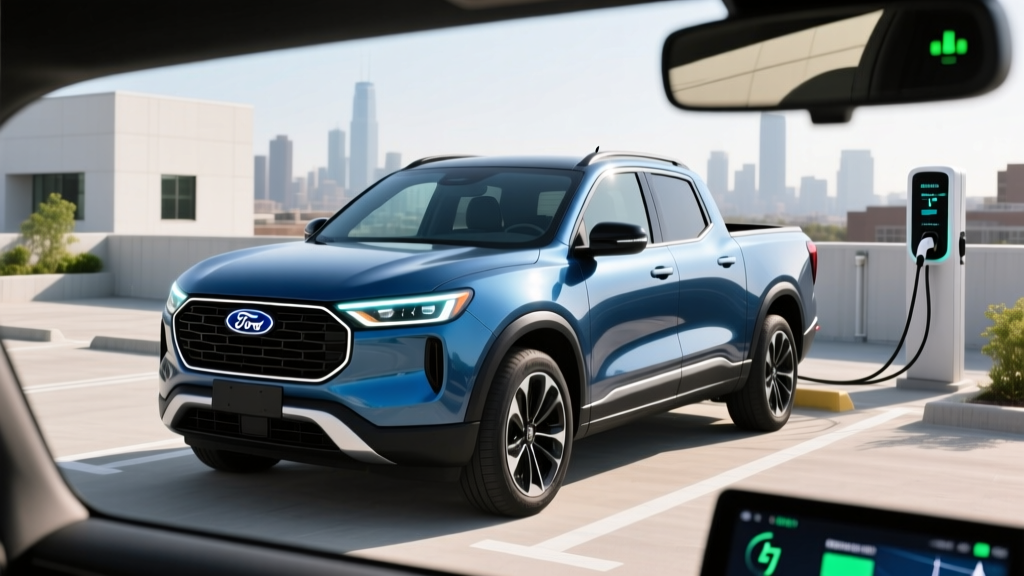
Ford's entry into the small electric truck segment centers on the Ford Maverick EV, announced for the 2026 model year. Built on a dedicated EV platform, the Maverick EV targets buyers who want truck utility without full-size pricing or range anxiety. Expected EPA range sits around 250–300 miles, with pricing anticipated in the $35,000–$45,000 range before incentives. If you need a compact electric pickup for daily commuting with occasional hauling, it's one of the most anticipated releases in the segment — but production timing and final specs remain preliminary until Ford confirms deliveries.
Why a Ford Small Electric Truck Matters Now
The compact truck segment has been dominated by the gas-powered Maverick and Hyundai Santa Cruz, but neither has offered a fully electric variant — until now. A Ford small electric truck fills a gap between the $55,000+ F-150 Lightning and the $60,000+ Rivian R1T, targeting buyers who want electric propulsion at a sub-$45,000 starting price.
Consider the math: the average compact truck buyer drives roughly 12,000 miles per year, mostly in urban and suburban environments where regenerative braking maximizes efficiency. At 12,000 miles annually and $3.50/gallon gas, a 25 MPG gas Maverick costs approximately $1,680/year in fuel. The same distance in an EV averaging 3.0 mi/kWh at $0.14/kWh (national average home electricity) costs roughly $560/year — a savings of over $1,100 annually before maintenance differences.
Expected Specs: Range, Battery, and Charging
Because the Maverick EV is still in the announced/preliminary stage, the figures below reflect Ford's stated targets and industry analysis of the platform. Final EPA-certified numbers may differ at launch.
| Specification | Expected / Preliminary |
|---|---|
| EPA Range (est.) | 250–300 miles |
| Battery Capacity (usable) | ~70–80 kWh (NMC chemistry expected) |
| Peak DC Fast Charge Rate | ~150 kW (estimated) |
| 10–80% DC Fast Charge Time | ~30–35 minutes (est.) |
| Level 2 Home Charging (240V) | ~10.5 kW (~25–30 mi/hr added) |
| Motor / Drivetrain | Dual-motor AWD expected |
| 0–60 mph (est.) | ~5.5–6.5 seconds |
| Payload / Towing (est.) | ~1,500 lb payload / ~4,000 lb towing |
| Base MSRP (est.) | $35,000–$45,000 |
| Battery/Powertrain Warranty | 8 years / 100,000 miles (expected, per federal minimum) |
Real-World Range Reality: An EPA estimate of 280 miles doesn't tell the full story. Expect approximately 230–250 miles at sustained highway speeds (70+ mph), and potentially 190–220 miles in sub-freezing winter conditions due to battery resistance and cabin heating demands. If your daily round-trip commute is under 80 miles, range will rarely be a concern — but road trips will require DC fast-charging stops every 200–220 miles in practice.
Charging at Home vs. On the Road
Home charging is where EV ownership either shines or frustrates. For the Maverick EV, a Level 2 home charger (240V, 32–48 amp) would add roughly 25–30 miles of range per hour of charging. An overnight session (8–10 hours) replenishes the battery from near-empty to full.
| Charging Level | Power (kW) | Miles Added per Hour | Full Charge Time (est.) |
|---|---|---|---|
| Level 1 (120V household) | 1.4 kW | ~3–4 mi/hr | ~24+ hours |
| Level 2 (240V home) | 10.5 kW | ~25–30 mi/hr | ~8–9 hours |
| DC Fast Charge | Up to ~150 kW peak | N/A (measured in minutes) | 10–80% in ~30–35 min |
Key distinction: kW (kilowatts) measures charging power — how fast energy flows. kWh (kilowatt-hours) measures battery capacity — how much energy is stored. A 150 kW charger doesn't deliver 150 kW continuously; the charge curve tapers significantly above 80% State of Charge to protect battery health. That's why 10–80% time is the standard metric, not 0–100%.
Home installation costs for a Level 2 charger typically range from $500–$1,500 for the equipment (a quality 48-amp unit like the ChargePoint Home Flex or Emporia Vue) plus $500–$2,000 for electrician labor and permitting, depending on whether your electrical panel needs an upgrade. Homes with 200-amp service usually accommodate a new 50-amp circuit without issue; older 100-amp panels may require a $1,500–$3,000 panel upgrade.
Cost of Ownership: EV vs. Gas Maverick
The strongest argument for a Ford small electric truck is the total cost of ownership over 5 years. Here's a data-driven comparison using the gas Maverick (25 MPG combined, ~$28,000 MSRP) versus the projected Maverick EV (~$40,000 MSRP, 3.0 mi/kWh efficiency).
| Cost Category (5 Years / 60,000 Miles) | Gas Maverick | Maverick EV (Est.) |
|---|---|---|
| Purchase Price | $28,000 | $40,000 |
| Federal Tax Credit (§30D) | $0 | Up to $7,500 (if eligible)* |
| Effective Purchase Price | $28,000 | $32,500 |
| Fuel / Electricity | $8,400 (gas @ $3.50/gal) | $2,800 (home charging @ $0.14/kWh) |
| Maintenance (oil, filters, brakes) | $3,000 | $800 (no oil changes; regen saves brakes) |
| Insurance (avg.) | $6,000 | $7,200 (+~20% typical EV premium) |
| 5-Year Total | $45,400 | $43,300 |
*Tax credit caveats: The IRS §30D Clean Vehicle Credit requires the buyer to meet income caps ($150K single / $300K joint MAGI), the vehicle MSRP must not exceed $80,000 for trucks, and the battery must meet critical-mineral and component-sourcing thresholds that change annually. As of 2026, many EVs have seen credit eligibility reduced due to stricter sourcing rules. Always verify current eligibility on IRS.gov or consult a tax professional before relying on the credit in your purchase math. The credit can now be transferred to the dealer as a point-of-sale discount.
The EV pulls ahead on operating costs — saving roughly $5,600 on fuel and $2,200 on maintenance over five years — but the higher insurance premiums and initial price gap mean the break-even point depends heavily on your local electricity rates, annual mileage, and tax-credit eligibility.
Common Misconceptions About Small Electric Trucks
| Myth | Fact |
|---|---|
| "Electric trucks can't tow." | The Maverick EV is expected to tow ~4,000 lbs — adequate for small trailers, jet skis, or a light camper. Towing does reduce range by 30–50%, but for occasional use, it's practical. |
| "The battery will need replacing in a few years." | Modern NMC and LFP batteries are engineered for 200,000+ miles with less than 10–15% degradation. Federal law mandates an 8-year/100,000-mile battery warranty (10 years in CARB states). Replacement is rarely needed within normal ownership. |
| "You can't charge in the rain or cold." | EV charging connectors are weather-sealed (IP67-rated). You can charge in rain, snow, and extreme temperatures. Cold weather slows charging speed and reduces range, but doesn't prevent it. |
| "A small electric truck costs more to insure than any gas truck." | EV insurance premiums run 15–25% higher on average due to repair costs and battery replacement risk, but the gap is narrowing. Shop quotes from multiple carriers — some now offer EV-specific discounts. |
| "Home charging requires expensive upgrades." | Many homes with 200-amp panels can add a 50-amp circuit for $500–$1,200 in labor. Only homes with older 100-amp panels typically need a full upgrade. Get a quote from a licensed electrician before assuming the worst. |
Real-World Ownership Considerations
Before committing to any EV — including the Maverick EV — honestly assess these factors:
Home charging access: If you own a home with a garage or driveway, Level 2 charging is straightforward and makes EV ownership convenient. If you rent, live in an apartment, or rely exclusively on street parking, your experience will depend entirely on public charging infrastructure, which varies dramatically by region. Check the Alternative Fuels Data Center for charger density in your area.
Climate impact: Battery chemistry matters in extreme temperatures. In sub-20°F winters, expect 20–30% range loss due to increased internal resistance and cabin heating. A heat pump (expected on the Maverick EV) mitigates this somewhat but doesn't eliminate it. If you live in northern Minnesota or Montana, plan for a shorter effective range.
Driving patterns: The Maverick EV makes the most sense for owners whose daily driving is under 150 miles round-trip with access to home charging. If you regularly drive 300+ miles in a day or live in a charging desert (rural stretches of I-10, I-80, or I-90), a PHEV or gas truck may be more practical until DC fast-charging infrastructure matures further.
Charging network reliability: Ford has adopted the NACS (North American Charging Standard) connector for its EVs, granting access to Tesla Supercharger stations via adapter or native port. The Supercharger network remains the most reliable public DC network in the U.S., with uptime consistently above 95% — a significant advantage over CCS-dependent networks like Electrify America, which have historically struggled with reliability.
Decision Framework: Is the Ford Small Electric Truck Right for You?
Choose the Maverick EV if:
- You have home charging access (garage or driveway with 240V outlet or ability to install one)
- Your daily driving is under 150 miles round-trip
- You want lower operating costs and qualify for at least a partial federal or state tax credit
- You value instant torque, quiet operation, and zero tailpipe emissions for daily use
- You tow occasionally (under 4,000 lbs) rather than frequently
Stick with the gas Maverick or consider a PHEV if:
- You lack reliable home or workplace charging
- You regularly drive 300+ miles per day or frequently tow heavy loads
- You live in an area with sparse DC fast-charging infrastructure
- Your budget is strictly under $30,000 and you can't wait for potential price drops
- You need a truck today — the Maverick EV is still in the preliminary/announced phase
Frequently Asked Questions
When will the Ford Maverick EV be available to buy?
Ford has announced the Maverick EV for the 2026 model year, but exact production start dates and dealer availability have not been confirmed as of early 2026. Check Ford's official press site or your local dealer for updates. Reservations may open before production begins.
Will the Maverick EV qualify for the $7,500 federal tax credit?
Eligibility depends on the battery's critical-mineral and component-sourcing compliance, your income (MAGI caps: $150K single, $225K head of household, $300K joint), and the vehicle's MSRP (must be under $80,000 for trucks). Ford has indicated it is engineering for credit eligibility, but final determination rests with the IRS. Verify at irs.gov before purchasing.
How does the Maverick EV compare to the F-150 Lightning?
The F-150 Lightning is a full-size truck with up to 320 miles of EPA range, 775 lb-ft of torque, and 10,000-lb towing capacity — but starts around $55,000. The Maverick EV will be smaller, less powerful, and less capable for heavy work, but significantly more affordable and efficient for daily commuting. Think of it as the right-sized EV truck for people who don't need full-size capability.
What connector does the Maverick EV use for charging?
Ford has adopted the NACS (Tesla-style) connector for its EV lineup. This means native access to Tesla Superchargers and growing NACS-compatible networks from ChargePoint, EVgo, and others. For legacy CCS stations, a passive adapter may be provided or available for purchase.
Will the battery last the life of the truck?
Based on industry data from millions of EVs on the road, modern lithium-ion batteries lose approximately 1–2% capacity per year under normal use. After 10 years and 120,000 miles, expect roughly 85–90% of original capacity remaining — still plenty for daily driving. Federal warranty requirements mandate coverage for at least 8 years / 100,000 miles against excessive degradation (typically below 70% capacity).
Can I install a home charger myself?
Level 1 (120V) charging requires no installation — just a standard household outlet. For Level 2 (240V), hire a licensed electrician. DIY electrical work on 240V circuits carries fire and code-compliance risks, and most jurisdictions require a permit and inspection. Budget $1,000–$2,500 total for a professional Level 2 installation including equipment.