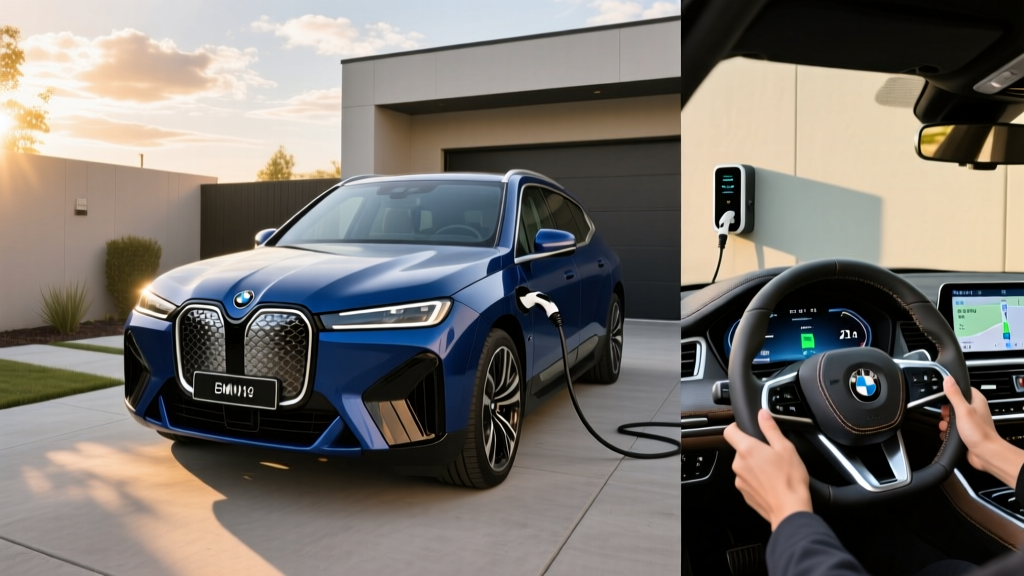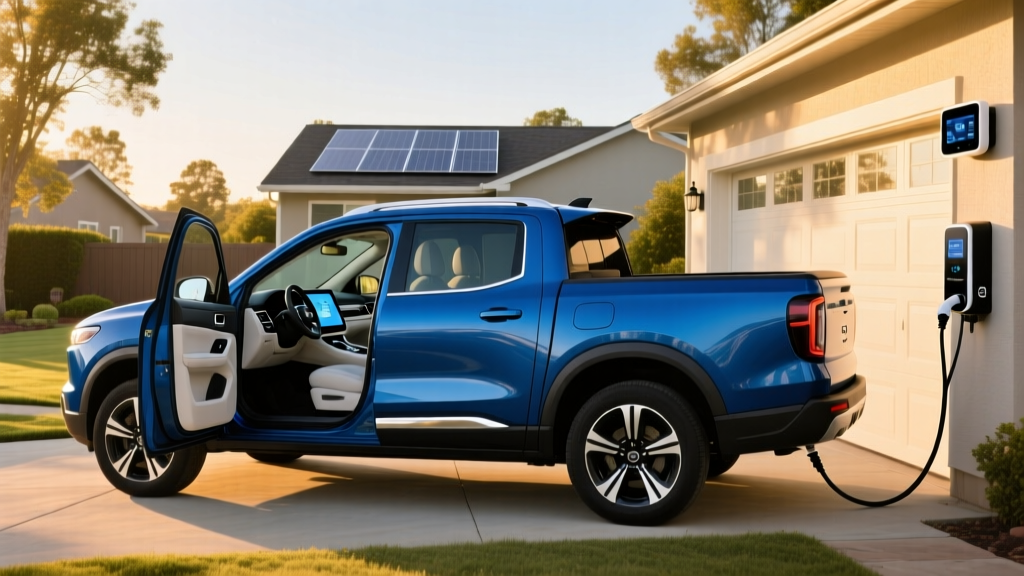
The short answer: The 2026 Ford Maverick EV targets buyers who want a compact, affordable electric pickup for family duty — school runs, hardware store hauls, and weekend trips — without paying F-150 Lightning prices. With an estimated starting MSRP around $35,000–$40,000 (before incentives), EPA-estimated range in the 250–300 mile ballpark, and compact dimensions that fit any garage, it aims to be the most accessible electric truck on the market. But "affordable" depends on your charging setup, driving patterns, and whether you qualify for federal tax credits. Here's the full ownership picture.
What the Maverick EV Actually Is (and Isn't)
Let's set expectations clearly. The Maverick EV is a compact unibody pickup — think Subaru Outback cargo capacity with a 4.5-foot bed bolted on. It is not a body-on-frame work truck. If you need to tow 10,000 pounds or haul a pallet of concrete daily, the F-150 Lightning or a diesel Ram is your vehicle. The Maverick EV is engineered for the 85% of truck buyers who use the bed a few times a month and spend the rest of their miles commuting, carpooling, and running errands.
Ford has not released final specifications as of early 2026, but based on the platform architecture shared with the Escape and Bronco Sport (Ford's C2-derived EV platform), industry estimates, and Ford's stated pricing targets, here is what we expect:
| Spec | Estimated Value | Notes |
|---|---|---|
| Base MSRP | $35,000–$38,000 | Select trim; Lariat likely $40k–$43k |
| Battery Capacity | ~70–75 kWh usable | LFP chemistry likely for cost/longevity |
| EPA Range (est.) | 250–300 miles | FWD; AWD variants may lose 15–20 mi |
| Peak DC Fast Charge | ~150 kW | 10–80% in ~28–32 minutes (est.) |
| Level 2 Charge Rate | 10.5–11.5 kW | Full charge in ~7 hours |
| Horsepower | ~210–265 hp | Single motor FWD / dual motor AWD |
| 0–60 mph | ~6.5–7.5 seconds | AWD dual-motor variant faster |
| Max Payload | ~1,200–1,500 lbs | Compact truck class |
| Max Towing | ~2,000 lbs | Not a heavy-duty hauler |
| Bed Length | ~4.5 feet | Fits standard 4×8 sheets at an angle |
| Battery Warranty | 8 years / 100,000 miles | Standard federal requirement; ≥70% capacity retention |
Note: These are preliminary estimates based on platform analysis and Ford's public statements. Final EPA-certified figures may differ. We will update this article when official specs are published.
The Real Cost of Ownership: Maverick EV vs. Gas Maverick vs. F-150 Lightning
"Affordable" is a five-year story, not a sticker price. Let's compare the Maverick EV against the two alternatives most family-pickup buyers actually cross-shop: the gas-powered Maverick hybrid (the current volume seller) and the larger F-150 Lightning.
| Category | Maverick EV (est.) | Maverick Hybrid (AWD) | F-150 Lightning (Pro) |
|---|---|---|---|
| Base MSRP | $37,000 | $28,000 | $52,000 |
| Fed. Tax Credit (§30D) | Up to $7,500* | $0 | Up to $7,500* |
| Effective Purchase Price | ~$29,500 | $28,000 | ~$44,500 |
| Energy/Fuel (75k mi, 5 yr) | $3,200 (home) / $5,400 (public) | $6,800 | $3,600 / $6,100 |
| Maintenance (5 yr) | ~$1,800 | ~$3,200 | ~$2,000 |
| Insurance (avg. 5 yr) | ~$9,500 | ~$7,800 | ~$10,200 |
| Est. Depreciation | ~$12,000 | ~$9,500 | ~$22,000 |
| 5-Year Total (home charging) | ~$56,000 | ~$55,300 | ~$82,300 |
*Federal §30D tax credit eligibility depends on MSRP caps (trucks: ≤$80,000), buyer income limits ($150k single / $300k joint AGI), battery critical-mineral and component sourcing requirements, and point-of-sale transfer availability. Verify current-year rules at IRS.gov and confirm with a tax professional.
Key takeaway: The Maverick EV and gas Maverick Hybrid are remarkably close on five-year cost — within $700 in this estimate. The EV pulls ahead if you have cheap home electricity (under $0.14/kWh), drive more than 15,000 miles/year, or live in a state with additional rebates. The gas hybrid wins if you rely entirely on public DC fast charging, lack home charging access, or drive fewer than 10,000 miles annually.
Charging Reality: What You Need at Home and on the Road
Every EV ownership experience rises or falls on charging access. Here's the honest breakdown for a Maverick EV owner.
Home Charging (Where 80%+ of Your Charging Will Happen)
The Maverick EV will almost certainly ship with a dual-voltage mobile cord (120V Level 1 / 240V Level 2 capable). On a standard 120V household outlet, you'll recover roughly 3–5 miles of range per hour — adequate only if you drive under 40 miles daily and can plug in every night.
For real family-truck duty, you'll want a 240V Level 2 home station. Here's what to budget:
| Item | Typical Cost Range | Notes |
|---|---|---|
| Level 2 charger hardware | $300–$700 | 32A–48A units; ChargePoint, Emporia, Wallbox |
| Electrician labor (240V/50A circuit) | $600–$2,000 | Depends on panel proximity and conduit run |
| Electrical panel upgrade (if needed) | $1,500–$4,000 | Older homes with 100A service may need 200A upgrade |
| Permit & inspection | $100–$400 | Varies by municipality |
| Total (no panel upgrade) | $1,000–$3,100 | Most newer homes with 200A service |
| Total (with panel upgrade) | $2,500–$7,100 | Older homes, full-service upgrades |
At a 48A Level 2 station delivering ~11.5 kW, a full 0–100% charge on a ~72 kWh battery takes roughly 6.5–7 hours. Plug in when you get home; wake up full every morning.
DC Fast Charging on Road Trips
The Maverick EV is expected to use the NACS (Tesla-style) connector, giving access to the Tesla Supercharger network — currently the most reliable public DC fast-charging infrastructure in the U.S. At an estimated peak rate of ~150 kW, expect a 10–80% charge in roughly 28–32 minutes at a V3 or V4 Supercharger.
Charging-curve reality check: Peak kW is not sustained kW. The battery management system will taper charge speed significantly above 80% State of Charge to protect cell longevity. On a road trip, plan your stops around 10–80% increments — charging from 80–100% can take as long as the 10–80% session. This is physics, not a flaw.
What If You Can't Charge at Home?
This is the dealbreaker question. If you live in an apartment, park on the street, or lack access to a 240V outlet, EV ownership shifts from convenience to chore. You'll rely on public Level 2 chargers (workplace, grocery store, gym) and DC fast chargers. Budget $5,000–$6,000 over five years for public charging instead of $3,000–$3,500 for home electricity. More importantly, budget time: 30–40 minutes at a fast charger twice a week, or 6–7 hours at a Level 2 destination charger.
Honest recommendation: If you cannot install or reliably access Level 2 charging at or near home, the Maverick Hybrid (42 MPG combined EPA, no plug required) is likely the better family truck for you today.
Range in the Real World: Sticker vs. Actual
An EPA-estimated 275 miles (midpoint of our 250–300 estimate) sounds generous for daily family use. And for around-town driving — school drop-off, groceries, soccer practice — it is. You'll realistically use 40–70 miles daily and charge every 3–4 nights.
But family pickups also do highway road trips and face winter weather. Here's how range shifts:
EPA Estimated Range: ~250–300 miles (final TBD)
Real-World Highway (70–75 mph, summer): Expect ~220–260 miles. Aerodynamic drag hits EVs hard at sustained highway speeds; the Maverick's truck shape doesn't help.
Real-World Winter (20–35°F, mixed driving): Expect ~175–220 miles. Cold temperatures reduce lithium-ion chemical efficiency and increase cabin heating load. LFP chemistry (if equipped) may show slightly steeper cold-weather losses than NMC.
Real-World Towing (1,500-lb trailer): Expect ~140–170 miles. Towing roughly halves EV range. This is the Maverick EV's most significant limitation vs. a gas truck.
Practical framework: If 90% of your driving is within a 60-mile daily radius and you can charge at home, the Maverick EV's range is a non-issue. If you regularly drive 200+ miles one-way in winter or tow frequently, you'll need to plan charging stops or consider the hybrid variant.
EV vs. Gas vs. Hybrid: Which Maverick Fits Your Life?
Ford now offers (or will soon offer) the Maverick in three powertrains: gas turbo, hybrid, and EV. Here's a decision framework based on actual use patterns, not marketing:
| If your situation is... | Best Maverick variant | Why |
|---|---|---|
| Home charging available, <80 mi/day, rare towing | Maverick EV | Lowest per-mile cost, quiet, minimal maintenance, instant torque for city driving |
| No home charging, <40 mi/day, budget-first | Maverick Hybrid | 42 MPG combined, no plug needed, lowest purchase price, no range planning |
| Frequent towing (>2,000 lbs), long rural highway trips | Maverick Gas (2.0T EcoBoost) | Highest towing capacity (4,000 lbs with tow package), fast refueling anywhere |
| Apartment dweller, urban commute, weekend warrior | Maverick Hybrid | Regen braking excels in city traffic; no charging dependency |
| Solar-panel home, cheap electricity, tech-forward buyer | Maverick EV | "Free" fuel from solar, OTA updates, V2L potential for job-site/camping power |
| Cold climate (sub-0°F winters), mixed driving | Maverick Hybrid or Gas | EV range loss in extreme cold is significant; hybrid/gas unaffected |
Common Misconceptions About Affordable EV Trucks
| Myth | Fact |
|---|---|
| "The battery will need replacing in 5 years and cost $20,000." | Federal law mandates 8-year/100,000-mile battery warranties with ≥70% capacity retention. Modern LFP batteries project 1,500–3,000+ full cycles before significant degradation — that's 300,000+ miles for a 250-mile-range truck. Replacement cost (if ever needed out of warranty) is estimated at $8,000–$14,000 for a ~72 kWh pack in 2026, declining yearly. |
| "I'll save $10,000 in fuel in the first year." | Realistic annual fuel savings vs. a 25 MPG gas truck: $800–$1,400, depending on local electricity rates and annual mileage. At 15,000 miles/year and $0.14/kWh home charging, expect ~$1,100/year savings. Meaningful, but not dramatic in year one. |
| "Every EV gets the full $7,500 federal tax credit." | §30D credit eligibility requires the vehicle to meet battery critical-mineral sourcing and component manufacturing requirements, the buyer to fall under income caps, and the MSRP to be within limits. Credit amounts vary — some qualifying vehicles receive $3,750 (partial). Check fueleconomy.gov for the current qualifying list. |
| "An EV truck can't handle real truck work." | The Maverick EV's ~1,200–1,500 lb payload handles lumber, mulch, furniture, and ATV loading. The 2,000-lb tow rating covers a small utility trailer or jet ski. It won't replace an F-250, but it matches what most compact-truck buyers actually do. |
| "Public charging is unreliable everywhere." | Network reliability varies enormously. Tesla Superchargers (which the Maverick EV should access via NACS) consistently report >95% uptime. Electrify America and EVgo are improving but still trail. Plan trips around Supercharger routes for best reliability. Use apps like PlugShare to check station status. |
What First-Time EV Buyers Must Know Before Signing
If the Maverick EV is your first electric vehicle, these are the ownership realities no brochure mentions:
1. Your electrical panel matters more than the truck. Before ordering, have a licensed electrician assess your home's panel capacity. A 200A panel with open slots can usually accommodate a 50A EV circuit for $600–$1,500. A 100A panel in an older home may require a $2,000–$4,000 upgrade. This is your first real EV purchase decision, and it happens before the truck arrives.
2. Insurance premiums are typically 15–25% higher for EVs. Repair costs after collisions are higher due to battery-pack proximity, specialized labor, and OEM parts pricing. Get insurance quotes before committing — in some states, EV insurance surcharges can offset a meaningful portion of fuel savings. Companies like GEICO, Progressive, and State Farm now offer EV-specific policies; shop around.
3. Tire wear accelerates 20–30% on EVs. Instant torque and heavier vehicle weight (the battery adds ~800–1,200 lbs vs. a gas Maverick) eat through tires faster. Budget for replacement tires at 30,000–40,000 miles instead of the 50,000–60,000 miles typical on gas trucks. EV-rated tires (like Michelin e.Primacy or Hankook iON) reduce road noise and rolling resistance but cost $200–$300 more per set.
4. Preconditioning is not optional for fast charging. When navigating to a DC fast charger, the Maverick EV's thermal management system will precondition (warm or cool) the battery to optimal temperature for maximum charge speed. If you arrive at a fast charger with a cold-soaked battery in winter without preconditioning, charge speeds may drop to 50–80 kW instead of the rated 150 kW. Always use the truck's built-in navigation to route to chargers — this triggers preconditioning automatically.
5. Regenerative braking changes how you drive. The Maverick EV will offer adjustable regen levels, likely including a one-pedal driving mode. In daily city and suburban driving, you'll rarely touch the brake pedal — lifting off the accelerator slows the truck significantly while recapturing energy. This takes 1–2 weeks to internalize and then becomes second nature. It also reduces brake-pad wear dramatically; expect factory brake pads to last 80,000–120,000+ miles.
Final Decision Framework: Should You Buy the Maverick EV?
Buy the Maverick EV if:
- You can install or already have Level 2 home charging
- Your daily driving is under 80 miles round-trip
- You rarely tow more than 2,000 lbs
- You qualify for the §30D tax credit (check income and sourcing rules)
- You value low running costs, quiet operation, and instant acceleration
- You live in a moderate or warm climate (or accept 25–35% winter range loss)
Buy the Maverick Hybrid instead if:
- You cannot install home charging (apartment, street parking, rental)
- You regularly drive 200+ miles one-way in cold weather
- Your budget is strictly under $30,000
- You tow frequently or live in an area with sparse DC fast-charging infrastructure
- You want maximum flexibility with zero route planning
Wait or look elsewhere if:
- You need a full-size truck bed (6.5+ feet) or 5,000+ lb towing — consider the F-150 Lightning or Rivian R1T
- You need 300+ miles of real-world winter range today — the Maverick EV likely won't deliver this
- Final specs, pricing, or tax-credit eligibility don't align with your budget when orders open
Frequently Asked Questions
When can I actually order the Ford Maverick EV?
Ford has confirmed the Maverick EV is in development for the compact truck segment, but a firm on-sale date has not been published as of early 2026. Industry expectations point to a late-2026 or 2027 model-year launch. We'll update this guide when Ford opens reservations.
Will the Maverick EV qualify for the $7,500 federal tax credit?
It's likely but not guaranteed. Eligibility depends on battery sourcing (critical minerals and component manufacturing thresholds that tighten annually under the Inflation Reduction Act), the buyer's adjusted gross income, and the truck's MSRP staying under the $80,000 truck cap. Ford has strong incentive to engineer for credit eligibility. Check IRS.gov clean vehicle credits and consult a tax professional before purchasing.
Can the Maverick EV power my home during an outage?
Ford has not confirmed V2H (vehicle-to-home) capability for the Maverick EV. The F-150 Lightning offers Ford Intelligent Backup Power via a dedicated home integration system, but this requires a compatible bidirectional charger and home electrical setup. V2L (vehicle-to-load) — plugging devices or tools into the truck's bed outlet — is more likely for the Maverick and would support job-site tools or camping gear without full home-backup capability.
How does the Maverick EV compare to the Hyundai Santa Cruz or Rivian R1T?
The Hyundai Santa Cruz currently has no EV variant planned, so the Maverick EV has no direct compact-EV-truck rival at launch. The Rivian R1T is a midsize adventure truck starting around $70,000 — a different segment and price class entirely. The Maverick EV's competitive set is really its own gas and hybrid siblings, plus compact crossovers like the Tesla Model Y that buyers might choose if a truck bed isn't mandatory.
Is LFP or NMC battery chemistry better for a family truck?
For a cost-focused compact truck, LFP (lithium iron phosphate) is the likely and sensible choice. LFP batteries offer longer cycle life (2,000–3,000+ cycles vs. 1,000–1,500 for NMC), better thermal stability (lower fire risk), and lower cost — but with ~15–20% lower energy density, meaning a heavier or physically larger pack for the same range. For daily family use with home charging, LFP's longevity advantage outweighs its density penalty. You can also charge LFP to 100% daily without the degradation concerns that apply to NMC chemistry.