The Short Answer: No Electric Maverick Exists Yet
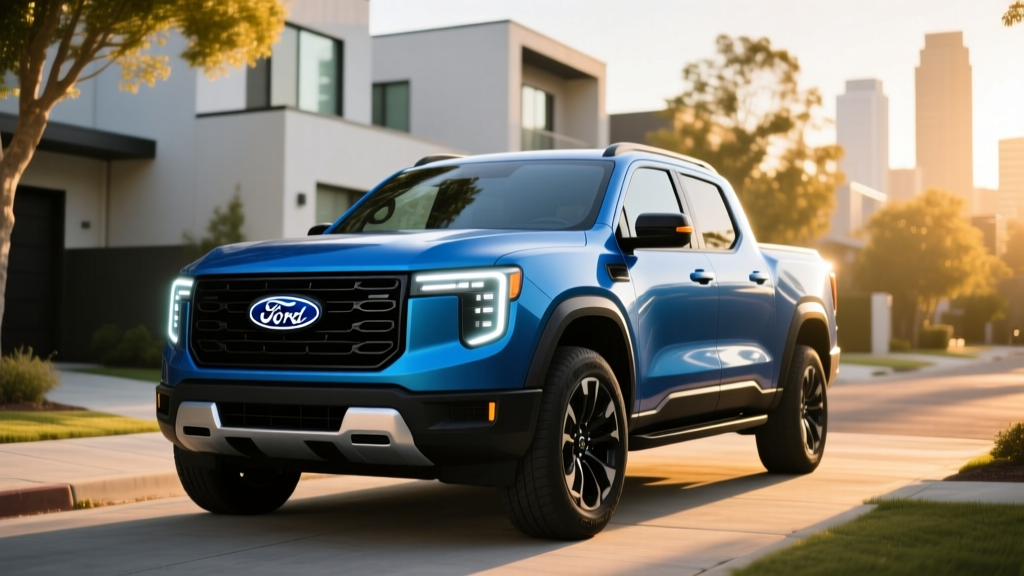
As of early 2026, Ford does not sell a fully electric Maverick. The Maverick is available exclusively as a hybrid (HEV) or with a 2.0L EcoBoost gas engine. Ford has not announced a battery-electric Maverick for the 2026 or 2027 model year. If you want a compact electric truck today, your closest alternatives are the Rivian R1T (starting ~$69,900), the Chevrolet Silverado EV (starting ~$39,900 for the 4WT fleet-oriented trim), or the Tesla Cybertruck (starting ~$79,990). None match the Maverick's sub-$28,000 starting price. The Maverick Hybrid, however, delivers an EPA-estimated 42 MPG city and remains one of the most efficient trucks on the market.
What the Maverick Lineup Actually Looks Like in 2026
The Ford Maverick entered the 2025 model year with a refresh that included updated styling, available AWD on the hybrid, and enhanced tech. For 2026, the powertrain lineup remains unchanged:
- 2.5L Hybrid (HEV): 194 hp combined, front-wheel drive standard, AWD available. EPA-estimated 42 MPG city / 35 MPG highway / 40 MPG combined (FWD). This is a self-charging hybrid — no plug, no electric-only range.
- 2.0L EcoBoost (Gas): 250 hp, 277 lb-ft torque, AWD available. EPA-estimated 23 MPG city / 30 MPG highway / 26 MPG combined (FWD).
Neither powertrain has a plug. The Maverick Hybrid uses a small ~1.1 kWh battery pack to assist the gas engine during acceleration and enable low-speed electric-only driving for brief stretches. You cannot charge it from a wall outlet, and it does not qualify for the federal §30D EV tax credit.
Ford CEO Jim Farley confirmed in late 2024 that the company was exploring a next-generation small electric truck on its flexible EV platform, but no production timeline or pricing has been announced. Industry analysts at Reuters have reported Ford is targeting a sub-$30,000 electric vehicle by the end of the decade, but this remains speculative.
Maverick Hybrid vs. Electric Trucks: A Numbers Comparison
If you're cross-shopping a Maverick against actual electric trucks, the financial and practical picture is very different. Here's how the core specs stack up:
| Spec | 2026 Maverick Hybrid (FWD) | Rivian R1T (Dual Motor, Standard) | Chevy Silverado EV 4WT |
|---|---|---|---|
| Powertrain | 2.5L Hybrid (HEV) | BEV (Dual Motor AWD) | BEV (RWD/AWD) |
| Starting MSRP | $27,995 | $69,900 | $39,900 |
| EPA Range / Fuel Economy | 42 MPG city / 500+ mi tank range | ~270 miles | ~380 miles |
| Battery Capacity | ~1.1 kWh (not plug-in) | ~95 kWh usable (LFP) | ~100 kWh usable (NMC) |
| Max DC Fast Charge | N/A | ~200 kW peak | ~350 kW peak |
| Horsepower | 194 hp combined | 533 hp | ~510 hp |
| Towing Capacity | 2,000 lbs (hybrid) | 11,000 lbs | 10,000 lbs |
| Bed Length | 4.5 ft (FLEXBED) | 4.5 ft + Gear Tunnel | 5 ft 11 in |
| Federal §30D Credit | Not eligible | Up to $7,500 (if eligible) | Up to $7,500 (if eligible) |
The gap is stark: the Maverick Hybrid costs less than half the price of the cheapest electric truck, but it doesn't offer the performance, towing, or zero-tailpipe-emission benefits of a BEV. The Silverado EV 4WT is the closest in price, but it's a fleet-oriented work truck with a basic interior and limited consumer availability.
Real Cost of Ownership: Maverick Hybrid vs. Going Electric
The Maverick Hybrid's appeal is its low entry cost and excellent fuel economy. But how does a five-year ownership comparison look against an electric truck? Let's use the Rivian R1T Dual Motor as the EV benchmark, since it's the most established electric pickup available to consumers.
| Cost Factor (5-Year Estimate) | Maverick Hybrid (FWD) | Rivian R1T (Dual Motor, Standard) |
|---|---|---|
| Purchase Price (base MSRP) | $27,995 | $69,900 |
| Federal Tax Credit (§30D) | $0 | Up to $7,500 (eligibility varies) |
| Effective Purchase Price | $27,995 | $62,400 (if credit applies) |
| Fuel / Electricity (60,000 mi) | ~$5,250 (gas at $3.50/gal, 40 MPG) | ~$3,600 (home charging at $0.14/kWh, 2.5 mi/kWh) |
| Maintenance (5 yr) | ~$2,500 (oil changes, filters, brakes) | ~$800 (no oil changes, less brake wear via regen) |
| Insurance (avg. 5 yr) | ~$7,500 | ~$12,000 (higher premiums for EVs) |
| Estimated Depreciation | ~$10,000 | ~$25,000 |
| Total 5-Year Cost | ~$53,245 | ~$105,800 |
Sources: Fuel economy figures from fueleconomy.gov; insurance estimates based on national averages from industry data; electricity cost based on U.S. residential average of ~$0.14/kWh (EIA, 2025).
The Maverick Hybrid wins on total cost by a wide margin, primarily because of its dramatically lower purchase price and lower insurance costs. The R1T saves roughly $1,650 on fuel and $1,700 on maintenance over five years, but those savings are overwhelmed by the $34,000+ price gap. Even if you factor in the full $7,500 federal tax credit for the Rivian, the Maverick Hybrid is still tens of thousands of dollars cheaper to own.
This is the fundamental reality of the compact truck market in 2026: if you want an affordable truck with excellent fuel economy, the Maverick Hybrid has no electric rival at its price point.
When Would an Electric Maverick Make Sense?
Ford's rumored electric Maverick would need to solve several challenges to be viable:
- Price: A battery-electric powertrain with 250+ miles of range currently adds $15,000-$25,000 to vehicle cost compared to a hybrid. Getting an electric Maverick below $35,000 would require significant battery cost reductions, likely with LFP chemistry.
- Towing range penalty: Electric trucks lose 30-50% of their range when towing. A Maverick-sized EV with a 250-mile range would realistically deliver only 125-175 miles while towing its rated load — a serious limitation for truck buyers.
- Charging infrastructure: Truck buyers often travel to rural areas, job sites, and campgrounds where DC fast charging is sparse. A hybrid's 500+ mile tank range eliminates this concern entirely.
- Payload and bed utility: Heavy battery packs reduce payload capacity. The current Maverick hybrid already maxes out at 1,500 lbs payload; an EV version would need careful engineering to match that.
If Ford does launch an electric Maverick, it would likely target urban and suburban buyers who rarely tow, have home Level 2 charging, and prioritize low running costs over maximum utility. Think of it as an electric Honda Ridgeline competitor rather than a work truck.
Decision Framework: What Should You Buy?
- Choose the Maverick Hybrid if: You want the lowest-cost compact truck, drive mostly in the city, don't tow heavy loads, and want 40+ MPG without plugging in.
- Choose the Maverick EcoBoost if: You need AWD, want 250 hp and 277 lb-ft of torque, tow up to 4,000 lbs (with the tow package), and don't mind 23-26 MPG.
- Choose the Rivian R1T if: Budget is flexible, you want 500+ hp, 11,000-lb towing, serious off-road capability, and have reliable home charging.
- Choose the Silverado EV if: You need a full-size electric truck bed, want 350+ miles of range, and can find a consumer-available trim.
- Wait for an electric Maverick if: You want a compact electric truck under $35,000 — but understand this may be 2028 or later, if it happens at all.
Common Misconceptions About the Maverick and EVs
| Myth | Fact |
|---|---|
| "The Maverick has an electric version." | The Maverick Hybrid is a conventional HEV, not a plug-in. It cannot drive on electricity alone for meaningful distances and does not qualify for EV tax credits. |
| "Hybrids are basically electric cars." | HEVs use a small battery to assist the gas engine. They never plug in. PHEVs (like the Ford Escape PHEV) can drive 30-40 miles on electricity alone and do plug in. BEVs have no gas engine at all. |
| "An electric truck would save me money vs. the Maverick Hybrid." | At 40 MPG and $3.50/gal gas, the Maverick Hybrid costs ~$0.088/mile in fuel. Home-charging an EV at $0.14/kWh and 2.5 mi/kWh costs ~$0.056/mile. The per-mile savings are real (~$0.032/mile), but over 60,000 miles that's only ~$1,920 — far less than the $30,000+ price premium of current electric trucks. |
| "I'll never be able to get an affordable electric truck." | Battery costs have fallen ~90% since 2010 (BloombergNEF). LFP batteries are now below $100/kWh at the cell level. A $30,000-$35,000 compact EV truck is plausible by 2028-2030, but it doesn't exist today. |
| "The Maverick Hybrid qualifies for the $7,500 tax credit." | Only plug-in vehicles (PHEVs and BEVs) qualify for the §30D federal credit. Conventional hybrids like the Maverick do not qualify. |
What First-Time Buyers Should Know Before Waiting for an Electric Maverick
If you're holding out for a battery-electric Maverick, here are the practical realities to consider:
Home charging is essential for EV ownership. Roughly 80% of EV charging happens at home. If you live in an apartment, lack a garage, or can't install a Level 2 charger (240V, ~$500-$2,000 for equipment and installation), an EV truck will be significantly less convenient than a hybrid you can fill at any gas station.
Cold weather reduces EV range by 20-30%. The Maverick Hybrid's fuel economy dips in cold weather too, but it doesn't lose a third of its range. If you live in the northern U.S., an electric truck with a 250-mile EPA range could realistically deliver 175-200 miles in winter — before accounting for highway speeds or towing.
The used EV market is an option. If you want an electric truck experience without the new-vehicle premium, used Rivian R1T models from 2022-2023 are appearing in the $45,000-$55,000 range. The used EV tax credit (§25E) offers up to $4,000 on qualifying pre-owned EVs priced under $25,000 — though finding an electric truck at that price is unlikely in 2026.
The Maverick Hybrid depreciates less than most EVs. According to iSeeCars and Kelley Blue Book data, compact trucks hold value well, while EVs have seen steeper depreciation due to rapid price cuts and technology updates. A Maverick Hybrid bought today will likely retain 55-65% of its value after five years; an electric truck may retain 40-50%.
Frequently Asked Questions
Will Ford make an electric Maverick?
Ford has not announced a battery-electric Maverick as of early 2026. The company has hinted at a next-generation small electric truck on a new flexible platform, but no timeline, specs, or pricing have been confirmed. Industry estimates place a potential launch in the 2028-2030 timeframe.
Does the Ford Maverick Hybrid plug in?
No. The Maverick Hybrid is a conventional hybrid (HEV), like a Toyota Prius. It charges its small battery through regenerative braking and the gas engine. There is no plug, no electric-only range of significance, and no eligibility for the federal EV tax credit.
What is the cheapest electric truck I can buy in 2026?
The Chevrolet Silverado EV 4WT starts at approximately $39,900, but it's primarily a fleet-oriented work truck with limited consumer availability. The next most affordable consumer electric truck is the Rivian R1T at ~$69,900. Neither competes with the Maverick's sub-$28,000 price.
Is the Maverick Hybrid better than a gas-only truck for fuel costs?
Yes, significantly. At 40 MPG combined, the Maverick Hybrid uses roughly 35% less fuel than a comparable gas compact truck getting 26 MPG. Over 15,000 miles/year at $3.50/gallon, that's a savings of approximately $625 annually, or $3,125 over five years.
Can I get the Maverick Hybrid with AWD?
Yes. Ford added AWD availability to the Maverick Hybrid starting with the 2025 refresh. The AWD hybrid achieves slightly lower fuel economy — EPA-estimated 38 MPG city / 34 MPG highway / 37 MPG combined — but adds all-weather capability.