Quick Answer: Is There a Ford Maverick Electric Truck?
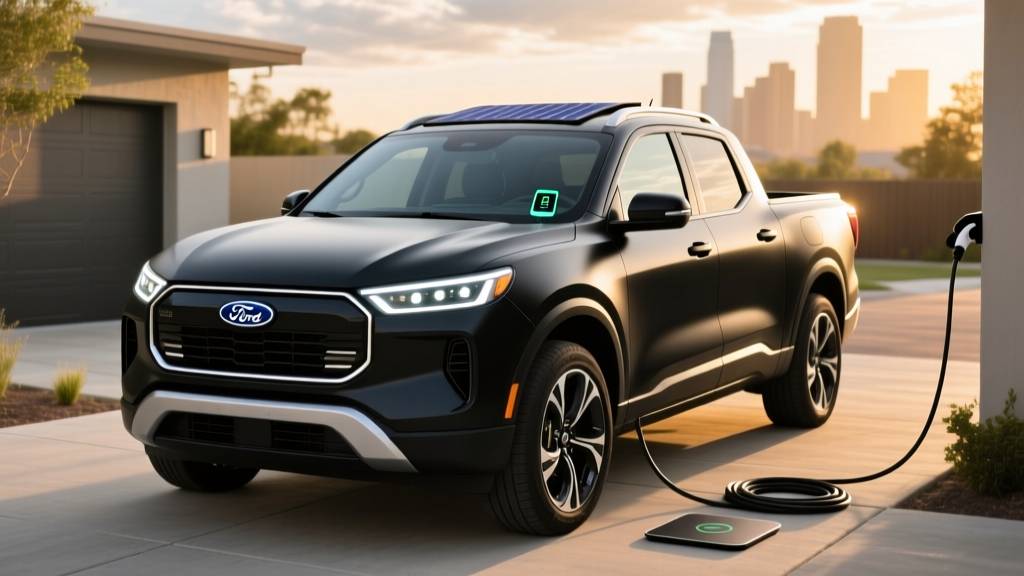
As of early 2026, Ford has not released a fully electric Maverick. The Maverick lineup currently offers a standard 2.0L EcoBoost turbo (gas) and an available 2.5L hybrid powertrain. Ford has confirmed an all-electric Maverick is in development, but no official EPA range, battery size, pricing, or on-sale date has been published. This guide breaks down what we know from Ford's announcements, what the specs are likely to look like based on the company's BEV platform strategy, and how a future electric Maverick would stack up against the current hybrid Maverick and gas competitors like the Hyundai Santa Cruz.
What We Know About the Upcoming Electric Maverick
Ford CEO Jim Farley has publicly stated that the company plans to bring affordable electric vehicles to market, and the compact truck segment is a logical candidate. The current Maverick, built on a unibody platform derived from the Ford Escape/Bronco Sport architecture, is one of Ford's best-selling nameplates. Industry analysts expect the electric Maverick to ride on a next-generation EV skateboard platform, potentially sharing components with future compact EVs in Ford's global lineup.
Based on Ford's current EV battery strategy — which includes LFP (lithium iron phosphate) chemistry for cost-sensitive models and NMC (nickel manganese cobalt) for performance-oriented vehicles — the electric Maverick is likely to feature an LFP battery pack in the 70–85 kWh usable range, targeting an EPA-estimated range between 250 and 310 miles. Ford's existing EVs, like the Mustang Mach-E and F-150 Lightning, provide useful benchmarks:
- F-150 Lightning (extended range): 131 kWh usable, ~320 miles EPA, peak 150 kW DC charging
- Mustang Mach-E (extended range RWD): 91 kWh usable, ~320 miles EPA, peak 150 kW DC charging
- Expected Maverick EV: ~70–85 kWh usable, ~250–310 miles EPA (preliminary), peak ~150+ kW DC charging (estimated)
These figures are preliminary and subject to change when Ford officially reveals the vehicle. We'll update this guide as confirmed specs become available.
Current Maverick Hybrid vs. Future Electric: A Data Comparison
Until the electric Maverick arrives, the 2026 Maverick Hybrid is the most efficient option in the lineup. Here's how it compares to projected electric specs and the gas-only variant:
| Spec | Maverick Hybrid (FWD) | Maverick 2.0L EcoBoost (AWD) | Maverick EV (Projected) |
|---|---|---|---|
| Powertrain | 2.5L I4 + electric motor | 2.0L Turbo I4 | Dual-motor or single-motor BEV |
| Horsepower | 191 hp combined | 250 hp | ~250–300 hp (est.) |
| EPA Fuel Economy / Efficiency | 42 city / 33 hwy / 37 combined MPG | 23 city / 30 hwy / 26 combined MPG | ~100–110 MPGe (est.) |
| Range | ~500+ miles (16.5-gal tank) | ~415 miles (16.5-gal tank) | ~250–310 miles EPA (est.) |
| Energy Storage | 1.1 kWh lithium-ion (hybrid) | N/A | ~70–85 kWh usable (est.) |
| Base MSRP | ~$28,000 (XL trim) | ~$26,000 (XL trim) | ~$35,000–$42,000 (est.) |
| Towing Capacity | 2,000 lbs | 4,000 lbs (w/ 4K Tow Pkg) | ~3,500–4,500 lbs (est.) |
| Payload | 1,500 lbs | 1,500 lbs | ~1,200–1,500 lbs (est.) |
Sources: EPA Fuel Economy, Ford Maverick Official Specs. Electric Maverick figures are projected based on platform analysis and are not confirmed by Ford.
Real Costs: Electric Truck vs. Hybrid vs. Gas Ownership
The biggest question for Maverick shoppers is whether waiting for the electric version makes financial sense versus buying the hybrid now. Let's run the numbers over a 5-year / 75,000-mile ownership period.
| Cost Category | Maverick Hybrid | Maverick Gas (EcoBoost AWD) | Maverick EV (Projected) |
|---|---|---|---|
| Purchase Price (base MSRP) | $28,000 | $26,000 | $38,000 (est.) |
| Federal Tax Credit (§30D) | $0 | $0 | Up to $7,500* |
| Effective Purchase Price | $28,000 | $26,000 | ~$30,500 (est.) |
| Fuel / Electricity (75K mi) | ~$5,400 (37 MPG, $3.20/gal) | ~$9,230 (26 MPG, $3.20/gal) | ~$3,000 (3.5 mi/kWh, $0.14/kWh) |
| Maintenance (5 yr) | ~$2,500 | ~$3,200 | ~$1,200 (est.) |
| Insurance (5 yr avg) | ~$7,500 | ~$7,200 | ~$8,500 (est.) |
| Home Charger Install | $0 | $0 | ~$1,200–$2,500 |
| Total 5-Year Cost | ~$43,400 | ~$45,630 | ~$44,400–$45,700 (est.) |
* Federal §30D EV tax credit eligibility depends on MSRP caps (trucks: ≤$80,000), buyer income limits ($150K single / $300K joint), and battery critical-mineral sourcing requirements. Rules are subject to change — verify at IRS.gov. Point-of-sale transfer is available through registered dealers.
The hybrid Maverick wins on upfront cost and proven reliability, while the electric variant — once available — could close the gap through lower fueling and maintenance costs, especially if the buyer qualifies for the full §30D credit. The gas EcoBoost is the most expensive to operate long-term.
Charging Reality: What an Electric Maverick Owner Would Face
Charging access is the single biggest variable in EV ownership satisfaction. Here's what a future electric Maverick buyer should plan for:
Home Charging (Level 2)
A Level 2 home charger (240V, 32–48 amps) delivering 7.7–11.5 kW would fully replenish an ~80 kWh battery overnight in roughly 8–10 hours. Installation costs typically range from $800 to $2,500 depending on panel capacity, run length, and local permitting. Homes with 100-amp panels may need a $1,500–$3,000 service upgrade to 200 amps — a factor many first-time EV buyers overlook.
DC Fast Charging (Public)
Based on Ford's current charging architecture, the electric Maverick would likely support 150+ kW peak DC fast charging via the NACS connector (Ford has transitioned its EV lineup to NACS for Supercharger network access). At peak rate, a 10–80% charge would take approximately 25–30 minutes. However, real-world charging curves taper significantly above 80% SoC — a full 10–100% session could take 45+ minutes.
Cold-Weather Range Impact
LFP batteries, while cost-effective and durable, are more sensitive to cold temperatures than NMC chemistry. In sub-freezing conditions (below 32°F / 0°C), expect 15–30% range reduction depending on cabin heating demand and whether the vehicle has a heat pump. A projected 280-mile EPA range could realistically deliver 195–240 miles in harsh winter driving.
Common Misconceptions About Electric Trucks
| Myth | Fact |
|---|---|
| "Electric trucks can't tow." | EVs produce instant torque, making them strong tow vehicles. The F-150 Lightning tows up to 10,000 lbs. The Maverick EV would likely tow 3,500–4,500 lbs — comparable to the gas EcoBoost. Range does drop 30–50% while towing at highway speeds, however. |
| "Batteries need replacing every few years." | Ford warranties its EV batteries for 8 years / 100,000 miles with a capacity retention threshold of 70%. Real-world degradation data from Mach-E and Lightning owners shows ~5–8% loss over 100K miles with normal use. |
| "I can't charge without a garage." | Outdoor-rated Level 2 chargers (e.g., ChargePoint Home Flex, Emporia Vue) are designed for driveway installation. Many apartment dwellers also use workplace or public Level 2 charging as their primary strategy. |
| "The tax credit is guaranteed $7,500." | §30D credit eligibility requires meeting MSRP caps, buyer income limits, and North American battery-mineral sourcing rules. Not every EV qualifies for the full amount, and rules can shift with legislation. Always verify current-year requirements. |
| "EVs are worse in the cold." | EVs start reliably in any temperature (no cold-cranking amps to worry about). Range drops are real but manageable with preconditioning and a heat pump. Many EV owners in Minnesota and Maine report high satisfaction. |
Decision Framework: Should You Buy Now or Wait?
Buy the Maverick Hybrid Now If:
- You need a truck within the next 6 months and can't wait for an unconfirmed release date
- Your budget is firmly under $32,000
- You drive more than 400 miles between fill-ups regularly (hybrid range exceeds 500 miles)
- You lack reliable home charging access and don't want to depend on public infrastructure
- You want a proven powertrain with established long-term reliability data
Wait for the Electric Maverick If:
- You have home charging access (or can install a Level 2 charger)
- Your daily driving is under 200 miles round-trip, making overnight charging sufficient
- You want to minimize fuel and maintenance costs over 5+ years of ownership
- You qualify for the §30D tax credit (income under $150K single / $300K joint) and the vehicle meets sourcing requirements
- You value instant torque, quiet operation, and V2L (vehicle-to-load) capability for job-site or camping use
- You're willing to accept a higher upfront price in exchange for lower operating costs
Consider the Gas EcoBoost If:
- You need AWD and maximum towing capacity (4,000 lbs) at the lowest purchase price
- You frequently tow heavy loads over long distances where EV range drop is impractical
- You live in a rural area with limited charging infrastructure and extreme cold
What First-Time EV Truck Buyers Must Know
If the electric Maverick becomes your first EV, prepare for these ownership realities:
- kW vs. kWh matters. kW (kilowatts) measures charging power — how fast energy flows into the battery. kWh (kilowatt-hours) measures battery capacity — how much energy the battery holds. An 80 kWh battery charged at 11.5 kW takes roughly 7 hours from empty. Don't confuse the two when shopping for chargers or reading specs.
- EPA range is a best-case estimate. Highway driving at 75+ mph, cold weather, air conditioning, and cargo weight all reduce real-world range. Plan for 75–85% of the EPA sticker in mixed real-world use.
- Charging speed isn't linear. DC fast chargers deliver peak kW only at low state-of-charge (typically 10–40%). Above 80%, charging slows dramatically to protect the battery. A "150 kW" charger won't deliver 150 kW for the entire session.
- Preconditioning is essential. Most EVs allow you to warm the battery before a fast-charging stop (via navigation routing). Skipping preconditioning in cold weather can cut charging speed by 40–50%.
- Insurance may cost more. EVs typically carry 10–20% higher insurance premiums due to higher repair costs and specialized parts. Get quotes before purchasing.
Frequently Asked Questions
When will the Ford Maverick electric truck be available?
Ford has not announced an official release date. Industry analysts project a reveal in late 2026 or 2027, with deliveries potentially starting in 2027 or 2028. Ford has not confirmed these timelines, and production schedules can shift.
Will the electric Maverick qualify for the $7,500 federal tax credit?
If the electric Maverick is assembled in North America with a base MSRP under $80,000 (the truck cap under §30D), and meets battery critical-mineral and component sourcing requirements, it should qualify — subject to buyer income limits. However, sourcing rules have tightened significantly, and eligibility can change model year to model year. Always check IRS.gov for the current qualified vehicle list before purchasing.
Can the electric Maverick tow as much as the gas version?
Projected towing capacity for the electric Maverick is 3,500–4,500 lbs, which would match or exceed the gas EcoBoost (4,000 lbs with the tow package). However, towing significantly reduces EV range — expect a 30–50% drop at highway speeds, making long-distance towing less practical without frequent charging stops.
Will the electric Maverick have a frunk (front trunk)?
Most purpose-built EVs include a frunk since there's no engine. If the Maverick EV uses a dedicated EV platform, a frunk is very likely. If it's a conversion of the existing unibody platform, frunk space may be limited or absent.
Is the Maverick Hybrid a better choice right now?
For most buyers who need a compact truck today, the Maverick Hybrid is an outstanding value: 37 MPG combined, over 500 miles of range, a sub-$28,000 starting price, and proven Toyota-derived hybrid reliability. Unless you have specific reasons to wait (home charging, daily commute under 100 miles, desire for EV operating costs), the hybrid is the practical choice in 2026.
What charging connector will the electric Maverick use?
Ford has adopted the NACS (North American Charging Standard) connector for its EVs, granting access to Tesla Supercharger stations via Ford's native charge port. The electric Maverick is expected to use NACS natively, eliminating the need for a CCS-to-NACS adapter.