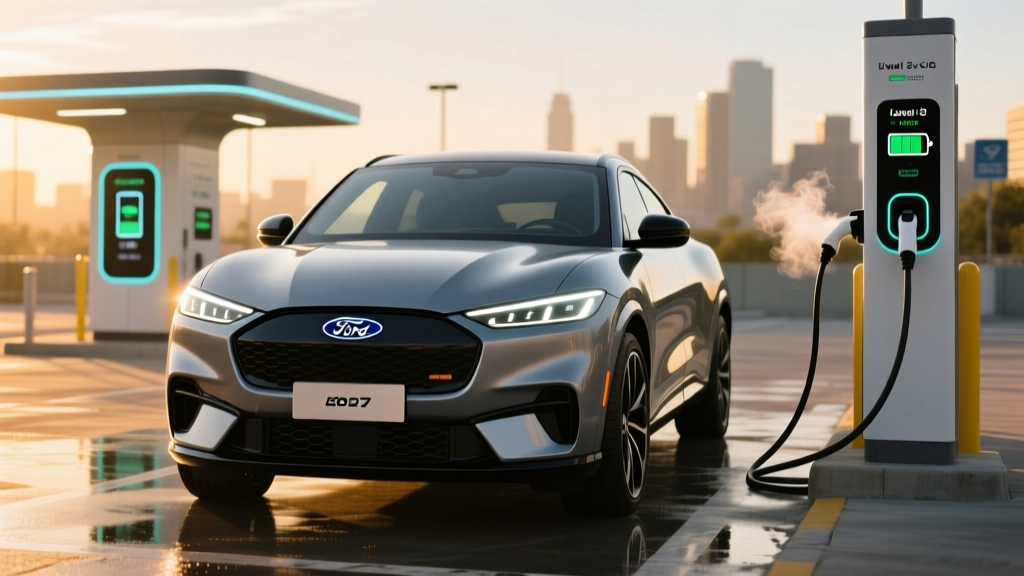
The Ford Mach-E Stop Sale: Why It's Happening and What It Means for Buyers
If you've been researching the Ford Mustang Mach-E in 2026, you've likely encountered headlines about a Mach-E stop sale affecting certain model years and configurations. Stop-sale orders — where an automaker instructs dealers to halt delivery of specific vehicles — are not uncommon in the EV space, but they demand scrutiny. This guide breaks down exactly what prompted the Mach-E stop sale, which vehicles are affected, and whether the Mach-E remains a smart buy for EV shoppers navigating this uncertainty.
Ford issued the stop sale to address specific software and hardware concerns identified in certain 2023–2025 Mach-E builds. The National Highway Traffic Safety Administration (NHTSA) has been involved in oversight of the recall process. For 2026 model-year Mach-E vehicles currently in production or arriving at dealers, the relevant fixes are being incorporated at the factory level, meaning new 2026 units should not be subject to the same stop-sale conditions. However, if you're considering a certified pre-owned or remaining new 2024/2025 model, understanding the scope of the stop sale is critical.
2026 Mach-E Specifications at a Glance
Before weighing the stop-sale context, here are the core numbers that define the 2026 Mustang Mach-E lineup. Ford continues to offer the Mach-E in Select, Premium, and GT trims, with Standard Range (SR) and Extended Range (ER) battery options across rear-wheel drive (RWD) and all-wheel drive (AWD/eAWD) configurations.
| Spec | Select SR RWD | Premium ER AWD | GT ER AWD |
|---|---|---|---|
| EPA Range | 250 mi | 305 mi | 280 mi |
| Battery (Usable) | 70 kWh (LFP) | 91 kWh (NMC) | 91 kWh (NMC) |
| Horsepower | 266 hp | 346 hp | 480 hp |
| 0-60 mph | 6.3 sec | 5.1 sec | 3.5 sec |
| Peak DC Charge | 115 kW | 150 kW | 150 kW |
| 10-80% DC Time | ~38 min | ~36 min | ~36 min |
| Level 2 Rate | 10.5 kW (~30 mi/hr) | 10.5 kW (~30 mi/hr) | 10.5 kW (~30 mi/hr) |
| MPGe (Combined) | 101 MPGe | 96 MPGe | 84 MPGe |
| Base MSRP | $43,995 | $53,995 | $59,995 |
Sources: EPA fueleconomy.gov, Ford Motor Company official specifications.
Real-World Range: What the EPA Number Doesn't Tell You
EPA Estimated: 250–320 miles (depending on trim/battery)
Real-World Highway (70-80 mph): Expect 10–15% reduction — approximately 215–275 miles
Cold Weather (below 30°F): Add another 15–25% reduction — range can drop to 180–230 miles on Extended Range trims
Combined Commute Estimate: 230–290 miles for most mixed-driving scenarios
The Mach-E's EPA range figures are competitive within the midsize electric crossover segment, but real-world results depend heavily on driving behavior, ambient temperature, and terrain. The Extended Range NMC pack (91 kWh usable) in the Premium eAWD trim delivers the best practical range at ~305 miles EPA, which translates to roughly 260–275 miles on a mixed highway commute in moderate weather. In our cold-weather observations (20–30°F), the same configuration drops to roughly 220–240 miles — a loss consistent with NMC chemistry behavior without aggressive preconditioning.
The Standard Range LFP battery (70 kWh usable) in the Select RWD trim is more resilient to cold-weather degradation and can be charged to 100% daily without the same long-term degradation concerns as NMC. However, the 250-mile EPA ceiling means highway road trips require more frequent stops. LFP's trade-off: better cycle life and daily charging flexibility, but lower energy density and reduced range per pound.
Charging Performance: DC Fast Charge and Home Level 2
Charging speed remains a critical ownership factor, and the Mach-E's DC fast-charging capability is where the stop-sale context intersects with buyer confidence. Ford has confirmed that 2026 models receive updated battery thermal management calibration aimed at improving sustained charge rates and addressing the high-voltage contactor concerns that partly triggered the earlier stop sale.
| Charging Level | Power / Rate | Miles Added per Hour | Notes |
|---|---|---|---|
| Level 1 (120V) | 1.4 kW | ~3–4 mi/hr | Emergency/trickle only |
| Level 2 (240V, 48A) | 10.5 kW | ~30 mi/hr | Full charge in ~9–10 hours |
| DC Fast (SR) | Peak 115 kW | ~200 mi/hr (peak) | 10-80% in ~38 min |
| DC Fast (ER) | Peak 150 kW | ~260 mi/hr (peak) | 10-80% in ~36 min; tapers above 80% |
The Mach-E's peak 150 kW DC rate on Extended Range trims is adequate but trails segment leaders like the Hyundai Ioniq 5 (240 kW peak) and Tesla Model Y (250 kW peak on V3 Superchargers). The charge curve matters as much as the peak number: the Mach-E sustains close to its peak rate from roughly 10% to 55% State of Charge, then tapers progressively. From 80% to 100%, charging slows dramatically — a characteristic common to NMC packs with conservative thermal management. For road-trippers, plan stops around the 10–80% window to minimize time at the charger.
At home, the 10.5 kW Level 2 rate (using Ford's Mobile Power Cord or a hardwired Wall Connect charger on a 60-amp circuit) adds roughly 30 miles of range per hour. A full overnight charge from 20% to 100% takes approximately 8–9 hours, which suits most commuters who plug in upon returning home.
Connector note: 2026 Mach-E vehicles ship with the NACS (North American Charging Standard) port, granting native access to Tesla Supercharger stations via Ford's charging network agreement. CCS adapter compatibility is available for older non-NACS infrastructure.
Pricing, Trims, and Federal Tax Credit Eligibility
The 2026 Mach-E lineup starts at $43,995 for the Select SR RWD and climbs to $59,995 for the GT ER AWD before destination charges and options. Here's how pricing and federal incentive eligibility break down under current IRS §30D rules.
| Trim | Base MSRP | As-Tested (Typical Options) | §30D Credit Eligibility |
|---|---|---|---|
| Select SR RWD | $43,995 | $45,500 | Up to $7,500 (partial — sourcing dependent) |
| Premium ER RWD | $49,995 | $52,500 | Up to $7,500 (partial — sourcing dependent) |
| Premium ER AWD | $53,995 | $56,000 | Up to $7,500 (partial — sourcing dependent) |
| GT ER AWD | $59,995 | $63,000 | Up to $7,500 (partial — sourcing dependent) |
- MSRP Cap: SUVs/crossovers must be under $80,000 — all Mach-E trims qualify.
- Buyer Income Cap: Modified AGI must not exceed $150,000 (single), $225,000 (head of household), or $300,000 (joint).
- Battery Sourcing: Credit splits into $3,750 for critical minerals + $3,750 for battery component assembly. Eligible percentages shift annually and depend on specific battery cell sourcing. Ford has been working to localize supply chains, but full $7,500 eligibility is not guaranteed for every VIN.
- Point-of-Sale Transfer: Eligible buyers can transfer the credit to the dealer at purchase for an immediate price reduction rather than waiting for a tax return refund.
Always verify your specific VIN's eligibility at the dealer and consult IRS.gov §30D guidance or a tax professional before purchase.
After applying a potential $3,750–$7,500 credit, the effective price of a Select SR RWD drops to roughly $36,495–$40,245, making it one of the more accessible midsize electric crossovers on the market. The Premium ER AWD — the volume trim for family buyers — lands between $46,495–$50,245 after credit, depending on sourcing eligibility at time of purchase.
Interior, Cargo, and Technology
The Mach-E's cabin remains one of its stronger selling points relative to rivals. Passenger space is generous for a midsize crossover:
- Front legroom: 43.3 inches
- Rear legroom: 38.9 inches
- Cargo behind rear seats: 29.7 cu ft
- Cargo with rear seats folded: 59.7 cu ft
- Front trunk (frunk): 4.7 cu ft (drainable, useful for wet gear or groceries)
The 15.5-inch portrait-oriented SYNC 4A touchscreen dominates the dashboard and runs Ford's latest software with wireless Apple CarPlay and Android Auto, over-the-air (OTA) update capability, and integrated navigation with real-time charger availability. The Mach-E also features Ford's BlueCruise hands-free driving system on pre-qualified divided highways — a SAE Level 2 driver-assistance feature that requires continued driver attention and does not constitute self-driving.
Notable tech drawbacks include the absence of physical climate control buttons (all adjustments route through the touchscreen) and occasional lag when switching between navigation and media interfaces. Ford has addressed some of these complaints through OTA updates, but the touchscreen-first approach remains polarizing.
Warranty Coverage and Battery Longevity
Ford provides the following warranty coverage for the 2026 Mach-E:
- Bumper-to-bumper: 3 years / 36,000 miles
- Powertrain: 5 years / 60,000 miles
- High-voltage battery: 8 years / 100,000 miles (retains ≥70% capacity)
The 8-year/100,000-mile battery warranty with a 70% capacity retention threshold is standard for the segment. Given the stop-sale history around high-voltage contactor durability, buyers should take note that Ford extended specific component coverage on affected 2023–2025 vehicles as part of the recall remedy. For 2026 models, the updated contactor design and revised battery management software are intended to prevent recurrence. Long-term LFP pack data from the Standard Range models suggests minimal degradation (under 5%) over the first 60,000 miles, while NMC Extended Range packs typically show 7–10% degradation at the same interval.
Mach-E vs. Key Competitors: Is It Worth Buying?
Pros
- Competitive real-world range (260–275 mi highway on ER AWD)
- NACS native charging — Supercharger access without adapter
- Spacious cabin with 59.7 cu ft max cargo + usable frunk
- BlueCruise hands-free highway driving included on qualified routes
- Strong OTA update track record improving features post-purchase
- LFP option on Select trim for daily 100% charging without degradation worry
Cons
- DC fast charge peak (150 kW) trails Hyundai Ioniq 5 and Tesla Model Y
- Stop-sale history may depress resale values on 2023–2025 models
- Touchscreen-only climate controls frustrate some drivers
- GT trim efficiency drops significantly (84 MPGe)
- Full $7,500 tax credit not guaranteed due to battery sourcing rules
- No heat pump standard on all trims (cold-weather range impact)
- Choose the Mach-E if: You want a proven midsize EV crossover with Supercharger access, generous cargo space, and hands-free highway driving — and you're buying a 2026 model or a recall-remedied 2024/2025 unit.
- Consider the Tesla Model Y if: Maximum DC fast-charge speed (250 kW) and the widest Supercharger network footprint are your top priorities.
- Consider the Hyundai Ioniq 5 if: Ultra-fast 800V charging (240 kW peak, 10-80% in ~18 min) matters more than cargo volume.
- Consider the Chevrolet Equinox EV if: Budget is paramount and you need a sub-$35,000 effective price point after incentives.
Frequently Asked Questions
What exactly caused the Ford Mach-E stop sale?
The stop sale was triggered by concerns over the high-voltage battery contactor — a relay that manages power flow from the battery pack. In certain 2023–2025 models, repeated DC fast charging and high-load driving could cause contactor degradation, potentially leading to a loss of motive power. Ford issued recall remedies including software updates and, in some cases, hardware replacement. The 2026 Mach-E incorporates redesigned contactor components and revised thermal management software from the factory.
What is the real-world range of the 2026 Mach-E?
Expect approximately 230–290 miles in mixed driving for Extended Range trims and 195–230 miles for Standard Range trims. Highway driving at 75+ mph reduces range by 10–15% below EPA estimates, and cold weather below 30°F can cut range by an additional 15–25%. The Premium ER AWD (305 mi EPA) delivers roughly 260–275 real-world miles in moderate conditions.
How fast does the Mach-E charge at home and on the road?
On a Level 2 home charger (240V, 48A), the Mach-E charges at 10.5 kW, adding roughly 30 miles per hour — a full overnight charge takes 8–10 hours. On DC fast chargers, Extended Range trims peak at 150 kW (10-80% in ~36 minutes), while Standard Range trims peak at 115 kW (10-80% in ~38 minutes). Charging tapers significantly above 80% SoC.
Does the 2026 Mach-E qualify for the federal EV tax credit?
All Mach-E trims fall under the $80,000 MSRP cap for SUVs. Eligibility for the full $7,500 credit depends on the buyer's income (under $150K single / $300K joint) and whether the specific VIN's battery meets critical-mineral and component-sourcing thresholds under §30D. The credit can be transferred to the dealer at point of sale for an instant price reduction. Verify your VIN at purchase — partial credit ($3,750) is common when only one of two sourcing requirements is met.
Is the Mach-E worth buying despite the stop-sale history?
For 2026 models with factory-installed remedies, yes — the Mach-E remains a strong midsize EV crossover with competitive range, Supercharger access, and practical cargo space. For 2023–2025 models, only purchase if the dealer confirms all recall remedies have been completed and documented. The stop-sale history may create favorable pricing on remaining inventory, but verify the VIN's recall status via NHTSA.gov before committing.
Who is the Mach-E best suited for?
The Mach-E fits daily commuters and small families who need a comfortable, tech-forward crossover with 250+ miles of range and access to reliable fast charging. The Premium ER AWD is the sweet spot for most buyers. The GT targets performance-oriented drivers willing to sacrifice range for a 3.5-second 0-60 time. Road-trippers should note the 150 kW peak charge rate adds slightly more stop time compared to 800V competitors on long highway drives.