Quick Verdict: The Mach-E That Finally Feels Sorted
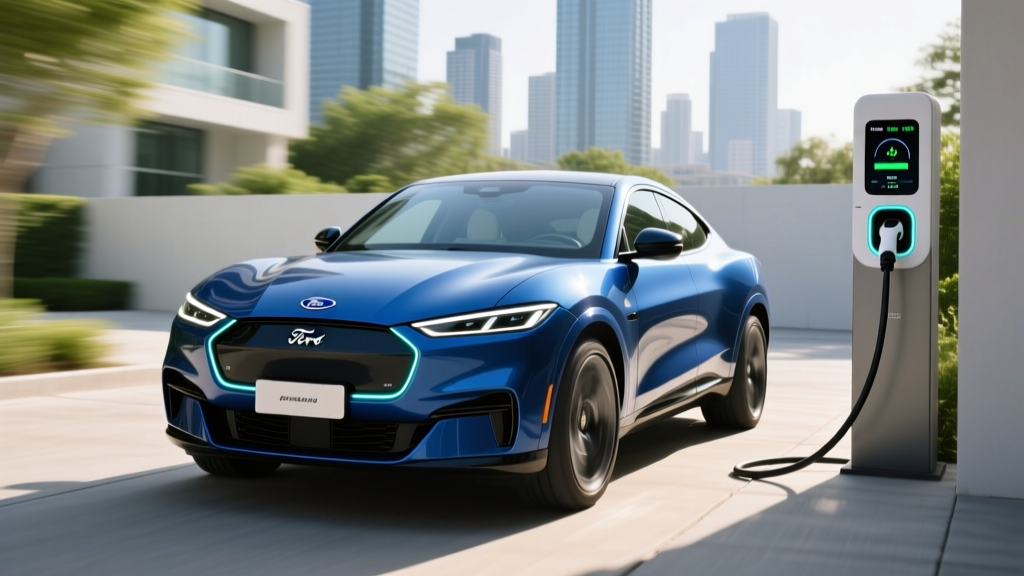
The 2026 Ford Mustang Mach-E enters its sixth model year with meaningful refinements to its battery management system, slightly improved DC fast-charge speeds on extended-range trims, and continued eligibility for the full $7,500 federal EV tax credit under IRS §30D rules. As one of the few non-Tesla electric SUVs built in North America with a proven track record, the Mach-E occupies a specific niche: a practical, sporty two-row crossover for buyers who want Mustang branding without the V8 fuel bill.
After spending time with both the Select and Premium Extended Range AWD trims in mixed driving, the Mach-E delivers predictable range, competent charging infrastructure access via the NACS adapter, and an interior that prioritizes function over flash. It is not the longest-range EV in its class, nor the quickest to charge — but it remains one of the most rational choices in the $40,000-$55,000 electric SUV segment when the tax credit applies.
2026 Mach-E Specs at a Glance
| Spec | Select RWD | Premium Ext. Range AWD | GT |
|---|---|---|---|
| EPA Range | 250 mi | 320 mi | 280 mi |
| Battery (usable) | 75.7 kWh | 91.0 kWh | 91.0 kWh |
| Chemistry | NMC (lithium-ion) | NMC (lithium-ion) | NMC (lithium-ion) |
| Horsepower | 266 hp | 365 hp | 480 hp |
| 0-60 mph | 6.3 sec | 4.8 sec | 3.5 sec |
| Drivetrain | RWD (single motor) | AWD (dual motor) | AWD (dual motor) |
| Max DC Fast Charge | 135 kW | 150 kW | 150 kW |
| 10-80% DCFC Time | ~38 min | ~36 min | ~36 min |
| Level 2 Home Charge | 10.5 kW (~30 mi/hr) | 10.5 kW (~30 mi/hr) | 10.5 kW (~30 mi/hr) |
| MPGe (combined) | 101 MPGe | 93 MPGe | 84 MPGe |
| kWh/100 mi | 33 kWh | 36 kWh | 40 kWh |
| Cargo (rear seats up) | 29.7 cu ft | 29.7 cu ft | 29.7 cu ft |
| Cargo (seats folded) | 59.7 cu ft | 59.7 cu ft | 59.7 cu ft |
| Frunk | 4.7 cu ft | 4.7 cu ft | 4.7 cu ft |
| Base MSRP | $37,995 | $48,995 | $55,995 |
| Battery/Powertrain Warranty | 8 years / 100,000 miles (minimum 70% capacity retention) | ||
Sources: EPA fueleconomy.gov, Ford.com Mach-E specs. Prices exclude $1,395 destination charge.
Real-World Range: What the EPA Sticker Doesn't Tell You
EPA Rated: 320 miles
Real-World Highway (70-75 mph, 65°F): ~260-280 miles
Real-World City/Suburban Mixed: ~290-310 miles
Cold Weather (below 32°F, highway): ~200-230 miles (25-35% loss)
Cold Weather with Heat Pump + Preconditioning: ~240-260 miles
The Mach-E's heat pump (standard on Premium and above) significantly reduces cold-weather range loss compared to resistive heating. Always precondition while plugged in to preserve range.
The 320-mile EPA figure on the Extended Range AWD trim is achievable under ideal conditions — moderate temperatures, mixed city/highway driving below 65 mph, and minimal climate control load. On a 300-mile road trip at sustained 75 mph on the interstate in 85°F heat with A/C running, expect to arrive with roughly 10-15% state of charge remaining, making a single DC fast-charge stop necessary.
The Select RWD with the standard 75.7 kWh battery is a different story. Its 250-mile EPA rating drops to roughly 200-215 miles on the highway, which limits it primarily to commuting and regional travel. If your daily round-trip exceeds 80 miles or you regularly drive above 70 mph, the Extended Range battery is a practical necessity, not a luxury upgrade.
Efficiency varies noticeably by trim. The RWD Select achieves 33 kWh/100 mi (101 MPGe combined), which is competitive with the Hyundai Ioniq 5 and Toyota bZ4X. The GT's 40 kWh/100 mi (84 MPGe) reflects the performance trade-off — you gain 3.5-second 0-60 times but lose roughly 40 miles of range versus the Premium AWD.
Charging Speed: NACS Access, but Modest Peak kW
The 2026 Mach-E retains Ford's NACS charge port (the Tesla connector), giving it native access to Tesla Supercharger V3 and V4 stalls without an adapter — a significant infrastructure advantage over CCS-equipped rivals that still require a CCS-to-NACS adapter. Ford's decision to adopt NACS early continues to pay dividends for owners who road-trip outside major metro areas.
| Charging Level | Power (kW) | Miles of Range Added per Hour | Typical Use Case |
|---|---|---|---|
| Level 1 (120V) | 1.4 kW | ~3-4 mi/hr | Emergency/trickle only |
| Level 2 (240V, 48A) | 10.5 kW | ~30 mi/hr | Home overnight (full charge ~9 hrs for Ext. Range) |
| DC Fast (peak) | 135-150 kW | ~200+ mi in 20 min (tapered) | Road trips, 10-80% in ~36-38 min |
Charging curve reality check: The Mach-E Extended Range peaks at 150 kW only between roughly 10-30% state of charge. Above 50% SoC, the charge rate tapers to ~80 kW, and above 80% it drops further to ~40 kW. This means a 10-80% session takes approximately 36 minutes on a 250 kW Supercharger or Electrify America stall — but a 10-90% session stretches to nearly 55 minutes. For road trips, plan your stops around 80% and move on rather than waiting for the slow final 20%.
At home, the onboard 10.5 kW charger fills the 91 kWh Extended Range battery from empty to full in roughly 9 hours. Most owners charging from 20% to 80% overnight will need 5-6 hours, which is easily achievable on a standard 240V/48A Level 2 wall connector. Installation of a home Level 2 charger typically costs $800-$2,000 depending on panel capacity and run length from the electrical panel to the garage or driveway.
Performance and Driving Dynamics
The Mach-E's dual-motor AWD powertrain delivers confidence-inspiring acceleration without the neck-snapping violence of a Tesla Model Y Performance or a Porsche Macan Electric. The Premium Extended Range AWD's 4.8-second 0-60 time is brisk enough for any on-ramp merge, and the GT's 3.5-second sprint is genuinely quick for a 4,800-pound crossover.
Ride quality leans firm — Ford tuned the suspension for sportiness over comfort, which you notice on broken pavement but appreciate on twisty two-lane roads. The steering is precise and well-weighted, a carryover from Ford's European engineering influence. Regenerative braking offers multiple modes including a true one-pedal driving setting that brings the car to a complete stop without touching the brake pedal — useful in stop-and-go traffic once you acclimate.
The GT trim adds MagneRide adaptive dampers, a sport-tuned air suspension, and an Unbridled Extend drive mode that manages battery thermal limits for sustained track-style driving. However, the GT's 480 hp comes at a real cost to efficiency: expect 2.5-3.0 miles per kWh versus 3.0-3.3 for the Premium AWD.
Pricing, Trims, and Federal Tax Credit Eligibility
| Trim | MSRP (excl. dest.) | Est. Federal Credit | Effective Price |
|---|---|---|---|
| Select RWD | $37,995 | $7,500 | ~$30,495 |
| Select AWD | $40,995 | $7,500 | ~$33,495 |
| Premium Ext. Range RWD | $45,995 | $7,500 | ~$38,495 |
| Premium Ext. Range AWD | $48,995 | $7,500 | ~$41,495 |
| GT Ext. Range AWD | $55,995 | $7,500 | ~$48,495 |
Prices shown before state/local incentives, dealer fees, or optional equipment. Destination charge: $1,395.
- MSRP Cap: SUVs/crossovers must be under $80,000 — all Mach-E trims qualify
- Buyer Income Cap: AGI ≤ $150,000 (single), $225,000 (head of household), $300,000 (joint)
- North American Assembly: Built in Cuautitlán, Mexico — qualifies under USMCA rules
- Battery Sourcing: Ford has confirmed sufficient critical-mineral and battery-component sourcing for the full $7,500 credit for 2026 model year
- Point-of-Sale Transfer: Credit can be applied at purchase to reduce the out-of-pocket price immediately (dealer must be IRS-registered)
- One-Time Use: Credit applies once per VIN; cannot be claimed on a vehicle previously sold new
Verify current eligibility at IRS.gov §30D and fueleconomy.gov before purchasing. Rules change annually. Consult a tax professional for personal eligibility.
The Mach-E's tax credit eligibility is one of its strongest competitive advantages. Several rivals — including the Hyundai Ioniq 5 (built in Georgia for 2026, now qualifying) and the Volkswagen ID.4 (Chattanooga-built, qualifying) — have closed the gap, but the Mach-E remains one of the most accessible ways to get a 300+ mile EV under $42,000 effective price after the credit.
Interior, Tech, and Daily Livability
The Mach-E's cabin is functional and modern without the minimalist austerity of a Tesla or the premium material quality of a BMW iX. The 15.5-inch vertical touchscreen running Ford's SYNC 4A system is responsive, supports wireless Apple CarPlay and Android Auto, and handles navigation, media, and vehicle settings competently. The physical volume knob at the bottom of the screen is a welcome usability detail.
Interior space accommodates four adults comfortably. Rear legroom measures 38.9 inches — adequate for adults on longer trips — and the flat floor (no transmission tunnel hump) makes the middle rear seat usable for a child seat or a smaller passenger. Cargo capacity of 29.7 cubic feet behind the rear seats expands to 59.7 with the 60/40 split folded, competitive with the RAV4 Hybrid and slightly less than the Ioniq 5's 27.2/59.3 cu ft split.
The 4.7-cubic-foot frunk (front trunk) includes a drain plug, making it useful for storing wet gear, ice, or a charging cable. It is not large enough for a carry-on suitcase but handles a grocery bag or laptop case.
Ford BlueCruise — Ford's Level 2 hands-free driver-assistance system — is available on Premium and GT trims and operates on over 130,000 miles of pre-mapped divided highways in the US and Canada. It allows hands-off driving while requiring eyes-on attention via a driver-monitoring camera. BlueCruise is not self-driving (that remains SAE Level 4, available only in robotaxi services like Waymo), but it significantly reduces fatigue on long highway stretches. A 90-day free trial is included; after that, expect $75/year or $10/month for continued access.
Ford BlueCruise, Tesla Autopilot, GM Super Cruise, and similar systems are SAE Level 2 — the driver must remain engaged, monitor the road, and be prepared to take over at any moment. These are not autonomous or self-driving systems. Hands-free does not mean attention-free.
Ownership Costs and Warranty
Ford covers the Mach-E's battery and electric powertrain components for 8 years or 100,000 miles, with a capacity retention threshold of 70% — meaning if the battery degrades below 70% of its original capacity within that period, Ford will repair or replace it. The bumper-to-bumper warranty is 3 years/36,000 miles, which is standard for the industry.
Long-term battery degradation data for the Mach-E is still accumulating. Early 2021-2022 models with the extended-range NMC battery have shown approximately 5-8% degradation over 60,000-80,000 miles based on owner-reported data — well within the 70% warranty threshold and consistent with industry norms for liquid-cooled NMC packs. The liquid thermal management system actively conditions the battery during fast charging and extreme temperatures, which helps preserve long-term health.
Insurance costs for the Mach-E average 15-25% higher than a comparably priced gas-powered RAV4, reflecting higher repair costs for EV-specific components and the vehicle's MSRP. Expect annual premiums of $1,800-$2,400 depending on state, driving record, and coverage level. Get quotes before purchasing — insurance varies significantly by ZIP code and trim (the GT commands higher premiums).
How the Mach-E Stacks Up Against Key Competitors
The $40,000-$55,000 electric crossover segment is crowded. Here is how the Mach-E Premium Extended Range AWD compares to its most direct rivals:
| Spec | Ford Mach-E Premium ER AWD | Hyundai Ioniq 5 SEL AWD | Tesla Model Y LR AWD | VW ID.4 AWD Pro S |
|---|---|---|---|---|
| EPA Range | 320 mi | 290 mi | 310 mi | 275 mi |
| Battery (kWh) | 91.0 | 77.4 | 78.1 | 82.0 |
| Peak DCFC | 150 kW | 240 kW | 250 kW | 175 kW |
| 10-80% Time | ~36 min | ~18 min | ~22 min | ~29 min |
| MSRP | $48,995 | $50,100 | $47,990 | $47,490 |
| Federal Credit | $7,500 | $7,500 | $7,500 | $7,500 |
| Connector | NACS (native) | CCS1 | NACS (native) | CCS1 |
The Mach-E's primary weakness is DC fast-charge speed. At 150 kW peak, it charges noticeably slower than the Ioniq 5's 800V architecture (240 kW) or the Model Y (250 kW). On a road trip, that translates to 10-15 extra minutes per stop. If you road-trip more than 4-5 times per year and prioritize minimal charging time, the Ioniq 5 or Model Y are objectively faster-charging alternatives.
Where the Mach-E wins is range-per-dollar at the Extended Range trim and Ford's dealer network. With over 600 US dealerships stocking parts and trained EV technicians, the Mach-E offers service accessibility that Tesla's mobile-ranger-dependent model and Hyundai's smaller dealer footprint cannot match in rural areas.
Pros, Cons, and the Bottom Line
- 320-mile EPA range on Extended Range trims
- Native NACS connector — no adapter for Superchargers
- Full $7,500 federal tax credit eligibility
- Strong dealer network for service and parts
- Competitive driving dynamics and steering feel
- BlueCruise hands-free highway driving
- Heat pump on Premium+ trims reduces cold-weather loss
- Drainable frunk for practical storage
- 150 kW peak DCFC is slow vs. Ioniq 5 and Model Y
- 36+ minute 10-80% charge time on road trips
- Standard-range battery (250 mi) is limiting for road trips
- No LFP battery option for cost/longevity optimization
- Insurance costs 15-25% higher than gas equivalents
- Rear visibility compromised by sloping roofline
- BlueCruise requires paid subscription after trial
- Touchscreen-heavy controls lack physical climate buttons
Choose the Mach-E if: You want 300+ miles of range, native Supercharger access, a Ford dealer for service, and the full tax credit — and you road-trip fewer than 5 times per year where charging speed matters less.
Choose the Ioniq 5 instead if: You road-trip frequently and want 18-minute 10-80% charging, or you prefer a more spacious rear seat and cargo area.
Choose the Model Y instead if: You want the largest Supercharger network advantage (even as CCS opens up), the quickest acceleration, and the best software/OTA update experience.
Choose the VW ID.4 instead if: You want a more traditional crossover feel, the most comfortable ride quality, and don't mind slightly less range.
Frequently Asked Questions
What is the real-world range of the Ford Mach-E?
The Extended Range AWD achieves 320 miles EPA, but expect 260-280 miles at highway speeds in moderate temperatures, and 200-230 miles in sub-freezing cold. The Standard Range RWD delivers 250 miles EPA, roughly 200-215 miles on the highway. Always precondition the battery while plugged in to maximize range, especially in cold weather.
How fast does the Mach-E charge at home and on the road?
At home on a Level 2 (240V/48A) charger, the Mach-E charges at 10.5 kW, adding roughly 30 miles of range per hour. A full charge of the 91 kWh Extended Range battery takes about 9 hours. On DC fast chargers, it peaks at 150 kW (Extended Range trims), achieving a 10-80% charge in approximately 36 minutes. Above 80% SoC, charging slows significantly — plan road-trip stops around 80% rather than waiting for a full charge.
Does the Ford Mach-E qualify for the $7,500 federal tax credit?
Yes, as of the 2026 model year, all Mach-E trims qualify for the full $7,500 federal EV tax credit under IRS §30D, provided the buyer meets income requirements (AGI ≤ $150K single / $300K joint) and the credit has not been previously claimed on that VIN. The credit can be transferred to the dealer at point of sale to reduce the purchase price directly. Verify eligibility at IRS.gov before purchasing, as sourcing rules can change annually.
Is the Mach-E worth buying versus the Tesla Model Y or Hyundai Ioniq 5?
It depends on your priorities. The Mach-E offers the best combination of range (320 mi), native NACS Supercharger access, and Ford dealer service among non-Tesla options. The Ioniq 5 charges nearly twice as fast (18 min vs 36 min for 10-80%) and has a roomier interior, but uses CCS1 requiring an adapter for Superchargers. The Model Y offers the best software, the most cargo space, and the broadest charging network — but Tesla's service model relies more on mobile rangers than physical service centers. Test-drive all three before deciding.
What is the biggest drawback of the Ford Mach-E?
The Mach-E's most significant limitation is its DC fast-charge speed. At a peak of 150 kW and a 10-80% time of ~36 minutes, it adds 10-15 minutes per road-trip stop compared to the Ioniq 5 (18 min) or Model Y (22 min). For daily commuters who charge at home overnight, this is irrelevant. For frequent road-trippers, it is a meaningful inconvenience. Ford has not announced plans to adopt an 800V architecture that would enable faster charging.
How long will the Mach-E battery last?
Ford warrants the battery for 8 years or 100,000 miles with a minimum 70% capacity retention threshold. Based on early owner data from 2021-2023 models, NMC batteries with liquid thermal management are showing approximately 5-8% degradation over 60,000-80,000 miles. At that rate, the battery should retain 85-90% capacity at 150,000 miles — well above the warranty threshold. Avoid routinely charging to 100% or depleting to 0% for optimal longevity; a 20-80% daily window is ideal for NMC chemistry.
For the latest Mach-E specifications, pricing, and tax credit details, consult Ford's official Mach-E page, fueleconomy.gov, and IRS.gov §30D guidance.