Quick Verdict: What 0% APR Means for Mach-E Buyers in 2026
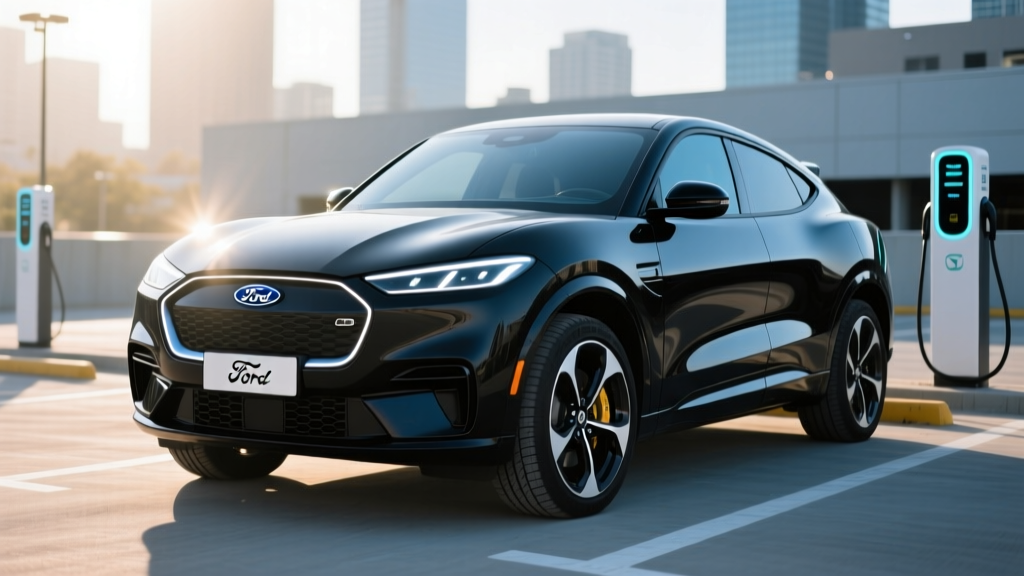
If you've been searching for a "ford mach e 0 apr" deal, you've likely seen Ford's promotional financing offers cycle through periodically. A 0% APR promotion on the Mustang Mach-E effectively shaves thousands off the total cost of ownership compared to prevailing auto-loan rates (which hover around 6-8% for new EVs in early 2026). On a $45,000 Mach-E financed over 60 months, the difference between 0% and 7% APR is roughly $8,400 in avoided interest — more valuable in many cases than the federal tax credit itself.
But financing deals are only as good as the vehicle underneath. The 2026 Mustang Mach-E remains one of the most well-rounded electric crossovers on the market, competing directly with the Tesla Model Y, Hyundai Ioniq 5, and Kia EV6. Below, we break down the real numbers — range, charging, pricing, and tax-credit eligibility — so you can decide whether to pull the trigger while promotional rates last.
2026 Ford Mustang Mach-E: Full Spec Sheet
| Specification | Select RWD (Std Range) | Premium RWD (Ext Range) | Premium AWD (Ext Range) | GT (Ext Range) |
|---|---|---|---|---|
| EPA Range | 250 mi | 320 mi | 290 mi | 280 mi |
| Battery (usable kWh) | 70 kWh (LFP) | 91 kWh (NMC) | 91 kWh (NMC) | 91 kWh (NMC) |
| Horsepower | 266 hp | 290 hp | 346 hp | 480 hp |
| 0-60 mph | 6.3 sec | 5.8 sec | 5.1 sec | 3.5 sec |
| Peak DC Fast Charge | 115 kW | 150 kW | 150 kW | 150 kW |
| 10-80% DCFC Time | ~38 min | ~36 min | ~36 min | ~36 min |
| Level 2 Home Charge (miles/hr) | ~22 mi/hr | ~28 mi/hr | ~28 mi/hr | ~28 mi/hr |
| EPA Efficiency (MPGe) | 101 MPGe | 104 MPGe | 96 MPGe | 84 MPGe |
| Base MSRP | $39,995 | $46,995 | $49,995 | $56,995 |
Source: Ford Motor Company official specifications and fueleconomy.gov.
Real-World Range: What the EPA Number Doesn't Tell You
EPA sticker: 320 miles (Premium RWD, Extended Range)
Real-world highway (70 mph, mild weather): ~265-280 miles
Real-world highway (winter, 30°F): ~220-240 miles
City/mixed driving with regen: ~290-310 miles
The 320-mile EPA figure on the Premium RWD Extended Range is competitive with the segment, but as with every EV, your mileage will vary. The Mach-E's thermal management system is robust — Ford uses an active liquid cooling/heating loop that mitigates some cold-weather losses — but physics still wins in sub-freezing temperatures. Expect a 20-30% range reduction in sustained winter highway driving. In our experience, the Mach-E's range estimator (the "Guess-O-Meter" in the instrument cluster) is reasonably accurate once it calibrates to your driving pattern over the first 50-100 miles.
For the Standard Range LFP battery trims, the 250-mile EPA figure is adequate for commuting and city use but will feel tight on road trips. Plan charging stops every ~180-200 miles of highway driving in a Standard Range model.
Charging Speed: DC Fast, Level 2, and the NACS Transition
Charging speed is where the Mach-E shows its age relative to the Hyundai Ioniq 5's 800V architecture (which peaks at 240+ kW). The Mach-E operates on a 400V platform, capping DC fast charging at 150 kW peak for Extended Range models and 115 kW for Standard Range.
| Charging Level | Power / Rate | Typical Use Case |
|---|---|---|
| Level 1 (120V household) | ~1.4 kW / ~3-4 mi/hr | Overnight trickle; emergency top-offs |
| Level 2 (240V home, 48A) | ~10.5 kW / ~22-28 mi/hr | Daily home charging; full charge in 8-10 hrs |
| DC Fast Charge (Std Range) | 115 kW peak / 10-80% in ~38 min | Road-trip stops on Electrify America, EVgo |
| DC Fast Charge (Ext Range) | 150 kW peak / 10-80% in ~36 min | Road-trip stops; taper begins above 80% SoC |
| Tesla Supercharger (with adapter) | Up to 150 kW (varies by station) | Access to 20,000+ NACS Superchargers nationwide |
The 10-80% time of roughly 36 minutes for Extended Range models is acceptable for road trips — you'll add about 180-200 miles of range per stop — but it's noticeably slower than the Ioniq 5's ~18-minute 10-80% sprint. The charge curve tapers significantly above 80% State of Charge, so avoid charging past 85% at DC fast stations unless you need every last mile.
NACS adapter access: Ford began shipping CCS-to-NACS adapters to Mach-E owners in 2024, and the 2026 model year includes the adapter in-box. This unlocks the Tesla Supercharger network — a massive advantage for road-trip charging reliability. Ford's in-dash navigation now routes through Superchargers alongside Electrify America and EVgo stations.
For detailed home charger installation costs and electrical requirements, see our charging guides or consult a licensed electrician for your specific panel capacity.
Performance, Efficiency, and Daily Drivability
The Mach-E's driving dynamics punch above its weight for an electric crossover. The rear-wheel-drive layout (standard on Select and available on Premium) gives it a sporty, balanced feel that lives up to the Mustang badge more than skeptics expected. The GT trim's 3.5-second 0-60 time puts it in sports-car territory, while the standard RWD model's 6.3-second sprint is perfectly adequate for merging and passing.
Efficiency figures from fueleconomy.gov show the Premium RWD Extended Range at 104 MPGe combined (roughly 32 kWh/100 mi). That's competitive with the Tesla Model Y Long Range (111 MPGe) but trails the lighter Hyundai Ioniq 5 (114 MPGe). In practical terms, expect to spend about $0.04-$0.06 per mile on electricity at national-average residential rates ($0.16/kWh) — versus $0.12-$0.15 per mile for a comparable gas crossover at $3.50/gallon.
Cargo and passenger space: The Mach-E offers 29.7 cubic feet behind the rear seats and 59.7 cubic feet with the rear seats folded. Rear legroom is 38.1 inches — generous for the segment. The front trunk (frunk) adds 4.7 cubic feet of drainable storage, useful for charging cables or groceries. Total interior volume is competitive with the Model Y but slightly behind the Ioniq 5's flat-floor packaging.
Pricing, 0% APR Financing, and Federal Tax Credit Math
Here's where the "ford mach e 0 apr" search intent pays off. Ford periodically offers 0% APR financing for 48-72 months on the Mach-E through Ford Credit, typically to buyers with tier-1 credit (FICO 720+). Let's model what this means versus paying cash, using the federal tax credit, or taking a conventional loan.
| Scenario | MSRP | Incentive / Credit | Interest Paid (60 mo) | Effective Total Cost |
|---|---|---|---|---|
| Cash purchase, no credit | $46,995 | $0 | $0 | $46,995 |
| Cash + §30D tax credit | $46,995 | -$7,500 | $0 | $39,495 |
| 0% APR (60 mo), no credit | $46,995 | $0 | $0 | $46,995 |
| 0% APR + §30D at point-of-sale | $46,995 | -$7,500 | $0 | $39,495 |
| 7% APR (60 mo), no credit | $46,995 | $0 | +$9,310 | $56,305 |
Federal tax credit (§30D) eligibility for the 2026 Mach-E: As of the current IRS guidance, the Mach-E qualifies for the full $7,500 federal tax credit when purchased new, subject to the following requirements (verify current status at irs.gov):
- MSRP cap: Vehicle MSRP must not exceed $80,000 (vans/SUVs/pickups) — the Mach-E qualifies across all trims.
- Buyer income cap: Modified AGI must not exceed $150,000 (single), $225,000 (head of household), or $300,000 (married filing jointly).
- Battery sourcing: Critical minerals and battery components must meet phased-in domestic-content thresholds that tighten annually. Ford has worked to qualify the Mach-E's battery supply chain, but always confirm current-year eligibility on the IRS qualified vehicles list before purchasing.
- Point-of-sale transfer: Since 2024, buyers can transfer the credit to the dealer at purchase, reducing the sale price by $7,500 upfront — you don't need to wait until tax filing.
Key caveat: You generally cannot stack a 0% APR promotional rate AND the point-of-sale tax credit transfer if the dealer's promotional financing requires forgoing other incentives. Ask your Ford dealer to run both scenarios — sometimes taking the $7,500 credit at a slightly higher rate (e.g., 1.9% APR) costs less overall than 0% without the credit. Always run the math for your specific term and credit tier.
Tech, Safety, and Driver-Assist Features
The 2026 Mach-E runs Ford's latest SYNC 4A infotainment on a 15.5-inch vertical touchscreen. Wireless Apple CarPlay and Android Auto are standard. The system is responsive, though Ford's decision to bury climate controls in the touchscreen remains a frustration for some drivers.
Ford BlueCruise (Ford's hands-on-wheel, eyes-on-road Level 2 driver-assist system) is available on mapped divided highways. It handles steering, acceleration, and braking competently, and the driver-monitoring camera ensures you stay engaged. BlueCruise is not self-driving — it is an SAE Level 2 system requiring constant driver supervision, comparable to GM's Super Cruise or Tesla's Autopilot. A 90-day trial is included; after that, expect a subscription of roughly $75/month or $800/year.
Safety ratings are strong: the Mach-E earned a 5-star overall rating from NHTSA and TOP SAFETY PICK+ status from IIHS in prior model years. Standard equipment includes automatic emergency braking with pedestrian detection, blind-spot monitoring, rear cross-traffic alert, and evasive steering assist.
Warranty and Long-Term Battery Outlook
Ford covers the Mach-E with a 3-year/36,000-mile bumper-to-bumper warranty and a 8-year/100,000-mile battery and electric powertrain warranty. The battery warranty guarantees that the high-voltage pack will retain at least 70% of its original capacity during the coverage period — a fairly standard threshold in the industry.
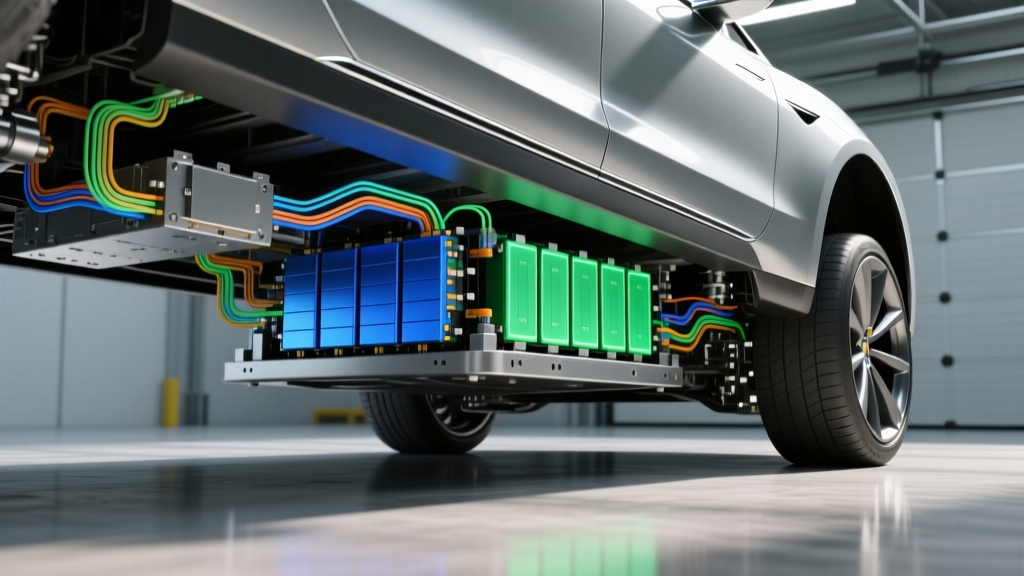
The Extended Range models use NMC (nickel manganese cobalt) chemistry, which offers higher energy density but is slightly more sensitive to sustained 100% charges and extreme heat. The Standard Range models use LFP (lithium iron phosphate) chemistry, which is more durable over thousands of charge cycles and can be charged to 100% daily without accelerated degradation. If you plan to keep the vehicle 10+ years or regularly charge to full, the LFP Standard Range pack may age more gracefully — though you sacrifice 70 miles of EPA range.
Real-world degradation data from early Mach-E owners (2021-2023 models) suggests approximately 5-8% capacity loss over the first 60,000 miles for NMC packs, which is within industry norms. A full battery replacement out of warranty would likely cost $12,000-$18,000 based on current pricing, though module-level repairs may be possible at lower cost.
Pros, Cons, and Who Should Buy the Mach-E
- 320-mile EPA range (Ext Range RWD) is segment-competitive
- NACS adapter included — full Supercharger network access
- Sporty driving dynamics; GT trim is genuinely quick
- Comfortable, spacious cabin with strong cargo capacity
- Strong safety ratings (NHTSA 5-star, IIHS TSP+)
- 0% APR promos can save $8,000+ vs. market-rate loans
- DC fast charging peaks at 150 kW — slower than Ioniq 5/EV6
- Climate controls buried in touchscreen
- BlueCruise subscription adds ongoing cost
- Ride quality firm on larger wheels (GT especially)
- No frunk power outlet for V2L accessories
- Standard Range (LFP) limited to 250 miles EPA
- Choose the Mach-E if: You want a well-rounded EV crossover with Supercharger access, sporty handling, and strong safety credentials — and you can lock in 0% APR or stack the §30D credit at point-of-sale.
- Consider the Ioniq 5 or EV6 if: Ultra-fast DC charging (10-80% in ~18 min) is a priority for frequent road trips, or you prefer V2L capability for camping/tailgating.
- Consider the Tesla Model Y if: You want the most mature Supercharger-native experience, the lowest energy consumption per mile, or the strongest software/OTA update cadence.
- Consider a PHEV instead if: You lack reliable home charging access and your commute includes long rural stretches with sparse DC fast-charging infrastructure.
Frequently Asked Questions
What is the real-world range of the Ford Mustang Mach-E?
The EPA rates the Premium RWD Extended Range at 320 miles, but expect 265-280 miles in real-world highway driving at 70 mph, and 220-240 miles in freezing winter conditions. The Standard Range LFP model delivers about 200-210 real-world highway miles.
How fast does the Mach-E charge at home and on the road?
On a Level 2 home charger (240V, 48A), the Mach-E adds roughly 22-28 miles of range per hour, fully charging overnight in 8-10 hours. DC fast charging peaks at 150 kW (Extended Range) or 115 kW (Standard Range), with a 10-80% session taking approximately 36-38 minutes.
Does the 2026 Mach-E qualify for the $7,500 federal EV tax credit?
The Mach-E has qualified for the full §30D credit in recent years, but eligibility depends on current-year battery sourcing rules, your income (AGI caps apply), and the vehicle's MSRP (must be under $80,000). Always check the IRS qualified vehicle list before purchasing, as eligibility can change mid-year.
Can I combine the 0% APR offer with the federal tax credit?
It depends on the specific Ford Credit promotion terms. Some 0% APR offers are structured as "special financing OR incentive cash" — meaning you must choose one. Ask your dealer to model both scenarios. In many cases, taking the $7,500 point-of-sale credit at a low (but not zero) APR yields a lower total cost than 0% APR without the credit.
Is the Mach-E worth buying vs. the Tesla Model Y or Hyundai Ioniq 5?
The Mach-E wins on driving dynamics, interior material quality, and NACS Supercharger access (with included adapter). The Model Y wins on efficiency, software, and native Supercharger integration. The Ioniq 5 wins on DC fast-charge speed and V2L capability. If 0% APR financing is available on the Mach-E but not on competitors, the financing savings alone can tip the value equation in Ford's favor.
How long will the Mach-E battery last?
Ford warranties the battery for 8 years/100,000 miles with a 70% capacity retention guarantee. Early owner data shows 5-8% degradation over 60,000 miles for NMC packs. With proper care (avoiding sustained 100% charges, using preconditioning for DC fast charging), the battery should provide reliable service well beyond the warranty period. LFP Standard Range packs may degrade even more slowly.