Quick Answer: Is the Ford Focus Electric Worth Buying in 2026?
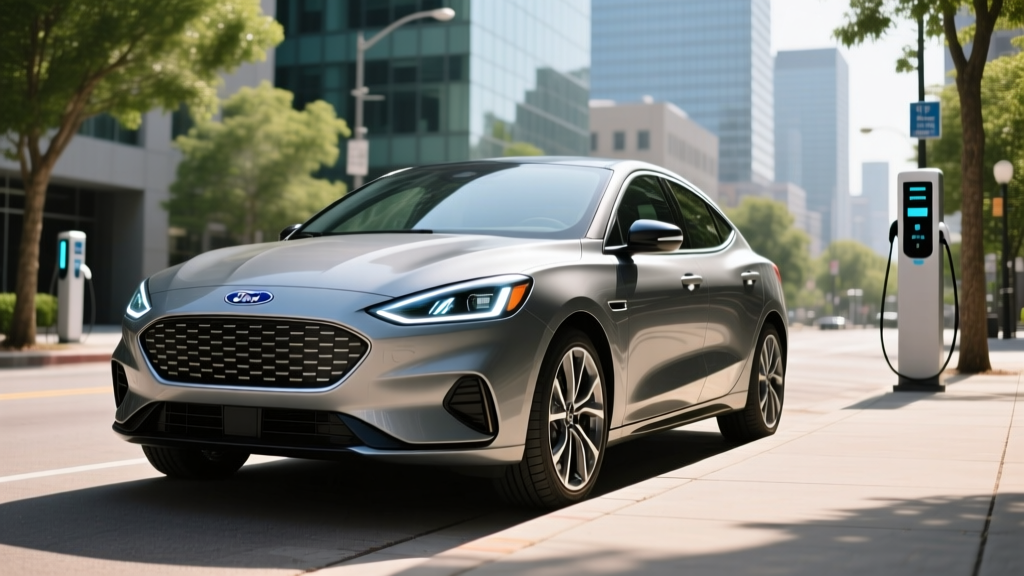
The Ford Focus Electric was discontinued after the 2018 model year and is only available on the used market. With an EPA-rated 76 miles of range (115 MPGe combined) from its 23 kWh usable liquid-cooled lithium-ion battery, it serves as a low-cost city commuter — not a road-trip vehicle. Used prices in 2026 typically range from $6,000 to $11,000 depending on mileage and battery health. It makes sense only if you have reliable home Level 2 charging, drive under 50 miles round-trip daily, and want an ultra-affordable entry into EV ownership. For anything beyond a second car or urban runabout, modern EVs with 250+ miles of range are a far better investment.
Ford Focus Electric: Key Specs at a Glance
Before evaluating whether this aging EV fits your life, here are the exact numbers that define the Focus Electric. Ford produced two main variants: the 2012–2016 model with a 23 kWh battery (76-mile EPA range) and the 2017–2018 refresh with a 33.5 kWh battery (115-mile EPA range). The differences matter enormously on the used market.
| Specification | 2012–2016 Focus Electric | 2017–2018 Focus Electric |
|---|---|---|
| EPA Range | 76 miles | 115 miles |
| Battery (usable) | 23 kWh | 33.5 kWh |
| Battery Chemistry | Lithium-ion (NMC) | Lithium-ion (NMC) |
| Thermal Management | Liquid-cooled | Liquid-cooled |
| Motor Output | 107 kW (143 hp) | 107 kW (143 hp) |
| 0–60 mph | ~9.2 seconds | ~9.2 seconds |
| EPA MPGe (combined) | 105 MPGe | 107 MPGe |
| DC Fast Charging | Not available | 50 kW CCS (optional) |
| Level 2 Charge Rate | 6.6 kW (J1772) | 6.6 kW (J1772) |
| Level 2 Charge Time (0–100%) | ~3.5 hours | ~5.5 hours |
| Level 1 (120V) Charge Time | ~20+ hours | ~30+ hours |
| Cargo Volume | 14.5 cu ft (reduced by battery) | 14.5 cu ft |
Sources: EPA Fuel Economy Guide, Ford Motor Company archived specifications.
Real-World Range: What to Actually Expect
The EPA sticker is a starting point, not a guarantee. For the Focus Electric, real-world range varies significantly based on temperature, driving style, and terrain.
EPA Sticker: 76 miles (2012–2016) / 115 miles (2017–2018)
Real-World Highway (70 mph, moderate temps): ~60–65 miles (early) / ~90–100 miles (late)
Cold Weather (below 30°F, cabin heat on): ~45–55 miles (early) / ~70–85 miles (late)
City Driving (regen-heavy, mild temps): ~80–90 miles (early) / ~115–125 miles (late)
The Focus Electric's liquid-cooled battery is a genuine advantage over the air-cooled packs in the contemporaneous Nissan Leaf — it resists heat-related degradation far better in hot climates and sustains performance during repeated acceleration. However, cabin heating in winter draws heavily from the 23 kWh pack. Unlike modern EVs with heat pumps, the Focus Electric uses a resistive PTC heater that can consume 3–5 kW continuously, cutting range by 30–40% in freezing conditions.
For the 2017–2018 models, the larger 33.5 kWh battery provides a meaningful buffer, but the same cold-weather penalty applies. If you live in the northern U.S. and commute more than 40 miles one-way in winter, even the later model will be tight.
Charging the Focus Electric: What You Need to Know
This is where ownership reality sets in. The Focus Electric was designed for home charging, and its limitations become painful if you lack a garage or driveway.
| Charging Level | Power (kW) | Connector | Miles Added per Hour | Practical Use Case |
|---|---|---|---|---|
| Level 1 (120V outlet) | ~1.2 kW | J1772 | ~4–5 miles | Emergency top-up only |
| Level 2 (240V home/public) | 6.6 kW | J1772 | ~22 miles | Primary daily charging |
| DC Fast Charge (2017–18 only) | 50 kW peak | CCS1 | ~120 miles/hr (taper quickly) | Road-trip emergency only |
Critical note on DC fast charging: Only the 2017–2018 models offered a CCS DC fast-charge port, and even then it was optional on some trims. At 50 kW peak, the charge curve tapers sharply past 80% State of Charge (SoC). Expect a 10–80% charge in roughly 45–55 minutes on a 50 kW station — far slower than modern EVs that hit 10–80% in 18–25 minutes at 150–250 kW. The early 2012–2016 models have no DC fast charging at all, meaning every charge must happen on Level 1 or Level 2.
Home charging setup: A Level 2 home charger (240V, 30-amp circuit minimum) is essentially mandatory for daily Focus Electric ownership. Installation costs vary:
| Item | Estimated Cost Range |
|---|---|
| Level 2 EVSE (J1772, 32–40A) | $250–$600 |
| Electrician labor (240V outlet or hardwire) | $500–$1,500 |
| Permit (where required) | $50–$200 |
| Electrical panel upgrade (if needed, 100A→200A) | $1,500–$3,500 |
| Total typical install | $800–$2,300 (without panel upgrade) |
If you rent, live in an apartment, or rely exclusively on street parking, the Focus Electric's lack of fast-charging speed (or absence of DC charging entirely on early models) makes it a poor fit. Consult a licensed electrician for your specific home setup.
Focus Electric vs. Gas Focus vs. Modern Used EVs
How does the Focus Electric compare to the gas-powered Focus it was based on, and to other used EVs available in 2026?
| Metric | Focus Electric (2017) | Gas Focus (2017, 2.0L) | Used Chevy Bolt EV (2017–2019) | Used Nissan Leaf (2018, 40 kWh) |
|---|---|---|---|---|
| EPA Range / Tank Range | 115 miles | ~380 miles | 238 miles | 151 miles |
| MPGe / MPG Combined | 107 MPGe | 30 MPG | 119 MPGe | 112 MPGe |
| Fuel/Energy Cost per Mile | ~$0.04 (at $0.14/kWh) | ~$0.12 (at $3.50/gal) | ~$0.04 | ~$0.04 |
| Used Price (2026 est.) | $7,000–$11,000 | $8,000–$12,000 | $12,000–$17,000 | $10,000–$15,000 |
| DC Fast Charging | 50 kW (optional) | N/A | 55 kW CCS | 50 kW CHAdeMO |
| Battery Warranty Remaining | 8yr/100k mi (if eligible) | N/A | 8yr/100k mi | 8yr/100k mi |
The Focus Electric's main advantage is its low used price. Against the Bolt EV, which offers more than double the range, the Focus Electric only wins on upfront cost. Against the Leaf, it's comparable in range (for the 2017–2018 model) but the Leaf's CHAdeMO connector is being phased out at many public networks in favor of CCS and NACS, which may limit future public charging access.
Total Cost of Ownership: 5-Year Breakdown
Assuming a 2017 Focus Electric purchased for $9,000 with 60,000 miles, driven 10,000 miles/year with home Level 2 charging at $0.14/kWh average:
| Cost Category (5 Years) | Focus Electric (2017) | Gas Focus (2017) |
|---|---|---|
| Purchase Price | $9,000 | $10,000 |
| Fuel / Electricity | $2,100 (50,000 mi × $0.042/mi) | $5,833 (50,000 mi × $0.117/mi) |
| Maintenance | ~$1,200 (tires, cabin filter, brake fluid) | ~$3,500 (oil, filters, brakes, belts) |
| Insurance (avg.) | ~$5,500 ($1,100/yr) | ~$5,000 ($1,000/yr) |
| Home Charger Install (one-time) | $1,200 | $0 |
| Estimated Depreciation | ~$3,000 | ~$3,500 |
| 5-Year Total | ~$22,000 | ~$27,833 |
Savings over 5 years: approximately $5,800 — but only if you have home charging and your daily driving fits the range. The savings come primarily from lower energy and maintenance costs. EV insurance tends to be slightly higher due to repair cost structures. Note: the Focus Electric is not eligible for the federal §30D new-vehicle tax credit (discontinued), and the used clean vehicle credit requires the sale price to be $25,000 or less from a licensed dealer, with buyer income caps ($75,000 single / $150,000 married filing jointly). At typical used prices, the Focus Electric qualifies on price, but check current IRS rules for sourcing and income eligibility.
Battery Health and Longevity: What to Check Before Buying
The Focus Electric's liquid-cooled NMC battery holds up better than air-cooled competitors, but degradation is inevitable on a 7–14 year-old pack. Here's what to expect:
- Typical degradation at 8 years / 80,000 miles: 10–18% capacity loss (varies by climate and charging habits)
- Remaining range on a degraded pack: ~60–68 miles (early model) / ~95–105 miles (late model)
- Ford's battery warranty: 8 years / 100,000 miles, covering defects and capacity below 70% of original — but most 2012–2016 models are now outside this window
- Battery replacement cost: $5,000–$8,000 (if available; aftermarket options are limited for this discontinued model)
Before purchasing, insist on:
- A State of Health (SoH) reading from the car's onboard diagnostics or an OBD-II scanner app like LeafSpy (compatible with Focus Electric via CAN bus)
- Documented charging history — frequent DC fast charging and habitual 100% SoC storage accelerate degradation
- Verification that the battery coolant has been serviced per Ford's schedule
- A pre-purchase inspection by an EV-qualified mechanic
Myths vs. Facts: Common Misconceptions
| Myth | Fact |
|---|---|
| "The Focus Electric battery will need replacing soon" | Liquid-cooled NMC packs typically retain 80–90% capacity at 100k miles. Check SoH before buying; most are still functional. |
| "It can use Tesla Superchargers" | No. The Focus Electric uses J1772 (Level 2) and CCS1 (DC, late models only). It has no NACS port and no adapter exists for Supercharger access on this model. |
| "76 miles of range is useless" | For a dedicated city commuter with home charging and a sub-40-mile round trip, 76 miles is adequate — and costs about $1.50/day in electricity. |
| "I can charge it on a regular outlet overnight" | Level 1 adds only ~4–5 miles per hour. A full charge from empty takes 20+ hours on 120V. Level 2 (240V) is strongly recommended. |
| "Maintenance-free means zero costs" | You still need tire rotations, cabin air filters, brake fluid checks, wiper fluid, and eventual tire replacement. EVs are lower-maintenance, not no-maintenance. |
Decision Framework: Should You Buy a Used Ford Focus Electric?
Buy the Focus Electric if:
- Your daily round-trip commute is under 50 miles (under 40 miles in cold climates)
- You have a garage or driveway where a Level 2 charger can be installed
- You want the cheapest possible entry into EV ownership ($6,000–$11,000)
- This will be a second car, with a gas or longer-range vehicle available for road trips
- You value the Focus hatchback's driving dynamics and want an EV version
Skip the Focus Electric and look at a used Bolt EV, Model 3, or newer Leaf if:
- You regularly drive more than 60 miles one-way
- You live in an apartment or lack home charging access
- You need DC fast charging for any highway travel (early models lack it entirely)
- You live in a region with extreme winters and have a commute over 30 miles one-way
- You want modern driver-assistance features (the Focus Electric has basic ABS and stability control, no adaptive cruise or lane-keeping)
Frequently Asked Questions
Is the Ford Focus Electric still being made?
No. Ford discontinued the Focus Electric after the 2018 model year, along with most of its North American car lineup. The only way to buy one in 2026 is on the used market.
Can I get a tax credit for buying a used Ford Focus Electric?
You may qualify for the IRS used clean vehicle credit of up to $4,000 (30% of sale price, max $4,000) if the vehicle is purchased from a licensed dealer for $25,000 or less, and your income is below $75,000 (single) or $150,000 (married filing jointly). Rules are subject to change — consult a tax professional and the latest IRS guidance.
What happens if the battery dies out of warranty?
Replacement options are limited since the model is discontinued. Some EV battery refurbishers offer cell-level repair for $2,000–$4,000, and full pack replacement (if sourced) runs $5,000–$8,000. Factor this risk into your purchase decision on higher-mileage examples.
How does cold weather affect the Focus Electric's range?
Expect a 30–40% range reduction in sustained freezing temperatures due to resistive cabin heating and reduced battery efficiency. A 76-mile EPA car becomes a 45–55 mile car in January in Minnesota. Preconditioning while plugged in helps preserve range.
Is the Focus Electric safe?
The Focus Electric was not separately crash-tested by the NHTSA or IIHS as an EV variant, but the conventional Focus hatchback of the same generation earned an IIHS Top Safety Pick rating (2013–2014 models, with specific headlight and restraint caveats). It lacks modern ADAS features like automatic emergency braking or lane-departure warning.
Can I tow with the Ford Focus Electric?
No. Ford did not rate the Focus Electric for any towing capacity. It's strictly a passenger commuter vehicle.