Quick Verdict: Is the 2017 Ford Focus Electric Worth Buying Used in 2026?
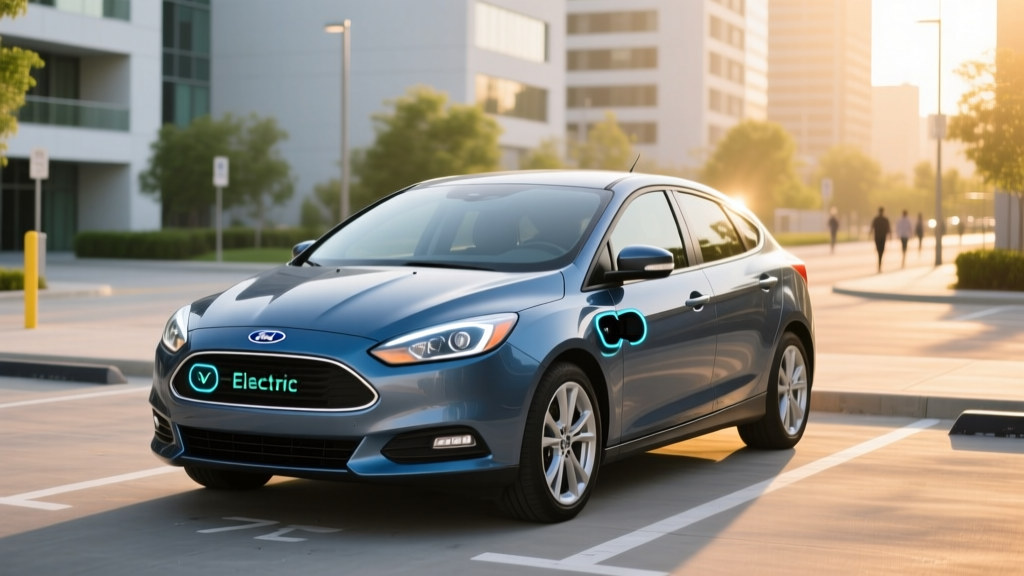
The 2017 Ford Focus Electric is a viable budget commuter EV for drivers who can charge at home and travel fewer than 80 miles round-trip daily. With a used market price of roughly $7,000–$11,000 in 2026, it undercuts nearly every modern EV. However, its 115-mile EPA range, 33.5 kWh battery (with only ~23 kWh usable), and DC fast-charge rate limited to ~50 kW mean it cannot serve as a sole household vehicle for road trips or long commutes. Buy it as a second car, a city runabout, or a cheap entry into EV ownership — not as a do-everything daily driver.
Range and Battery: What 115 EPA Miles Really Means in 2026
The 2017 Focus Electric uses a 33.5 kWh total / ~23 kWh usable lithium-ion battery pack with LG Chem NMC (nickel manganese cobalt) cells. Ford deliberately buffers a large portion of the pack to protect longevity, but the trade-off is modest real-world range.
According to EPA data on fueleconomy.gov, the 2017 Focus Electric achieves:
- EPA range: 115 miles
- Combined MPGe: 107 MPGe
- Energy consumption: 31 kWh/100 miles
Real-World Range Expectations
EPA sticker: 115 miles. Here is what to expect in practice:
- Mild weather, city driving: 105–120 miles (regenerative braking helps in stop-and-go traffic)
- Highway (70 mph sustained): 85–100 miles (aerodynamic drag and no regen advantage)
- Cold weather (below 30°F): 65–85 miles (no heat pump; resistive cabin heater draws significant battery power)
- Hot weather with A/C: 95–110 miles
If your daily round-trip commute exceeds 80 miles, this car will cause range stress. Plan conservatively.
Battery Degradation After 8–9 Years
Most 2017 Focus Electric packs have experienced between 10% and 20% capacity loss by 2026 depending on climate, charging habits, and mileage. A well-maintained example in a temperate climate might retain ~85–90% State of Health (SoH), yielding roughly 95–105 miles of usable range. A high-mileage car frequently DC fast-charged in Arizona heat could be closer to 75–80% SoH — meaning only ~85 real-world miles in mild conditions.
Before purchasing, request a battery health report. Some OBD-II tools and apps like LeafSpy (adapted for Ford via FORScan) can estimate SoH. Ford's original battery warranty was 8 years/100,000 miles (10 years/150,000 miles in CARB states like California), covering defects and capacity loss below 60%. Most 2017 models are now at or past the 8-year mark — verify remaining coverage by VIN with a Ford dealer.
Charging Speeds: Level 1, Level 2, and DC Fast Charging
The 2017 Focus Electric was one of the few affordable EVs of its era to include DC fast charging (via CCS1 connector) as standard equipment — a notable advantage over the contemporaneous Nissan Leaf, which used the CHAdeMO standard and often required a paid upgrade for fast-charge capability.
| Charging Level | Power (kW) | Connector | Time (Empty to Full / 10–80%) | Miles Added per Hour |
|---|---|---|---|---|
| Level 1 (120V household) | ~1.4 kW | J1772 | ~24 hours (full) | ~4–5 mi/hr |
| Level 2 (240V home/public) | 6.6 kW (onboard charger max) | J1772 | ~5 hours (full) | ~20–22 mi/hr |
| DC Fast Charge | ~50 kW peak | CCS1 (Combo) | ~30 min (10–80%) | ~90–110 mi/hr (at peak) |
Charging Curve Reality Check
The ~50 kW peak DC fast-charge rate is maintained only between roughly 10% and 50% State of Charge. Above 80%, the charge rate tapers sharply to protect the battery — dropping to under 15 kW. This means a 10–80% session takes about 30 minutes, but a 10–100% session could stretch past 50 minutes. For road trips, plan to charge to 80% and move on rather than waiting for a full pack.
Home Charging Setup
Level 2 home charging at 6.6 kW is the practical sweet spot. A full charge in ~5 hours means you can plug in after work and wake up to a full battery every morning. Installation of a 240V Level 2 circuit (NEMA 14-50 outlet or hardwired EVSE) typically costs $500–$2,000 depending on your electrical panel's proximity to the garage and whether a panel upgrade is needed. Always hire a licensed electrician for the final installation.
Performance and Driving Experience
The 2017 Focus Electric produces 143 horsepower (107 kW) and 184 lb-ft of torque from its front-mounted AC synchronous motor. Ford lists the 0–60 mph time at approximately 9.9 seconds — adequate for city merging but noticeably slower than modern EVs.
| Spec | 2017 Ford Focus Electric |
|---|---|
| Motor Output | 143 hp / 184 lb-ft |
| 0–60 mph | ~9.9 seconds |
| Top Speed | 84 mph (electronically limited) |
| Drivetrain | Front-wheel drive |
| Curb Weight | ~3,624 lbs |
| Cargo Volume | 14.5 cu ft (reduced by battery packaging) |
The driving dynamics are typical of a compact hatchback — competent, if uninspiring. Regenerative braking is moderate and does not enable true one-pedal driving like a Chevrolet Bolt or Tesla Model 3. The cabin is quiet at low speeds, and the liquid-cooled battery thermal management system keeps the pack in a healthy temperature range during both hot and cold conditions — a significant advantage over the passively air-cooled Nissan Leaf of the same era.
Cost Breakdown: Buying and Owning the Focus Electric in 2026
Purchase Price
Used 2017 Focus Electric models in 2026 typically trade between $7,000 and $11,000 depending on mileage, condition, and battery health. Low-mileage examples under 40,000 miles command the higher end of that range.
Federal and State Incentives
The Used Clean Vehicle Credit (§25E) allows eligible buyers to claim up to $4,000 (or 30% of the sale price, whichever is less) on a qualifying used EV purchased from a dealer. However, the vehicle must have a sale price of $25,000 or less, the buyer must meet income thresholds ($75,000 single / $150,000 joint), and the car must be at least two model years old. At a ~$9,000 purchase price, the credit would be 30% of that — roughly $2,700 — effectively bringing your net cost down to the $5,000–$8,000 range. Verify current eligibility on IRS.gov before purchase.
The original $7,500 new-vehicle §30D credit does not apply to used purchases.
| Annual Cost Category | 2017 Focus Electric | 2017 Ford Focus 1.0L Gas (30 MPG Combined) |
|---|---|---|
| Fuel / Electricity (12,000 mi/yr) | $450–$600 (at $0.13–$0.17/kWh home rate) | $1,400–$1,600 (at $3.50–$4.00/gal) |
| Maintenance | $200–$400 (no oil changes, fewer brake jobs due to regen) | $600–$900 (oil, filters, belts, more frequent brakes) |
| Insurance (avg) | $1,100–$1,500 | $1,000–$1,400 |
| Estimated Annual Total | $1,750–$2,500 | $3,000–$3,900 |
The annual fuel and maintenance savings of $1,200–$1,800 make the Focus Electric compelling as a commuter — especially since the purchase price is already low.
Focus Electric vs. Modern Budget EVs and Gas Cars
| Spec | 2017 Focus Electric (Used) | 2026 Nissan Leaf S (New) | 2017 Focus Gas 1.0L (Used) |
|---|---|---|---|
| Purchase Price (2026) | $7,000–$11,000 | ~$29,000 MSRP | $8,000–$12,000 |
| EPA Range / MPG | 115 mi | 149 mi | 30 MPG combined |
| Battery / Tank | 33.5 kWh (23 usable) | 40 kWh usable | 12.4 gal |
| DC Fast Charge | ~50 kW (CCS1) | ~50 kW (CHAdeMO) | N/A |
| Annual Fuel Cost | $450–$600 | $400–$550 | $1,400–$1,600 |
| Warranty Remaining | Expired or expiring | 8 yr / 100,000 mi battery | Expired |
The Focus Electric trades a lower purchase price for significantly less range and no remaining warranty in most cases. If your budget stretches to $25,000+, a used 2022–2024 Chevrolet Bolt EV (259-mile range) offers far more versatility. If your budget is firmly under $12,000, the Focus Electric is one of the cheapest ways to go electric.
Common Misconceptions About the Focus Electric
| Myth | Fact |
|---|---|
| "The battery will need a $15,000 replacement soon." | Most packs are retaining 80–90% SoH at 8–9 years. The liquid-cooled thermal system has proven durable. Full replacement is rare and would cost $6,000–$9,000 at a dealer — though that rarely makes economic sense on a car worth $9,000. |
| "It can't handle winter." | It can, but range drops to 65–85 miles in freezing temperatures. Preconditioning while plugged in helps. The liquid thermal management system is an advantage over air-cooled competitors. |
| "There are no replacement parts." | The Focus Electric shares most body, interior, and suspension parts with the gas Focus. EV-specific parts (motor, inverter) are available through Ford dealers and salvage networks. |
| "I can road-trip in it." | Technically possible with CCS1 DC fast charging, but the 115-mile range and ~30-minute charge stops make trips over 200 miles tedious. This is a commuter, not a tourer. |
| "It qualifies for the $7,500 tax credit." | The new-vehicle §30D credit expired for this model years ago. The used-vehicle §25E credit may provide up to ~$2,700 for eligible buyers purchasing from a dealer. |
Who Should Buy the 2017 Focus Electric?
Decision Framework
- Buy it if: You need a cheap second car for commuting under 80 miles round-trip, you have reliable home Level 2 charging access, and your budget is under $12,000.
- Buy it if: You want to try EV ownership with minimal financial risk before committing to a new $40,000+ electric vehicle.
- Buy it if: You live in a mild climate where cold-weather range loss is less severe (Southern or coastal states).
- Skip it if: You need a single vehicle to handle commuting, road trips, and family duties. Look at a used Chevy Bolt EV (259 mi) or Bolt EUV instead.
- Skip it if: You lack home charging access and must rely entirely on public infrastructure. The 115-mile range makes public-charging dependence impractical.
- Skip it if: You regularly drive in sub-freezing temperatures and your commute exceeds 60 miles one-way. Consider a used Chevy Bolt or a plug-in hybrid like the Toyota Prius Prime.
Pre-Purchase Checklist for the 2017 Focus Electric
If you have decided the Focus Electric fits your needs, follow these steps before handing over cash:
- Check battery State of Health. Use an OBD-II scanner with FORScan software or have a Ford dealer pull the battery health report. Target: 80%+ SoH.
- Verify warranty status. Run the VIN on Ford's owner site to check remaining powertrain and battery warranty. CARB-state cars may still have coverage through 10 years/150,000 miles.
- Test the DC fast-charge port. Visit a CCS1 public charger and confirm the car accepts a charge and reaches at least 40 kW. A malfunctioning DC port is expensive to repair.
- Inspect the onboard charger. Confirm Level 2 charging reaches the full 6.6 kW rate. Slower-than-expected Level 2 charging may indicate a faulty onboard charger module.
- Check for recalls. Look up the VIN on NHTSA.gov for any open recalls, particularly related to the battery or charging system.
- Budget for tires and brakes. While regenerative braking reduces wear, a used example may still need new tires ($400–$700) and brake fluid flush ($100–$150).
Frequently Asked Questions
Can I charge the 2017 Focus Electric at a Tesla Supercharger?
No. The 2017 Focus Electric uses a CCS1 DC fast-charge connector. Tesla Superchargers use the NACS (North American Charging Standard) connector. While some automakers have adopted NACS for future models, there is no reliable CCS1-to-NACS adapter for the Focus Electric. You will rely on Electrify America, EVgo, ChargePoint, and other CCS1-compatible networks.
What happens if the battery fails out of warranty?
A full dealer replacement costs approximately $6,000–$9,000, which is rarely economical on a car worth $7,000–$11,000. Independent EV shops sometimes offer refurbished pack replacements for $3,500–$5,500. In practice, catastrophic battery failure is uncommon — gradual capacity loss is the more likely scenario, and the car remains drivable with reduced range.
How does the Focus Electric compare to a 2017 Nissan Leaf?
The 2017 Leaf (30 kWh version) offers a similar 107-mile EPA range but uses a passively air-cooled battery, making it more susceptible to heat-related degradation and rapid charging slowdowns (known as "Rapidgate"). The Focus Electric's liquid-cooled battery is more thermally robust, but the Leaf has slightly more cargo space and a larger used-parts ecosystem. Both are viable budget commuter EVs — the Focus Electric edges ahead on battery longevity.
Is the 2017 Focus Electric safe?
The gasoline Ford Focus earned an IIHS Top Safety Pick rating in its era, and the Electric variant shares the same body structure. It includes standard stability control, antilock brakes, and six airbags. It lacks modern ADAS features like automatic emergency braking or lane-keeping assist, which are now standard on most new vehicles. Check IIHS.org for detailed crash-test scores.
What is the real cost per mile to drive the Focus Electric?
At a national average residential electricity rate of ~$0.15/kWh and the car's consumption of 31 kWh/100 miles, you are paying approximately $0.047 per mile for electricity. A comparable gas car at 30 MPG and $3.75/gallon costs about $0.125 per mile in fuel alone. Over 12,000 miles annually, that is roughly $560 vs. $1,500 — a savings of nearly $940 per year just on energy.