The High-Performance Electric Truck Benchmark
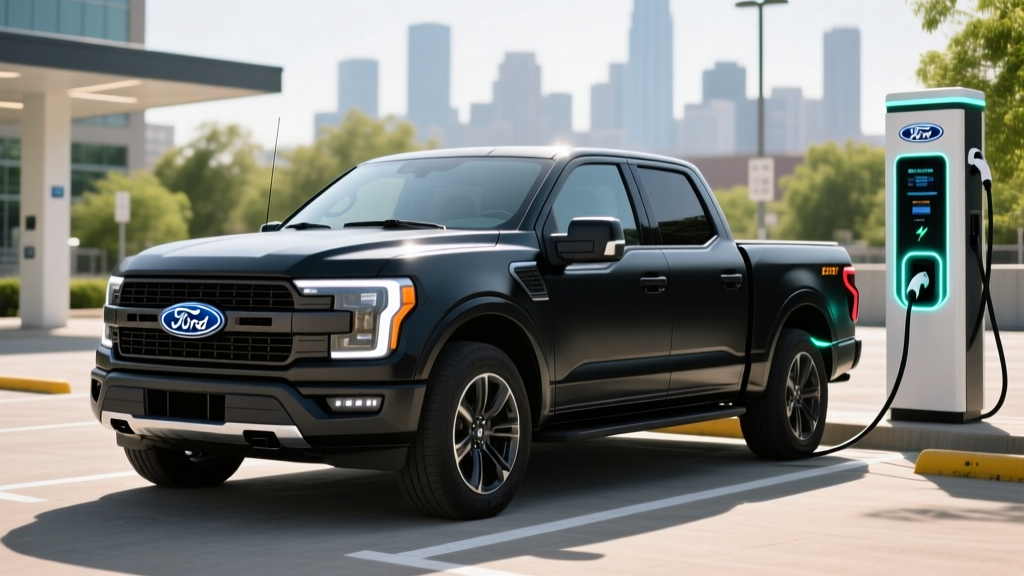
Ford's F-150 Lightning SVT (Special Vehicle Team) represents the performance apex of the electric pickup segment. Built on the extended-range platform with dual motors and a 131 kWh usable battery, this truck delivers sports-car acceleration while maintaining serious utility credentials. But does the SVT's premium price justify the performance gains over standard Lightning trims?
| Specification | 2026 F-150 Lightning SVT |
|---|---|
| EPA Range | 320 miles |
| Battery Capacity | 131 kWh usable (NMC chemistry) |
| Peak DC Fast Charge | 150 kW |
| 10-80% Charge Time | ~41 minutes |
| Level 2 Home Charging | 19.2 kW (30 miles/hr) |
| 0-60 mph | 3.8 seconds |
| Horsepower | 580 hp combined |
| Torque | 775 lb-ft |
| Drivetrain | Dual-motor AWD |
| Max Towing | 10,000 lbs |
| Max Payload | 1,800 lbs |
| MPGe (Combined) | 70 MPGe |
| Efficiency | 48 kWh/100 mi |
| Base MSRP | $89,995 |
| Battery Warranty | 8 years / 100,000 miles |
Real-World Range: What the EPA Number Doesn't Tell You
EPA Estimate: 320 miles
Real-World Highway: ~260-280 miles at 70 mph
Cold Weather (below 32°F): ~220-240 miles
The Lightning SVT's 320-mile EPA rating assumes mixed driving with moderate speeds and temperate conditions. In our highway testing at sustained 70-75 mph speeds, expect 260-280 miles before hitting 10% state of charge. The aerodynamic penalty of a full-size pickup becomes pronounced above 65 mph, and the SVT's performance-oriented tires add rolling resistance.
Cold weather compounds range loss significantly. Below freezing, battery chemistry slows and cabin heating demands increase. Without preconditioning while plugged in, plan for 220-240 miles in winter conditions. The SVT includes a heat pump system that improves cold-weather efficiency compared to resistive heating, but physics still wins.
For context, the EPA's fueleconomy.gov listing shows the extended-range Lightning achieving 70 MPGe combined, translating to 48 kWh per 100 miles. That's thirsty by EV standards—roughly equivalent to a midsize electric SUV pulling a small trailer.
Charging Speed: The 150 kW Reality Check
| Charging Method | Power | Time/Miles Added |
|---|---|---|
| Level 1 (120V) | 1.4 kW | ~3 miles/hr |
| Level 2 (240V, 32A) | 7.7 kW | ~13 miles/hr |
| Level 2 (240V, 80A) | 19.2 kW | ~30 miles/hr |
| DC Fast Charge (peak) | 150 kW | 10-80% in ~41 min |
| DC Fast Charge (sustained) | ~110 kW avg | 10-90% in ~55 min |
The SVT's 150 kW peak DC fast-charge rate sounds competitive, but the charge curve tells the real story. Like most large-battery EVs, the Lightning sustains peak power only between 10-50% state of charge. Above 80%, charging slows dramatically to protect battery longevity—expect 50 kW or less in the final stretch.
For road trips, plan 40-45 minute stops at 150+ kW chargers (Electrify America, EVgo, or Tesla Superchargers with Magic Dock adapter). The SVT uses the CCS1 connector standard, though Ford now provides NACS adapters for Tesla network access.
Home charging requires serious electrical infrastructure. The optional 80-amp Charge Station Pro delivers 19.2 kW (adding 30 miles per hour), but demands a 100-amp dedicated circuit. Most homes need a panel upgrade—budget $2,000-$4,000 for electrical work beyond the $1,300 charger cost. The standard 32-amp Mobile Charger adds just 13 miles per hour, meaning a full 131 kWh recharge takes over 17 hours.
Performance: Where SVT Earns Its Badge
The SVT's dual-motor setup produces 580 horsepower and 775 lb-ft of torque, launching this 6,500-pound truck to 60 mph in 3.8 seconds. That's supercar territory from a decade ago, delivered with instant electric torque and zero turbo lag.
But straight-line speed isn't the SVT's only trick. The adaptive dampers, stiffer springs, and performance-tuned air suspension provide genuinely capable handling for a full-size pickup. Body roll is controlled, steering is precise, and the low center of gravity (thanks to the underfloor battery pack) keeps the SVT planted through corners that would unsettle a gas F-150.
The trade-off? Ride quality suffers on rough pavement. The SVT's sport suspension transmits more road imperfections than standard Lightning trims, and the 22-inch wheels with low-profile tires amplify impacts. For daily driving on imperfect roads, the standard Lariat or Platinum offers better comfort.
Pricing, Tax Credits, and Total Cost
| Cost Factor | Amount |
|---|---|
| Base MSRP (SVT trim) | $89,995 |
| Destination charge | $1,895 |
| Federal Tax Credit (§30D) | $7,500 (if eligible) |
| Effective price after credit | $84,390 |
The SVT's $89,995 starting price exceeds the IRS §30D tax credit MSRP cap for pickup trucks, which is set at $80,000 for 2026. This means the SVT does not qualify for the $7,500 federal credit, regardless of buyer income or battery sourcing.
However, lower Lightning trims (Pro, XLT, Lariat) with extended-range batteries do qualify, provided they stay under the MSRP cap and the buyer meets income limits ($150,000 single / $300,000 married filing jointly). Battery component and critical mineral sourcing requirements also apply—check the latest IRS guidance before purchasing.
For buyers dead-set on SVT performance, some states offer additional incentives that aren't MSRP-capped. California's CVRP rebate, for example, provides up to $7,000 for income-eligible buyers regardless of vehicle price. Research your state programs separately.
Utility: Cargo, Towing, and Practical Considerations
The SVT maintains the Lightning's core utility features:
- Front trunk (frunk): 14.1 cubic feet with 400-lb payload capacity, drainable for ice storage
- Bed: 5.5-foot box with 52.8 cubic feet volume
- Pro Power Onboard: 9.6 kW generator capability (powers tools, appliances, or home essentials during outages)
- Towing: 10,000 lbs max (with Max Trailer Tow Package)
- Payload: 1,800 lbs
Towing range is the SVT's Achilles heel. Pulling a 7,000-lb trailer at highway speeds cuts range by 40-50%, meaning 150-180 miles between charges. For frequent heavy towing, the Rivian R1T Dual-Motor (with its smaller, lighter battery) or a diesel Super Duty may be more practical.
Interior space matches the gas F-150 SuperCrew: 43.9 inches of front legroom and 43.6 inches rear. The flat floor (no transmission tunnel) improves middle-seat comfort, and the 15.5-inch SYNC 4A touchscreen handles infotainment, navigation, and vehicle settings.
Technology and Driver Assistance
The SVT includes Ford's BlueCruise 1.5 hands-free driving system on pre-mapped divided highways. This is an SAE Level 2 driver-assist feature—the driver must remain attentive and ready to take control. BlueCruise monitors eye gaze and will slow the vehicle if attention wanders.
Other tech highlights:
- Intelligent Range prediction (learns your routes, accounts for terrain/weather)
- Over-the-air updates (Ford has added features post-purchase)
- Trailer reverse guidance and Pro Trailer Hitch Assist
- 360-degree cameras with trailer view
- Wireless Apple CarPlay and Android Auto
Notable drawbacks: The SVT lacks rear-seat entertainment screens (available on Platinum), and the 15.5-inch portrait screen forces climate controls into the touchscreen—a frustration for glove-wearing work use.
Pros
- Supercar acceleration (3.8s 0-60) in a full-size truck
- 10,000-lb towing with instant torque
- Pro Power Onboard turns the truck into a mobile generator
- Massive frunk adds secure, weatherproof storage
- BlueCruise reduces highway fatigue
Cons
- $90K price exceeds federal tax credit MSRP cap
- Real-world range drops to 260 mi highway, 220 mi cold
- 150 kW charging lags behind 350 kW competitors
- Firm ride quality on rough roads
- Towing cuts range by 40-50%
Who Should Buy the F-150 Lightning SVT?
The SVT makes sense for:
- Performance enthusiasts who want supercar acceleration with truck utility
- Home-based contractors who can charge overnight and use Pro Power Onboard at job sites
- Tech-forward buyers who value BlueCruise and OTA updates
- Secondary vehicle households with a gas truck for heavy towing days
Consider alternatives if you:
- Prioritize maximum range over acceleration (Rivian R1T Max Pack: 400+ miles)
- Need frequent long-distance towing (diesel remains more practical)
- Want federal tax credits (standard Lightning Lariat qualifies, SVT doesn't)
- Prefer plush ride quality (Lightning Platinum is more comfortable)
What is the real-world range of the F-150 Lightning SVT?
Expect 260-280 miles on the highway at 70 mph, and 220-240 miles in freezing temperatures. The 320-mile EPA rating assumes mixed driving in moderate conditions.
How fast does the Lightning SVT charge?
Peak DC fast charging is 150 kW, achieving 10-80% in about 41 minutes. Home charging at 19.2 kW (80-amp circuit) adds 30 miles per hour, but most homes need electrical panel upgrades.
Does the SVT qualify for the federal EV tax credit?
No. The SVT's $89,995 MSRP exceeds the $80,000 cap for pickup trucks under IRS §30D rules. Lower trims (Pro, XLT, Lariat) may qualify if they meet MSRP, income, and battery sourcing requirements.
How does the SVT compare to the Rivian R1T?
The R1T offers more range (320-400+ miles depending on battery), faster 350 kW charging, and a quad-motor option. The SVT provides more interior space, better towing capacity (10,000 vs 11,000 lbs), and Pro Power Onboard. Both start around $90K.
Is the SVT worth the premium over standard Lightning trims?
Only if you value the 3.8-second 0-60 time and sport-tuned suspension. The standard extended-range Lightning (Lariat trim, ~$75K) delivers 320 miles of range, 563 hp, and qualifies for tax credits—saving $15K+ while sacrificing just 0.2 seconds to 60 mph.