The Ford F-150 Lightning Retirement: What We Know in 2026
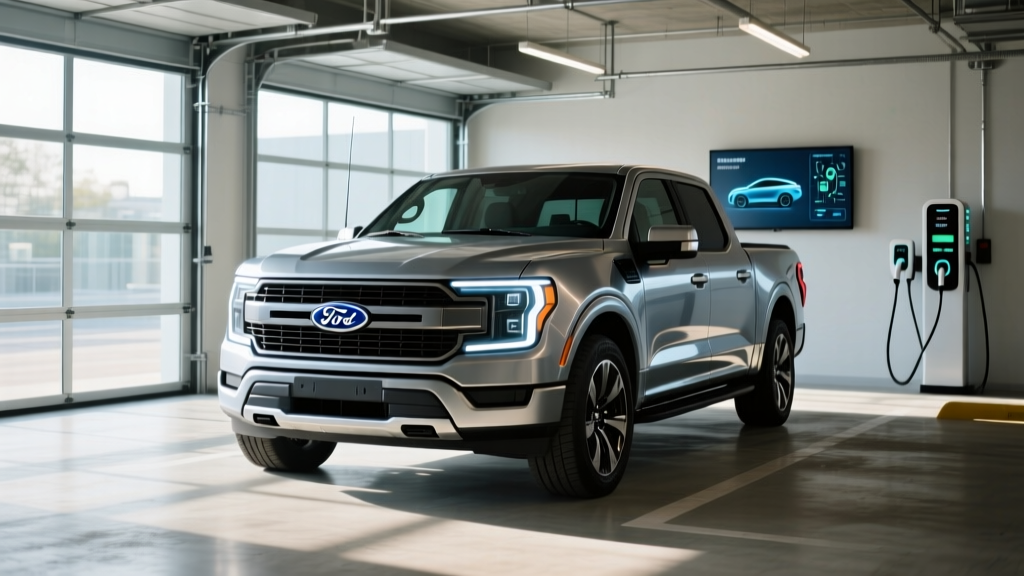
Ford's decision to wind down the F-150 Lightning nameplate marks a pivotal shift in the electric truck segment. After launching for the 2022 model year and iterating through 2025, Ford confirmed that the Lightning badge will be retired as the company pivots its full-size truck electrification strategy toward a next-generation platform built on its flexible universal EV architecture. For buyers, this creates a narrow window: remaining 2025 and early 2026 dealer inventory represents the final opportunity to purchase a new Lightning, while the used market will absorb the bulk of future demand.
This review covers the final-production Lightning's specs, real-world usability, and whether it still makes sense to buy as the model exits the market.
| Spec | Standard Range | Extended Range |
|---|---|---|
| EPA Range | 240 miles | 320 miles |
| Battery Capacity (usable) | 98 kWh | 131 kWh |
| Battery Chemistry | NMC (Nickel Manganese Cobalt) | NMC |
| Drivetrain | Dual-motor AWD | Dual-motor AWD |
| Horsepower | 452 hp | 580 hp |
| Torque | 775 lb-ft | 775 lb-ft |
| 0–60 mph | ~3.8 sec | |
| Max DC Fast Charge | 150 kW | 150 kW |
| 10–80% DC Charge Time | ~44 min | ~41 min |
| Level 2 Home Charge Rate | 11.3 kW (~25 mi/hr) | 19.2 kW (~30 mi/hr) with 80A charger |
| Max Towing | 7,700 lb | 10,000 lb (w/ Max Trailer Tow) |
| Max Payload | 2,235 lb | 1,952 lb |
| EPA Efficiency (MPGe) | 76 MPGe combined | 66 MPGe combined |
| Base MSRP | $54,995 (Pro) | $69,995 (Lariat) |
| Battery Warranty | 8 years / 100,000 miles (≥70% retention) | |
Real-World Range: What the EPA Sticker Doesn't Tell You
EPA Sticker: 240 mi (Standard Range) / 320 mi (Extended Range)
Real-World Expectation: In mixed driving at moderate temperatures, expect 210–230 miles from the Standard Range pack and 270–300 miles from the Extended Range. At sustained highway speeds of 70–75 mph, aerodynamic drag on the truck's boxy profile cuts range by roughly 15–20%. In freezing conditions (below 30°F), cabin heating and battery thermal management can reduce range an additional 20–30%, dropping the Extended Range model to approximately 220–250 miles on a full charge.
The Lightning's real-world range has been one of its most debated attributes. According to EPA data on fueleconomy.gov, the Extended Range model achieves 66 MPGe combined, which translates to roughly 2.0 kWh per mile — thirsty by EV standards but expected for a 6,500-pound truck.
For context: a 300-mile highway road trip in the Extended Range Lightning requires at least one DC fast-charge stop in ideal conditions, and potentially two stops in winter or mountainous terrain. The Standard Range truck is best suited for commuters with reliable home charging and daily drives under 150 miles round-trip.
Charging Speed: DC Fast Charge and Home Level 2
| Charging Level | Power | Miles Added per Hour | Notes |
|---|---|---|---|
| Level 1 (120V outlet) | ~1.4 kW | ~2–3 mi/hr | Emergency/trickle only |
| Level 2 (240V, 32A mobile) | 7.7 kW | ~13 mi/hr | Included mobile cord |
| Level 2 (240V, 48A Wall Connector) | 11.3 kW | ~19–25 mi/hr | Standard Range full overnight |
| Level 2 (240V, 80A Charge Station Pro) | 19.2 kW | ~30 mi/hr | Extended Range; requires 100A circuit |
| DC Fast Charge (CCS) | 150 kW peak | ~100 mi in ~20 min | 10–80% in ~41–44 min; tapers above 80% |
The Lightning's peak 150 kW DC fast-charge rate was competitive at launch but has fallen behind newer rivals. The Rivian R1T (Dual-Motor, Large Pack) now peaks at over 200 kW, and the Chevrolet Silverado EV (4WT trim) supports up to 350 kW on its Ultium platform. The Lightning's charge curve is relatively flat from 20–60% SoC but tapers noticeably above 80%, meaning that last 20% can add 20+ minutes to your stop.
At home, the Lightning's onboard charger is a genuine strength. The available 19.2 kW Level 2 capability (with Ford's 80A Charge Station Pro and a dedicated 100-amp circuit) is among the fastest in any consumer EV. An overnight charge from 20% to full takes roughly 6–7 hours on the Extended Range pack — practical for daily use. Budget $1,200–$2,500 for professional installation of the Charge Station Pro, including a potential panel upgrade if your home electrical service is below 200 amps.
Performance, Towing, and Payload
The dual-motor AWD powertrain gives every Lightning sure-footed traction and genuinely quick acceleration. The Extended Range model's 3.8-second 0–60 mph time outpaces most gas-powered F-150s and makes highway merging effortless even under load.
Towing is where the Lightning demands honest expectations. While Ford rates the Extended Range at 10,000 pounds with the Max Trailer Tow package, real-world towing range drops dramatically. Expect a 50–60% range reduction when towing near maximum capacity at highway speeds — meaning a 320-mile EPA truck becomes a 130–160-mile truck with a heavy trailer. Ford's onboard scales and intelligent range estimation (which factors in trailer weight and route elevation) help manage this, but physics is physics.
Payload capacity ranges from 1,952 to 2,235 pounds depending on battery pack, which is competitive with half-ton gas trucks but lower than heavy-duty alternatives. The front trunk (frunk) offers 14.1 cubic feet of lockable, drainable storage — a genuine utility advantage over gas trucks, and one of the Lightning's most-loved features.
Pricing, Tax Credits, and the Retirement Discount Opportunity
As Ford winds down Lightning production, dealer incentives and inventory clearance pricing are creating opportunities that didn't exist during the 2022–2023 allocation-constrained launch era. Here's where pricing stands for final-production models:
| Trim | Battery | MSRP | Est. After §30D Credit* | Eligible? |
|---|---|---|---|---|
| Pro | Standard Range | $54,995 | ~$47,495 | Yes (if under caps) |
| XLT | Standard Range | $59,995 | ~$52,495 | Yes |
| Lariat | Extended Range | $69,995 | ~$62,495 | Yes |
| Platinum | Extended Range | $84,995 | ~$77,495 | Yes |
| Flash (new for 2025) | Extended Range | $67,995 | ~$60,495 | Yes |
*Estimates assume buyer qualifies for the full $7,500 §30D credit. Eligibility depends on MSRP caps, income thresholds, and battery-component/critical-mineral sourcing rules. See IRS §30D guidelines for current-year rules.
Federal Tax Credit Eligibility Checklist (§30D — current rules):
- MSRP Cap: Trucks/vans/SUVs must have an MSRP at or below $80,000. The Platinum trim at $84,995 exceeds this cap and does NOT qualify.
- Buyer Income Cap: Modified AGI must not exceed $300,000 (joint), $225,000 (head of household), or $150,000 (single).
- Battery Sourcing: The $7,500 credit splits into two halves ($3,750 each) — one for battery components manufactured in North America, and one for critical minerals sourced from the U.S. or FTA partners. The Lightning's SK On battery cells (built in Georgia) have historically met the component requirement, but critical-mineral eligibility can shift annually. Verify current-year sourcing compliance with your dealer before purchase.
- Point-of-Sale Transfer: Eligible buyers can transfer the credit to the dealer at purchase, reducing the purchase price by up to $7,500 upfront rather than waiting for a tax refund.
The retirement timeline creates a buyer's paradox: inventory is more available and discount-friendly than at any point since launch, but the model's long-term parts and service support is an open question. Ford has committed to supporting Lightning owners with parts and service for a minimum of 10 years post-production, but resale values may soften as the nameplate exits the market.
Interior, Tech, and Driver Assistance
The Lightning's cabin is essentially identical to the gas F-150 SuperCrew — a 4-door, 5-6 passenger layout with generous rear legroom (43.6 inches) and a flat floor thanks to the absence of a driveshaft hump. Cargo volume behind the rear seats is approximately 52.8 cubic feet in the 5.5-foot bed.
The available 15.5-inch portrait touchscreen (Lariat and above, running SYNC 4A) is one of the largest in any truck, and it handles navigation, media, and vehicle settings well once you learn the menu structure. Wireless Apple CarPlay and Android Auto are standard across all trims.
Ford BlueCruise is the Lightning's headline driver-assist feature. It enables hands-free driving on over 130,000 miles of pre-mapped divided highways in the U.S. and Canada, using a driver-facing camera to monitor attention.
SAE Automation Level: Level 2
BlueCruise is a Level 2 driver-assistance system. Despite the hands-free capability on approved roads, the driver must remain attentive and ready to resume control at any moment. This is not self-driving (Level 4). The system will disengage and alert the driver if attention monitoring detects prolonged distraction.
Other notable tech includes Pro Power Onboard (up to 9.6 kW of AC power from the truck's battery — enough to run job-site tools, a tailgate setup, or serve as a home backup during outages with the available Home Integration System), a 360-degree camera with trailer-reverse guidance, and over-the-air software updates that have added features throughout the Lightning's production run.
Notable Drawbacks:
- DC fast-charge speed (150 kW peak) trails Rivian R1T, Silverado EV, and Tesla Cybertruck
- Towing range drops 50–60% under heavy loads — not ideal for frequent long-distance haulers
- Platinum trim exceeds the $80K §30D MSRP cap, losing federal tax credit eligibility
- Retiring nameplate may depress resale values relative to ongoing-production competitors
- No NACS (Tesla connector) port on 2025 models — CCS1 only, with a NACS adapter available from Ford
F-150 Lightning vs. Remaining Competitors
With the Lightning's retirement, the electric truck buyer's shortlist shifts to three main alternatives:
Best for Charging Speed
Chevrolet Silverado EV — up to 350 kW DC fast charging on Ultium platform; 4WT trim from ~$55,000.
Best for Off-Road & Tech
Rivian R1T (Dual-Motor) — quad-motor option, tank turns, 200+ kW charging, starting ~$75,000.
Best for Value & Utility
F-150 Lightning (remaining stock) — Pro Power Onboard, massive frunk, proven platform, tax-credit eligible.
Best for Tesla Ecosystem
Tesla Cybertruck — native NACS, Supercharger access, 340+ mi range (AWD), but polarizing design and limited towing.
Who Should Buy the F-150 Lightning Before It's Gone:
- Homeowners with Level 2 charging who need a full-size truck for daily commuting, weekend projects, and occasional towing under 5,000 pounds.
- Job-site professionals who value Pro Power Onboard for running tools without a generator.
- Families who want SuperCrew space, a frunk for gear, and BlueCruise for road trips.
Who Should Look Elsewhere:
- Frequent heavy towers (7,000+ lb over long distances) — range loss makes the Lightning impractical for daily 200+ mile towing routes.
- Buyers who want the latest charging tech — the 150 kW peak and CCS-only port (without adapter) feel dated compared to 2026 competition.
- Resale-value-sensitive buyers — a retired nameplate typically depreciates faster than an ongoing model.
Warranty and Long-Term Ownership
Ford covers the Lightning's battery and electric powertrain for 8 years or 100,000 miles, whichever comes first, with a capacity-retention threshold of 70%. If the battery degrades below 70% of its original usable capacity within that window, Ford will repair or replace it. The basic vehicle warranty is 3 years / 36,000 miles.
For a retiring model, the warranty commitment matters. Ford's dealer network — the largest in the U.S. — provides a practical advantage for service access that Rivian's smaller service footprint and Tesla's mobile-ranger model can't match in rural areas. However, buyers should ask dealers about parts inventory commitments for Lightning-specific components (battery modules, inverters, the unique front suspension) as production tooling is repurposed.
NMC battery chemistry in the Lightning offers high energy density (enabling that 320-mile Extended Range) but degrades slightly faster than LFP chemistry over thousands of cycles. Real-world data from early 2022–2023 Lightning owners shows approximately 5–8% capacity loss at 50,000 miles — well within the 70% warranty threshold and consistent with industry norms for NMC packs with active liquid thermal management.
Frequently Asked Questions
What is the real-world range of the F-150 Lightning?
The Extended Range model (320 mi EPA) delivers approximately 270–300 miles in mixed driving at moderate temperatures, 240–270 miles on sustained highway driving, and 220–250 miles in freezing conditions. The Standard Range (240 mi EPA) nets roughly 200–220 miles in mixed use.
How fast does the Lightning charge at home and on the road?
At home on a Level 2 charger, the Lightning accepts up to 19.2 kW (with the 80A Charge Station Pro), adding about 30 miles of range per hour — a full overnight charge is practical. On DC fast chargers, it peaks at 150 kW, reaching 10–80% in roughly 41–44 minutes depending on the battery pack.
Does the F-150 Lightning qualify for the federal EV tax credit?
Most trims qualify for up to $7,500 under IRS §30D, provided the buyer meets income caps ($150K single / $300K joint) and the trim's MSRP is at or below the $80,000 truck cap. The Platinum trim ($84,995) exceeds the cap and is ineligible. Battery-component and critical-mineral sourcing rules apply and should be verified at purchase. The credit can be transferred to the dealer at point of sale.
Is it worth buying the Lightning now that it's being retired?
If you need a full-size electric truck today and value Pro Power Onboard, the SuperCrew cabin, and Ford's dealer network, the remaining Lightning inventory offers genuine value — especially with dealer discounts and tax-credit eligibility. However, accept that resale value may underperform ongoing-production competitors, and that DC charging speed is no longer class-leading.
What are the biggest pros and cons?
Pros
- 14.1 cu ft Mega Power Frunk — best-in-class front storage
- Pro Power Onboard (up to 9.6 kW) — job-site and home-backup utility
- BlueCruise hands-free highway driving (Level 2)
- 19.2 kW Level 2 home charging — fastest in segment
- Spacious SuperCrew cabin with flat rear floor
- Eligible for $7,500 federal tax credit (most trims)
Cons
- 150 kW peak DC charging trails competitors
- Range drops 50–60% when towing near max capacity
- CCS1 port — NACS adapter required for Tesla Superchargers
- Platinum trim exceeds §30D MSRP cap
- Retiring nameplate may hurt long-term resale value
- Heavy: 6,500+ lb curb weight impacts efficiency (66–76 MPGe)
Will Ford still service the Lightning after retirement?
Ford has committed to a minimum 10-year parts and service support window post-production. The company's 6,000+ dealer network provides broad service access, though Lightning-specific high-voltage components may have longer lead times as production ceases. The 8-year/100,000-mile battery warranty remains fully honored.
What replaces the F-150 Lightning?
Ford has announced a next-generation electric truck built on its universal EV platform, expected for the 2027–2028 timeframe. Details on range, pricing, and capability remain preliminary. The company has also indicated future electric trucks will feature native NACS ports and next-generation battery chemistries. Buyers who cannot wait should consider the remaining Lightning stock or evaluate the Chevrolet Silverado EV, Rivian R1T, or Tesla Cybertruck as current alternatives.