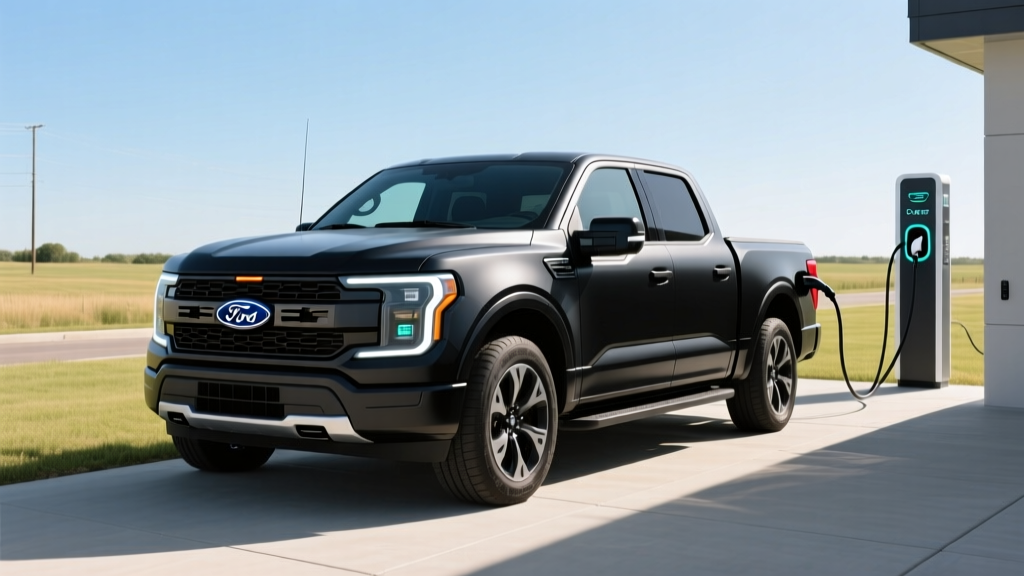
If you have been searching for an F-150 Lightning and wondering whether the electric pickup lives up to the hype once you leave the showroom, you are not alone. After spending extended time with Ford's full-size electric truck — charging it at home, hauling on the highway, and watching the battery gauge in winter cold — we can tell you exactly what the Lightning does well and where it falls short. This review breaks down real-world range versus the EPA sticker, charging speeds across DC fast chargers and Level 2 home setups, tax credit eligibility under current IRS §30D rules, and whether the Lightning still makes sense against the Rivian R1T and Chevrolet Silverado EV.
Ford F-150 Lightning Quick Specs at a Glance
| Spec | Standard Range | Extended Range |
|---|---|---|
| EPA Range | 240 miles | 320 miles |
| Battery (Usable) | 98 kWh (LFP) | 131 kWh (NMC) |
| Drivetrain | Dual-Motor AWD | Dual-Motor AWD |
| Horsepower / Torque | 452 hp / 775 lb-ft | 580 hp / 775 lb-ft |
| 0–60 mph | ~3.8 sec | |
| Max DC Fast Charge | 120 kW | 150 kW |
| 10–80% DC Time | ~44 min | ~41 min |
| Level 2 Home Charge | 11.3 kW (~22 mi/hr) | 19.2 kW (~37 mi/hr) |
| MPGe (Combined) | 76 MPGe | 70 MPGe |
| Efficiency | 44 kWh/100mi | 48 kWh/100mi |
| Max Towing | 7,700 lbs | 10,000 lbs |
| Payload | 2,235 lbs | 1,952 lbs |
| Battery Warranty | 8 yr / 100,000 mi (70% capacity retention) | |
| Base MSRP | ~$54,995 | ~$69,995 |
Source: fueleconomy.gov, Ford Motor Company spec sheets. Specs reflect latest available model year. Always confirm trim-specific figures with your dealer.
Real-World Range vs. the EPA Sticker
EPA Combined Range: 240 mi (Standard) / 320 mi (Extended)
Real-World Expectation: Plan for ~200–220 mi on the highway (Standard) and ~260–285 mi (Extended) at sustained 70–75 mph speeds. In freezing weather (below 32°F), expect a 25–35% range reduction from the EPA sticker — bringing the Extended Range pack down to roughly 200–230 mi on a cold highway run.
The Lightning's boxy aerodynamics and heavy curb weight (~6,500 lbs for the Extended Range) work against efficiency at highway speeds. In mixed suburban driving with regen braking, you can get close to the EPA number. But sustained interstate travel is where the gap opens. If your daily commute is under 80 miles round-trip with home charging, the Standard Range pack handles it effortlessly. For road trips or towing, the Extended Range battery is the pragmatic choice — though even then, plan charging stops every 200–230 miles when loaded.
Towing impact is severe. Pulling a 7,000-lb trailer at highway speeds can cut range by 40–50%. We have seen the Extended Range Lightning drop below 160 miles of effective range while towing on the interstate. Ford's onboard range calculator adjusts for trailer load once connected, which helps with trip planning, but physics is unforgiving here.
Charging Speed: DC Fast, Level 2, and Home Setup
Charging is where Lightning ownership gets nuanced. The Standard Range truck uses a lithium iron phosphate (LFP) battery, while the Extended Range uses nickel manganese cobalt (NMC) chemistry. This matters: LFP is heavier and less energy-dense but tolerates frequent 100% charging better, while NMC offers more range per pound but benefits from staying between 20–80% for daily use.
| Charging Level | Standard Range (98 kWh LFP) | Extended Range (131 kWh NMC) |
|---|---|---|
| Level 1 (120V, 1.4 kW) | ~2 mi/hr | ~2 mi/hr |
| Level 2 (240V, 32A Mobile) | 7.6 kW — ~15 mi/hr | 7.6 kW — ~15 mi/hr |
| Level 2 (240V, 48A Wall Charger) | 11.3 kW — ~22 mi/hr | 11.3 kW — ~22 mi/hr |
| Level 2 (240V, 80A Charge Station Pro) | 11.3 kW — ~22 mi/hr | 19.2 kW — ~37 mi/hr |
| DC Fast Charge (Peak) | 120 kW | 150 kW |
| DC 10–80% Time | ~44 minutes | ~41 minutes |
Charging curve reality check: The Lightning's peak DC rate is not sustained. The Extended Range pack hits ~150 kW only briefly between 15–30% state of charge, then tapers progressively. From 80–100%, charging slows to under 30 kW. On a road trip, the 10–80% window is your practical charge — plan for roughly 40 minutes at a 150+ kW station.
Home charging is the sweet spot. With Ford's Charge Station Pro (80A hardwired), the Extended Range Lightning adds ~37 miles of range per hour — a full overnight charge from 20% to 100% in about 8–9 hours. The Standard Range at 11.3 kW refills overnight in roughly 7 hours. A 48A Level 2 wall charger on a NEMA 14-50 outlet is the budget-friendly alternative; expect ~15–22 miles of range per hour depending on pack. Budget $800–$2,500 for a professional Level 2 home installation, depending on whether your electrical panel needs an upgrade to support 48A+ circuits.
Performance, Payload, and Everyday Driving
The dual-motor AWD layout gives every Lightning instant torque off the line. The Extended Range model's 580 hp and 775 lb-ft of torque deliver a 0–60 mph sprint in roughly 3.8 seconds — sports-car territory in a full-size pickup. The Standard Range is only slightly behind at ~4.5 seconds. Both feel effortlessly quick in daily driving, and the low center of gravity (battery pack under the floor) keeps body roll surprisingly controlled for a truck this size.
Cargo and space:
- Mega Power Frunk: 14.1 cubic feet of lockable front trunk space with 400 lbs payload capacity, drain plug, and 120V outlet
- Bed: 5.5-foot box (52.8 cu ft) with 2,000 lbs max payload (Standard Range)
- Rear legroom: 43.6 inches — genuinely spacious for adult passengers
- Pro Power Onboard: Up to 9.6 kW of exportable power (Extended Range with max tow package), turning the Lightning into a mobile generator for job sites or tailgating
Ride quality benefits from the independent rear suspension — a departure from the solid rear axle on the gas F-150. Unloaded, the Lightning rides smoother than its gas sibling. The trade-off is a slightly lower max payload rating on Extended Range models due to the heavier battery.
Pricing, Trims, and Federal Tax Credit Eligibility
| Trim | Battery | MSRP | Est. After §30D Credit |
|---|---|---|---|
| Pro | Standard Range | ~$54,995 | ~$47,495* |
| XLT | Standard Range | ~$59,995 | ~$52,495* |
| XLT | Extended Range | ~$69,995 | ~$62,495* |
| Lariat | Extended Range | ~$77,995 | ~$70,495* |
| Platinum | Extended Range | ~$96,874 | ~$89,374* |
*Federal tax credit estimates assume full eligibility. Actual credit depends on IRS §30D rules. See checklist below.
Federal EV Tax Credit (§30D) — Key Requirements:
- MSRP Cap: Vans, SUVs, and pickup trucks must have an MSRP at or below $80,000. The Platinum trim exceeds this cap and does not qualify.
- Buyer Income Cap: Modified AGI must not exceed $150,000 (single), $225,000 (head of household), or $300,000 (joint filing).
- Battery Sourcing: Critical minerals and battery components must meet phased-in domestic/free-trade sourcing thresholds per IRS rules. Ford has worked to qualify multiple trims, but eligibility can shift. Always verify at irs.gov before purchase.
- Point-of-Sale Transfer: Eligible buyers can transfer the credit to the dealer at purchase, reducing the sale price directly rather than waiting for a tax refund.
- Assembly: Vehicle must undergo final assembly in North America. The Lightning is built in Dearborn, Michigan — this requirement is satisfied.
The Pro and XLT Standard Range trims are the most credit-friendly. The Lariat Extended Range at ~$77,995 squeaks under the $80,000 truck cap, but adding packages can push it over. Always confirm the final build MSRP with your dealer before assuming credit eligibility.
Tech, Driver Assists, and the SYNC Experience
The Lightning comes equipped with Ford's SYNC 4 infotainment system on a 12-inch touchscreen (15.5-inch vertical screen on Lariat and above). Wireless Apple CarPlay and Android Auto are standard. The available BlueCruise hands-free driving system operates on pre-mapped divided highways — this is SAE Level 2 driver assistance, meaning you must remain attentive and the system monitors your eyes via an infrared camera. It is not self-driving.
BlueCruise = SAE Level 2: The driver must remain engaged and ready to take over at any time. Hands-free operation is permitted only on approved highway sections. This is fundamentally different from Level 4 robotaxi services like Waymo, which operate without a human driver in geofenced areas.
Other notable tech:
- Intelligent Range: Cloud-connected range prediction that factors in weather, terrain, and traffic for more accurate estimates
- Onboard Scales: Available payload measurement displayed in the instrument cluster
- Vehicle-to-Home (V2H): With the Ford Charge Station Pro and Home Integration System, the Lightning can power your house during an outage — up to 3 days of backup power at average household consumption
- OTA Updates: Ford Power-Up software updates delivered over the air, adding features and refining performance post-purchase
Who Should Buy the F-150 Lightning?
Buy the Lightning if:
- You need a full-size truck for work, payload, or occasional towing under 8,000 lbs
- You have reliable home Level 2 charging (or can install it)
- You value the frunk, Pro Power Onboard, and V2H backup capability
- Your daily driving is under 150 miles and you road-trip a few times per year
- You want a smooth, quiet daily driver that happens to be a truck
Look elsewhere if:
- You tow heavy trailers over long distances regularly (range drops too severely)
- You lack access to home or workplace charging
- You want a compact truck for trails — consider the Rivian R1T instead
- You need more than 320 miles of range without stopping
Lightning vs. the competition: The Rivian R1T is more capable off-road and charges faster (up to ~220 kW peak on the latest packs), but it costs more and has a smaller bed. The Chevrolet Silverado EV (4WT and RST trims) offers up to 440 miles of EPA range on the largest pack but is larger, pricier, and less refined in interior quality. The Lightning remains the most "normal truck" experience of the three — it drives like an F-150, just one that never visits a gas station.
Pros and Cons
Pros
- Massive 14.1 cu-ft frunk with 400-lb capacity and 120V outlet
- Pro Power Onboard up to 9.6 kW — genuine job-site utility
- Smooth, quiet ride with independent rear suspension
- Strong 0–60 performance (3.8 sec Extended Range)
- V2H backup power capability with proper home setup
- Multiple trims qualify for up to $7,500 federal tax credit
- Over-the-air updates keep adding features post-purchase
Cons
- Real-world highway range falls well short of EPA sticker
- Towing cuts range by 40–50% — severe limitation for heavy haulers
- DC fast-charge speeds (120–150 kW) lag behind Rivian and Hyundai/Kia platforms
- Extended Range battery adds ~500 lbs, reducing payload
- Platinum trim exceeds $80K MSRP cap — no federal tax credit
- Bed is only 5.5 feet — shorter than many gas F-150 configurations
- Insurance costs run 15–25% higher than comparable gas F-150s
Battery Longevity and Warranty Coverage
Ford backs the Lightning's battery and electric powertrain with an 8-year / 100,000-mile warranty, guaranteeing a minimum of 70% capacity retention over that period. Independent data from early high-mileage Lightning owners and fleet operators suggests degradation is tracking well — most trucks are holding above 93% state of health after 30,000 miles.
The LFP battery in the Standard Range model has a theoretical cycle-life advantage over the NMC pack in the Extended Range, as LFP chemistry tolerates repeated full charges and deeper cycles with less degradation. If you plan to charge to 100% daily for work use, the Standard Range LFP pack is the more durable choice long-term, even with less total range.
For battery replacement outside warranty, current estimates for a full Lightning pack swap run $20,000–$30,000 depending on pack size — a significant sum, though industry pricing continues to decline as cell costs drop. Most owners will never need a replacement within typical ownership periods.
Frequently Asked Questions
What is the real-world range of the F-150 Lightning?
The EPA rates the Extended Range at 320 miles combined, but expect ~260–285 miles in real-world highway driving at 70–75 mph. In freezing temperatures, plan for 200–230 miles. The Standard Range (EPA 240 mi) delivers roughly 190–215 miles on the highway.
How fast does the Lightning charge at home and on the road?
At home on a 48A Level 2 charger, expect ~22 miles of range per hour (Standard) or ~37 miles per hour with Ford's 80A Charge Station Pro (Extended Range). On DC fast chargers, the 10–80% charge takes ~41–44 minutes, with peak rates of 120–150 kW depending on battery pack.
Does the F-150 Lightning qualify for the $7,500 federal tax credit?
Many trims do, but eligibility depends on the truck's MSRP staying at or below $80,000 (the truck/van cap), your income not exceeding IRS thresholds, and the battery meeting critical-mineral sourcing requirements. The Platinum trim exceeds the MSRP cap and does not qualify. Always verify current eligibility at irs.gov before purchasing.
Can I tow with the Lightning, and how does it affect range?
Yes — up to 10,000 lbs with the Extended Range and Max Trailer Tow Package. However, towing at highway speeds reduces range by 40–50%. A 320-mile Extended Range truck may deliver only 150–170 miles while pulling a heavy trailer on the interstate. Plan charging stops accordingly.
Is the F-150 Lightning worth buying over the Rivian R1T or Silverado EV?
The Lightning is the best choice if you want a traditional full-size truck experience with electric benefits — big bed, frunk, V2H, and familiar F-150 ergonomics. The Rivian R1T is more agile, charges faster, and excels off-road but has a smaller bed and higher price. The Silverado EV offers more range but is less refined. For most truck buyers who want daily usability and work capability, the Lightning remains the most balanced option.
What is the Lightning's biggest drawback?
Highway range and towing range fall significantly short of the EPA sticker, and DC fast-charge speeds lag behind competitors. If your use case involves frequent long highway drives or heavy towing, you will need to plan charging stops carefully. For daily commuting and local work, these limitations matter far less.
Sources: fueleconomy.gov (EPA range and efficiency data), Ford F-150 Lightning official specs, IRS §30D Clean Vehicle Credit guidelines. Pricing and credit rules reflect the latest available information and are subject to change. Consult a tax professional for personal credit eligibility.