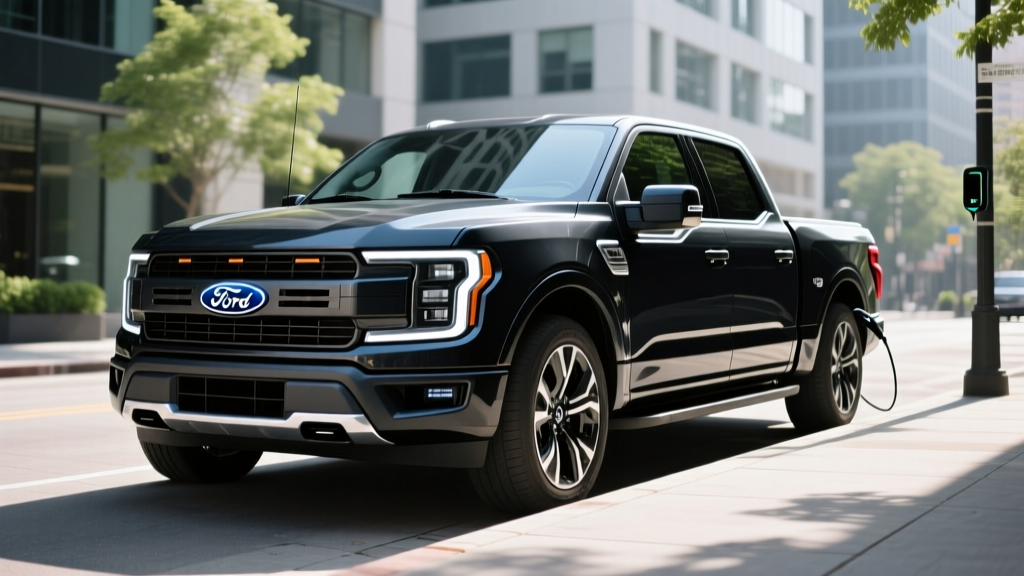
Rumors about the Ford F-150 Lightning production being stopped have circulated across EV forums and social media since late 2025, leaving prospective buyers confused and current owners concerned about parts and resale values. The reality is more nuanced than the headlines suggest. Ford has made significant production adjustments to the Lightning lineup for the 2026 model year, but the truck is not entirely dead — at least not yet. Here's a data-driven breakdown of where things stand, what's actually available, and whether the Lightning still makes sense for your driveway.
Production Status: Paused, Trimmed, or Dead?
In early 2026, Ford confirmed it was significantly reducing F-150 Lightning production volume at its Rouge Electric Vehicle Center in Dearborn, Michigan, and idling shifts in response to softer-than-expected demand in the full-size electric truck segment. Several lower-volume trims were discontinued, and Ford redirected factory capacity toward its more profitable hybrid F-150 PowerBoost lineup.
As of mid-2026, the Lightning remains available through dealer inventory and limited production runs, but Ford has not committed to a next-generation electric F-150 on the current platform. The company has signaled a pivot to a next-gen truck architecture expected around 2028. For buyers, this means:
- 2026 model-year trucks are available but in reduced trim configurations (primarily XLT and Lariat).
- Platinum and Limited trims have been discontinued for 2026.
- Dealer lots still carry 2025 and early 2026 inventory, often with incentives.
- Parts and service remain fully supported under Ford's existing warranty obligations.
If you've been searching "ford f-150 lightning production stopped" and panicking — breathe. The truck isn't vaporized. But the window to buy one new is narrowing, and Ford's long-term commitment to the nameplate is uncertain.
Range, Battery, and Efficiency: The Real Numbers
The 2026 F-150 Lightning (carried over from the 2024 refresh) comes in two battery configurations. Here's what the EPA says versus what you'll actually experience:
| Spec | Standard Range | Extended Range |
|---|---|---|
| Battery Capacity (usable) | 98 kWh | 131 kWh |
| Chemistry | NMC (Nickel Manganese Cobalt) | NMC (Nickel Manganese Cobalt) |
| EPA Estimated Range | 230 miles | 320 miles |
| MPGe (Combined) | 78 MPGe | 73 MPGe |
| Efficiency (kWh/100 mi) | 43 kWh/100 mi | 46 kWh/100 mi |
| Drivetrain | Dual-Motor AWD | Dual-Motor AWD |
The EPA sticker says 320 miles for the Extended Range pack, but expect 260–280 miles on highway road trips at 70–75 mph. In cold weather (below 32°F), range drops an additional 15–25%, putting real-world winter highway range closer to 210–240 miles for the Extended Range. The Standard Range pack realistically delivers 185–200 miles highway and as low as 155–170 miles in freezing conditions. The Lightning's boxy aerodynamics and 6,000+ lb curb weight work against efficiency at speed. Source: fueleconomy.gov
Charging Speed: DC Fast, Level 2, and the Curve
Charging speed is where the Lightning's age shows compared to newer 800V-architecture rivals. The truck runs on a 400V platform, which caps its DC fast-charging ceiling.
| Charging Level | Power (kW) | Speed (miles/hr) | Notes |
|---|---|---|---|
| Level 1 (120V household) | ~1.4 kW | ~3 mi/hr | Emergency/trickle only |
| Level 2 (240V, 32A) | 7.7 kW | ~19 mi/hr | Standard mobile charger |
| Level 2 (240V, 48A) | 11.5 kW | ~28 mi/hr | Ford Charge Station Pro |
| Level 2 (240V, 80A) | 19.2 kW | ~47 mi/hr | Ford Charge Station Pro (80A config) |
| DC Fast Charge (peak) | 150 kW | — | 10–80% in ~41 min (Extended Range) |
Charging curve reality: The Lightning peaks at 150 kW only briefly between roughly 15–30% State of Charge (SoC). Above 50%, the rate tapers significantly — often dropping below 80 kW. A 10–80% session on a 150+ kW charger takes approximately 41 minutes for the Extended Range and 36 minutes for Standard Range. Above 80%, charging slows dramatically to protect the NMC cells. Plan to charge to 80% on road trips and move on.
At home on the 80A Ford Charge Station Pro, the Extended Range pack refills from empty in roughly 8 hours — fine for overnight charging but slower than the Rivian R1T's available 11.5 kW onboard charger or the Hyundai Ioniq 5's available 10.9 kW unit relative to its smaller pack.
Performance, Towing, and Utility Specs
| Spec | Standard Range | Extended Range |
|---|---|---|
| Horsepower | 452 hp | 580 hp |
| Torque | 775 lb-ft | 775 lb-ft |
| 0–60 mph | ~4.5 seconds | ~3.8 seconds |
| Max Towing Capacity | 7,700 lbs | 10,000 lbs (w/ Max Trailer Tow Pkg) |
| Max Payload | 2,235 lbs | 1,952 lbs |
| Bed Length | 5.5 ft | 5.5 ft |
| Frunk Volume | 14.1 cu ft | 14.1 cu ft |
| Pro Power Onboard | 2.4 kW | 9.6 kW (available) |
The Extended Range Lightning's 3.8-second 0–60 time remains genuinely quick for a full-size truck, and the instant torque makes merging and passing effortless. However, towing is the Lightning's Achilles' heel: pulling a 7,000-lb trailer at highway speeds can cut range by 40–50%, meaning a 320-mile truck becomes a 160–190-mile truck under load. For heavy towing beyond 200-mile round trips, the F-150 PowerBoost hybrid remains a more practical choice.
The 14.1 cu ft Mega Power Frunk is a genuine differentiator — lockable, weatherproof, with four 120V outlets and two USB ports. The 9.6 kW Pro Power Onboard (Extended Range) can run power tools at a job site or serve as a home backup generator via Ford's Intelligent Backup Power system (requires a compatible transfer switch and electrical panel setup).
Pricing, Trims, and Federal Tax Credit Eligibility
Here's where the production cutbacks matter most for buyers. With fewer trims available, pricing is simpler but options are limited.
| Trim | Battery | Base MSRP | §30D Credit Eligible? | Effective Price (est.) |
|---|---|---|---|---|
| XLT (312A) | Standard Range | $54,995 | Yes (if sourcing rules met) | ~$47,495 |
| XLT (312A) | Extended Range | $69,995 | Yes (if sourcing rules met) | ~$62,495 |
| Lariat (510A) | Extended Range | $79,995 | Yes (if sourcing rules met) | ~$72,495 |
Federal tax credit (§30D) details for 2026: The F-150 Lightning qualifies as a light-duty truck, so the $80,000 MSRP cap for trucks applies (not the $55,000 sedan cap). However, eligibility depends on several conditions that change frequently:
- MSRP cap: Truck/SUV/van cap is $80,000. The Lariat Extended Range at $79,995 barely fits; any added packages pushing it above $80K disqualify it.
- Buyer income limits: AGI must not exceed $150,000 (single), $225,000 (head of household), or $300,000 (joint filers).
- Battery sourcing requirements: Critical minerals and battery component sourcing thresholds tighten annually. Ford has sourced some Lightning battery cells domestically, but verify current-year compliance at IRS.gov before relying on the credit.
- Point-of-sale transfer: As of 2024, buyers can transfer the credit to the dealer at purchase, reducing the out-of-pocket price directly — no need to wait for tax filing.
- VIN verification: Always confirm the specific VIN's eligibility at fueleconomy.gov before signing.
Note: Tax credit rules are subject to legislative changes. Consult a tax professional for your specific situation. The credit availability shown above reflects rules as of early 2026.
Interior, Tech, and Driver Assistance
The Lightning's cabin is essentially the same as the 14th-gen F-150 — functional, spacious, and tech-forward but not luxury-grade.
Infotainment: The available 15.5-inch portrait touchscreen running SYNC 4A is responsive and supports wireless Apple CarPlay and Android Auto. The digital instrument cluster is a configurable 12-inch panel. Over-the-air (OTA) updates continue to refine the system, though Ford's software update cadence lags behind Tesla's.
Driver Assistance (SAE Level 2): The Lightning offers Ford Co-Pilot360 2.0 as standard, with available BlueCruise — Ford's hands-free highway driving system. BlueCruise operates on pre-mapped divided highways (over 130,000 miles of compatible roads in the US and Canada) and allows hands-off driving with eyes-on monitoring via a driver-facing camera.
BlueCruise is a Level 2 driver-assist system, not a self-driving feature. The driver must remain alert, keep eyes on the road, and be prepared to take over at any time. The system will issue escalating warnings and eventually bring the truck to a stop if the driver is unresponsive. This is fundamentally different from Level 4 robotaxi services like Waymo.
Cargo and Passenger Space:
- Rear-seat legroom: 43.6 inches (SuperCrew cab)
- Rear headroom: 40.4 inches
- Bed volume: 52.8 cu ft (5.5 ft bed)
- Frunk: 14.1 cu ft with 400 lbs payload capacity
- Max cargo behind front seats (bed + frunk combined): practical for large loads
Notable drawbacks: The interior materials at the XLT trim level feel plasticky for the price. Road noise is more pronounced than in the Rivian R1T. The available BlueCruise subscription costs $75/month or $800/year after the initial trial period. And the 5.5-foot bed is short for traditional truck buyers used to 6.5- or 8-foot beds.
Warranty and Long-Term Ownership
| Component | Coverage |
|---|---|
| Basic (Bumper-to-Bumper) | 3 years / 36,000 miles |
| Powertrain | 5 years / 60,000 miles |
| EV Battery Components | 8 years / 100,000 miles |
| Battery Capacity Retention | ≥70% SoH guaranteed for 8 yr / 100,000 mi |
| Corrosion Perforation | 5 years / unlimited miles |
The 8-year/100,000-mile battery warranty with a 70% State of Health (SoH) retention floor is industry-standard, matching the federal minimum. NMC chemistry in the Lightning has shown approximately 5–8% degradation over the first 50,000 miles based on fleet data and owner reports — well within the warranty threshold. However, the production slowdown raises legitimate concerns about long-term parts availability beyond the warranty period. Ford is legally obligated to support the vehicle, but if the Lightning is fully discontinued, aftermarket and third-party support may become critical after year 10.
For current owners and prospective buyers: Ford's dealer network remains the largest in the US, which is an advantage for service access compared to Rivian or Tesla in rural areas.
Lightning vs. Competitors: Is It Worth Buying?
Pros
- Massive 14.1 cu ft frunk — best in class
- 9.6 kW Pro Power Onboard for job sites and backup power
- Ford's vast dealer/service network (3,000+ locations)
- Strong 0–60 performance (3.8s Extended Range)
- Familiar F-150 ergonomics — low learning curve
- BlueCruise hands-free highway driving available
- Competitive pricing vs. Rivian R1T with tax credit
Cons
- 400V architecture limits DC charging to 150 kW peak
- Towing cuts range by 40–50% — impractical for long hauls
- Real-world highway range ~260–280 mi (Extended), not 320
- 5.5 ft bed is short for truck traditionalists
- Production uncertainty affects long-term resale confidence
- Interior materials underwhelming at XLT price point
- No 800V fast-charge capability (behind rivals)
Who Should Buy the F-150 Lightning in 2026?
Choose the Lightning if: You need a full-size truck for daily commuting, light towing (under 5,000 lbs), job-site power (Pro Power Onboard), and you have reliable home Level 2 charging. The frunk and backup power capability are genuine advantages no competitor matches at this price.
Look elsewhere if: You tow heavy trailers regularly (consider the F-150 PowerBoost hybrid or wait for next-gen EV trucks), you need fast road-trip charging (Rivian R1T or the upcoming Silverado EV with 800V+ architecture are better), or you're concerned about long-term resale value given the production uncertainty.
Consider the Rivian R1T if: You want a more modern EV platform, faster charging, an adventure-oriented truck with better off-road capability, and don't mind a smaller service network.
Consider the Chevy Silverado EV if: You need a longer bed, GM's Ultium platform with available 400+ mile range, and are willing to accept a newer, less proven model.
Frequently Asked Questions
Has Ford officially stopped F-150 Lightning production?
Ford has not officially killed the F-150 Lightning as of mid-2026, but it has significantly reduced production volume, idled shifts at the Rouge Electric Vehicle Center, and discontinued the Platinum and Limited trims. The truck remains available through existing inventory and limited production, but Ford's long-term commitment to the current-generation Lightning is uncertain, with a next-gen electric truck expected around 2028 on a new platform.
What is the real-world range of the F-150 Lightning?
The Extended Range (131 kWh) is EPA-rated at 320 miles, but real-world highway driving at 70–75 mph yields approximately 260–280 miles. In cold weather (below 32°F), expect 210–240 miles. The Standard Range (98 kWh) is EPA-rated at 230 miles, with real-world highway range around 185–200 miles. Towing reduces range by 40–50%.
How fast does the Lightning charge at home and on the road?
On a DC fast charger, the Lightning peaks at 150 kW and charges from 10–80% in approximately 41 minutes (Extended Range) or 36 minutes (Standard Range). At home on a 240V/80A Ford Charge Station Pro (19.2 kW), the Extended Range pack refills from empty in about 8 hours. On a standard 240V/48A outlet (11.5 kW), expect roughly 13 hours for a full charge.
Does the 2026 F-150 Lightning qualify for the $7,500 federal tax credit?
The Lightning can qualify for up to $7,500 under IRS §30D, but eligibility depends on the buyer's AGI (under $150K single/$300K joint), the specific VIN meeting battery sourcing and critical mineral requirements for the current tax year, and the truck's MSRP staying under the $80,000 truck cap. Always verify at fueleconomy.gov and consult a tax professional before relying on the credit.
Is the Lightning worth buying given the production uncertainty?
If the truck fits your use case (daily driving, light towing, home charging, job-site power), the current pricing with potential tax credits makes it competitive. Ford's large dealer network provides service security. However, resale value may suffer if Ford fully discontinues the model, and the 400V charging architecture is already behind newer 800V competitors. Buyers prioritizing long-term value retention may want to consider alternatives.
Will Ford still service and provide parts for the Lightning?
Yes. Ford is legally obligated to honor all warranty commitments (8 years/100,000 miles for battery components) and maintain parts supply. Ford's dealer network of 3,000+ locations is the largest among EV truck sellers. However, if the model is fully discontinued, parts availability could become more challenging in the 10–15 year ownership horizon.
How does the Lightning compare to the F-150 PowerBoost hybrid?
The PowerBoost hybrid offers 25 MPG combined, 700+ miles of range, 12,700 lbs max towing, and no range anxiety — making it superior for towing and road trips. The Lightning wins on daily operating cost (electricity vs. gas), instant torque, the frunk, Pro Power Onboard, and zero tailpipe emissions. For a garage with one truck that does everything, the PowerBoost is often the more practical choice. For a daily driver with home charging and light-duty needs, the Lightning saves significantly on fuel.