Why the Ford F-150 Lightning Production Pause Matters for Buyers
Ford's decision to implement a production pause on the F-150 Lightning has sent ripples through the electric truck market. Whether you're a current owner wondering about parts and service support, or a prospective buyer weighing whether now is the right time to purchase, understanding what this pause means—and what the Lightning still offers as a vehicle—is critical to making an informed decision.
The F-150 Lightning remains one of the most capable electric pickups on the market, blending work-truck utility with genuine daily-driver comfort. But with production adjustments reshaping availability and potentially affecting pricing dynamics, buyers need clear data—not speculation. This review breaks down every spec that matters, from real-world range to charging speeds to total cost of ownership, so you can evaluate the Lightning on its merits regardless of supply-side headlines.
2026 Ford F-150 Lightning: Core Specifications at a Glance
| Specification | Standard Range | Extended Range |
|---|---|---|
| EPA Range | 240 miles | 320 miles |
| Battery Capacity (usable) | 98 kWh (NMC) | 131 kWh (NMC) |
| Battery Chemistry | NMC (Nickel Manganese Cobalt) | NMC (Nickel Manganese Cobalt) |
| Horsepower | 563 hp | 563 hp |
| Torque | 775 lb-ft | 775 lb-ft |
| 0-60 mph | ~3.8 sec | |
| Drivetrain | Dual-motor AWD | Dual-motor AWD |
| Max DC Fast Charge | 150 kW | 150 kW |
| 10-80% DC Fast Charge | ~36 min | ~41 min |
| Level 2 Home Charge Rate | 11.3 kW (~22 mi/hr) | 11.3 kW (~26 mi/hr) |
| Max Towing | 7,700 lbs | 10,000 lbs |
| Max Payload | 2,235 lbs | 1,800 lbs |
| MPGe (combined) | 68 MPGe | 70 MPGe |
| Efficiency (kWh/100 mi) | 49 kWh/100 mi | 48 kWh/100 mi |
| Battery/Powertrain Warranty | 8 years / 100,000 miles | |
| Base MSRP (Pro trim) | ~$54,995 | |
Source: fueleconomy.gov and Ford Motor Company official specifications. Verify current pricing with your local dealer, as MSRP may vary by model year and configuration.
Real-World Range: What the EPA Number Doesn't Tell You
EPA Sticker: 320 miles (Extended Range) / 240 miles (Standard Range)
Real-World Highway (70-75 mph, moderate temps): Expect approximately 250-270 miles from the Extended Range pack. The Standard Range delivers closer to 185-200 miles at sustained highway speeds.
Cold Weather Impact (below 32°F): Range drops 20-30% depending on cabin heating demand and battery preconditioning. Extended Range may deliver 220-255 miles in freezing conditions; Standard Range falls to 165-190 miles.
Towing Scenario: When towing near max capacity (8,000-10,000 lbs), expect range to drop 40-55%. A 320-mile truck towing a heavy trailer may see only 145-180 miles before needing a charge.
The F-150 Lightning's range story is one of trade-offs inherent to a 6,500+ pound electric pickup. The Extended Range pack's 131 kWh of usable NMC lithium-ion energy is among the largest in any production EV, and that capacity delivers genuinely useful distance for daily driving and moderate road trips. But physics is unforgiving: pushing a truck-sized frontal area at 75 mph consumes energy rapidly, and cold weather compounds the penalty because NMC chemistry becomes less efficient at low temperatures and cabin heating draws significant power.
Ford's heat pump system (standard on 2025-2026 models) helps mitigate cold-weather losses compared to earlier model years that relied solely on resistive heating. Preconditioning the battery while plugged in before departure also preserves range by warming the pack using grid power rather than battery energy. For buyers in northern climates, these features matter—plan for roughly 240 miles of usable winter range from the Extended Range model if your commute includes highway driving.
Charging Speed: DC Fast Charging and Home Setup
| Charging Level | Power (kW) | Connector | Rate (miles/hr added) | Notes |
|---|---|---|---|---|
| Level 1 (120V household) | ~1.4 kW | J1772 / NACS | ~2-3 mi/hr | Emergency/trickle only; ~5 days for full Extended Range charge |
| Level 2 (240V, 48A) | 11.3 kW | J1772 or NACS | ~22-26 mi/hr | Full overnight charge in 10-14 hours; requires 60A dedicated circuit |
| Level 2 (240V, 80A Ford Charge Station Pro) | 19.2 kW | NACS (native) | ~30-38 mi/hr | Requires 100A circuit; available with Pro Power Onboard-equipped trucks |
| DC Fast Charge (peak) | 150 kW | CCS1 or NACS | Up to ~170 mi/hr at peak | Peak rate sustained to ~55% SoC, then tapers; 10-80% in ~36-41 min |
The Lightning's 150 kW peak DC fast-charge rate is its most debated specification. Compared to rivals like the Rivian R1T (which can accept over 200 kW on newer models) or the Chevrolet Silverado EV's 350 kW capability, the Lightning's charge speed is modest. The charging curve tells the real story: the truck pulls close to 150 kW from roughly 10% to 55% state of charge, then tapers progressively—dropping to around 80 kW by 70% and below 50 kW past 85%. This means the published 10-80% time of roughly 36 minutes (Standard Range) or 41 minutes (Extended Range) is achievable at a well-maintained 150+ kW station, but real-world stops with older or congested chargers may stretch to 50+ minutes.
On the home front, the Lightning shines. The available Ford Charge Station Pro delivers up to 19.2 kW on a 240V/80A circuit—provided your truck is equipped with the onboard dual chargers that come with the Max Trailer Tow Package or certain higher trims. This is one of the fastest AC home-charging setups available in any EV, meaning even the 131 kWh Extended Range pack can fully replenish in roughly 7-8 hours overnight. Most buyers will install a standard 48A Level 2 charger (requiring a 60A breaker), which adds roughly 25 miles of range per hour—more than adequate for daily use if you plug in each evening.
Home installation costs for a Level 2 charger typically range from $800 to $2,500 depending on panel proximity, wiring distance, and whether your electrical panel needs an upgrade from 100A to 200A service. Always get a quote from a licensed electrician before committing.
Performance, Capability, and Daily Driving
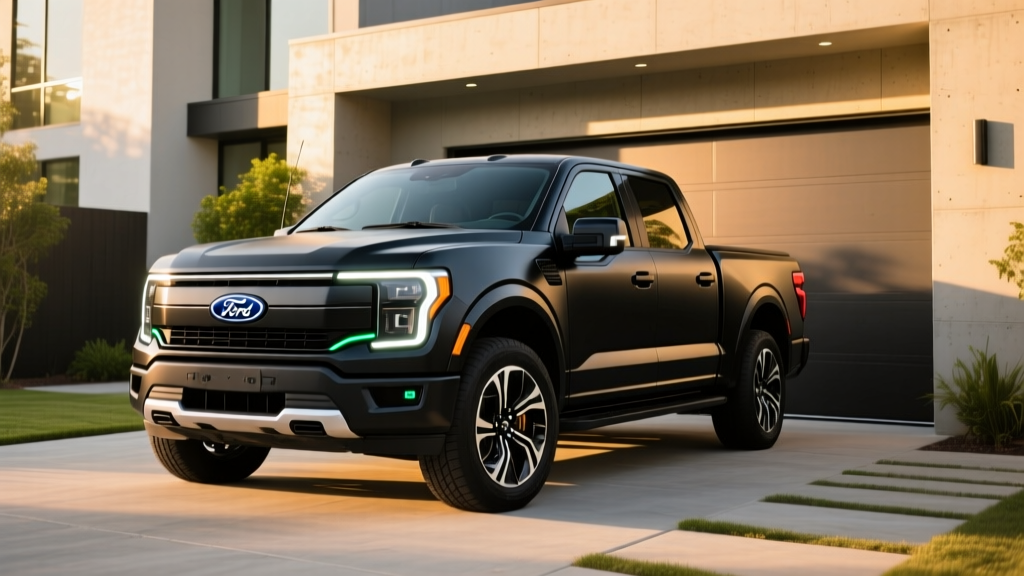
The dual-motor all-wheel-drive powertrain is standard across every F-150 Lightning trim, delivering 563 horsepower and 775 lb-ft of instant torque. The Extended Range model hits 60 mph in approximately 3.8 seconds—a figure that feels surreal in a full-size pickup. The Standard Range version clocks in around 4.5 seconds, which still outpaces most V-8 gas F-150s off the line.
But the Lightning's performance story extends beyond straight-line speed. The independent rear suspension (a first for the F-150 line) delivers noticeably better ride quality than the solid rear axle on gas models, particularly when the bed is empty. Steering is precise if light, and the low center of gravity from the under-floor battery pack minimizes body roll through corners. This is a truck that drives more like a large SUV than a traditional pickup.
Towing capability reaches 10,000 pounds on Extended Range models with the Max Trailer Tow Package, though—as noted in the range section—towing heavy loads dramatically cuts range. Ford's Pro Trailer Hitch Assist and onboard scales (which estimate payload weight via the touchscreen) are genuinely useful features that reduce the stress of hitching and loading.
Cargo and Passenger Space:
- Bed length: 5.5 feet (standard across Lightning trims)
- Mega Power Frunk (front trunk): 14.1 cu ft, 400 lb payload capacity, with drain plug and 120V outlet
- Rear-seat legroom: 43.6 inches (SuperCrew cab)
- Rear-seat headroom: 40.4 inches
- Interior passenger volume: ~135 cu ft (SuperCrew)
The frunk is a standout feature—14.1 cubic feet of lockable, weather-sealed storage with a powered open/close tailgate. It's large enough for groceries, tools, or a weekend's worth of carry-on luggage, and the built-in 120V outlet makes it a practical mobile workspace.
Pricing, Trims, and Federal Tax Credit Eligibility
| Trim Level | Base MSRP | Battery Option | Estimated Price After §30D Credit* |
|---|---|---|---|
| Pro (Standard Range) | ~$54,995 | 98 kWh (included) | ~$47,495 |
| XLT (Standard Range) | ~$59,995 | 98 kWh (included) | ~$52,495 |
| XLT (Extended Range) | ~$69,995 | 131 kWh (+$10,000) | ~$62,495 |
| Lariat (Extended Range) | ~$77,995 | 131 kWh (included) | ~$70,495 |
| Platinum (Extended Range) | ~$96,995 | 131 kWh (included) | Not eligible (MSRP cap) |
*Tax credit estimates assume full $7,500 eligibility under IRS §30D. Actual eligibility depends on buyer income, battery sourcing compliance, and point-of-sale transfer availability. Consult a tax professional and verify current rules at irs.gov.
The federal EV tax credit under §30D remains available for qualifying F-150 Lightning buyers, but eligibility is not universal. Key rules to understand:
- MSRP Cap: Pickup trucks must have an MSRP at or below $80,000 to qualify. This excludes the Platinum trim but keeps Pro, XLT, and Lariat trims eligible.
- Income Cap: Modified adjusted gross income must not exceed $150,000 (single filers), $225,000 (head of household), or $300,000 (joint filers).
- Battery Sourcing: The credit is split into two halves—$3,750 for meeting critical minerals requirements and $3,750 for battery component sourcing. Ford has worked to increase North American sourcing, but the exact credit amount (full $7,500, partial $3,750, or none) can vary by production batch and model year. Always verify the specific vehicle's eligibility via the dealer and the IRS portal.
- Point-of-Sale Transfer: Eligible buyers can transfer the credit to the dealer at purchase, reducing the purchase price upfront rather than waiting for a tax refund.
The production pause may affect trim availability and dealer markups. During periods of constrained supply, some dealers have added market adjustment fees of $3,000-$8,000 above MSRP, which can erode the tax credit's benefit. Shop across multiple dealers and negotiate based on invoice pricing where possible.
Technology, Driver Assists, and Standout Features
The Lightning comes equipped with Ford's SYNC 4A infotainment system on a 12-inch touchscreen (15.5-inch vertical screen on Lariat and Platinum trims). Wireless Apple CarPlay and Android Auto are standard. The system is responsive and logically organized, though some users report occasional lag when loading navigation routes with multiple waypoints.
Ford BlueCruise (SAE Level 2): Available on equipped trims, BlueCruise enables hands-free driving on over 130,000 miles of pre-mapped divided highways. A driver-facing camera monitors your attention, and you must remain prepared to take over at any time. This is a Level 2 driver-assistance system—it is not self-driving and requires active supervision. In practice, BlueCruise performs well on long highway stretches, reducing fatigue significantly, but it disengages in construction zones and on unmapped roads.
Ford BlueCruise is a Level 2 driver-assistance system per SAE International classification. The driver must remain engaged, eyes on the road (or responsive to camera prompts), and hands available to take the wheel. This is not autonomous driving. Full self-driving capability (Level 4+) is currently only available in limited robotaxi services like Waymo—not in any consumer vehicle.
Pro Power Onboard: This is the Lightning's party trick. Available in 2.4 kW or 9.6 kW configurations, it turns the truck's battery into a mobile generator with multiple 120V and 240V outlets in the bed and frunk. The 9.6 kW version can power tools at a job site, run appliances during an outage (with the optional home integration system), or even supply enough juice to keep a small home running for several days during a blackout via a transfer switch.
Notable Drawbacks:
- DC fast-charge speed (150 kW peak) lags behind newer competitors
- Extended Range models carry a significant price premium (~$10,000-$15,000 over Standard Range)
- Rear-seat cushion is flatter than some competitors, reducing long-trip comfort for rear passengers
- Bed is limited to 5.5 feet—shorter than the 6.5-foot beds available on gas F-150s
- BlueCruise requires a paid subscription after the initial trial period (typically $75/month or $800/year after year one)
Pros, Cons, and Who Should Buy the Lightning
- Mega Power Frunk (14.1 cu ft) is class-leading front storage
- Pro Power Onboard (up to 9.6 kW) turns the truck into a mobile power station
- Smooth, quiet ride with independent rear suspension
- Strong 0-60 performance (3.8 sec Extended Range)
- Available BlueCruise hands-free highway driving
- Home charging up to 19.2 kW (with dual onboard chargers)
- Qualifies for up to $7,500 federal tax credit on eligible trims
- 10,000-lb towing capacity (Extended Range w/ Max Trailer Tow)
- 150 kW DC fast-charge peak is below newer rivals (Rivian, Silverado EV)
- Real-world highway and cold-weather range falls well below EPA estimates
- Towing heavy trailers cuts range by 40-55%
- Extended Range battery adds ~$10,000-$15,000 to the price
- 5.5-foot bed is shorter than gas F-150 options
- Production pause may limit availability and inflate dealer pricing
- Platinum trim exceeds $80,000 MSRP cap for tax credit eligibility
Who the F-150 Lightning Suits Best:
The Lightning is ideal for truck buyers who need a full-size pickup for daily commuting, light-to-moderate towing, and weekend projects—but who also want to eliminate fuel costs and enjoy home charging. If you have a garage or driveway where you can install a Level 2 charger, your daily "refueling" cost drops to roughly $0.12-$0.15 per mile (depending on local electricity rates) compared to $0.20-$0.28 per mile for a gas F-150 at $3.50/gallon.
It's also a strong fit for homeowners in areas with unreliable grid power, thanks to Pro Power Onboard's ability to serve as a backup generator. Contractors and tradespeople who need mobile power at job sites will find the 9.6 kW onboard system transformative.
It's less suited for buyers who frequently tow heavy trailers over long distances (range becomes a serious constraint), those who need a 6.5-foot bed for large cargo, or road-trippers in regions with sparse DC fast-charging infrastructure.
Competitor Comparison: Lightning vs. Rivian R1T and Silverado EV
The Lightning competes primarily with the Rivian R1T (a more premium, adventure-focused electric truck) and the Chevrolet Silverado EV (which offers longer range and faster charging but at higher starting prices). The Lightning's advantage is familiarity—it looks, feels, and operates like a traditional F-150, which matters to fleet buyers and traditional truck customers. The R1T offers a quad-motor option with over 1,000 hp and a gear tunnel for cross-bed storage, but starts above $70,000 and doesn't qualify for the full tax credit on all configurations. The Silverado EV's 400+ mile range (on the 4WT max-range version) and 350 kW charging are compelling, but availability is limited and pricing skews higher.
For buyers prioritizing value, dealer network accessibility, and work-truck utility, the Lightning remains the most approachable electric pickup on the market—production pause or not.
Frequently Asked Questions
What does the Ford F-150 Lightning production pause mean for buyers?
A production pause means Ford has temporarily reduced or halted assembly line output, typically to align supply with demand or to retool for model-year changes. For buyers, this can mean longer wait times for custom orders, reduced dealer inventory, and potentially higher prices due to limited supply. Existing orders are typically honored, but delivery timelines may shift. Check with your local dealer for current availability and estimated delivery dates.
What is the real-world range of the F-150 Lightning?
The Extended Range model carries a 320-mile EPA rating, but expect approximately 250-270 miles in real-world highway driving at moderate temperatures, and 220-255 miles in freezing weather. The Standard Range model's 240-mile EPA rating translates to roughly 185-200 miles on the highway. Towing near max capacity cuts range by 40-55%.
How fast does the F-150 Lightning charge?
On a DC fast charger, the Lightning peaks at 150 kW and charges from 10-80% in approximately 36 minutes (Standard Range) or 41 minutes (Extended Range). At home on a standard 48A Level 2 charger (11.3 kW), it adds roughly 22-26 miles of range per hour. With the available Ford Charge Station Pro (19.2 kW), a full overnight charge takes about 7-8 hours for the Extended Range pack.
Does the F-150 Lightning qualify for the $7,500 federal EV tax credit?
Most trims qualify, but eligibility depends on several factors: the truck's MSRP must be at or below $80,000 (which excludes the Platinum trim), the buyer's income must fall below IRS thresholds ($150K single / $300K joint), and the vehicle's battery must meet critical minerals and component sourcing requirements. The credit amount can be $3,750 or $7,500 depending on sourcing compliance. Verify the specific vehicle's eligibility through your dealer and irs.gov before purchasing.
Is the F-150 Lightning worth buying vs. the Rivian R1T or Silverado EV?
The Lightning wins on value, dealer network accessibility, and work-truck familiarity. The Rivian R1T offers more power, a unique gear tunnel, and better off-road capability, but at a higher price point. The Silverado EV provides longer range and faster charging, but availability is limited and it lacks the Lightning's frunk and Pro Power Onboard versatility. If you want a no-compromise daily-driver truck with strong utility features and tax credit eligibility, the Lightning is the most balanced option.
How long will the F-150 Lightning's battery last?
Ford warrants the battery pack for 8 years or 100,000 miles against defects and excessive degradation (typically defined as falling below 70% of original capacity). NMC batteries like those in the Lightning generally retain 85-90% of capacity after 100,000 miles based on industry data from similar packs. Avoid routinely charging to 100% or depleting to 0%—keeping daily charges between 20-80% maximizes long-term battery health.
Can I use the F-150 Lightning to power my home during an outage?
Yes, with the available Pro Power Onboard (9.6 kW) and Ford's optional Home Integration System (a wall-mounted transfer switch), the Lightning can supply power to essential home circuits during an outage. At 9.6 kW continuous output, a fully charged Extended Range pack (131 kWh) could theoretically power a modest home's essential loads for 3-5 days. A licensed electrician must install the transfer switch.
Always verify specifications, pricing, and tax credit eligibility with your local Ford dealer and official sources including fueleconomy.gov and irs.gov before making a purchase decision. Specs and rules may change by model year.