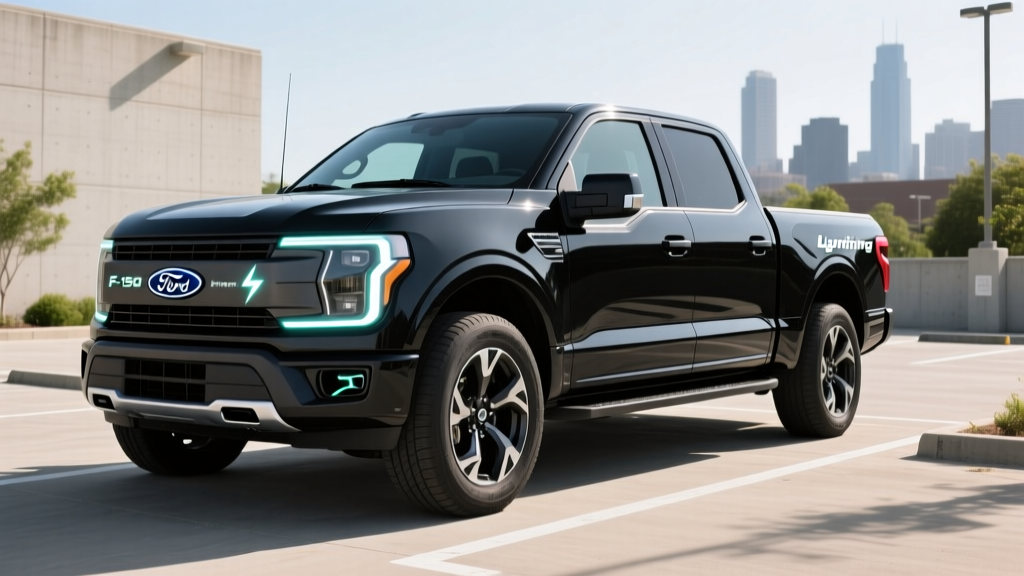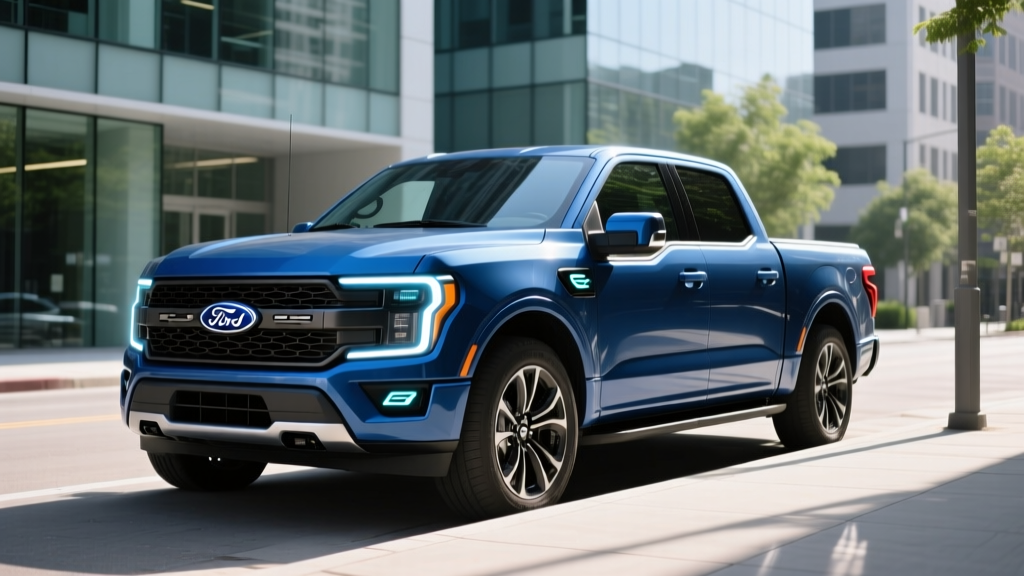
The Ford F-150 Lightning production pause has become a recurring concern for prospective electric truck buyers. Ford has periodically adjusted Lightning output at its Rouge Electric Vehicle Center in Dearborn, Michigan, responding to shifting demand, supply chain constraints, and broader EV market dynamics. If you're researching the Lightning in 2026, understanding why these pauses happen — and what they mean for pricing, availability, and long-term ownership — is just as important as the truck's spec sheet.
This review covers the current-generation F-150 Lightning with full specifications, real-world range data, charging performance, pricing, and a clear-eyed look at whether Ford's electric flagship pickup is worth buying amid production uncertainty.
Why the Ford F-150 Lightning Production Pause Keeps Happening
Ford first signaled production slowdowns for the Lightning in early 2024, citing softer-than-expected EV demand in the truck segment and a consumer shift toward hybrids. The automaker idled shifts and redirected some battery supply to its hybrid lineup. These adjustments have continued into 2025 and 2026, with Ford periodically scaling output up or down based on dealer inventory levels and order bank depth.
The root causes are multilayered:
- EV adoption pacing: Full-size electric truck buyers remain a niche. Many fleet and retail customers opted for the F-150 PowerBoost hybrid or waited for newer entrants like the Chevrolet Silverado EV and Ram 1500 REV.
- Battery cost and sourcing: The Lightning's large NMC packs are expensive to produce, and federal §30D tax credit sourcing requirements add compliance complexity.
- Competitive pressure: Tesla's Cybertruck, Rivian R1T, and the Silverado EV have fragmented the electric truck market that Ford initially dominated.
- Dealer lot inventory: Periodic pauses help Ford prevent oversupply and protect residual values.
For buyers, the practical takeaway is this: the Lightning is still in production and available through Ford dealers, but lead times, trim availability, and regional allocation can be inconsistent. If you want a specific configuration, ordering ahead rather than relying on lot inventory is increasingly the norm.
Ford F-150 Lightning Specifications at a Glance
| Spec | Standard Range | Extended Range |
|---|---|---|
| EPA Range | 240 miles | 320 miles |
| Battery Capacity (usable) | 98 kWh | 131 kWh |
| Battery Chemistry | NMC (Nickel Manganese Cobalt) | NMC |
| Drivetrain | Dual-motor AWD | Dual-motor AWD |
| Horsepower | 452 hp | 580 hp |
| Torque | 775 lb-ft | 775 lb-ft |
| 0-60 mph | ~3.8 sec | |
| Max DC Fast Charge | 150 kW | 150 kW |
| 10-80% DCFC Time | ~44 min | ~41 min |
| Level 2 Home Charge Rate | 11.3 kW (30 mi/hr) | 19.2 kW (with 80A charger) |
| Efficiency (Combined) | 66 MPGe / 51 kWh/100mi | 70 MPGe / 48 kWh/100mi |
| Max Towing | 7,700 lbs | 10,000 lbs (w/ Max Trailer Tow) |
| Max Payload | 2,235 lbs | 1,952 lbs |
| Battery Warranty | 8 years / 100,000 miles (70% retention) | |
Source: fueleconomy.gov and Ford Motor Company official specifications. Real-world results vary by driving style, temperature, and terrain.
Real-World Range: What the EPA Number Doesn't Tell You
EPA Sticker: 240 mi (Standard Range) / 320 mi (Extended Range)
Highway Driving (70-75 mph): Expect ~190-210 mi (Std) / ~255-280 mi (Ext)
Cold Weather (below 30°F): Expect ~160-185 mi (Std) / ~215-250 mi (Ext)
Towing (5,000+ lb trailer): Range can drop 40-50% — plan for 120-150 mi (Ext)
The F-150 Lightning's EPA range figures are achievable in mixed city/suburban driving at moderate speeds and temperatures. But this is a heavy, boxy truck pushing a large frontal area through the air, and highway efficiency suffers accordingly.
In real-world highway testing at sustained 70-75 mph speeds, the Extended Range model typically delivers between 255 and 280 miles before requiring a charge — roughly 12-20% below the EPA sticker. Cold weather compounds this: at temperatures below 30°F, the NMC battery's internal resistance increases, cabin heating draws significant energy (the Lightning uses resistive heating, not a heat pump), and regenerative braking is limited until the pack warms up.
The most dramatic range reduction comes from towing. Pulling a 5,000-pound travel trailer or boat can cut range nearly in half. Ford's onboard range calculator is generally honest about this — when you hook up a trailer and the truck's cameras and sensors detect it, the estimated range drops precipitously. Plan charging stops accordingly if you're towing on a road trip.
Charging Performance: DC Fast Charging and Home Setup
Charging speed remains one of the Lightning's weaker attributes compared to newer competitors with 800-volt architectures. The Lightning runs on a 400-volt platform, which caps its peak DC fast-charge rate at 150 kW.
| Charging Level | Power | Miles Added per Hour | Notes |
|---|---|---|---|
| Level 1 (120V outlet) | 1.4 kW | ~3 mi/hr | Emergency/top-up only |
| Level 2 (240V, 32A) | 7.7 kW | ~20 mi/hr | Standard mobile charger |
| Level 2 (240V, 48A) | 11.3 kW | ~30 mi/hr | Wall-mounted charger |
| Level 2 (240V, 80A) | 19.2 kW | ~50 mi/hr | Extended Range + Ford Charge Station Pro |
| DC Fast Charge | 150 kW peak | ~150 mi in 30 min | 10-80% in ~41 min (Ext Range) |
The 10-80% DC fast-charge time of roughly 41 minutes for the Extended Range pack is acceptable for road-trip stops but noticeably slower than the Rivian R1T or Hyundai Ioniq 5, which can accomplish the same in 20-25 minutes thanks to higher charge rates or 800V architectures. The Lightning's charge curve is relatively flat between 20-60% SoC at around 130-150 kW, then tapers steeply above 80% — charging from 80-100% can take nearly as long as 10-80%.
At home, the 80-amp Ford Charge Station Pro is the standout option for Extended Range owners, delivering 19.2 kW and adding roughly 50 miles of range per hour. This requires a 100-amp dedicated circuit, which means most homes will need a panel upgrade (expect $1,500-$3,000 in electrical work beyond the charger itself). Standard Range models are limited to 11.3 kW on Level 2.
One advantage Ford retains: the Lightning uses the NACS (Tesla-style) connector as of the 2025 model year, giving it native access to Tesla's Supercharger network without an adapter — a significant infrastructure advantage over CCS-equipped competitors.
Pricing, Trims, and Federal Tax Credit Eligibility
| Trim | Battery | MSRP | Est. After §30D Credit |
|---|---|---|---|
| Pro (fleet/base) | Standard Range | $52,090 | $44,590* |
| XLT | Standard Range | $57,575 | $50,075* |
| Lariat | Extended Range | $72,090 | $64,590* |
| Platinum | Extended Range | $93,090 | $85,590* |
*Estimated after $7,500 federal tax credit. Eligibility depends on buyer income, battery sourcing, and MSRP caps. See IRS rules below.
The Lightning's pricing has climbed since its 2022 launch, reflecting battery cost pressures and added features. The production pause environment means dealers may have less flexibility on pricing — fewer units on lots can reduce discounting, though some trims (particularly higher-end Platinum) may still see incentives to move inventory.
- MSRP Cap: Trucks/vans/SUVs must have an MSRP at or below $80,000. The Lightning Platinum exceeds this cap and does NOT qualify.
- Buyer Income Cap: Modified AGI must not exceed $150,000 (single), $225,000 (head of household), or $300,000 (joint filers).
- Battery Sourcing: Critical minerals and battery components must meet escalating percentage thresholds from "free trade agreement" countries. Ford has worked to qualify, but verify current-year compliance on IRS.gov.
- Point-of-Sale Transfer: Eligible buyers can transfer the credit to the dealer at purchase, reducing the purchase price directly rather than waiting for a tax refund.
- Assembly: Must be assembled in North America (the Lightning is built in Dearborn, MI — qualifies).
Source: IRS §30D Clean Vehicle Credit. Rules are subject to change; consult a tax professional before purchasing.
Performance, Capability, and Daily Driving
The F-150 Lightning's dual-motor all-wheel-drive powertrain delivers genuinely impressive performance. The Extended Range model's 580 horsepower and 775 lb-ft of torque propel this 6,500-pound truck to 60 mph in roughly 3.8 seconds — quicker than most sports sedans. The Standard Range model at 452 hp still manages a 5.0-second run, which is remarkable for a work truck.
Where the Lightning excels is in its sheer usability as a daily driver:
- Mega Power Frunk: The front trunk offers 14.1 cu ft of lockable storage with a 400-lb payload capacity — large enough for tools, groceries, or gear. It includes four 120V outlets and two USB ports.
- Pro Power Onboard: Available 2.4 kW or 9.6 kW onboard generator turns the Lightning into a mobile power station. The 9.6 kW version can power tools at a job site, tailgate events, or even back up essential home circuits during an outage (with the Ford Intelligent Backup Power system and home integration).
- Ride quality: The independent rear suspension (a first for the F-150) delivers a noticeably smoother ride than the solid-axle gas F-150, especially when unloaded.
- Cabin space: Crew Cab configuration provides 43.6 inches of rear legroom and 40.4 inches of front legroom. Interior volume is generous for five adults.
On the technology front, Ford's SYNC 4A infotainment system runs on a 15.5-inch portrait touchscreen (12-inch on Pro trim), supporting wireless Apple CarPlay and Android Auto. The available BlueCruise hands-free driving system is a SAE Level 2 driver-assistance feature — it operates on pre-mapped divided highways and allows hands-off driving, but the driver must remain attentive and is monitored by an infrared camera. This is not autonomous driving.
Lightning vs. the Competition: Is It Still Worth Buying?
The electric truck landscape has expanded considerably since the Lightning's 2022 debut. Here's how it stacks up against key rivals:
| F-150 Lightning Ext. | Chevy Silverado EV 4WT | Rivian R1T Dual | Tesla Cybertruck AWD | |
|---|---|---|---|---|
| EPA Range | 320 mi | 492 mi | 352 mi | 340 mi |
| Battery (kWh) | 131 kWh | 200+ kWh | 141 kWh | ~123 kWh |
| Peak DCFC | 150 kW | 350 kW | 220 kW | 250 kW |
| 0-60 mph | 3.8 sec | ~4.5 sec | 4.5 sec | 4.1 sec |
| Max Tow | 10,000 lbs | 10,000 lbs | 11,000 lbs | 11,000 lbs |
| Base MSRP | $52,090 | $60,000+ | $79,900 | $79,990 |
| Bed Length | 5.5 ft | 5.5 ft | 4.5 ft | 6.0 ft |
The Silverado EV's enormous battery gives it a dominant range and charging-speed advantage, but it comes at a higher starting price and a much heavier curb weight that impacts tire wear and efficiency. The Rivian R1T offers superior off-road capability and a more premium interior but at a significantly higher price point. The Cybertruck's polarizing design and stainless-steel exoskeleton aren't for everyone, and its build-quality track record is still maturing.
The Lightning's strongest competitive advantage remains its value proposition at the lower trims and its familiarity as an F-150. If you want an electric truck that looks, feels, and works like the F-150 you've always known — just with instant torque and a massive frunk — the Lightning still occupies that niche better than anything else, production pauses notwithstanding.
Pros and Cons
- Best value entry point in electric trucks (Pro trim under $53K)
- Massive frunk (14.1 cu ft) with integrated power outlets
- Pro Power Onboard (up to 9.6 kW) for job-site and home backup
- Independent rear suspension gives excellent ride quality
- NACS connector = native Supercharger access
- 580 hp Extended Range is genuinely quick (3.8s 0-60)
- Familiar F-150 ergonomics and controls
- 150 kW peak DCFC is slow for a 131 kWh battery
- Real-world highway range falls well short of 320-mi EPA
- No heat pump — cold-weather range loss is significant
- 5.5-foot bed is short for traditional truck users
- Production pauses create ordering uncertainty and wait times
- Platinum trim exceeds $80K MSRP cap (no §30D credit)
- Towing range drops 40-50% — a serious limitation
Who Should Buy the F-150 Lightning?
- You need a full-size truck for commuting and light-duty work, and want to eliminate fuel costs for daily driving
- Pro Power Onboard's mobile generator capability is valuable for your job site, tailgating, or home backup
- You can charge at home (Level 2) and your daily driving stays under 150 miles
- You value the lowest entry price in the electric truck segment
- You regularly tow heavy trailers over long distances (range limitations are severe)
- You need maximum road-trip range and fast DC charging (Silverado EV is superior)
- Off-road capability is a priority (Rivian R1T is better equipped)
- You need a 6.5-foot or longer bed for cargo
Frequently Asked Questions
Is the Ford F-150 Lightning still in production in 2026?
Yes. Despite periodic production pauses and shift adjustments at Ford's Rouge Electric Vehicle Center, the Lightning remains in production and available for order through Ford dealers. Production pauses have been used to manage inventory levels and respond to market demand, not to discontinue the model. However, availability of specific trims and configurations may vary by region and timing.
What is the real-world range of the F-150 Lightning?
The Extended Range model's EPA estimate is 320 miles, but real-world highway driving at 70-75 mph typically yields 255-280 miles. In cold weather below 30°F, expect 215-250 miles. The Standard Range model's 240-mile EPA figure translates to roughly 190-210 miles on the highway. Towing cuts range dramatically — plan for 120-150 miles with a heavy trailer on the Extended Range model.
How fast does the F-150 Lightning charge?
On DC fast charging, the Lightning peaks at 150 kW and charges from 10-80% in approximately 41 minutes (Extended Range) or 44 minutes (Standard Range). At home on Level 2, the Extended Range model with the 80-amp Ford Charge Station Pro charges at 19.2 kW, adding about 50 miles of range per hour — a full overnight charge from empty is achievable.
Does the F-150 Lightning qualify for the $7,500 federal tax credit?
The Pro, XLT, and Lariat trims (all under the $80,000 MSRP cap for trucks) can qualify for the full $7,500 §30D credit, provided the buyer meets income limits ($150K single / $300K joint) and the battery meets critical-mineral and component sourcing requirements. The Platinum trim exceeds the MSRP cap and does not qualify. Always verify current eligibility on IRS.gov before purchasing.
Is the F-150 Lightning worth buying over the Silverado EV or Rivian R1T?
It depends on your priorities. The Lightning offers the best value at lower trims, the most practical frunk, and Pro Power Onboard capability no competitor matches. The Silverado EV wins on range (492 mi) and charging speed (350 kW). The Rivian R1T excels in off-road capability and interior quality but costs significantly more. For a daily-driver truck with home charging and occasional light towing, the Lightning's value proposition holds strong.
What is the F-150 Lightning's battery warranty?
Ford covers the Lightning's battery pack for 8 years or 100,000 miles, whichever comes first, against defects and capacity loss below 70% of original capacity. This is consistent with industry standards and federal requirements for EV battery warranties.