Why the Ford F-150 Lightning Production Halt Matters in 2026
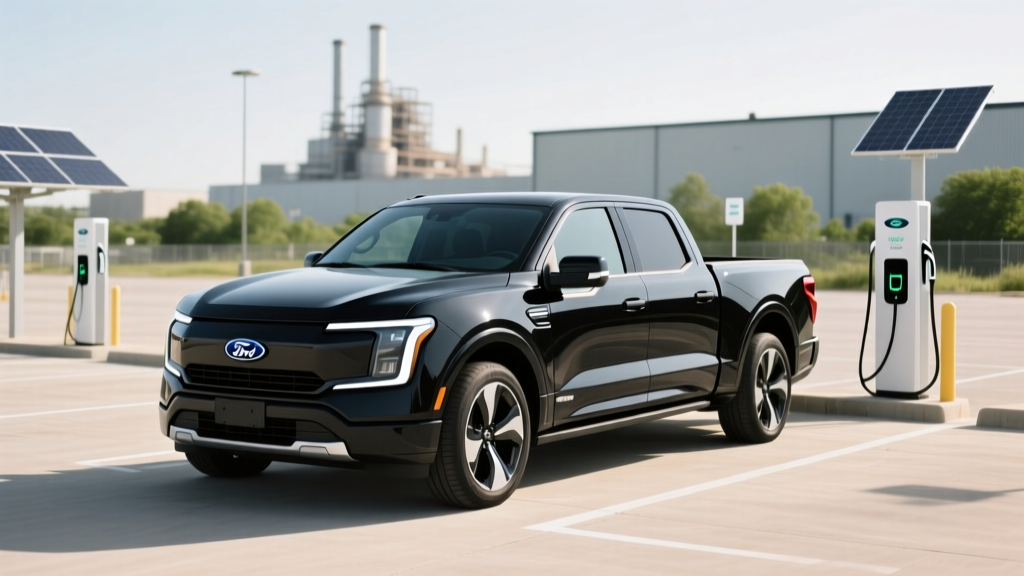
Ford's decision to temporarily halt and scale back F-150 Lightning production at its Rouge Electric Vehicle Center in Dearborn, Michigan, has sent ripples through the electric truck market. The automaker cited shifting demand patterns, dealer inventory buildup, and a strategic pivot toward hybrid powertrains as key factors. For buyers researching the Ford F-150 Lightning production halt, the critical question isn't just why Ford pulled back — it's whether the Lightning remains a smart buy in 2026, what inventory looks like, and how the production pause affects pricing, availability, and long-term support.
This review covers the 2025–2026 F-150 Lightning as it exists in dealer lots and order books today, with exact specs, real-world range data, charging performance, and a clear-eyed look at ownership economics during a period of manufacturing uncertainty.
Range, Battery, and Real-World Efficiency
The F-150 Lightning offers two battery configurations. The Standard Range pack uses a 98 kWh usable nickel-manganese-cobalt (NMC) lithium-ion battery, while the Extended Range pack steps up to 131 kWh usable, also NMC chemistry. Ford has not adopted LFP (lithium iron phosphate) for the Lightning, prioritizing energy density for towing and payload duty over the lower cost and longer cycle life that LFP provides.
| Specification | Standard Range | Extended Range |
|---|---|---|
| Usable Battery Capacity | 98 kWh (NMC) | 131 kWh (NMC) |
| EPA Estimated Range | 240 miles | 320 miles |
| MPGe (Combined) | 78 MPGe | 77 MPGe |
| kWh/100 Miles | 43 kWh | 44 kWh |
| Drivetrain | Dual-Motor AWD | Dual-Motor AWD |
| Horsepower | 452 hp | 580 hp |
| Torque | 775 lb-ft | 775 lb-ft |
| 0–60 mph | ~3.8 sec | |
| Max Towing Capacity | 7,700 lbs | 10,000 lbs |
| Max Payload | 2,235 lbs | 1,800 lbs |
| Battery Warranty | 8 years / 100,000 miles | |
Efficiency hovers around 43–44 kWh per 100 miles, which is typical for a full-size electric truck but significantly higher than a sedan or crossover. The Lightning's boxy aerodynamics and 6,000+ lb curb weight are the main culprits. For context, that means a full charge of the Extended Range pack costs roughly $17–$22 at residential electricity rates of $0.13–$0.17/kWh.
Charging Speed: DC Fast and Home Level 2
Charging performance is where the Lightning's size cuts both ways. The large battery means longer fill times, but Ford equipped the truck with capable hardware.
| Charging Level | Power | Standard Range (98 kWh) | Extended Range (131 kWh) |
|---|---|---|---|
| Level 1 (120V) | ~1.4 kW | ~3 mi/hr | ~3 mi/hr |
| Level 2 (240V, 48A) | 11.5 kW | ~25 mi/hr (~10 hrs full) | ~25 mi/hr (~13 hrs full) |
| Level 2 (240V, 80A – Ford Charge Station Pro) | 19.2 kW | ~42 mi/hr (~5.5 hrs full) | ~42 mi/hr (~7 hrs full) |
| DC Fast Charge (Peak) | 150 kW (Std) / 155 kW (Ext) | 10–80% in ~44 min | 10–80% in ~41 min |
The Lightning's DC fast-charging peak of 150–155 kW is its most notable limitation in 2026. Competitors like the Rivian R1T and Chevrolet Silverado EV accept 200+ kW, and GM's Ultium-based trucks push past 350 kW on compatible chargers. The Lightning's charge curve tapers significantly above 80% state of charge (SoC), so the final 20% can add another 25–30 minutes. On a road trip, plan your stops around 15–20% remaining SoC to maximize time in the peak charging window.
For home charging, the Ford Charge Station Pro (80A, $1,299 hardware) is the best option and unlocks the truck's full 19.2 kW onboard charger capability. This requires a 100-amp dedicated circuit — many homes need a panel upgrade, which adds $1,500–$3,500 to installation costs. A standard 48A Level 2 charger on a 60-amp circuit is more practical for most garages and still fills the Extended Range pack overnight.
Pricing, Trims, and Federal Tax Credit Eligibility
The production halt has had a paradoxical effect on pricing: with reduced output, dealer lots have thinner inventory, but Ford has also offered aggressive incentives to move existing stock. Here's where the 2025–2026 lineup stands:
| Trim | Battery | Base MSRP | Federal §30D Credit Potential | Effective Price |
|---|---|---|---|---|
| Pro | Standard Range | $54,995 | Up to $7,500 | ~$47,495 |
| XLT | Standard Range | $62,995 | Up to $7,500 | ~$55,495 |
| Lariat | Extended Range | $76,995 | Up to $7,500 | ~$69,495 |
| Platinum | Extended Range | $96,874 | Up to $7,500 | ~$89,374 |
- MSRP Cap: Trucks/vans/SUVs must have an MSRP at or below $80,000. The Platinum trim exceeds this cap and does NOT qualify.
- Buyer Income Cap: Modified AGI must not exceed $150,000 (single), $225,000 (head of household), or $300,000 (joint filers).
- Battery Sourcing: Critical minerals and battery component requirements phase in annually. Verify current-year compliance on the IRS qualified vehicles list before purchasing.
- Point-of-Sale Transfer: As of 2024+, buyers can transfer the credit to the dealer for an immediate price reduction at purchase, rather than waiting to claim it on their tax return.
- Final Assembly: Must be assembled in North America (the Lightning is built in Dearborn, MI — qualifies).
Always confirm eligibility with a tax professional and check the latest IRS guidance before purchasing. Rules and qualified-model lists update frequently.
Performance, Utility, and Cargo Space
The dual-motor all-wheel-drive powertrain is standard across all Lightning trims — there is no rear-wheel-drive option. The Extended Range model's 580 horsepower and 775 lb-ft of torque deliver a 0–60 mph time of approximately 3.8 seconds, making it one of the quickest trucks on the road regardless of powertrain. The Standard Range model hits 60 mph in about 5.0 seconds — still brisk for a vehicle weighing over 6,000 lbs.
Utility specs are where the Lightning proves it's a real truck, not just an EV novelty:
- Bed Length: 5.5 feet (Styleside)
- Bed Volume: 52.8 cu ft
- Mega Power Frunk: 14.1 cu ft (400 lbs payload capacity) — lockable, drainable, with 120V outlets
- Total Cargo Volume (bed + frunk): ~67 cu ft of enclosed/bed space
- Front Legroom: 43.9 inches
- Rear Legroom: 43.5 inches (SuperCrew only)
- Pro Power Onboard: 2.4 kW standard (Pro/XLT), 9.6 kW available (Lariat/Platinum) — turns the truck into a mobile generator with 240V outlets in the bed
The 9.6 kW Pro Power Onboard system is a genuine differentiator. It can power job-site tools, tailgate events, or serve as home backup power during outages (with the Ford Intelligent Backup Power system and a compatible home transfer switch, the truck can supply up to 9.6 kW to your home for roughly 3 days on a full Extended Range charge).
Technology, Driver Assistance, and Drawbacks
The Lightning runs Ford's SYNC 4A infotainment system on a 12-inch touchscreen (15.5-inch vertical screen on Lariat and Platinum trims). Wireless Apple CarPlay and Android Auto are standard. Over-the-air (OTA) updates continue to refine the software, though Ford's OTA track record has been uneven compared to Tesla's seamless updates.
Driver assistance comes via Ford Co-Pilot360 2.0, which includes:
- Adaptive cruise control with stop-and-go
- Lane centering assist
- Automatic emergency braking with pedestrian detection
- Blind-spot monitoring with trailer coverage
- BlueCruise (hands-free highway driving on pre-mapped divided highways — available by subscription, ~$75/month or $800/year)
Notable Drawbacks:
- Charging speed lags competitors — 155 kW peak vs. 200–350 kW on rival platforms
- Towing range anxiety is real — expect 140–160 miles per charge under heavy tow
- Weight affects tire wear — the 6,500+ lb curb weight accelerates tire consumption; budget for replacements every 25,000–35,000 miles
- Production uncertainty — the halt raises questions about long-term model commitment and resale value
- No LFP battery option — NMC degrades faster if routinely charged to 100%; Ford recommends daily charging to 80–90% for battery longevity
How the Production Halt Affects Your Decision
Ford's F-150 Lightning production halt is not a cancellation — it's a recalibration. The automaker reduced shifts at the Rouge Electric Vehicle Center and redirected investment toward hybrid F-150 variants, responding to softer-than-expected EV truck demand and stronger hybrid truck interest. Here's what this means practically:
- Inventory: Dealer lots have limited new stock. You may need to search regionally or place a custom order with a 4–8 week lead time.
- Incentives: Ford has offered $5,000–$10,000 in dealer cash and customer rebates on existing inventory to clear stock — negotiate aggressively.
- Resale Value: Production halts create uncertainty. If Ford discontinues the Lightning within 2–3 model years, parts availability and resale value could suffer. However, the F-150 platform's ubiquity provides some insulation.
- Service and Support: Ford's dealer network remains one of the largest in the US. Even if production pauses, service infrastructure for the Lightning is well-established.
- Warranty: The 8-year/100,000-mile battery and powertrain warranty remains in effect regardless of production status. Ford is legally obligated to honor it.
F-150 Lightning vs. Key Competitors
| Attribute | Ford F-150 Lightning (Ext. Range) | Rivian R1T (Dual-Motor Max) | Chevy Silverado EV (4WT) |
|---|---|---|---|
| EPA Range | 320 mi | 352 mi | 380 mi |
| Peak DC Charge | 155 kW | 200 kW | 350 kW |
| 0–60 mph | 3.8 sec | 3.5 sec | 4.5 sec |
| Starting MSRP | $54,995 | $69,900 | $59,900 |
| Tax Credit | Up to $7,500 | Up to $7,500 | Up to $7,500 |
| Frunk | 14.1 cu ft | 11.1 cu ft (gear tunnel) | 10.7 cu ft |
| Pro Power / V2L | 9.6 kW onboard | ~2.4 kW | V2L capable |
- Choose the Lightning if: You need Pro Power Onboard for job-site or backup power, prefer a traditional truck layout and dealer network, can charge at home, and find one under $80,000 MSRP for tax credit eligibility.
- Choose the Rivian R1T if: You prioritize driving dynamics, faster charging, and adventure-oriented design, and budget is less of a constraint.
- Choose the Silverado EV if: You want maximum range (380+ mi) and the fastest DC charging (350 kW) in an electric truck, and prefer GM's Ultium platform.
- Consider a hybrid F-150 PowerBoost instead if: You tow frequently over long distances, lack reliable home charging, or are concerned about the Lightning's production future.
Pros and Cons at a Glance
- Best-in-class frunk (14.1 cu ft) with 120V outlets
- 9.6 kW Pro Power Onboard — genuine mobile generator
- Strong 0–60 performance (3.8 sec Extended Range)
- Ford dealer network for service and warranty
- Competitive pricing on lower trims with tax credit
- BlueCruise hands-free driving on approved highways
- Home backup power capability (Intelligent Backup Power)
- DC fast charging limited to 155 kW — slowest in class
- Real-world towing range under 160 miles
- Production halt creates resale and longevity uncertainty
- NMC battery requires 80–90% daily charge limit for longevity
- Platinum trim exceeds $80K tax credit MSRP cap
- Heavy weight accelerates tire wear
- Extended Range pack adds ~$10K+ to price
Frequently Asked Questions
What is the real-world range of the F-150 Lightning?
The EPA rates the Extended Range at 320 miles and Standard Range at 240 miles. In real-world highway driving at 70 mph, expect 260–280 miles (Extended) and 190–210 miles (Standard). Cold weather reduces these figures by 20–30%. Towing cuts range roughly in half.
How fast does the F-150 Lightning charge?
On a DC fast charger, the Lightning peaks at 150–155 kW, achieving a 10–80% charge in approximately 41–44 minutes. At home on a Level 2 charger (80A/19.2 kW), a full charge takes about 5.5 hours (Standard Range) or 7 hours (Extended Range). On a standard 48A Level 2, plan for 10–13 hours.
Does the F-150 Lightning qualify for the federal EV tax credit?
Most trims qualify for up to $7,500 under IRS §30D, provided the buyer meets income caps ($150K single / $300K joint) and the vehicle MSRP is at or below $80,000 (trucks). The Platinum trim at $96,874 MSRP does NOT qualify. Always verify current eligibility on the IRS qualified vehicles list and consult a tax professional.
Is the F-150 Lightning worth buying despite the production halt?
If you find one at a competitive price with incentives, the Lightning remains a capable electric truck with unique features like the mega frunk and Pro Power Onboard. However, the production halt introduces uncertainty about long-term resale value and Ford's commitment to the nameplate. Buyers who tow frequently over long distances or lack home charging should consider the F-150 PowerBoost hybrid instead.
Is the F-150 Lightning production halt a cancellation?
No. As of 2026, Ford has reduced production shifts and paused expansion plans, but the Lightning remains in the lineup and available through dealers. Ford continues to honor all warranties and provide OTA updates. The company has signaled a strategic shift toward hybrids, but has not officially discontinued the Lightning.
What is the battery warranty on the F-150 Lightning?
Ford covers the Lightning's battery and electric powertrain for 8 years or 100,000 miles, whichever comes first. The warranty guarantees the battery will retain at least 70% of its original capacity during that period. (Source: Ford.com)
Can the F-150 Lightning power my home during an outage?
Yes, with the optional Ford Intelligent Backup Power system and a professionally installed home transfer switch. The 9.6 kW Pro Power Onboard system (available on Lariat and Platinum) can supply power to essential home circuits for approximately 3 days on a full Extended Range battery charge. Equipment and electrician costs for the home transfer system typically run $3,000–$5,000.
Sources: EPA fueleconomy.gov, IRS §30D Qualified Vehicles, Ford F-150 Lightning Official Page