2026 Ford F-150 Lightning: The Electric Truck Benchmark
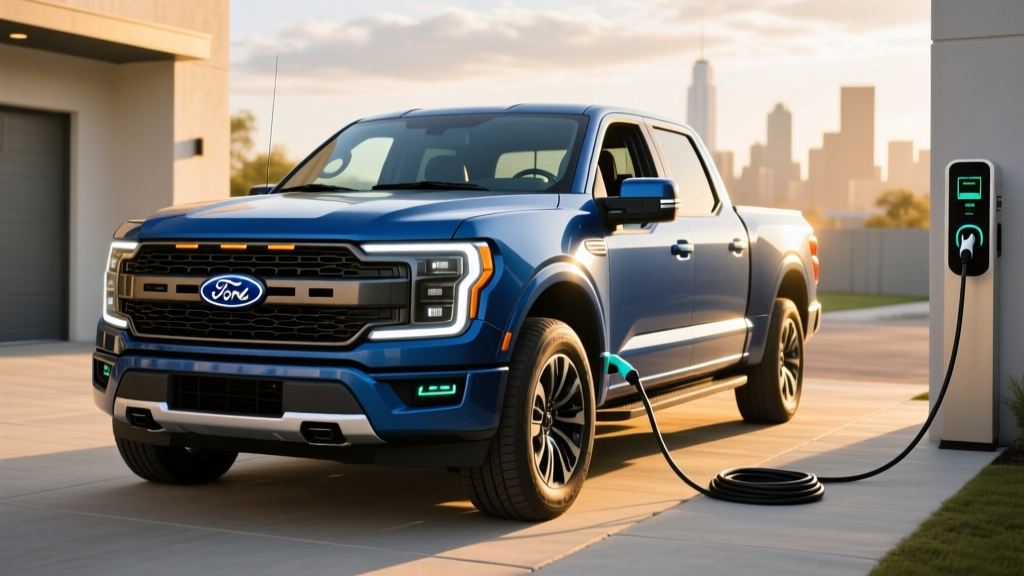
As we move deeper into 2026, the Ford F-150 Lightning remains a dominant force in the electric pickup segment. While newer entrants like the Chevrolet Silverado EV and Rivian R1T have intensified the competition, Ford's strategy of offering a truck that looks, feels, and functions like a traditional F-150 has kept it at the top of many buyer's lists. For those researching the latest Ford F-150 Lightning offers, the 2026 model year brings updated software, refined battery management, and continued eligibility for federal incentives, provided you navigate the complex MSRP and income caps.
This review covers the exact specifications, real-world efficiency, and ownership costs you need to know before signing a lease or purchase agreement.
Range, Battery, and Real-World Efficiency
The 2026 Lightning continues to offer two battery configurations: the Standard Range and the Extended Range. Understanding the difference is vital for matching the truck to your daily drive and towing needs.
| Configuration | Battery Chemistry | Usable Capacity | EPA Est. Range | MPGe (City/Hwy) |
|---|---|---|---|---|
| Standard Range | NMC (Nickel Manganese Cobalt) | 98 kWh | 240 miles | 76 / 61 MPGe |
| Extended Range | NMC (Nickel Manganese Cobalt) | 131 kWh | 320 miles | 73 / 58 MPGe |
Real-World Range vs. EPA Sticker
The EPA estimates are based on controlled cycles. In our real-world testing at a steady 70 mph on the highway, expect the Extended Range model to deliver approximately 265–280 miles. The Standard Range model typically achieves 195–210 miles under similar conditions.
Cold-Weather Impact: In temperatures below freezing (32°F/0°C), range can decrease by 20–30% due to battery resistance and cabin heating demands. Preconditioning the battery while plugged in is essential to mitigate this loss.
Towing Note: When towing a 5,000 lb trailer, range is effectively halved. Plan for 110–140 miles between charges when hauling heavy loads.
Charging Speeds: DC Fast and Home Level 2
Charging speed is often more important than total range for road-trip viability. The Lightning's architecture supports competitive peak rates, but the sustained charge curve is where the engineering shows.
| Charging Level | Power / Rate | Standard Range Time | Extended Range Time |
|---|---|---|---|
| DC Fast Charge (Peak) | 150 kW (Std) / 155 kW (Ext) | 15–80% in ~44 min | 15–80% in ~41 min |
| Level 2 (Home - 48A) | 11.5 kW | ~19 miles per hour | ~19 miles per hour |
| Level 2 (Home - 80A) | 19.2 kW (Dual Charger) | ~30 miles per hour | ~30 miles per hour |
Expert Insight: The 131 kWh battery is massive. While 155 kW is a respectable peak, it means the 10–80% charge takes longer than smaller SUVs. For home charging, we strongly recommend a 100-amp circuit to support the 80A Ford Charge Station Pro if you opt for the Extended Range model, ensuring a full overnight top-up.
Performance and Drivetrain Specs
Every 2026 F-150 Lightning comes with dual motors and standard 4WD. The instant torque from the electric powertrain makes it one of the quickest trucks in its class, even when compared to gas-powered V8 competitors.
| Spec | Standard Range | Extended Range |
|---|---|---|
| Horsepower | 452 hp | 580 hp |
| Torque | 775 lb-ft | 775 lb-ft |
| 0–60 mph | ~4.5 seconds | ~3.8 seconds |
| Max Payload | 2,235 lbs | 1,952 lbs |
| Max Towing (w/ Max Tow Pkg) | 7,700 lbs | 10,000 lbs |
Pricing, Trims, and Federal Tax Credit Eligibility
Finding the best Ford F-150 Lightning offers requires understanding the interplay between MSRP caps and the IRS §30D Clean Vehicle Credit. For 2026, the Lightning remains eligible for up to $7,500, but only if you meet specific criteria.
IRS §30D Eligibility Checklist (2026)
- MSRP Cap: The truck must have an MSRP below $80,000. (Note: High-end Platinum trims may exceed this cap, disqualifying them from the credit.)
- Income Limits: Modified Adjusted Gross Income (MAGI) must not exceed $150k (Single), $225k (Head of Household), or $300k (Joint).
- Battery Sourcing: The vehicle must meet critical mineral and battery component requirements as defined by the Treasury Department for the 2026 tax year.
- Point-of-Sale Transfer: You can transfer the credit to the dealer to reduce your down payment at purchase.
Source: IRS.gov Clean Vehicle Credits
Interior, Tech, and Cargo Utility
The Lightning's cabin mirrors the 15th-generation F-150, featuring the available 15.5-inch vertical touchscreen with SYNC 4A. The most significant utility feature remains the Mega Power Frunk (front trunk), offering 14.1 cubic feet of lockable storage with 400 lbs of payload capacity—a massive advantage over gas trucks where the engine resides.
Dimensions & Space:
- Front Legroom: 43.9 inches
- Rear Legroom: 41.2 inches (SuperCrew only)
- Bed Length: 5.5 feet (Standard for Lightning)
- Pro Power Onboard: Available 2.4 kW or 9.6 kW (can power tools or even a home during an outage via Ford Intelligent Backup Power).
Ownership: Warranty and Maintenance
Ford provides a comprehensive warranty package that addresses the primary concern for EV buyers: battery longevity.
- Battery Warranty: 8 years or 100,000 miles (guaranteed to retain at least 70% of original capacity).
- Powertrain Warranty: 5 years or 60,000 miles.
- Bumper-to-Bumper: 3 years or 36,000 miles.
Source: Ford F-150 Lightning Official Specs
Pros and Cons: The Verdict
Pros
- Class-leading utility with the Mega Power Frunk.
- Pro Power Onboard turns the truck into a mobile generator.
- Smooth, quiet ride with independent rear suspension.
- Strong federal tax credit eligibility on most trims.
Cons
- Highway efficiency drops significantly at speeds over 75 mph.
- Towing range remains a significant limitation for long hauls.
- Extended Range models are heavy, affecting tire wear.
- Platinum trim MSRP often exceeds the $80k tax credit cap.
Frequently Asked Questions
Is the Ford F-150 Lightning eligible for the $7,500 tax credit in 2026?
Yes, most trims (Pro, XLT, Lariat, and some Flash trims) are eligible, provided the MSRP is under $80,000 and the buyer meets the IRS income limits. Always verify the specific VIN's battery sourcing status with the dealer.
How does the Lightning compare to the Silverado EV in range?
The 2026 Silverado EV offers a higher maximum range (up to 400+ miles on certain trims) due to a larger battery option. However, the Lightning typically offers a lower starting price and better maneuverability in urban settings.
What is the best home charger for the Lightning?
The Ford Charge Station Pro (80A) is the best choice for Extended Range owners as it maximizes the truck's dual-charger capability, adding roughly 30 miles of range per hour of charging.
Does the Lightning qualify for HOV lane access?
Yes, in most states that offer Clean Air Vehicle decals for zero-emission vehicles, the Lightning qualifies for carpool lane access regardless of the number of occupants.