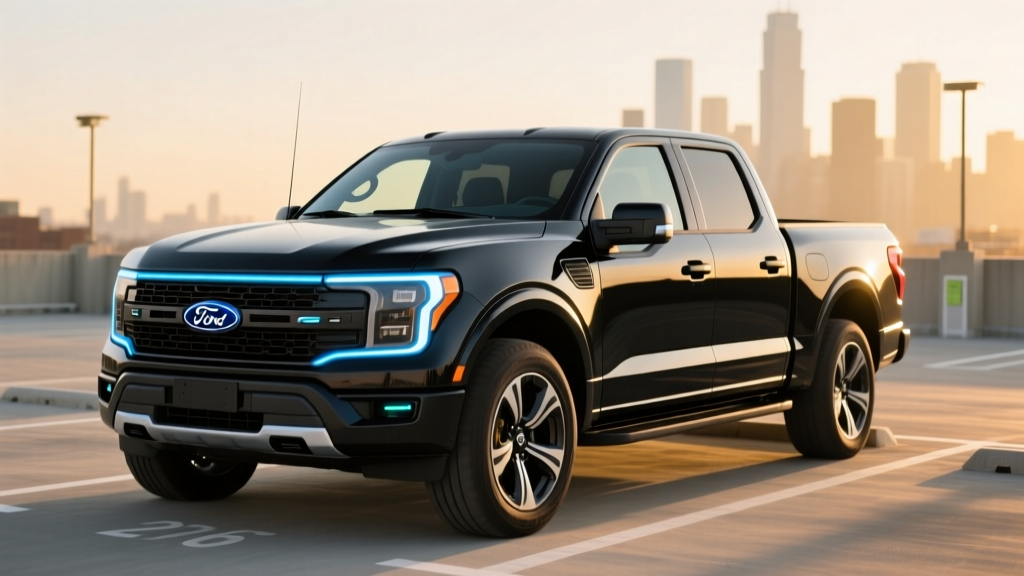
The Ford F-150 Lightning remains one of the few full-size electric pickups available in the U.S. market, and for 2026, it continues to draw buyers who need truck utility without tailpipe emissions. But with MSRPs starting near $55,000 and climbing past $90,000 for Platinum trims, many shoppers are turning to leasing as a way to lower monthly costs and sidestep depreciation risk. This review breaks down the 2026 F-150 Lightning's real-world range, charging performance, pricing, and whether current lease deals and federal incentives make it a smart move.
2026 Ford F-150 Lightning: Quick Specs Overview
| Spec | Standard Range | Extended Range |
|---|---|---|
| EPA Range | 240 miles | 320 miles |
| Battery (Usable) | 98 kWh (NMC) | 131 kWh (NMC) |
| Drivetrain | Dual-motor AWD | Dual-motor AWD |
| Horsepower | 452 hp | 580 hp |
| Torque | 775 lb-ft | 775 lb-ft |
| 0-60 mph | ~3.8 sec | |
| Max DC Fast Charge | 150 kW | 150 kW |
| 10-80% DC Charge | ~36 min | ~41 min |
| Level 2 Home Charge | 11.3 kW (~22 mi/hr) | 11.3 kW (~22 mi/hr) |
| MPGe (Combined) | 68 MPGe | 66 MPGe |
| Max Payload | 2,235 lbs | 1,800 lbs |
| Max Towing | 7,700 lbs | 10,000 lbs (w/ Max Tow Pkg) |
| Base MSRP | $54,995 (Pro) | $69,995 (Lariat) |
Sources: fueleconomy.gov, Ford Motor Company
Real-World Range: What the EPA Sticker Doesn't Tell You
The F-150 Lightning's boxy aerodynamics and 6,000+ pound curb weight work against efficiency at highway speeds. During mixed city/highway driving, the Extended Range model averages around 2.0-2.2 kWh/mile, which aligns with its 66 MPGe combined rating. City driving with regenerative braking recovers more energy, and some owners report exceeding the EPA estimate in stop-and-go commuting. However, if your typical use involves loaded highway towing, range can fall to 100-150 miles depending on trailer weight and terrain — a critical factor for buyers considering this truck for work or recreation.
The battery pack uses NMC (nickel-manganese-cobalt) chemistry in both configurations, which offers higher energy density than LFP but is more sensitive to sustained high state-of-charge. Ford recommends daily charging to 80-90% for routine use and 100% only when you need maximum range for a trip.
Charging Performance: DC Fast and Home Level 2
Charging speed is where the Lightning's age shows compared to newer rivals. The truck uses a 400-volt architecture (not the 800V systems found in the Hyundai Ioniq 5 or Porsche Macan EV), which caps its peak DC fast-charge rate at 150 kW.
| Charging Level | Power | Speed (Miles/Hour) | Notes |
|---|---|---|---|
| Level 1 (120V) | 1.4 kW | ~2-3 mi/hr | Emergency/trickle only |
| Level 2 (240V, 48A) | 11.3 kW | ~22 mi/hr | Full charge in ~9-12 hrs |
| Level 2 (240V, 80A)* | 19.2 kW | ~30 mi/hr | Requires Ford Charge Station Pro + 100A circuit |
| DC Fast Charge | 150 kW peak | ~150 mi in 30 min | Peak rate sustained to ~55% SoC, then tapers |
*80A Level 2 available on Extended Range models with the Ford Charge Station Pro and a dedicated 100-amp circuit installed by a licensed electrician.
The charge curve matters more than peak rate. The Extended Range Lightning holds close to 150 kW from roughly 15% to 55% state of charge, then progressively tapers. The 10-80% charge takes approximately 41 minutes for the Extended Range pack — adequate for highway road trips but noticeably slower than the Rivian R1T or Chevrolet Silverado EV on newer 800V platforms. For home charging, the 80A Ford Charge Station Pro can fully replenish the Extended Range pack overnight in about 8-9 hours, which is a strong advantage for daily drivers who install the required electrical infrastructure.
Lease Pricing, MSRP, and the Federal Tax Credit
The 2026 F-150 Lightning lineup spans four trims: Pro, XLT, Lariat, and Platinum. Pricing has stabilized after the volatility of the 2022-2024 launch years, but it remains a premium-priced electric truck.
| Trim | Battery | MSRP (incl. destination) | Est. Lease (36 mo, 10.5k mi/yr)* |
|---|---|---|---|
| Pro | Standard Range | $54,995 | $550-$650/mo |
| XLT | Standard Range | $59,995 | $620-$720/mo |
| XLT | Extended Range | $72,495 | $750-$850/mo |
| Lariat | Extended Range | $77,495 | $800-$920/mo |
| Platinum | Extended Range | $91,995 | $950-$1,100/mo |
*Lease estimates vary by region, dealer, credit tier, and available incentives. Always confirm with your local Ford dealer.
Federal §30D Tax Credit: Does the Lightning Qualify?
- Credit amount: Up to $7,500 (split: $3,750 for critical minerals + $3,750 for battery component sourcing)
- MSRP cap: Trucks/vans/SUVs must be under $80,000 — this eliminates the Platinum trim and some Lariat configurations
- Buyer income cap: AGI ≤ $150,000 (single), $225,000 (head of household), $300,000 (joint)
- Battery sourcing: Must meet critical-mineral and battery-component requirements per IRS guidance — Ford has sourced an increasing share domestically, but verify the specific VIN with your dealer
- Point-of-sale transfer: Eligible buyers can apply the credit as a down-payment reduction at purchase, or claim it on their tax return
Source: IRS.gov — Clean Vehicle Credits
For leasing, the tax credit situation is different. Under a lease, the lessor (Ford Credit) technically claims the commercial clean vehicle credit (§45W), and they may pass some or all of that savings to the lessee through a capitalized cost reduction — commonly called "lease cash." Ford has historically offered lease cash incentives of $7,500-$12,500 on Lightning models to move inventory, which effectively makes leasing more attractive than buying for some shoppers. Always ask the dealer exactly how much lease cash is being applied and whether it's reducing the cap cost or being retained by the dealership.
Interior, Cargo, and Technology
The Lightning retains the F-150's spacious SuperCrew cab with 43.6 inches of rear legroom — enough for adults on long trips. The front trunk (frunk) is a standout feature, offering 14.1 cubic feet of lockable, weatherproof storage with a drain plug, effectively replacing the need for a bed toolbox in some use cases. The 5.5-foot bed provides 52.8 cubic feet of volume, and the 2,235-pound max payload (Standard Range Pro) is competitive for the segment.
Technology highlights include:
- SYNC 4A with a 12-inch touchscreen (15.5-inch vertical screen on Lariat and Platinum)
- Ford BlueCruise (SAE Level 2) hands-free highway driving on pre-mapped divided highways — requires driver attention monitoring
- Pro Power Onboard: 2.4 kW standard, 9.6 kW available — turns the Lightning into a mobile generator with 120V and 240V outlets in the bed and frunk
- Intelligent Backup Power: With the Ford Charge Station Pro and a home transfer switch, the Lightning can power essential home circuits during an outage (up to 9.6 kW)
- Onboard scales and Pro Trailer Hitch Assist for towing workflows
Drawbacks include the Lightning's sheer size (232.7 inches long), which makes parking garages and tight urban streets a challenge, and road noise that's more noticeable than in car-based EVs due to the truck's body-on-frame construction and all-terrain tire options.
How It Compares: Lightning vs. Rivian R1T and Silverado EV
The F-150 Lightning occupies a unique position: it's the only body-on-frame, full-size electric truck from a legacy automaker priced below $80,000 (in most trims). The Rivian R1T is more refined, faster-charging (on its newer 800V Dual-Motor platform), and more off-road capable, but starts around $75,000 and is smaller inside. The Chevrolet Silverado EV (4WT and RST trims) uses GM's Ultium platform with up to 400 miles of range on the top configuration and faster DC charging, but its base pricing pushes higher, and its unconventional styling and fixed mid-gate bed don't appeal to traditional truck buyers.
Pros
- Pro Power Onboard and home backup power are unmatched utility features
- Massive frunk adds practical storage no gas F-150 offers
- Familiar F-150 driving position, controls, and cab space
- Competitive lease cash incentives lower effective cost
- Extended Range model hits 320 miles EPA — solid for a truck
- BlueCruise is one of the better Level 2 highway assists available
Cons
- 150 kW peak DC charging is slow vs. 800V competitors
- Highway and cold-weather range loss is significant (~20-30%)
- Towing range drops dramatically — 100-150 mi with heavy trailers
- Platinum trim exceeds the $80,000 §30D MSRP cap
- Heavy curb weight (6,000-6,500 lbs) affects tire wear and efficiency
- Body-on-frame ride quality is truck-like, not SUV-smooth
Who Should Lease the F-150 Lightning?
- Homeowners with Level 2 charging who commute locally and need a full-size truck bed for weekend projects, hauling, or light commercial work
- Fleet and business buyers who benefit from §45W commercial credits and can charge at a depot overnight
- Buyers in areas with frequent power outages — the 9.6 kW Pro Power Onboard with home backup capability is a genuine differentiator
- Shoppers who want EV running costs but refuse to compromise on truck size, ground clearance, or towing capacity
- You tow heavy trailers long distances regularly — range will be a persistent frustration
- You live in an apartment or lack reliable home charging — the Lightning's large battery makes public-only charging expensive and time-consuming
- You prioritize cutting-edge charging speed and efficiency — the Rivian R1T or Silverado EV are better on road trips
Battery Warranty and Long-Term Ownership
Ford covers the Lightning's high-voltage battery with an 8-year / 100,000-mile warranty (whichever comes first), guaranteeing the pack will retain at least 70% of its original capacity during that period. The electric powertrain components (motors, inverters) are also covered for 8 years / 100,000 miles. The bumper-to-bumper limited warranty runs 3 years / 36,000 miles.
NMC battery degradation in the Lightning has been moderate based on early owner data. Most high-mileage Lightning fleets and owner reports suggest approximately 5-8% capacity loss over the first 50,000 miles, which is within expectations for liquid-cooled NMC packs. For lease buyers, this is largely irrelevant — you'll return the truck before significant degradation occurs, which is one of leasing's core advantages for rapidly evolving EV technology.
Frequently Asked Questions
What is the real-world range of the F-150 Lightning?
The Extended Range model is EPA-rated at 320 miles, but expect 250-275 miles in real-world highway driving and as low as 200-230 miles in freezing temperatures. The Standard Range model's 240-mile EPA rating yields approximately 190-210 highway miles. Towing a loaded trailer can cut range to 100-150 miles.
How fast does the F-150 Lightning charge at home and on the road?
On a DC fast charger, the Lightning peaks at 150 kW and charges from 10-80% in roughly 36-41 minutes depending on battery size. At home on a Level 2 charger, it adds about 22 miles of range per hour at 11.3 kW, or about 30 miles per hour with the optional 80A Ford Charge Station Pro (Extended Range models).
How much does the F-150 Lightning cost after tax credits?
If you purchase and qualify for the full $7,500 §30D federal credit, a Pro Standard Range model drops from $54,995 to an effective $47,495 (before state incentives). For leases, Ford Credit may apply $7,500-$12,500 in lease cash as a cap cost reduction, which can bring monthly payments on an XLT Standard Range down to the $550-$650 range depending on your region and credit tier.
Does the F-150 Lightning qualify for the federal EV tax credit?
Most trims qualify for up to $7,500 under IRS §30D, provided the buyer meets income caps ($300K joint / $150K single), the truck's MSRP is under $80,000 (excluding Platinum), and the battery meets critical-mineral and component sourcing requirements. Verify VIN-specific eligibility at fueleconomy.gov before purchasing. For leases, the commercial credit (§45W) applies differently and savings are passed through the lessor.
Is the F-150 Lightning worth it vs. the Rivian R1T or Silverado EV?
If you need a traditional full-size truck bed, SuperCrew cab, Pro Power Onboard, and home backup power, the Lightning has no direct rival. If you prioritize charging speed, on-road refinement, and off-road capability in a smaller package, the Rivian R1T is the better EV. The Silverado EV offers more range (up to 400 miles) and faster charging but sacrifices the conventional truck look and feel. Lease deals and available incentives often tip the scales — compare actual monthly payments, not just MSRPs.
What is BlueCruise and is it self-driving?
Ford BlueCruise is an SAE Level 2 driver-assistance system that allows hands-free driving on approximately 130,000+ miles of pre-mapped divided highways. It is not self-driving — the driver must remain attentive, and a camera monitors eye gaze. You must be prepared to take over at any time. It's a strong highway companion but does not handle city streets, construction zones, or unmapped roads.