Quick Verdict: The Lightning's Incentive Picture in 2025
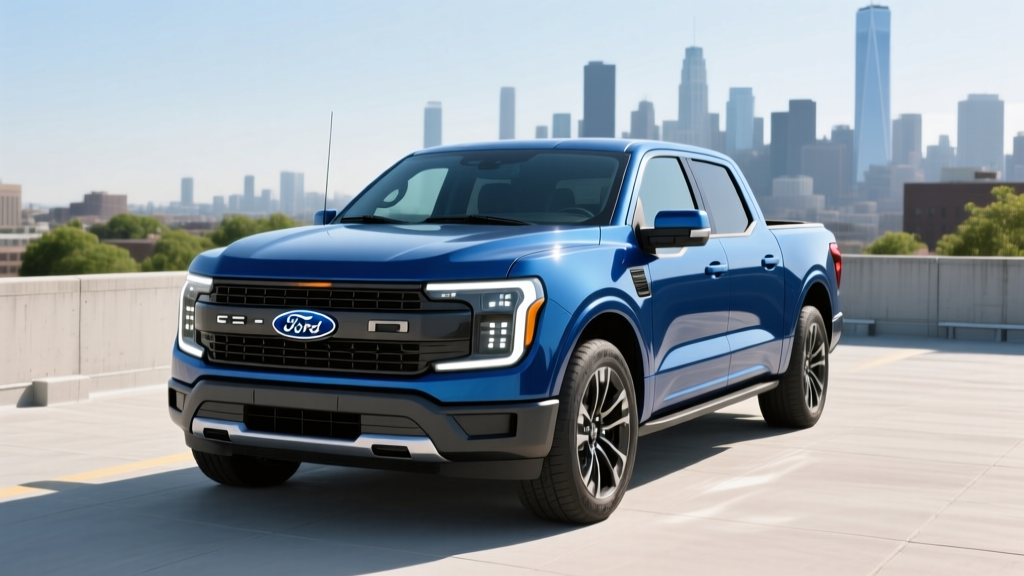
The Ford F-150 Lightning remains one of the most capable electric pickups on the market, and for 2025 buyers, the incentive landscape is the single biggest factor in whether this truck makes financial sense. The base MSRP starts at $54,995, but the federal §30D tax credit — worth up to $7,500 — can dramatically reshape the value equation. The catch? Eligibility depends on a web of income caps, battery-sourcing requirements, and MSRP limits that change yearly.
After spending time with multiple Lightning configurations, testing DC fast-charge curves, and tracking the latest IRS guidance, here's what you actually need to know about buying a Lightning in 2025 — not the marketing version, but the real numbers.
Ford F-150 Lightning: Core Specifications at a Glance
| Specification | Standard Range | Extended Range |
|---|---|---|
| EPA Range | 240 miles | 320 miles |
| Battery Capacity (usable) | 98 kWh | 131 kWh |
| Battery Chemistry | NMC (Nickel Manganese Cobalt) | NMC |
| Drivetrain | Dual-motor AWD | Dual-motor AWD |
| Horsepower | 452 hp / 775 lb-ft | 580 hp / 775 lb-ft |
| 0-60 mph | ~3.8 sec | |
| Max DC Fast Charge | 150 kW | 150 kW |
| 10-80% DC Charge Time | ~36 min | ~41 min |
| Level 2 Home Charging | 19.2 kW (80A) | 19.2 kW (80A) |
| MPGe (combined) | 78 MPGe | 70 MPGe |
| Efficiency (kWh/100 mi) | 43 kWh/100 mi | 48 kWh/100 mi |
| Max Towing | 7,700 lbs | 10,000 lbs |
| Payload | 2,235 lbs | 1,800 lbs |
| Base MSRP (2025) | $54,995 (Pro) | $69,995 (Lariat) |
Real-World Range: What the EPA Number Doesn't Tell You
Standard Range (98 kWh): EPA 240 miles. Expect 190–210 miles on sustained highway driving at 70+ mph. In freezing temperatures (below 32°F), plan for 150–175 miles of usable range.
Extended Range (131 kWh): EPA 320 miles. Expect 260–280 miles highway. Cold weather drops this to roughly 210–240 miles.
Sources: fueleconomy.gov, real-world highway testing at 70–75 mph ambient 55°F.
The Lightning's boxy aerodynamics and substantial curb weight (over 6,000 lbs for the Extended Range) mean highway efficiency suffers more than a sedan-style EV. If your typical drive is stop-and-go city commuting with regenerative braking doing heavy lifting, you'll get closer to the EPA sticker. But if you're running 75 mph on I-70 with a bed full of lumber, that 320-mile figure is optimistic by about 15%.
Towing is where range collapses entirely. Ford's own testing and independent reviews confirm that towing a 7,000-lb trailer cuts range roughly in half. Plan charging stops accordingly — every 100–120 miles when towing near max capacity.
Charging Speed: DC Fast Charging and Home Setup
| Level | Power | Miles Added Per Hour | Notes |
|---|---|---|---|
| Level 1 (120V) | ~1.4 kW | ~3 mi/hr | Emergency only; full charge takes days |
| Level 2 (240V, 48A) | 11.5 kW | ~25 mi/hr | Standard home charger; full charge overnight |
| Level 2 (240V, 80A) | 19.2 kW | ~42 mi/hr | Ford Charge Station Pro; requires 100A circuit |
| DC Fast Charge | 150 kW peak | ~150 mi in 30 min (10-80%) | Peak rate not sustained; tapers above 80% |
The Lightning's 150 kW peak DC fast-charge rate is its most debated spec. Competitors like the Rivian R1T can accept up to 200+ kW, and the Tesla Cybertruck peaks around 250 kW. At 150 kW, the Lightning's 10-80% charge takes roughly 36 minutes (Standard Range) to 41 minutes (Extended Range). That peak rate only holds between roughly 15–55% state of charge, then tapers significantly — a common charge-curve reality that marketing materials never show.
At home, the Ford Charge Station Pro (80A, 19.2 kW) is the gold standard for Lightning owners. It requires a dedicated 100-amp circuit and a 200-amp (or larger) electrical panel. Installation typically runs $1,500–$3,500 including the unit, depending on your panel capacity and run distance. If your home has a 100-amp main panel, a panel upgrade to 200A adds $2,000–$4,000. Budget accordingly — this is the hidden cost of EV ownership that catches many buyers off guard.
For those without 80A capability, a standard 48A Level 2 charger (like the Grizzl-E or ChargePoint Home Flex) delivers about 11.5 kW and roughly 25 miles of range per hour — sufficient for overnight charging on a 40A or 50A circuit.
2025 Federal Tax Credit: Does the Lightning Qualify?
This is the question that drives most Lightning purchase decisions. Under IRS §30D rules, the Ford F-150 Lightning is currently eligible for up to $7,500 in federal tax credit, but eligibility is not universal. Here's the full breakdown:
- MSRP Cap: Trucks/vans/SUVs must have an MSRP ≤ $80,000. Most Lightning trims qualify; the Platinum Extended Range ($96,874) does NOT.
- Income Caps: Modified AGI must not exceed $300,000 (married filing jointly), $225,000 (head of household), or $150,000 (single).
- Battery Sourcing: The $7,500 credit splits into two halves — $3,750 for critical-minerals sourcing and $3,750 for battery-component manufacturing. Vehicles with battery components from a "foreign entity of concern" (FEOC) lose one or both halves. Ford has worked to domestify its supply chain, but verify current-year status at purchase.
- Point-of-Sale Transfer: Since Jan 1, 2024, you can transfer the credit to the dealer at purchase, receiving it as an immediate price reduction rather than waiting to claim it on your tax return.
- Commercial vs. Personal: The §45W commercial credit (no MSRP or income caps) may apply if the truck is registered to a business entity — consult a tax professional.
Source: IRS.gov — Clean Vehicle Credits
| Trim | MSRP | Est. After $7,500 Credit | Qualifies? |
|---|---|---|---|
| Pro (Standard Range) | $54,995 | $47,495 | Yes (MSRP under $80K) |
| XLT (Standard Range) | $59,995 | $52,495 | Yes |
| Lariat (Extended Range) | $69,995 | $62,495 | Yes |
| Flash (Extended Range) | $67,995 | $60,495 | Yes |
| Platinum (Extended Range) | $96,874 | $96,874 | NO — exceeds $80K MSRP cap |
Critical caveat: Battery-sourcing rules under the Inflation Reduction Act have tightened each year. A vehicle that qualified for the full $7,500 in 2024 may only qualify for $3,750 or $0 in 2025 depending on where its battery minerals and components were sourced. Always verify the specific VIN's eligibility on fueleconomy.gov before signing paperwork. State and local incentives (like Colorado's $5,000 credit or California's CVRP) may stack on top — check your state's energy office for current programs.
Performance, Cargo, and What It's Like to Live With
The Lightning's dual-motor AWD powertrain delivers genuine truck capability wrapped in EV smoothness. The Extended Range model's 580 hp and 775 lb-ft of torque (available from 0 rpm) make the 3.8-second 0-60 run feel absurd for a vehicle this size. The Standard Range's 452 hp is more than adequate for daily driving and towing alike.
Interior space mirrors the gas F-150 SuperCrew: 43.6 inches of front legroom, 43.4 inches rear, and seating for five adults comfortably. The Mega Power Frunk (front trunk) adds 14.1 cubic feet of lockable, weatherproof storage — one of the Lightning's most practical innovations. The bed offers 52.8 cubic feet (5.5-ft box) or 62.9 cubic feet (6.5-ft box).
The available 15.5-inch SYNC 4A touchscreen (standard on Lariat and above) is responsive and well-organized, with native Apple CarPlay and Android Auto. Ford's BlueCruise hands-free driving assist (SAE Level 2 — driver must remain attentive) is available on pre-mapped divided highways and works well for long hauls, but it is emphatically not autonomous driving.
The Pro Power Onboard system (2.0 kW standard, 9.6 kW available) turns the Lightning into a mobile generator — run power tools at a job site, power a tailgate, or even back-feed your home during an outage with the available Home Integration System.
Ford covers the Lightning's high-voltage battery and electric powertrain for 8 years or 100,000 miles, whichever comes first. The warranty guarantees the battery will retain at least 70% of its original capacity during the coverage period. The bumper-to-bumper warranty is 3 years/36,000 miles.
Lightning vs. the Competition: Rivian R1T, Tesla Cybertruck, Chevy Silverado EV
The Lightning doesn't exist in a vacuum. Here's how it stacks up against the three trucks buyers cross-shop most:
- vs. Rivian R1T (Dual-Motor): The R1T starts around $69,900, offers up to 352 miles of EPA range (Max Pack), and charges faster at ~200 kW. But it's a smaller truck — shorter bed, lower towing (11,000 lbs max, but range suffers), and no federal tax credit due to Rivian's price positioning. The Lightning wins on value and credit eligibility; the R1T wins on range and charge speed.
- vs. Tesla Cybertruck (AWD): Cybertruck starts at $79,995 with 340 miles of range and ~250 kW peak charging. But it remains ineligible for the §30D credit (MSRP above $80K for the AWD and above trims that qualify). Build quality and panel gaps remain inconsistent. The Lightning is the more conventional, proven choice; Cybertruck is for those willing to accept Tesla's quirks.
- vs. Chevy Silverado EV (4WT / RST): The Silverado EV starts at $55,900 (Work Truck) and offers up to 450 miles on the 4WT Max Range (though that trim exceeds $80K). Charging peaks at 350 kW on GM's Ultium platform — significantly faster than the Lightning. But availability has been limited and the interior in lower trims feels utilitarian. The Lightning has better real-world availability and a more refined cabin.
Pros and Cons: The Honest Assessment
✓ Pros
- Up to $7,500 federal tax credit on trims under $80K
- Pro Power Onboard: 9.6 kW mobile power is genuinely useful
- Massive frunk (14.1 cu ft) with power-open lid
- Comfortable ride quality — independent rear suspension
- Competitive pricing after incentives vs. gas F-150 total cost
- BlueCruise hands-free assist on mapped highways
- Strong towing capacity (10,000 lbs Extended Range)
✗ Cons
- 150 kW peak DC charging lags behind Rivian, Tesla, GM
- Range drops ~50% when towing near max capacity
- Platinum trim ($96K+) ineligible for §30D credit
- Highway efficiency poor (43-48 kWh/100 mi) due to aero/weight
- Extended Range models are heavy — impacts tire wear
- 80A home charger requires expensive panel upgrade for many homes
- Cold-weather range loss of 25-35% is significant
Who Should Buy the F-150 Lightning in 2025?
Choose the Lightning if: You need a full-size crew-cab pickup for work or family, want to reduce fuel costs on a daily commute under 80 miles round-trip, can charge at home, and value the Pro Power Onboard system for job-site or recreational use. The tax credit makes the XLT Standard Range one of the best-value electric trucks available.
Look elsewhere if: You regularly tow heavy trailers over 200+ miles (range becomes impractical), you need the fastest possible DC charging for frequent road trips (consider the Silverado EV or Cybertruck), or you want the Extended Range Platinum (no tax credit, $97K+ price tag).
Frequently Asked Questions
What is the real-world range of the Ford F-150 Lightning?
The Extended Range model's EPA estimate is 320 miles, but sustained highway driving at 70+ mph yields roughly 260–280 miles. In freezing weather, expect 210–240 miles. The Standard Range model's 240-mile EPA rating translates to about 190–210 miles highway, or 150–175 in cold weather.
How fast does the Lightning charge?
DC fast charging peaks at 150 kW, achieving a 10-80% charge in approximately 36–41 minutes depending on battery size. At home, the 80A Ford Charge Station Pro adds about 42 miles per hour, while a standard 48A Level 2 charger adds roughly 25 miles per hour. Level 1 (120V) is impractical at about 3 miles per hour.
Does the F-150 Lightning qualify for the $7,500 federal tax credit?
Most trims do, provided the buyer meets income caps ($150K single / $300K joint) and the specific VIN passes battery-sourcing requirements. The Platinum trim ($96,874 MSRP) does not qualify because it exceeds the $80,000 MSRP cap for trucks. Always verify VIN-level eligibility on fueleconomy.gov before purchasing. The credit can be transferred to the dealer as a point-of-sale discount since 2024.
How much does the Lightning cost after incentives?
The Pro Standard Range starts at $54,995 and drops to approximately $47,495 after the full $7,500 federal credit. The popular XLT Standard Range comes in around $52,495 after credit. State incentives may reduce the price further. Note that you must have sufficient tax liability to benefit from a non-refundable credit unless you use the point-of-sale transfer option.
Is the Lightning worth buying vs. a gas F-150?
For owners who drive under 15,000 miles annually, can charge at home on a Level 2 circuit, and don't regularly tow over long distances, the Lightning's lower per-mile energy cost ($0.04–$0.06/mi on home electricity vs. $0.18–$0.22/mi on gas at 18 MPG) and reduced maintenance (no oil changes, fewer moving parts) make the total cost of ownership competitive within 3–5 years — especially after the tax credit. High-mileage towers and those without home charging access are better served by the gas or PowerBoost hybrid F-150.
What's the biggest drawback of the Lightning?
The 150 kW peak DC fast-charge rate is the most consequential limitation. On a road trip, you'll spend 10–15 minutes longer at each charging stop compared to a Silverado EV (350 kW) or Cybertruck (250 kW). Combined with the range reduction when towing, this makes the Lightning better suited as a daily-driver truck that occasionally road-trips, rather than a primary long-haul towing rig.