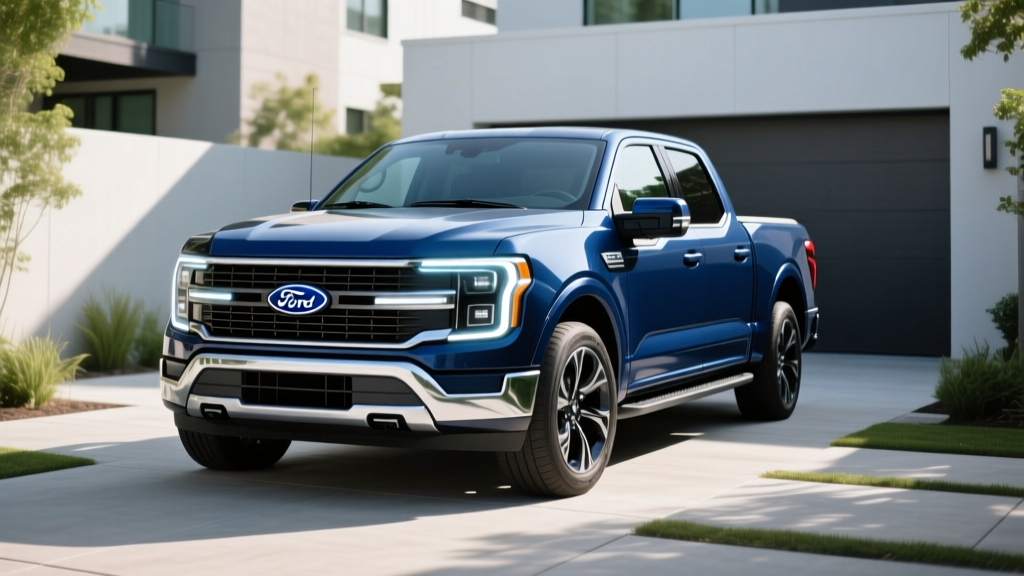
Quick Verdict: Can You Afford the 2026 F-150 Lightning?
The 2026 Ford F-150 Lightning remains one of the most capable electric pickups on the market, blending serious work-truck utility with daily-driver comfort. But with MSRPs stretching well past $70,000 on higher trims, smart financing is just as important as choosing the right battery pack. This review breaks down every cost variable — from base price to federal tax credit eligibility under IRS §30D — so you can determine whether the Lightning fits your budget, not just your garage.
Ford has streamlined the 2026 Lightning lineup around two battery options: the Standard Range (98 kWh usable) and the Extended Range (131 kWh usable). Both use NMC (nickel manganese cobalt) lithium-ion chemistry, which delivers higher energy density than LFP at the cost of slightly faster long-term degradation. The result is a truck that can tow, haul, and commute — if you can structure the monthly payment to match.
Range, Battery, and Real-World Efficiency
The EPA rates the 2026 F-150 Lightning Extended Range at up to 320 miles (Pro and Lariat trims with 18-inch wheels). The Standard Range variant is rated at 240 miles. These are headline numbers — but real-world results depend heavily on how you drive, what you carry, and what the thermometer reads.
EPA Estimate: 320 miles (Extended Range) / 240 miles (Standard Range)
Highway (70+ mph, unloaded): Expect ~250–275 mi (Extended) / ~185–200 mi (Standard)
Cold Weather (below 30°F): Plan for 20–30% reduction — as low as ~225 mi (Extended)
Towing (5,000+ lb trailer): Range can drop to 130–170 mi depending on speed and terrain
The Lightning's boxy aerodynamics work against it at highway speeds. Efficiency drops noticeably above 65 mph, and towing is where range anxiety becomes real. Ford's onboard range calculator is reasonably accurate, but it recalculates aggressively when you hook up a trailer — don't be alarmed when it slashes your projected miles in half.
| Spec | Standard Range | Extended Range |
|---|---|---|
| Usable Battery Capacity | 98 kWh (NMC) | 131 kWh (NMC) |
| EPA Range | 240 mi | 320 mi |
| Combined MPGe | 68 MPGe | 70 MPGe |
| Efficiency (kWh/100 mi) | 49 kWh/100 mi | 48 kWh/100 mi |
| Drivetrain | Dual-Motor AWD | Dual-Motor AWD |
Source: fueleconomy.gov
Charging Speed: DC Fast Charge and Home Level 2
Charging infrastructure is the make-or-break factor for any EV truck buyer, and the Lightning delivers competitive — if not class-leading — charge speeds. The Extended Range pack can accept a peak DC fast-charge rate of 150 kW, while the Standard Range pack peaks at around 120 kW. Neither matches the 350 kW architecture of some rivals, but for the battery sizes involved, the charge curves are practical.
| Charging Level | Standard Range (98 kWh) | Extended Range (131 kWh) |
|---|---|---|
| Level 1 (120V / 12A) | ~2 mi/hr (1.4 kW) | ~2 mi/hr (1.4 kW) |
| Level 2 (240V / 48A) | ~14 mi/hr (11.5 kW) | ~14 mi/hr (11.5 kW) |
| Level 2 (240V / 80A — Ford Charge Station Pro) | ~22 mi/hr (19.2 kW) | ~30 mi/hr (19.2 kW) |
| DC Fast Charge (peak kW) | 120 kW peak | 150 kW peak |
| DC Fast Charge 10–80% | ~45 min | ~41 min |
Key insight: kW is the rate of charge (power); kWh is the energy stored in the battery. The Lightning's 150 kW peak rate is not sustained across the entire charge curve. Like all EVs, charging speed tapers significantly above 80% State of Charge (SoC) to protect the NMC cells. For road trips, plan your stops around 10–80% sessions — pushing past 80% at a DC fast charger adds substantial time for diminishing range gains.
For home charging, Ford's Charge Station Pro (80A hardwired unit) requires a 100-amp dedicated circuit and professional installation by a licensed electrician. Budget $1,500–$3,000 for installation depending on your electrical panel capacity. Many Lightning owners find a 48A Level 2 unit on a 60A circuit sufficient for overnight replenishment — that's roughly 14 miles of range per hour of charging, which covers most daily commutes.
The Lightning uses the NACS (North American Charging Standard) connector as of the 2025 model year, giving it native access to Tesla's Supercharger network without an adapter. This is a major practical advantage for road-trip charging.
Performance and Capability
Every 2026 F-150 Lightning comes with dual-motor all-wheel drive. There is no rear-wheel-drive option. The performance split depends on which battery you choose:
| Metric | Standard Range | Extended Range |
|---|---|---|
| Horsepower | 452 hp | 580 hp |
| Torque | 775 lb-ft | 775 lb-ft |
| 0–60 mph | ~4.5 sec | ~3.8 sec |
| Max Towing Capacity | 7,700 lb | 10,000 lb |
| Max Payload | 2,235 lb | 1,803 lb |
The Extended Range's 3.8-second 0–60 time makes it one of the quickest trucks Ford has ever built. The instant torque delivery is remarkable when merging onto highways or pulling away from stoplights. Regenerative braking is well-calibrated, and the one-pedal driving mode is effective enough for most stop-and-go traffic without touching the brake pedal.
Towing reality check: Max towing is 10,000 pounds on Extended Range models equipped with the Max Trailer Tow Package. But towing at or near that limit compresses your range to roughly 130–170 miles depending on speed, grade, and wind. If you tow regularly over long distances, you will be planning charging stops carefully.
Interior, Cargo, and Technology
The Lightning retains the F-150 SuperCrew cab configuration, offering generous interior space for a full-size pickup:
- Front legroom: 43.9 inches
- Rear legroom: 43.6 inches
- Bed length: 5.5 ft (67.1 inches)
- Bed cargo volume: 52.8 cu ft
- Front trunk (frunk): 14.1 cu ft — lockable, weatherproof, with a 400-lb payload capacity and built-in drain
The frunk is one of the Lightning's most practical differentiators. It replaces the engine bay with sealed, drainable storage — ideal for wet gear, tools, or groceries. The Pro Power Onboard system turns the truck into a mobile generator, with up to 9.6 kW of exportable power (7.2 kW standard on Pro trim, 9.6 kW available on Lariat and above). This is genuinely useful on job sites or for home backup power during outages when paired with the Ford Intelligent Backup Power system (requires additional home transfer switch hardware).
Infotainment: The available 15.5-inch vertical touchscreen (standard on Lariat and above) runs Ford's SYNC 4A system with wireless Apple CarPlay and Android Auto. The interface is responsive but menu-heavy — physical climate controls are absent on the large-screen trims, which frustrates some drivers. The standard 12-inch screen on the Pro trim is more straightforward.
Driver Assistance (SAE Level 2): Ford's Co-Pilot360 Active 2.0 is available on higher trims, offering hands-free highway driving on pre-mapped divided roads. This is a Level 2 driver-assist system — the driver must remain attentive and is legally responsible for the vehicle at all times. It is not autonomous or "self-driving." BlueCruise performs well in its operational design domain but will disengage on unmapped roads, construction zones, or when the driver-monitoring camera detects inattention.
This is SAE Level 2 driver-assist, NOT self-driving. You must keep your eyes on the road and hands available to take over. The system operates only on pre-qualified divided highways. It does not handle city streets, roundabouts, or unmapped roads. The driver is always legally liable.
2026 Pricing, Trim Levels, and Federal Tax Credit Eligibility
Understanding Ford F-150 Lightning financing starts with the sticker price. Here's where each trim lands for the 2026 model year:
| Trim | Battery | Starting MSRP |
|---|---|---|
| Pro (Standard Range) | 98 kWh | ~$52,090 |
| Pro (Extended Range) | 131 kWh | ~$62,590 |
| XLT (Standard Range) | 98 kWh | ~$58,090 |
| XLT (Extended Range) | 131 kWh | ~$68,590 |
| Lariat (Extended Range) | 131 kWh | ~$74,090 |
| Platinum (Extended Range) | 131 kWh | ~$86,090 |
Note: Prices include destination charge. Options, packages, and dealer markups can add thousands. Verify current pricing at ford.com.
Federal EV Tax Credit (§30D) — Does the Lightning Qualify?
The F-150 Lightning is classified as a light truck under IRS §30D rules, which means the MSRP cap is $80,000. Here's the eligibility breakdown:
-
§30D Federal Tax Credit Checklist — F-150 Lightning
- ✅ MSRP Cap: Trucks/SUVs must be ≤$80,000 MSRP — Pro, XLT, and Lariat trims qualify; Platinum may exceed the cap depending on options
- ⚠️ Buyer Income Limits: AGI must not exceed $150,000 (single), $225,000 (head of household), or $300,000 (joint filers)
- ⚠️ Battery Sourcing Requirements: Critical minerals and battery components must meet escalating domestic-sourcing thresholds per the Inflation Reduction Act — the Lightning has historically qualified, but verify current-year status at IRS.gov
- ✅ Point-of-Sale Transfer: Eligible buyers can transfer the credit to the dealer at purchase, reducing the purchase price upfront rather than waiting for tax filing
- ⚠️ Final Assembly: Must be assembled in North America (the Lightning is built in Dearborn, MI — qualifies)
Critical caveat: Tax credit eligibility is not guaranteed and changes with IRS guidance on battery sourcing. Always confirm your specific vehicle's VIN eligibility on the IRS qualified vehicles list before signing a purchase agreement. Consult a tax professional for advice specific to your situation.
Financing the Lightning: What Monthly Payments Look Like
For a practical Ford F-150 Lightning financing scenario, consider the popular XLT Extended Range at ~$68,590 MSRP:
| Item | Amount |
|---|---|
| MSRP (XLT Extended Range) | $68,590 |
| Federal Tax Credit (§30D, if eligible) | −$7,500 |
| Effective Price After Credit | $61,090 |
| Estimated Monthly (72 mo, 6.5% APR, $5K down) | ~$940/mo |
| Estimated Monthly (84 mo, 6.5% APR, $5K down) | ~$830/mo |
This is illustrative only. Actual rates depend on credit score, lender, down payment, and trade-in. Ford Credit periodically offers promotional APRs (e.g., 1.9–3.9% for qualified buyers) that can significantly reduce monthly costs. Check with your dealer for current offers.
Battery Warranty and Long-Term Ownership
Ford backs the Lightning's high-voltage battery and electric powertrain with an 8-year / 100,000-mile warranty (whichever comes first), covering defects and capacity loss below 70% of original capacity. The rest of the vehicle carries a 3-year/36,000-mile bumper-to-bumper warranty and a 5-year/60,000-mile powertrain warranty for non-EV components.
NMC chemistry, which the Lightning uses, typically sees 10–15% degradation over the first 100,000 miles based on industry data from similar packs. Ford's 70% retention threshold is standard for the segment. To maximize longevity, avoid routinely charging to 100% on DC fast chargers, and use the truck's built-in charge-limit settings to cap daily charging at 80–90% SoC.
Insurance costs: EV pickups carry higher insurance premiums than their gas counterparts — expect 15–25% more than a comparable gas F-150. Get quotes before purchasing. Comprehensive coverage is essential given the battery replacement cost, which Ford has not publicly listed but industry estimates place between $15,000–$25,000 for the Extended Range pack out of warranty.
Pros and Cons
- Class-leading frunk (14.1 cu ft) with practical drain and power outlets
- Pro Power Onboard (up to 9.6 kW) — genuine worksite and backup power utility
- NACS connector — native Tesla Supercharger access
- Strong 0–60 performance (3.8 sec Extended Range)
- Comfortable, spacious SuperCrew interior with excellent ride quality
- BlueCruise hands-free highway assist on mapped roads
- Qualifies for §30D tax credit on most trims (verify current eligibility)
- Range drops sharply when towing (130–170 mi realistic with heavy loads)
- DC fast-charge peak of 150 kW trails some competitors
- Platinum trim may exceed $80K MSRP cap, losing tax credit eligibility
- Insurance premiums 15–25% higher than gas F-150
- Extended Range adds ~$10,500 over Standard Range on most trims
- No single-motor RWD option for fleet/commercial buyers prioritizing cost
- Large touchscreen replaces physical climate controls (Lariat+)
Who Should Buy the F-150 Lightning?
Choose the Lightning if: You need a full-size pickup for daily commuting and light-to-moderate towing, want the utility of Pro Power Onboard and a massive frunk, have home Level 2 charging access, and your typical drives stay within 200–250 miles without a trailer.
Look elsewhere if: You tow heavy loads over long distances regularly (the range penalty is severe), you lack reliable home charging access, or you need the lowest possible monthly payment (the Rivian R1T and Silverado EV offer different value propositions at various price points).
Best trim for most buyers: The XLT Extended Range (~$68,590 MSRP, ~$61,090 after tax credit) hits the sweet spot — 320 miles of EPA range, 580 hp, and enough features to justify the price without pushing past the §30D MSRP cap.
Frequently Asked Questions
What is the real-world range of the Ford F-150 Lightning?
The EPA rates the Extended Range at 320 miles and the Standard Range at 240 miles. In real-world highway driving at 70+ mph, expect 250–275 miles (Extended) and 185–200 miles (Standard). Cold weather below 30°F can reduce range by 20–30%. Towing a heavy trailer compresses range to 130–170 miles.
How fast does the F-150 Lightning charge?
On a DC fast charger, the Extended Range peaks at 150 kW and charges from 10–80% in approximately 41 minutes. The Standard Range peaks at 120 kW with a 10–80% time of about 45 minutes. At home on a 48A Level 2 charger, you'll add roughly 14 miles of range per hour. Ford's 80A Charge Station Pro adds up to 30 miles per hour for the Extended Range pack.
Does the 2026 F-150 Lightning qualify for the $7,500 federal tax credit?
Most trims qualify under IRS §30D, provided the MSRP stays at or below the $80,000 truck cap, the buyer's AGI is within limits ($150K single / $300K joint), and battery-sourcing requirements are met. The Platinum trim with options may exceed the MSRP cap. Always verify your specific VIN on the IRS qualified vehicles list and consult a tax professional.
How much does the F-150 Lightning cost after tax credits?
If eligible for the full $7,500 §30D credit via point-of-sale transfer, the Pro Standard Range drops to roughly $44,590, the XLT Extended Range to about $61,090, and the Lariat Extended Range to approximately $66,590. State and utility incentives may reduce costs further — check your local programs.
Is the F-150 Lightning worth buying vs. the Rivian R1T or Chevy Silverado EV?
The Lightning wins on traditional truck utility — frunk space, Pro Power Onboard, and a familiar F-150 driving experience. The Rivian R1T offers more range, faster charging, and a quad-motor option but at a higher starting price. The Chevy Silverado EV provides a larger battery option and longer range on higher trims. Your choice depends on whether you prioritize worksite features (Lightning), adventure performance (R1T), or maximum range (Silverado EV).
What is the battery warranty on the F-150 Lightning?
Ford covers the high-voltage battery for 8 years or 100,000 miles against defects and capacity loss below 70% of original capacity. The NMC chemistry is proven but benefits from daily charge limits of 80–90% to slow long-term degradation.