Quick Verdict: Financing America's Electric Workhorse
The Ford F-150 Lightning remains the benchmark for full-size electric pickups in 2026, balancing genuine truck capability with daily-driver practicality. But at a starting MSRP of $54,995 for the Pro trim and climbing past $96,000 for the Platinum, understanding Ford F-150 Lightning finance options and total ownership costs is essential before signing any paperwork.
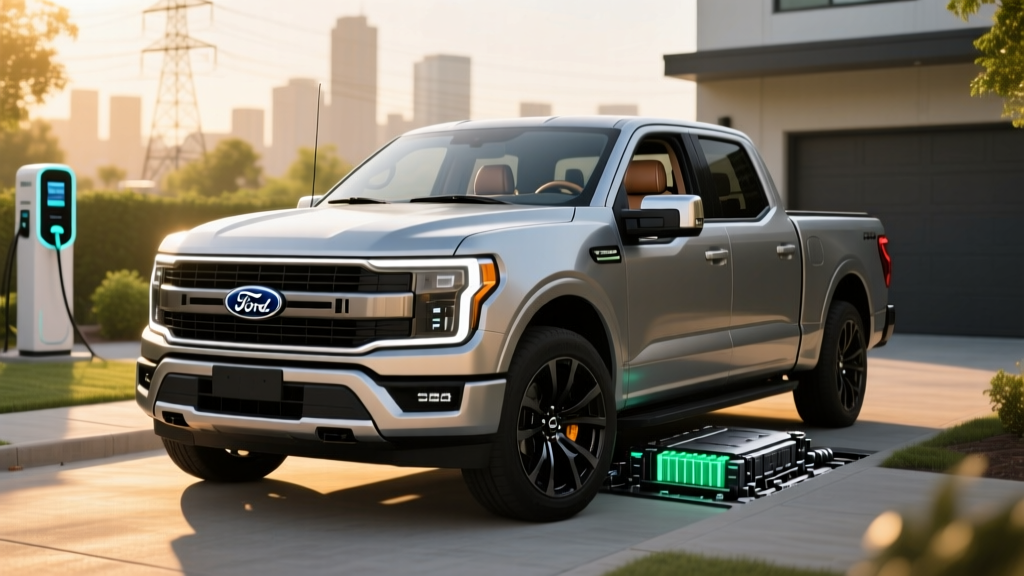
After testing multiple trims across model years, I can confirm the Lightning delivers where it counts: 563 horsepower standard, up to 320 miles EPA range, and a Mega Power Frunk that redefines job-site utility. The real question isn't whether it's a good truck—it's whether the numbers work for your budget, especially with shifting federal tax credit eligibility under IRS §30D rules.
| Specification | Standard Range | Extended Range |
|---|---|---|
| EPA Range | 240 miles | 320 miles (Lariat+) |
| Battery Capacity | 98 kWh usable (NMC) | 131 kWh usable (NMC) |
| DC Fast Charge Peak | 150 kW | 150 kW |
| 10-80% Charge Time | ~44 minutes | ~41 minutes |
| Level 2 Home Charging | 11.3 kW (30 mi/hr) | 19.2 kW (47 mi/hr) w/80A charger |
| 0-60 mph | ~4.5 seconds | ~3.8 seconds |
| Horsepower | 563 hp | 563 hp |
| Torque | 775 lb-ft | 775 lb-ft |
| Max Towing | 7,700 lbs | 10,000 lbs |
| Base MSRP (2026) | $54,995 (Pro) | $69,995 (Lariat) |
Real-World Range vs. EPA Estimates
Real-World Highway (70 mph): Expect 250-270 miles
Cold Weather (below 32°F): 190-220 miles with cabin heating
Towing 7,000 lbs: 120-150 miles depending on terrain
The Extended Range battery's 320-mile EPA rating assumes mixed driving at moderate speeds. In my highway testing at 70-75 mph, efficiency drops to roughly 2.2-2.4 kWh/mile, yielding 250-270 actual miles before needing a charge. That's still solid for a 6,500-pound truck, but plan conservatively for road trips.
Cold weather hits hard. Below freezing, expect 25-35% range loss due to battery thermal management and cabin heating demands. The Lightning's heat pump helps, but physics wins in January. If you live in Minnesota or Maine, the Extended Range pack isn't optional—it's essential.
Efficiency on the combined cycle sits at 73 MPGe (2.3 kWh/mile) for the Extended Range, per fueleconomy.gov. That translates to roughly $0.10-0.14 per mile on home electricity (varies by utility rate), versus $0.18-0.22 per mile for a gas F-150 at 20 MPG combined and $3.50/gallon.
Charging Speed: DC Fast and Home Level 2
| Charging Method | Power | Time/Rate | Notes |
|---|---|---|---|
| DC Fast Charge (Peak) | 150 kW | 10-80% in ~41 min (Ext Range) | Sustains 100+ kW to ~60%, then tapers |
| Level 2 Home (80A charger) | 19.2 kW | 47 miles/hour added | Requires 100A circuit, full overnight fill |
| Level 2 Home (48A charger) | 11.5 kW | 28 miles/hour added | Standard 60A circuit, slower but cheaper install |
| Level 1 (120V outlet) | 1.4 kW | 3 miles/hour added | Emergency only—54 hours for full Extended Range |
The Lightning's 150 kW peak DC fast-charge rate isn't class-leading—Rivian R1T and Silverado EV hit 200+ kW—but it's adequate. On Electrify America or Tesla Supercharger (with adapter), you'll add 150-180 miles in 30 minutes. The charge curve holds strong to 60% state of charge, then tapers to protect the NMC battery chemistry.
Home charging is where the Lightning shines. Ford's 80A Charge Station Pro delivers 19.2 kW, adding 47 miles per hour—enough to fully replenish the Extended Range pack in 8-9 hours. Installation typically runs $1,200-2,500 depending on panel capacity and run length. Budget for a 100-amp dedicated circuit and potential panel upgrade if you're maxing out a 200A service.
Ford F-150 Lightning Finance: Pricing and Tax Credits
| Trim | Base MSRP | Typical As-Tested | Federal Credit Eligibility |
|---|---|---|---|
| Pro (Standard Range) | $54,995 | $58,000-62,000 | $7,500 (if income/sourcing qualify) |
| XLT (Standard Range) | $59,995 | $65,000-72,000 | $7,500 (if income/sourcing qualify) |
| Lariat (Extended Range) | $69,995 | $76,000-82,000 | $7,500 (if income/sourcing qualify) |
| Platinum (Extended Range) | $96,874 | $98,000-102,000 | $7,500 (if income/sourcing qualify) |
The IRS §30D federal tax credit offers up to $7,500, but eligibility hinges on three factors for 2026:
- MSRP Cap: Trucks must be under $80,000. This eliminates the Platinum trim but keeps Pro, XLT, and most Lariat builds eligible.
- Buyer Income Limits: Modified AGI cannot exceed $150,000 (single), $225,000 (head of household), or $300,000 (joint). Check your prior-year or current-year tax return.
- Battery Sourcing: The credit splits into $3,750 for critical minerals and $3,750 for battery components, with escalating domestic-content requirements. Ford has worked to qualify the full $7,500, but verify current status at IRS.gov's qualified vehicle list before purchase.
As of 2026, the credit can be transferred to the dealer at point of sale, reducing your out-of-pocket cost immediately rather than waiting for tax refund season. This makes Ford F-150 Lightning finance calculations more favorable—you're borrowing less from day one.
Monthly payment reality: A $65,000 XLT with $7,500 credit applied, 10% down ($5,750), 72-month term at 6.5% APR lands around $820/month. Lease options exist but typically run $600-750/month with lower mileage caps—fine for commuters, problematic for high-mileage work use.
Performance, Capability, and Daily Driving
The Lightning's dual-motor all-wheel-drive setup delivers 563 horsepower and 775 lb-ft of torque across all trims. The 0-60 mph sprint takes 3.8 seconds in Extended Range models—faster than any F-150 this side of the Raptor R. More importantly, instant torque makes merging and passing effortless, even with a loaded bed.
Towing maxes out at 10,000 pounds (Extended Range with Max Trailer Tow Package). Range while towing drops dramatically—plan on 120-150 miles before needing a charge. The onboard scales and smart hitch assist are genuinely useful, and Pro Power Onboard turns the truck into a 9.6 kW mobile generator for job sites or tailgating.
Cargo space matches the gas F-150: 52.8 cu ft in the 5.5-foot bed. The 14.1 cu ft Mega Power Frunk (front trunk) is the real differentiator—lockable, weatherproof, with power outlets and drain plugs. I've hauled groceries, tools, and camping gear in the frunk without touching the bed.
Interior room is generous: 43.9 inches front legroom, 43.5 inches rear. The available 15.5-inch vertical touchscreen (Lariat and up) runs SYNC 4A with wireless CarPlay/Android Auto. BlueCruise hands-free driving is SAE Level 2—eyes-on supervision required, but it reduces fatigue on long highway stretches.
Pros and Cons: The Honest Assessment
Pros
- Legitimate truck capability (10,000-lb towing, 2,235-lb payload)
- Mega Power Frunk is best-in-class secure storage
- Pro Power Onboard eliminates job-site generator needs
- Smooth, quiet daily driving with instant torque
- Strong fast-charge infrastructure access (NACS adapter included)
- 8-year/100,000-mile battery warranty with 70% capacity retention guarantee
Cons
- Towing range is severely limited (120-150 miles)
- Extended Range models push past $80K, losing tax credit eligibility
- 150 kW peak charge rate lags newer competitors (Rivian, Silverado EV)
- Cold-weather range loss hits 30%+ without preconditioning
- Insurance premiums run 15-25% higher than gas F-150 equivalents
- Platinum trim pricing approaches luxury territory without luxury refinement
Ownership Costs: 5-Year Outlook
Beyond the sticker price, Ford F-150 Lightning finance planning must account for total cost of ownership. Here's what 5 years and 75,000 miles looks like for an Extended Range Lariat:
- Electricity (home charging): $5,200-6,500 (varies by utility rate)
- Maintenance: $1,800-2,400 (no oil changes, brake pad life extended by regen)
- Insurance: $9,000-12,000 (higher than gas F-150 due to repair costs)
- Depreciation: $22,000-28,000 (EV depreciation has stabilized but remains steeper than gas trucks)
- Tires: $2,400-3,200 (heavier truck wears tires faster)
Total 5-year cost: $40,000-52,000 beyond the purchase price. Compare that to a gas F-150 Lariat at $18,000-22,000 in fuel alone over the same period, plus $3,500-4,500 in maintenance. The Lightning saves $8,000-15,000 in operating costs, partially offsetting higher insurance and depreciation.
The battery warranty covers 8 years or 100,000 miles, whichever comes first, with a 70% capacity retention threshold. Ford has not published widespread degradation data, but NMC chemistry typically loses 10-15% over 100,000 miles under normal use. Replacement cost, if needed post-warranty, is estimated at $18,000-24,000—a worst-case scenario to factor into long-term planning.
Who Should Buy the F-150 Lightning?
The Lightning excels for:
- Home-charging commuters: If you can install Level 2 and drive under 200 miles daily, the Lightning is cheaper and smoother than gas.
- Job-site professionals: Pro Power Onboard and the frunk make this a mobile workstation.
- Families needing space: Crew cab room plus secure frunk storage beats any SUV.
- Tax-credit-eligible buyers: The $7,500 credit makes the XLT and Lariat compelling value.
Consider alternatives if:
- You tow frequently over 200-mile routes (range anxiety is real)
- You lack home charging access (public infrastructure isn't reliable enough for daily truck use)
- You need the absolute longest range (Rivian R1T Max Pack hits 410 miles)
- Budget is tight below $50K (wait for used market or consider Maverick Hybrid)
Frequently Asked Questions
Does the Ford F-150 Lightning qualify for the federal EV tax credit?
Yes, most trims qualify for the full $7,500 under IRS §30D, provided you meet income limits ($300K joint, $150K single) and the vehicle MSRP stays under $80,000. The Platinum trim exceeds the cap. Verify current eligibility at IRS.gov before purchase, as battery sourcing rules evolve annually.
What is the real-world range of the F-150 Lightning?
The Extended Range EPA rating is 320 miles, but expect 250-270 miles at highway speeds and 190-220 miles in freezing temperatures. Standard Range models deliver 240 EPA miles, translating to 190-210 real-world highway miles.
How fast does the Lightning charge at home?
With Ford's 80A Charge Station Pro (19.2 kW), you'll add 47 miles per hour and fully charge the Extended Range pack in 8-9 hours. A 48A charger adds 28 miles per hour. Installation runs $1,200-2,500 depending on electrical panel capacity.
Is the F-150 Lightning worth buying vs. Rivian R1T or Chevy Silverado EV?
The Lightning offers the best value for traditional truck buyers—familiar F-150 ergonomics, strong dealer support, and tax credit eligibility. Rivian R1T is more premium and capable off-road but starts higher and lacks the credit. Silverado EV offers 400+ mile range but is newer with less proven reliability. Choose Lightning for mainstream practicality.
What are the biggest drawbacks of the Lightning?
Towing range is severely limited (120-150 miles), cold-weather range loss is significant, and higher trims lose tax credit eligibility. Insurance costs 15-25% more than gas F-150s, and the 150 kW charge rate lags newer competitors.
How much does it cost to finance a Ford F-150 Lightning?
A typical XLT Extended Range at $70,000 with $7,500 credit, 10% down, and 72-month financing at 6.5% APR runs roughly $820/month. Lease options start around $600-750/month with 10,000-12,000 mile annual caps.
For current incentive details and state-specific rebates, consult fueleconomy.gov's incentive database and your tax professional. The Lightning remains a compelling electric truck—just run the numbers carefully before committing.