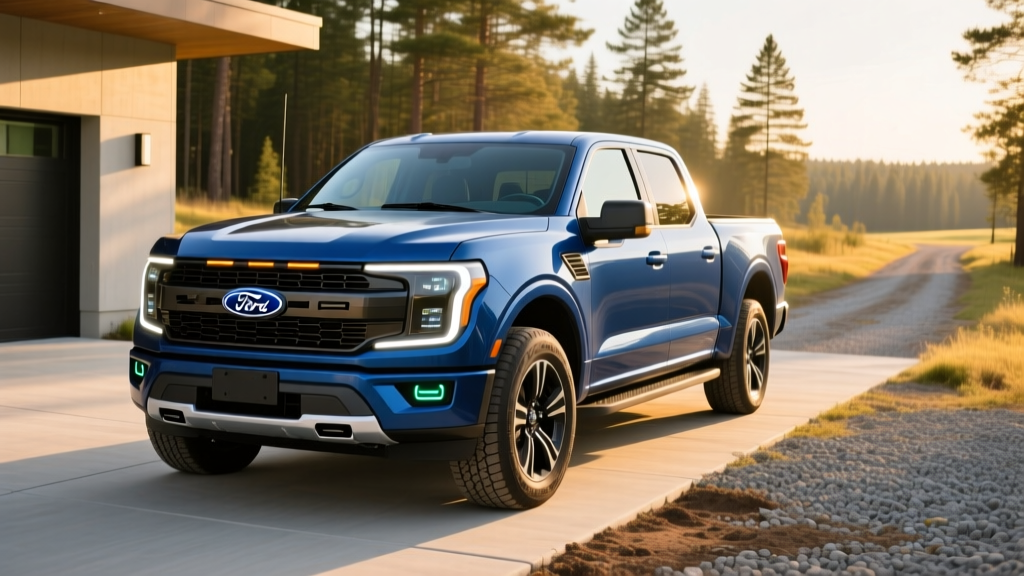
The Ford F-150 Lightning: America's Electric Workhorse Under the Microscope
The Ford F-150 Lightning remains one of the few full-size electric pickups that doesn't force buyers into a six-figure price tag. For 2026, Ford continues to refine the platform with expanded battery options and updated software, but the core question for truck buyers remains: can an electric F-150 actually replace a gas one for real work and daily driving? After tracking this platform since launch, here's the data-driven breakdown.
Specs at a Glance: 2026 Ford F-150 Lightning
| Specification | Standard Range | Extended Range |
|---|---|---|
| EPA Range | 230 miles | 320 miles |
| Battery Capacity (Usable) | 98 kWh | 131 kWh |
| Battery Chemistry | NMC (Nickel Manganese Cobalt) | NMC |
| Horsepower | 563 hp | 563 hp |
| Torque | 775 lb-ft | 775 lb-ft |
| 0–60 mph | ~4.0 seconds | ~3.8 seconds |
| Drivetrain | Dual-Motor AWD | Dual-Motor AWD |
| Max DC Fast Charge | 150 kW | 150 kW |
| 10–80% DC Charge Time | ~36 minutes | ~41 minutes |
| Level 2 Home Charge Rate | 11.3 kW (30 mi/hr) | 11.3 kW (30 mi/hr) |
| MPGe (Combined) | 76 MPGe | 70 MPGe |
| Efficiency (kWh/100 mi) | 44 kWh/100mi | 48 kWh/100mi |
| Max Towing Capacity | 7,700 lbs | 10,000 lbs |
| Max Payload | 2,235 lbs | 1,800 lbs |
| Battery Warranty | 8 years / 100,000 miles (70% capacity retention) | |
Charging Speed: DC Fast, Level 2, and the Charge Curve Reality
The Lightning's 150 kW peak DC fast-charge rate is moderate by 2026 standards—vehicles like the Hyundai Ioniq 5 and Chevrolet Silverado EV push past 300 kW—but Ford's thermal management keeps the charge curve relatively flat through the critical 10–80% window.
| Charging Method | Power (kW) | Rate (miles/hr) | Time (10–80%) |
|---|---|---|---|
| DC Fast Charge (peak) | 150 kW | ~150–180 mi/hr | ~36–41 min |
| DC Fast Charge (sustained avg) | ~115 kW | ~120 mi/hr | Actual average rate |
| Level 2 (Ford Mobile Charger 240V) | 9.6 kW | ~25 mi/hr | ~10–11 hours (full) |
| Level 2 (Ford Charge Station Pro) | 11.3 kW | ~30 mi/hr | ~9–10 hours (full) |
| Level 1 (120V standard outlet) | 1.4 kW | ~3 mi/hr | Not practical for daily |
On a 350 kW Electrify America or Tesla Supercharger station (with NACS adapter), the Lightning will peak at 150 kW but typically sustain 110–125 kW through the mid-SoC range. The charge curve tapers noticeably above 85%, so plan your road-trip stops at 80% to avoid wasting time at the tail end. For home charging, the Ford Charge Station Pro requires a 60-amp circuit and delivers a full overnight charge on either battery pack—critical for daily usability.
Performance and Drivetrain: 563 hp Standard Across the Board
Every 2026 F-150 Lightning comes with a dual-motor all-wheel-drive powertrain producing 563 horsepower and 775 lb-ft of torque. There's no base rear-wheel-drive option, which simplifies the lineup but means you're paying for AWD whether you need it or not. The 0–60 mph sprint takes approximately 3.8–4.0 seconds depending on battery configuration—genuinely quick for a 6,500+ lb truck.
The low center of gravity from the under-floor battery pack gives the Lightning surprisingly composed handling for a body-on-frame truck, though the weight is noticeable during hard cornering. Regenerative braking is well-calibrated with a one-pedal driving mode that's strong enough for most city deceleration without touching the friction brakes.
Pricing, Trims, and Federal Tax Credit Eligibility
The 2026 F-150 Lightning lineup spans four trims, with pricing reflecting the premium of a full-size electric pickup:
| Trim | Battery | MSRP | Est. After §30D Credit* |
|---|---|---|---|
| Pro (fleet-oriented) | Standard Range | $54,995 | ~$47,495 |
| XLT | Standard Range | $59,995 | ~$52,495 |
| XLT (Extended Range) | Extended Range | $69,995 | ~$62,495 |
| Lariat | Extended Range | $76,995 | ~$69,495 |
| Platinum | Extended Range | $96,874 | ~$89,374 |
*Federal tax credit estimates assume buyer meets all IRS §30D requirements. The F-150 Lightning qualifies as a truck under the $80,000 MSRP cap, but buyer income limits apply: $150,000 single / $225,000 head of household / $300,000 joint filers. Battery critical-mineral and component sourcing requirements must also be met. Point-of-sale transfer is available through participating dealers. Verify current eligibility at IRS.gov before purchase.
Destination charges add approximately $2,095. The Platinum trim pushes past $96,000 before options, at which point the value proposition erodes significantly against the Chevrolet Silverado EV and Rivian R1T.
Cargo, Passenger Space, and the Mega Power Frunk
The Lightning retains the SuperCrew cab configuration with seating for five. Rear-seat legroom measures 43.6 inches—generous for adults on long trips. Behind the rear seats, the 5.5-foot bed offers 52.8 cubic feet of cargo volume with the tonneau cover removed.
The standout feature remains the Mega Power Frunk: 14.1 cubic feet of lockable, drainable front storage with 400 lbs of payload capacity. It replaces the engine bay with genuinely useful space—ideal for tools, groceries, or camping gear you want secured and weather-protected. The Pro Power Onboard system (standard 2.4 kW, available 9.6 kW) turns the Lightning into a mobile generator capable of powering tools at a job site or running essential home circuits during an outage via the available Ford Intelligent Backup Power system.
Technology and Driver Assistance
The 2026 Lightning features Ford's SYNC 4A infotainment system on a 12-inch touchscreen (15.5-inch portrait screen on Lariat and Platinum). Wireless Apple CarPlay and Android Auto are standard. The digital instrument cluster is 12 inches and configurable.
Ford Co-Pilot360 Assist 2.0 is standard across the lineup, including adaptive cruise control with stop-and-go, lane centering, evasive steering assist, and intersection assist. BlueCruise (hands-free highway driving on pre-mapped divided highways) is available on Lariat and Platinum trims as a subscription service after a trial period. Note: BlueCruise is an SAE Level 2 system—the driver must remain attentive and is fully responsible for vehicle operation at all times.
Notable tech drawbacks include occasional SYNC 4A sluggishness reported by owners, and the BlueCruise geofencing limitation that restricts hands-free operation to approximately 130,000 miles of pre-mapped highways—less useful on rural or unmapped routes.
Strengths
- Massive frunk (14.1 cu ft) with 400-lb capacity
- Pro Power Onboard (up to 9.6 kW) for job-site or home backup use
- Quick acceleration (sub-4-sec 0–60) with standard AWD
- Available BlueCruise hands-free highway assist
- Qualifies for up to $7,500 federal tax credit (subject to §30D rules)
- Comfortable ride quality for a full-size truck
Drawbacks
- 150 kW peak DC charge rate lags newer competitors (Silverado EV: 350 kW)
- Heavy vehicle weight reduces efficiency vs lighter EVs (44–48 kWh/100mi)
- Towing significantly cuts range—expect 40–50% reduction at max load
- Extended Range battery adds ~$10,000 and 500+ lbs of weight
- Platinum trim pricing exceeds $96K, eroding value proposition
- No single-motor RWD option for fleet buyers seeking lowest cost
Who Should Buy the Ford F-150 Lightning?
Best for: Homeowners with Level 2 charging access who need a full-size truck for daily commuting, light-to-moderate towing (under 7,000 lbs regularly), job-site power needs, and occasional road trips under 250 miles. The Pro Power Onboard and frunk make it uniquely practical for contractors, outdoor enthusiasts, and homeowners who value vehicle-to-home capability.
Consider alternatives if: You regularly tow over 8,000 lbs (range drops precipitously), you lack home charging access (public charging a 131 kWh battery is time-consuming and expensive), or you need maximum range for frequent 400+ mile road trips. The Chevrolet Silverado EV offers 350 kW charging and up to 400 miles of range (4WT trim), while the Rivian R1T provides more off-road capability in a smaller package.
Frequently Asked Questions
What is the real-world range of the Ford F-150 Lightning?
The Extended Range model is EPA-rated at 320 miles, but real-world highway driving at 70+ mph typically yields 240–270 miles. Standard Range models rated at 230 miles EPA deliver 170–200 miles on the highway. Cold weather below freezing can reduce range by 20–30%. Towing at max capacity cuts range roughly in half regardless of battery size.
How fast does the Lightning charge at home and on the road?
At a DC fast charger, the Lightning peaks at 150 kW and charges from 10–80% in approximately 36–41 minutes depending on battery size. At home with the Ford Charge Station Pro (11.3 kW, requires a 60-amp circuit), a full charge takes 9–11 hours—manageable with overnight charging. The standard Ford Mobile Charger on a 240V outlet delivers 9.6 kW for roughly 25 miles of range per hour.
Does the 2026 F-150 Lightning qualify for the $7,500 federal tax credit?
The Lightning qualifies for up to $7,500 under IRS §30D, but eligibility depends on the buyer's modified adjusted gross income (under $150K single / $300K joint), the vehicle's MSRP being under the $80,000 truck cap, and battery critical-mineral and component sourcing requirements being met for that model year. Point-of-sale transfer is available through participating dealers. Always verify current eligibility at IRS.gov and consult a tax professional.
Is the Lightning worth buying over the Silverado EV or Rivian R1T?
It depends on priorities. The Lightning wins on frunk space, Pro Power Onboard capability, and familiar F-150 ergonomics. The Chevrolet Silverado EV offers faster 350 kW charging and up to 400 miles of EPA range. The Rivian R1T excels at off-road capability and has a more compact footprint. For traditional truck buyers who want electric without a steep learning curve, the Lightning remains the most approachable option.
Can the F-150 Lightning power my home during an outage?
Yes, with the available Ford Intelligent Backup Power system and the Home Integration System (installed by a licensed electrician). The 9.6 kW Pro Power Onboard can supply essential circuits—refrigerator, lights, HVAC fan—for up to three days at moderate usage. This requires a compatible transfer switch and electrical panel setup, with installation costs typically ranging from $3,000–$5,000 on top of the truck's cost.
What's the battery warranty on the Lightning?
Ford covers the high-voltage battery and electric powertrain components for 8 years or 100,000 miles, whichever comes first. The warranty guarantees the battery will retain at least 70% of its original capacity during that period. Real-world degradation data from early adopters suggests most Lightning batteries are retaining 92–95% capacity after 40,000–60,000 miles of use, though long-term data beyond 100,000 miles is still limited for this platform.
Sources: EPA fuel economy data via fueleconomy.gov, Ford Motor Company official specifications, IRS §30D clean vehicle credit guidelines at irs.gov.