Is the Ford F-150 Lightning Discontinued? Setting the Record Straight
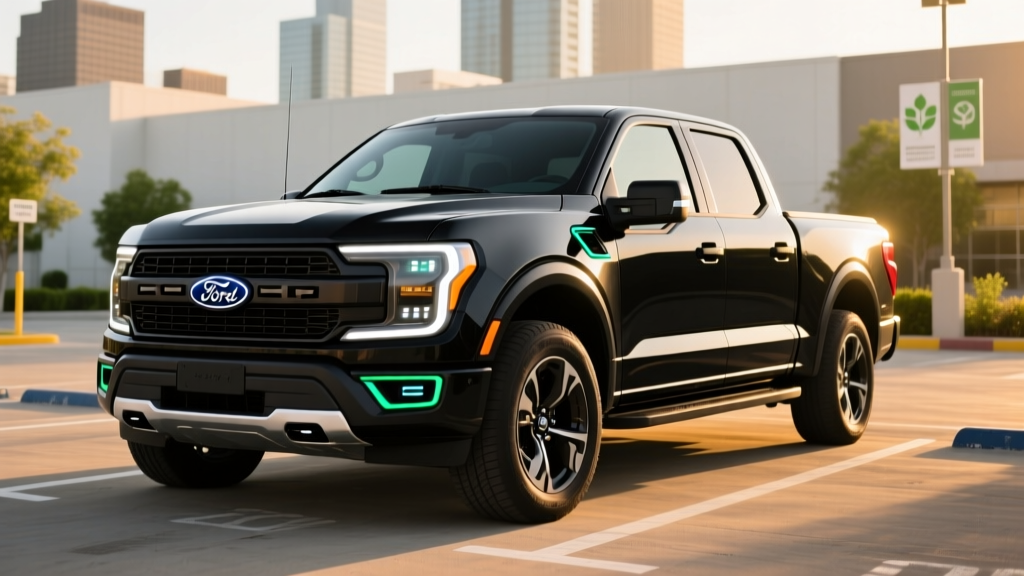
If you've been searching for answers about whether the Ford F-150 Lightning discontinued status is real, you're not alone. Searches spiked after Ford announced production slowdowns at its Rouge Electric Vehicle Center in late 2024 and shifted F-150 Lightning shifts in early 2025. Here's the definitive answer for 2026: the F-150 Lightning is not discontinued, but Ford has significantly scaled back production volume and simplified the trim lineup in response to softer EV truck demand and aggressive pricing from rivals like the Chevrolet Silverado EV and Rivian R1T.
As of the 2026 model year, the Lightning remains on sale with a consolidated trim structure—primarily the Pro, XLT, and Lariat—while the high-volume Platinum trim has been deprioritized and the limited-run Flash monochromatic package was sunset after 2024. Ford has not announced an end-of-production date, but the writing is on the wall: the Lightning's future depends heavily on the next-generation T3 platform truck expected for 2027–2028. For now, you can still order and buy a new 2026 F-150 Lightning, though dealer inventory is thinner than in 2023–2024.
2026 F-150 Lightning Specs: Range, Battery, and Efficiency
| Spec | Standard Range (SR) | Extended Range (ER) |
|---|---|---|
| EPA Range | 240 miles | 320 miles |
| Battery Capacity (usable) | 98 kWh | 131 kWh |
| Battery Chemistry | NMC (Nickel Manganese Cobalt) | NMC |
| Horsepower | 452 hp | 580 hp |
| Torque | 775 lb-ft | 775 lb-ft |
| 0–60 mph | ~4.5 sec | ~3.8 sec |
| Drivetrain | Dual-motor AWD | Dual-motor AWD |
| MPGe (combined) | 78 MPGe | 73 MPGe |
| Efficiency (kWh/100 mi) | 43 kWh/100 mi | 48 kWh/100 mi |
| Max Towing | 7,700 lbs | 10,000 lbs |
| Payload | 2,235 lbs | 1,952 lbs |
| Max DC Fast Charge | 150 kW | 150 kW |
| 10–80% DC Time | ~44 min | ~51 min |
| Level 2 Home Charge Rate | 11.3 kW (30 mi/hr) | 19.2 kW (47 mi/hr)* |
*19.2 kW requires the optional 80A Ford Charge Station Pro and a hardwired installation with 100A dedicated circuit. Standard Mobile Power Cord delivers ~3.3 kW on a 240V/30A outlet.
Real-World Range: What the EPA Sticker Doesn't Tell You
Extended Range (EPA 320 mi): Expect ~250–270 miles on a 70 mph highway trip in moderate weather. In winter conditions (below 30°F), plan for 190–220 miles. Towing a 6,000 lb trailer cuts range to roughly 140–160 miles.
Standard Range (EPA 240 mi): Expect ~190–210 miles highway in mild weather, and 140–165 miles in cold conditions. Towing drops this to ~100–120 miles.
The F-150 Lightning's boxy aerodynamics and 6,500+ lb curb weight work against highway efficiency. According to fueleconomy.gov, the Extended Range model achieves 73 MPGe combined, but sustained 75–80 mph driving pushes consumption closer to 55–60 kWh/100 mi. Cold weather compounds this: the Lightning uses a resistance heater in earlier builds (2022–2023), and while a heat pump was introduced for 2024+ models, winter range loss of 25–35% is typical for a truck this size.
The 131 kWh Extended Range battery is one of the largest in any production EV, which gives you a massive buffer. But that same mass means the Lightning is less efficient per mile than a unibody SUV like the Hyundai Ioniq 5 or even the Rivian R1T. If most of your driving is suburban and under 60 mph, you'll see numbers much closer to the EPA sticker. Highway warriors and towers should plan conservatively.
Charging Speed: DC Fast, Level 2, and Home Setup
| Level | Power | Speed (mi/hr) | Notes |
|---|---|---|---|
| Level 1 (120V) | ~1.4 kW | ~3 mi/hr | Emergency/trickle only; 100+ hr for full charge |
| Level 2 (240V, 30A) | ~6.6 kW | ~16 mi/hr | Mobile Power Cord on NEMA 14-50 |
| Level 2 (240V, 48A) | 11.3 kW | ~30 mi/hr | Ford Charge Station Pro standard config |
| Level 2 (240V, 80A) | 19.2 kW | ~47 mi/hr | Requires hardwired install + 100A breaker |
| DC Fast Charge | 150 kW peak | ~200 mi in 30 min | CCS1 connector; tapers above 80% SoC |
The Lightning's 150 kW peak DC fast-charging rate is its most significant competitive weakness in 2026. The Rivian R1T peaks at ~200 kW on newer packs, and the Chevrolet Silverado EV (Ultium platform) hits 350 kW. On a 150 kW Electrify America or EVgo stall, the Extended Range Lightning charges from 10–80% in approximately 51 minutes. That's adequate for road trips if you plan meal or rest breaks, but it's noticeably slower than what 800V architectures deliver.
The charge curve matters: the Lightning holds near-peak rate from about 15% to 55% SoC, then progressively tapers. From 80–100%, expect charge speeds to drop below 40 kW, adding 20+ minutes for that final 20%. For road-trip planning, target 10–80% stops and skip the temptation to top off completely unless you're at your destination overnight.
At home, the 19.2 kW Level 2 capability is outstanding—if your electrical panel can support it. A hardwired 80A installation requires a dedicated 100A breaker, which means most homes with 200A service will need a panel upgrade ($2,000–$4,000) or a load-management device. Consult a licensed electrician before committing. The Ford Charge Station Pro also enables Pro Power Onboard bi-directional capability, letting you power tools or even back up essential home circuits during an outage via the optional Home Integration System.
Pricing, Trims, and Federal Tax Credit Eligibility
| Trim | Battery | Base MSRP | §30D Credit Eligible? | Effective Price* |
|---|---|---|---|---|
| Pro SR | 98 kWh | ~$55,090 | Yes (up to $7,500) | ~$47,590 |
| XLT SR | 98 kWh | ~$63,090 | Yes (up to $7,500) | ~$55,590 |
| Lariat ER | 131 kWh | ~$75,090 | Yes (up to $7,500) | ~$67,590 |
*Effective price assumes full $7,500 federal credit. Actual credit depends on buyer income, battery sourcing, and point-of-sale transfer eligibility. Destination charges (~$2,095) not included.
The F-150 Lightning qualifies as a truck under IRS §30D rules, which means the MSRP cap is $80,000 (vs. $55,000 for sedans). All current trims fall under that threshold. However, eligibility for the full $7,500 depends on three factors that change annually:
- Buyer income caps: Modified AGI must not exceed $300,000 (joint), $225,000 (head of household), or $150,000 (single).
- Battery critical-mineral sourcing: A percentage of critical minerals must be sourced from the US or FTA partners. As of 2026, this threshold is stringent, and the Lightning's NMC battery sourcing has been partially compliant—some trims may qualify for only $3,750 (half credit) depending on the build date and supply-chain composition.
- Point-of-sale transfer: You can now transfer the credit to the dealer at purchase for an immediate price reduction, rather than waiting to claim it on your tax return. This requires dealer participation and IRS registration.
Always verify your specific eligibility with a tax professional and check the latest fueleconomy.gov tax credit database for the exact VIN-level qualification before signing.
Performance, Capability, and Daily Driving
The dual-motor AWD powertrain is standard across all Lightning trims—no rear-wheel-drive option exists. The Extended Range model's 580 hp and 775 lb-ft of torque deliver a 3.8-second 0–60 mph time, which is genuinely startling in a full-size pickup. The instant torque makes merging, passing, and low-speed trailering effortless. The Standard Range's 452 hp is more than adequate for most buyers.
Towing capacity maxes out at 10,000 lbs with the Extended Range and the Max Trailer Tow Package. But here's where physics intervenes: towing at or near max capacity effectively halves your range. The onboard tow/haul mode recalibrates regen and throttle mapping, and the integrated trailer brake controller and Pro Trailer Backup Assist are best-in-class. If you tow frequently over long distances, plan charging stops every 120–150 miles.
The independent rear suspension (a first for the F-150) delivers a noticeably smoother unloaded ride than the leaf-sprung gas F-150. Around town, the Lightning feels composed and car-like, though you'll notice its 22-foot length in tight parking structures. The 5.5-foot bed with integrated Mega Power Frunk (14.1 cu ft of lockable front trunk space) adds genuine utility—you can store charging cables, tools, or groceries in a sealed, drainable compartment with 400 lbs of payload capacity.
Interior, Tech, and Driver Assistance
The cabin is shared heavily with the 14th-generation gas F-150, which means excellent space: 43.9 inches of front legroom and 41.2 inches of rear legroom in the SuperCrew configuration. The Lariat and above trims offer the massive 15.5-inch portrait SYNC 4A touchscreen (with wireless Apple CarPlay and Android Auto), a 12-inch digital instrument cluster, and Ford's latest BlueCruise hands-free driving system on pre-mapped divided highways.
A critical clarification: BlueCruise is SAE Level 2, not self-driving. You must remain attentive, and the system uses a driver-facing camera to monitor eye gaze. It excels on long interstate stretches—reducing fatigue on 500-mile road trips—but it will disengage in construction zones, on unmapped roads, and in heavy rain or snow.
Pros, Cons, and the Competitive Landscape
Pros
- Class-leading frunk (14.1 cu ft) with 400 lb capacity
- Pro Power Onboard bi-directional charging (up to 9.6 kW)
- Smooth independent rear suspension ride quality
- Extended Range 320 mi EPA covers most daily + weekend use
- 19.2 kW Level 2 home charging capability (with proper install)
- BlueCruise hands-free highway assist included on higher trims
- Familiar F-150 cab space, controls, and dealer network
Cons
- 150 kW DC fast charging is slow vs. 2026 competitors
- Highway and towing range drop significantly (25–50% loss)
- Heavy curb weight (~6,500–7,000 lbs) hurts efficiency
- Requires expensive electrical upgrade for max Level 2 speed
- Reduced 2026 trim availability; long order wait possible
- No 800V architecture; charge curve tapers steeply past 80%
- Uncertain long-term future beyond current platform generation
Lightning vs. Key Competitors
The Chevrolet Silverado EV (350 kW DC charging, up to 400 mi range on 4WT/3LT) surpasses the Lightning in charging speed and range but starts at a higher price and has a less refined ride. The Rivian R1T Dual-Motor offers superior build quality, faster charging on newer packs (~200 kW), and a more premium interior, but starts above $70,000 and has a smaller dealer/service footprint. The Tesla Cybertruck has 800V architecture and 250+ kW charging but remains polarizing, has limited towing utility, and faces ongoing build-quality concerns.
The Lightning's strongest argument remains familiarity: it drives like an F-150, it's serviced at 3,000+ Ford dealers, and the frunk/Pro Power Onboard combo is unmatched for job-site or tailgate utility.
Who Should Buy the F-150 Lightning in 2026?
Decision Framework
Choose the F-150 Lightning if:
- You need a full-size truck bed for work or weekend projects and value the frunk for secure storage
- You can charge at home (ideally with 48A+ Level 2) and your daily commute is under 100 miles
- You want bi-directional power (Pro Power Onboard) for job-site tools or home backup
- You prefer Ford's dealer network for service over startup brands
- You tow occasionally but not daily over long distances
Look elsewhere if:
- You road-trip frequently and need the fastest possible DC charging (Silverado EV or Rivian R1T are better)
- You need maximum towing range—the Lightning loses half its range under heavy loads
- You want a next-generation platform with 800V architecture and 300+ kW charging
- You're concerned about long-term parts availability for a potentially end-of-life model
Battery Warranty and Long-Term Ownership
Ford covers the Lightning's battery pack for 8 years / 100,000 miles (whichever comes first) with a minimum 70% capacity retention threshold. The electric powertrain (motors, inverters, onboard chargers) carries the same 8-year/100,000-mile warranty. This is industry-standard and matches what Rivian, GM, and Tesla offer for their electric trucks and SUVs.
NMC chemistry in a 131 kWh pack means you should expect gradual degradation of roughly 10–15% over 150,000 miles based on current data from 2022–2024 Lightning owners. Ford's liquid-cooled thermal management system helps mitigate calendar degradation, but frequent DC fast charging and regular 100% SoC storage will accelerate wear. Best practice: charge to 80% for daily use, use DC fast charging sparingly, and precondition the battery before cold-weather fast charging sessions.
Insurance costs run 15–25% higher than a comparable gas F-150 due to repair costs for the battery pack and aluminum body panels. Shop quotes before purchasing—some carriers now offer dedicated EV policies with battery-specific coverage.
Frequently Asked Questions
Is the Ford F-150 Lightning really discontinued?
No. As of 2026, the F-150 Lightning is still in production and available for order, but Ford has reduced output and simplified the trim lineup. Production may end when Ford transitions to its next-generation T3 electric truck platform, expected around 2027–2028. If you want one, buying now is advisable.
What is the real-world range of the F-150 Lightning?
The Extended Range (EPA 320 mi) delivers roughly 250–270 miles on the highway in mild weather and 190–220 miles in winter. The Standard Range (EPA 240 mi) nets about 190–210 miles highway. Towing a trailer cuts range by 40–50%.
How fast does the F-150 Lightning charge?
On a DC fast charger, it peaks at 150 kW, achieving a 10–80% charge in about 44 minutes (Standard Range) or 51 minutes (Extended Range). At home on Level 2, it can charge at up to 19.2 kW (47 mi/hr) with the optional 80A Ford Charge Station Pro and proper electrical infrastructure.
Does the F-150 Lightning qualify for the $7,500 federal EV tax credit?
It can, but eligibility depends on your income (must be under $300,000 joint / $150,000 single AGI), battery critical-mineral sourcing compliance (which varies by build date), and the truck's MSRP being under $80,000 (it is). Check the IRS and fueleconomy.gov for current VIN-level eligibility. The credit can be transferred to the dealer at point of sale.
Is the F-150 Lightning worth buying vs. the Silverado EV or Rivian R1T?
The Lightning wins on frunk utility, bi-directional power, and dealer familiarity. The Silverado EV charges faster (350 kW) and offers more range. The Rivian R1T offers better build quality and a more premium experience but costs more. If you value Ford's service network and Pro Power Onboard, the Lightning remains a strong choice—but its 150 kW charging is a growing liability on road trips.
Can the F-150 Lightning power my house?
Yes, with the optional Ford Home Integration System and an 80A Charge Station Pro, the Lightning can supply up to 9.6 kW of backup power to essential home circuits during an outage. This can sustain a typical home for up to three days with managed loads. Installation requires a licensed electrician and a transfer switch.