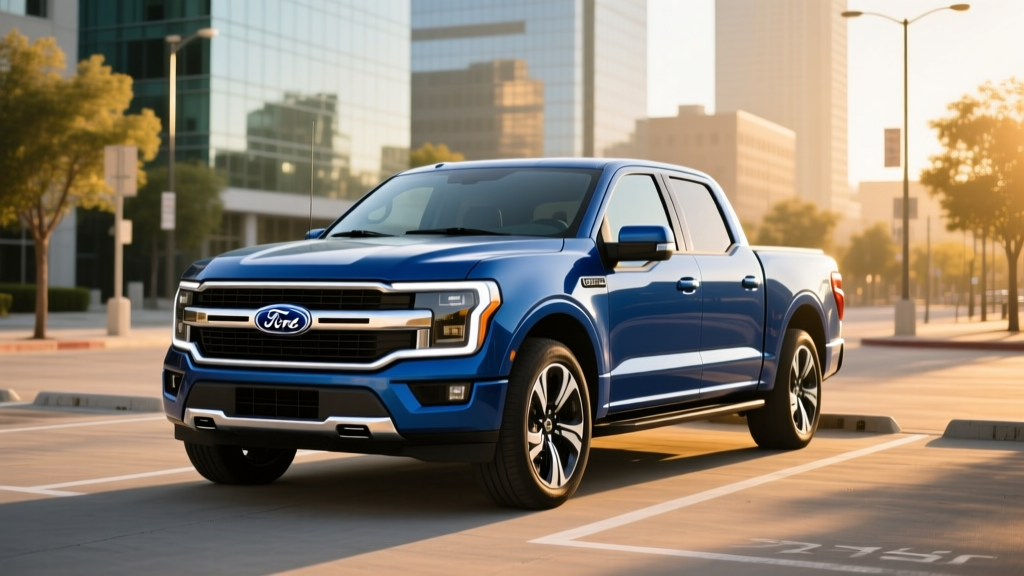
Rumors about a Ford F-150 Lightning discontinuation have circulated since late 2024, when Ford announced production cuts and shifted its next-generation electric truck strategy. As of early 2026, the F-150 Lightning remains on sale, but its future is uncertain. If you're considering one — whether as a work truck, daily driver, or towing rig — here's everything you need to know about the current model, its real-world capabilities, and whether buying now makes sense before Ford potentially pivots to its next-gen platform.
Is the Ford F-150 Lightning Actually Being Discontinued?
As of the 2026 model year, the F-150 Lightning is still in production and available for purchase. However, Ford has made no secret of its plan to transition away from the current Lightning platform. In late 2024, Ford confirmed it would idle shifts at the Rouge Electric Vehicle Center and reduce output in response to softer-than-expected EV truck demand and aggressive pricing pressure from competitors like the Chevrolet Silverado EV and Rivian R1T.
Ford's next-generation electric truck, built on a new flexible EV architecture, is expected to arrive for the 2027 or 2028 model year. Until then, the current-generation Lightning continues with incremental updates. The discontinuation chatter largely stems from:
- Production volume reductions at the Dearborn, Michigan plant throughout 2024-2025
- Financial losses on Ford's Model e division, which reported billions in operating losses
- Strategic messaging from Ford CEO Jim Farley about a "next-generation" electric truck that implies the current platform has a finite lifespan
The practical takeaway: the Lightning is buyable today, but Ford may sunset this specific generation within 1-2 model years. That has implications for resale value, parts availability, and long-term support.
2026 F-150 Lightning Specs at a Glance
| Specification | Standard Range | Extended Range |
|---|---|---|
| EPA Range | 230 miles | 320 miles |
| Battery Capacity (usable) | 98 kWh | 131 kWh |
| Battery Chemistry | NMC (Nickel Manganese Cobalt) | NMC |
| Drivetrain | Dual-Motor AWD | Dual-Motor AWD |
| Horsepower | 452 hp | 580 hp |
| Torque | 775 lb-ft | 775 lb-ft |
| 0-60 mph | ~4.0 sec | |
| Max DC Fast Charge | 120 kW | 150 kW |
| 10-80% DC Charge Time | ~44 min | ~41 min |
| Level 2 Home Charging | 11.3 kW (~22 mi/hr) | 11.3 kW (~30 mi/hr) |
| MPGe (combined) | 76 MPGe | 70 MPGe |
| Efficiency | 44 kWh/100 mi | 48 kWh/100 mi |
| Max Towing Capacity | 7,700 lbs | 10,000 lbs |
| Max Payload | 2,235 lbs | 1,952 lbs |
| Base MSRP (Pro trim) | ~$54,995 | ~$69,995 (Lariat) |
Source: fueleconomy.gov and Ford Motor Company 2026 specifications.
Real-World Range: What the EPA Sticker Doesn't Tell You
Standard Range (98 kWh): EPA 230 miles. Expect 185-200 miles in mixed highway driving at 70+ mph, and as low as 140-160 miles in sub-freezing temperatures or while towing.
Extended Range (131 kWh): EPA 320 miles. Expect 260-280 miles highway in moderate weather, dropping to 190-220 miles in cold conditions or under heavy load.
The F-150 Lightning's real-world range is one of its most debated attributes. The Extended Range pack's 320-mile EPA figure is legitimate for mixed suburban and city driving in mild weather. But this is a heavy, boxy truck with the aerodynamics of a brick, and highway efficiency suffers accordingly.
Based on owner reports and independent testing, here's what to actually expect:
- Highway cruising (70-75 mph, 65°F): ~260-280 miles on the Extended Range pack — roughly 12-15% below EPA
- Cold weather (20°F, highway): ~190-220 miles. The Lightning uses resistive heating in addition to its heat pump, which helps, but battery chemistry still loses 25-35% efficiency in deep cold
- Towing (5,000+ lb trailer): Range effectively halves. Plan for 130-160 miles between charges with a substantial trailer. This is the Lightning's Achilles heel for work-truck buyers who tow frequently
- City/commuter driving: You can actually exceed EPA estimates in stop-and-go traffic thanks to aggressive regenerative braking recapturing energy
The 131 kWh Extended Range battery is among the largest in any production EV, which means more buffer — but also more weight (the Lightning tips the scales at over 6,500 lbs in Extended Range form). That mass works against efficiency at highway speeds.
Charging Speed: Adequate but Not Class-Leading
| Charging Level | Power / Rate | Miles Added Per Hour | Notes |
|---|---|---|---|
| Level 1 (120V outlet) | ~1.4 kW | ~2-3 mi/hr | Emergency/trickle only; ~4 days for a full charge |
| Level 2 (240V, 48A) | 11.3 kW | ~22-30 mi/hr | Full overnight charge in 8-13 hours depending on pack |
| Level 2 (240V, 80A / Ford Charge Station Pro) | 19.2 kW | ~30-42 mi/hr | Requires 100A circuit; full charge in ~5-8 hours |
| DC Fast Charge (Standard Range) | Peak 120 kW | ~150-190 mi/hr (peak) | 10-80% in ~44 min; tapers significantly above 80% |
| DC Fast Charge (Extended Range) | Peak 150 kW | ~190-240 mi/hr (peak) | 10-80% in ~41 min; curve tapers hard past 80% |
The Lightning's DC fast-charging speeds are where the truck shows its age relative to newer competitors. At 150 kW peak for the Extended Range model, it falls well short of vehicles built on 800-volt architectures (like the Hyundai Ioniq 5 at 240 kW or the Rivian R1T's updated platform). The 10-80% charge time of roughly 41 minutes is workable on road trips but noticeably slower than the sub-25-minute benchmarks set by the latest EVs.
Charge curve reality check: The Lightning hits peak kW only in a narrow SoC window (roughly 15-40%). By 60% SoC, you're already tapering to ~100 kW, and above 80%, speeds drop to under 40 kW. For road-trip planning, assume an average of ~90-100 kW across a 10-80% session, not the peak number.
At home, the available Ford Charge Station Pro (19.2 kW, 80A) is a genuine advantage. It requires a dedicated 100-amp circuit — meaning a panel upgrade for many homes — but delivers a meaningful overnight top-up. At 19.2 kW, the Extended Range pack charges from empty to full in roughly 7-8 hours, which is practical for daily use.
Pricing, Trims, and Federal Tax Credit Eligibility
| Trim Level | Battery | MSRP (2026 est.) | Est. After §30D Credit |
|---|---|---|---|
| Pro (Standard Range) | 98 kWh | $54,995 | ~$47,495* |
| XLT (Standard Range) | 98 kWh | $59,995 | ~$52,495* |
| XLT (Extended Range) | 131 kWh | $69,995 | ~$62,495* |
| Lariat (Extended Range) | 131 kWh | $77,495 | ~$69,995* |
| Platinum (Extended Range) | 131 kWh | $96,874 | ~$89,374* |
*Tax credit estimates assume full $7,500 eligibility under IRS §30D rules. Actual eligibility depends on buyer income, battery sourcing, and MSRP caps. See details below.
Does the F-150 Lightning Qualify for the Federal EV Tax Credit?
The F-150 Lightning may qualify for up to $7,500 under the IRS §30D Clean Vehicle Credit, but eligibility is not guaranteed for every buyer or every trim. Here's the framework as of 2026:
- MSRP Cap: The vehicle MSRP must not exceed $80,000 for trucks/vans/SUVs. The Platinum trim at ~$96,874 exceeds this cap and is not eligible. Pro, XLT, and most Lariat configurations qualify.
- Buyer Income Cap: Adjusted gross income must not exceed $150,000 (single), $225,000 (head of household), or $300,000 (joint filers).
- Battery Sourcing: The $7,500 credit splits into two halves — $3,750 for critical minerals sourcing and $3,750 for battery component manufacturing. Ford has worked to qualify the Lightning under these rules, but sourcing requirements tighten annually. Verify current-year eligibility at IRS.gov.
- Point-of-Sale Transfer: As of 2024, buyers can transfer the credit to the dealer at purchase, reducing the purchase price directly rather than waiting for a tax refund.
Because the rules are complex and subject to change, consult a tax professional before relying on the credit for your purchase budget.
Performance, Capability, and Daily Driving
The F-150 Lightning's dual-motor AWD powertrain delivers genuinely impressive performance. The Extended Range model's 580 hp and 775 lb-ft of torque produce a 0-60 mph time of approximately 4.0 seconds — making it one of the quickest trucks on the road, gas or electric. The instant torque delivery is transformative for a vehicle this size, and the low center of gravity (battery pack under the floor) keeps body roll surprisingly controlled.
Towing and payload are where reality sets in. The Extended Range model's 10,000-lb max tow rating is respectable, but towing at or near that limit crushes range. Ford's onboard scales and Intelligent Range estimation help manage expectations, but if you regularly tow 7,000+ lbs, you'll be stopping to charge every 120-150 miles. For heavy towing, a diesel or the Ford PowerBoost hybrid F-150 remains more practical for long-haul work.
Cargo and passenger space mirrors the gas F-150 SuperCrew:
- Rear legroom: 43.6 inches (class-leading)
- Bed length: 5.5 ft (standard for the Lightning)
- Mega Power Frunk: 14.1 cu ft of front trunk space with 400 lbs payload capacity — a genuine differentiator for job-site tool storage or tailgate gear
- Pro Power Onboard: Available 9.6 kW onboard generator turns the truck into a mobile power source, capable of running power tools, appliances, or even backing up a home during an outage (with the Ford Home Integration System)
Tech, Driver Assistance, and Drawbacks
The Lightning runs Ford's SYNC 4A infotainment system on a 12-inch (XLT) or 15.5-inch vertical touchscreen (Lariat/Platinum). The system supports wireless Apple CarPlay and Android Auto, over-the-air updates, and Ford's BlueCruise hands-free driving on pre-mapped highways.
Ford BlueCruise allows hands-free driving on over 130,000 miles of pre-mapped divided highways, but the driver must remain attentive. An in-cabin camera monitors eye gaze. This is a Level 2 driver-assistance system, not autonomous driving. You are legally and practically responsible for the vehicle at all times.
Notable drawbacks:
- Charging speed: 150 kW peak is below the 2026 standard for premium EVs. Competitors like the Silverado EV and Rivian R1T charge faster.
- Efficiency: At 44-48 kWh/100 mi, the Lightning is thirstier than some rivals, driven by its heavy curb weight and poor aerodynamics.
- Software quirks: Early Lightnings had notable OTA update glitches. While most have been addressed, the SYNC 4A system still lags behind Tesla's or Rivian's interfaces in responsiveness.
- Dealer experience: Ford's EV-certified dealer network has improved, but service wait times for Lightning-specific issues can still be longer than for gas F-150s.
F-150 Lightning vs. the Competition
| Spec | Ford F-150 Lightning (Ext. Range) | Chevrolet Silverado EV 4WT | Rivian R1T (Dual-Motor Max) |
|---|---|---|---|
| EPA Range | 320 mi | ~390 mi (est.) | ~352 mi |
| Battery | 131 kWh NMC | ~200 kWh NMC | 149 kWh NMC |
| Peak DC Charge | 150 kW | ~350 kW (800V) | ~220 kW |
| 0-60 mph | ~4.0 sec | ~4.5 sec | ~3.5 sec |
| Max Tow | 10,000 lbs | 10,000 lbs | 11,000 lbs |
| Base MSRP | ~$69,995 | ~$74,800 | ~$83,000 |
| Federal Credit | Up to $7,500 | Up to $7,500 | Up to $7,500 |
The Silverado EV's larger battery and 800V architecture give it a range and charging advantage, though it's priced higher at launch. The Rivian R1T is more refined and quicker but costs significantly more and sits in the luxury segment. The Lightning's value proposition has been its relative affordability in the work-truck trims (Pro/XLT) and the practicality of the frunk and Pro Power Onboard system.
Should You Buy the Lightning Now or Wait?
- You want a full-size electric truck now at a relatively accessible price point (especially the Pro or XLT trims under $60K)
- You value the Mega Power Frunk and Pro Power Onboard for job-site or outdoor use
- You primarily commute and do light-to-moderate towing (under 5,000 lbs)
- You can charge at home and your daily driving stays under 200 miles
- You're comfortable with a vehicle whose platform may be replaced within 2-3 years (potential resale value impact)
- You regularly tow heavy trailers long distances — range will be a persistent frustration
- Fast DC charging is critical to your road-trip habits — the Lightning's 150 kW peak is dated
- You're concerned about long-term resale value on a potentially discontinued platform
- You want the latest 800V charging architecture or next-gen battery chemistry
Warranty and Long-Term Ownership
Ford backs the F-150 Lightning with:
- Battery/Powertrain: 8 years / 100,000 miles (whichever comes first), with a capacity retention threshold of 70% — meaning Ford warrants the battery will retain at least 70% of its original capacity during the warranty period
- Bumper-to-Bumper: 3 years / 36,000 miles
- Roadside Assistance: 5 years / 60,000 miles
The 8-year/100,000-mile battery warranty is standard for the segment and aligns with federal requirements. NMC batteries in the Lightning have shown modest degradation in early owner data — typically 5-8% loss over the first 50,000 miles — which is within expectations. However, if the Lightning platform is discontinued, long-term parts availability (beyond the warranty period) is a legitimate concern to factor into a 10-year ownership plan.
- Class-leading frunk (14.1 cu ft) and Pro Power Onboard (9.6 kW)
- Strong 0-60 performance (4.0 sec Extended Range)
- Comfortable, spacious SuperCrew cabin with 43.6" rear legroom
- Pro and XLT trims priced competitively for a full-size EV truck
- BlueCruise hands-free highway driving available
- Home backup power capability with Ford Home Integration System
- DC fast charging limited to 150 kW peak — below 2026 competitors
- Real-world range drops sharply when towing or in cold weather
- Heavy curb weight hurts efficiency (44-48 kWh/100 mi)
- Platform discontinuation risk may impact resale value
- SYNC 4A software not as polished as Tesla or Rivian interfaces
- Platinum trim exceeds $80K MSRP cap for federal tax credit
Frequently Asked Questions
What is the real-world range of the Ford F-150 Lightning?
The Extended Range Lightning is EPA-rated at 320 miles, but real-world highway driving in moderate weather yields approximately 260-280 miles. In cold weather (below 32°F), expect 190-220 miles. Towing a heavy trailer can cut range to 130-160 miles. The Standard Range model (EPA 230 miles) realistically delivers 185-200 miles highway.
How fast does the F-150 Lightning charge?
On a DC fast charger, the Extended Range model peaks at 150 kW and charges from 10-80% in approximately 41 minutes. At home on a Level 2 Ford Charge Station Pro (19.2 kW), a full charge takes roughly 7-8 hours. On a standard 48A Level 2 charger (11.3 kW), expect 10-13 hours for a full charge.
Does the F-150 Lightning qualify for the $7,500 federal tax credit?
Most trims qualify, but not all. The MSRP must be under $80,000 (eliminating the Platinum trim), and buyer income must be under $150K single / $300K joint. Battery sourcing requirements also apply and tighten annually. Check the latest rules at IRS.gov and consult a tax professional.
Is the F-150 Lightning being discontinued?
As of 2026, the Lightning is still in production and on sale. However, Ford has signaled a next-generation electric truck on a new platform for 2027-2028, and production volumes at the current plant have been reduced. The current generation is likely in its final 1-2 model years.
Is the F-150 Lightning worth buying vs. the Silverado EV or Rivian R1T?
If budget is a priority and you want a full-size electric truck now, the Lightning Pro and XLT trims offer strong value under $60K-$70K. The Silverado EV offers more range and faster charging but at a higher price. The Rivian R1T is more refined and capable but starts above $83K and targets a different buyer. For work-truck buyers who value the frunk, onboard power, and Ford dealer network, the Lightning remains compelling — with the caveat that its charging speed and platform longevity are relative weaknesses.
What is the battery warranty on the F-150 Lightning?
Ford provides an 8-year/100,000-mile warranty on the battery and electric powertrain components, with a guaranteed minimum capacity retention of 70% over that period.
For the latest F-150 Lightning specifications and availability, visit Ford's official Lightning page. Safety ratings can be reviewed at NHTSA.gov.