Ford F-150 Lightning Demand Issues: Why Production Slowed and What It Means for 2026 Buyers
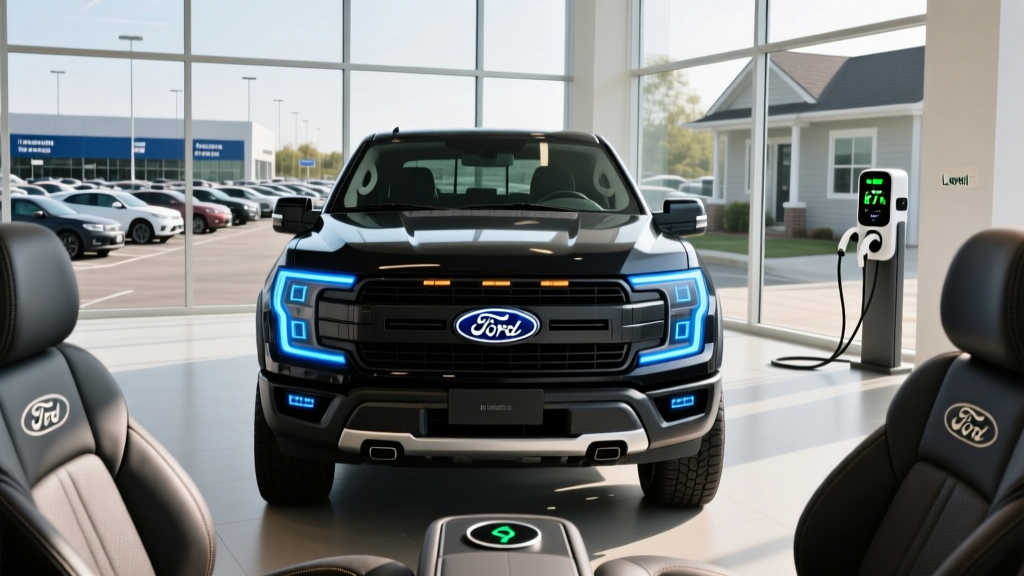
The Ford F-150 Lightning launched to massive waitlists and dealer markups in 2022–2023. By late 2024, Ford had cut Lightning production shifts and paused its Rouge Electric Vehicle Center expansion — moves the company attributed to "market demand calibration." For 2026, the Lightning remains on sale with meaningful updates, but Ford F-150 Lightning demand issues have shifted from supply constraints to a softer retail market driven by high MSRPs, evolving competition from the Chevy Silverado EV and Ram 1500 REV, and mixed consumer sentiment around electric truck utility.
This review covers everything a 2026 buyer needs to know: real-world range, charging performance, pricing after federal tax credits, and whether the Lightning still deserves a spot on your shortlist.
| Spec | Standard Range | Extended Range |
|---|---|---|
| EPA Range | 240 miles | 320 miles |
| Battery Capacity | 98 kWh usable (NMC) | 131 kWh usable (NMC) |
| Max DC Fast Charge | 150 kW | 150 kW |
| 10–80% DCFC Time | ~36 minutes | ~41 minutes |
| Level 2 Home Charging | 11.5 kW (~22 mi/hr) | 11.5 kW (~30 mi/hr) |
| Horsepower | 452 hp | 580 hp |
| 0–60 mph | ~3.8 sec | |
| Drivetrain | Dual-motor AWD | Dual-motor AWD |
| Max Towing | 7,700 lbs | 10,000 lbs |
| MPGe (Combined) | 78 MPGe | 70 MPGe |
| Efficiency | 43 kWh/100 mi | 49 kWh/100 mi |
| Base MSRP | $54,995 | $69,995 (Lariat) |
| Battery Warranty | 8 years / 100,000 miles (70% capacity retention) | |
Real-World Range: What the EPA Sticker Doesn't Tell You
The Extended Range Lightning carries an EPA-estimated 320 miles of range, while the Standard Range model is rated at 240 miles, per fueleconomy.gov. Those numbers come with real-world caveats every truck buyer should internalize before signing a purchase agreement.
- City/suburban mixed driving: 290–310 miles (regen braking helps recover energy)
- Highway cruising at 70–75 mph: 250–275 miles (aerodynamic drag dominates the boxy truck profile)
- Cold weather (below 32°F): 210–250 miles (battery chemistry slows, cabin heating draws 3–5 kW continuous)
- Towing a 5,000-lb trailer: 150–180 miles (energy consumption roughly doubles)
The Standard Range pack's 240-mile EPA figure drops to roughly 180–200 miles on the highway and can fall below 160 miles when towing. For buyers with a commute under 60 miles round-trip and home charging, this is manageable. For road-trippers or tradespeople towing to job sites, the Extended Range pack is nearly mandatory — and it's a key reason demand for Standard Range trims has softened.
Charging Speed and Infrastructure: Where the Lightning Falls Behind
The Lightning's charging architecture uses a 400-volt platform, capping DC fast-charging at 150 kW peak. In a 2026 market where the Rivian R1T Gen 2 peaks at 220+ kW and the Silverado EV hits 350 kW on its 800V architecture, the Lightning's charge curve is a genuine competitive weakness — and a contributor to Ford's demand recalibration.
| Charging Level | Power | Miles Added per Hour | Notes |
|---|---|---|---|
| Level 1 (120V) | 1.4 kW | ~2–3 mi/hr | Emergency/trickle only |
| Level 2 (240V, 48A) | 11.5 kW | ~22 mi/hr (Std) / ~30 mi/hr (Ext) | Full charge overnight (~10–13 hrs) |
| DC Fast Charge | 150 kW peak | ~150 mi in 30 min (Std Range) | Tapers significantly above 80% SoC |
The 10–80% charge takes roughly 36 minutes on the Standard Range and 41 minutes on the Extended Range pack at a functioning 150+ kW station. However, the Lightning's charge curve tapers hard past 80% State of Charge — expect 80–100% to add another 25–35 minutes. Ford's onboard route planner will precondition the battery when you navigate to a DC fast charger, warming the pack to optimize charge acceptance. Skipping preconditioning in cold weather can push 10–80% times past 55 minutes.
At home, the 11.5 kW Level 2 rate is solid for daily use. Most owners install a Ford Charge Station Pro or a third-party 48-amp unit (ChargePoint Home Flex, Emporia Level 2) on a 60-amp circuit. Budget $800–$2,500 for the unit and electrician labor, depending on panel proximity and whether your home needs a 200-amp service upgrade.
Pricing, Trim Levels, and Federal Tax Credit Eligibility
Ford restructured Lightning pricing for the 2026 model year. Here's where trims land before incentives:
- Pro (Standard Range): $54,995
- XLT (Standard Range): $59,995
- Lariat (Extended Range): $69,995
- Flash (Extended Range): $72,495
- Platinum (Extended Range): $84,995
The as-tested price on a well-equipped Lariat Extended Range with the Max Trailer Tow Package and BlueCruise typically lands between $76,000 and $80,000 before incentives.
| Requirement | F-150 Lightning Status |
|---|---|
| MSRP Cap (Trucks: ≤$80,000) | Pro, XLT, Lariat, Flash qualify; Platinum exceeds cap |
| Buyer Income Cap (Joint: ≤$300K AGI) | Varies by filer — verify on your tax return |
| Battery Sourcing / Critical Minerals | Partial compliance; credit may be $3,750 or $7,500 depending on current-year IRS guidance |
| Point-of-Sale Transfer | Available — apply credit as down payment at dealer |
| Final Assembly (North America) | ✓ Assembled in Dearborn, MI |
The IRS §30D rules require meeting both battery-component and critical-minerals sourcing thresholds for the full $7,500. As of 2026, the Lightning qualifies for at least $3,750 and potentially the full $7,500 depending on the model's battery supply chain — confirm with your tax professional before relying on the full amount. The point-of-sale transfer option lets you apply the credit directly as a down payment at the dealership, reducing your out-of-pocket cost immediately.
Performance, Cargo, and Everyday Practicality
The dual-motor AWD powertrain is standard across all Lightning trims. The Extended Range model's 580 hp and 775 lb-ft of torque deliver a 3.8-second 0–60 mph time — genuinely quick for a 6,500-lb truck. The Standard Range model at 452 hp still manages ~4.8 seconds.
Practicality remains the Lightning's strongest suit versus newer competitors:
- Mega Power Frunk: 14.1 cu ft of lockable front trunk space with 400 lbs payload capacity — fits tools, groceries, or a full camp kitchen
- Bed: 5.5 ft (67.1 in) with 2,235 lbs max payload (Pro trim)
- Rear-seat legroom: 43.6 inches — genuine full-size crew cab comfort
- Pro Power Onboard: Up to 9.6 kW of vehicle-to-load (V2L) export power through bed and frunk outlets — runs a job site or powers essentials during an outage
- Max towing: 10,000 lbs (Extended Range with Max Trailer Tow Package)
The SYNC 4A infotainment system on a 15.5-inch portrait touchscreen (Lariat and above) is responsive and includes wireless Apple CarPlay and Android Auto. The 12-inch digital instrument cluster handles range and tow-specific telemetry well. Ford BlueCruise (hands-free highway driving on mapped divided roads) is available and operates at SAE Level 2 — you must remain attentive and keep eyes on the road.
Why Demand Softened: Competitive Pressure and Buyer Hesitation
Ford's Lightning demand issues in 2025–2026 stem from several converging factors:
- Price sensitivity: At $55K–$85K, the Lightning competes with well-equipped gas F-150s that cost $15K–$25K less upfront, even after tax credits. Fleet and commercial buyers have been slower to adopt than Ford projected.
- Charging speed gap: The 150 kW peak charge rate trails the Silverado EV (350 kW), Rivian R1T (220+ kW), and upcoming Ram 1500 REV. For buyers who road-trip or tow frequently, this matters.
- Towing range reality: Real-world towing range of 150–180 miles on the Extended Range pack discourages long-haul trailer use — a core F-150 buyer use case.
- Depreciation concerns: Used Lightning values dropped significantly from 2023 peaks, making some buyers cautious about new purchases.
- Expanding competition: The Chevy Silverado EV, Ram 1500 REV, and refreshed Rivian R1T Gen 2 have all arrived with newer architectures, splitting the electric truck market.
The upside for buyers: dealers are more willing to negotiate on 2026 Lightnings than they were in 2022–2023. Manufacturer incentives, below-MSRP pricing, and lease deals have become common in many markets.
- Best-in-class frunk (14.1 cu ft) and Pro Power Onboard V2L
- Comfortable ride quality and quiet cabin for a full-size truck
- Strong 0–60 performance (3.8 sec Extended Range)
- Competitive pricing on Pro/XLT trims after tax credits
- BlueCruise hands-free highway driving
- Dealers more willing to negotiate than 2022–2023
- 150 kW DC charging peak trails key competitors
- Towing range (150–180 mi) limits utility for trailer users
- Extended Range trims push past $70K before options
- Cold-weather range loss (20–30%) is significant
- 400V architecture limits future charging upgrades
- Higher insurance premiums vs. gas F-150 (~15–25% more)
Who Should Buy the F-150 Lightning in 2026?
The Lightning works best for specific use cases rather than as a universal truck replacement:
- Daily commuters with home charging: If your round-trip commute is under 100 miles and you can install a Level 2 charger, the Lightning's operating cost (~4–6¢/mile on average electricity rates) crushes a gas F-150's fuel bill.
- Homeowners needing backup power: Ford's Intelligent Backup Power (with the Home Integration System) can power essential circuits in your home for up to 3 days during an outage using the truck's battery — a unique feature competitors don't match at this price.
- Job-site power users: Pro Power Onboard at 9.6 kW eliminates the need for a portable generator.
- Families wanting a comfortable electric daily driver: The SuperCrew cab, quiet powertrain, and BlueCruise make it an excellent family hauler.
The Lightning is a weaker fit for frequent long-distance towers, buyers in extreme-cold climates without garage parking, or those who need 300+ miles of highway range between fast-charge stops.
Is the F-150 Lightning Worth Buying vs. Key Competitors?
Against the Chevy Silverado EV, the Lightning offers a more traditional truck bed (the Silverado EV uses the controversial Multi-Flex midgate) and a lower starting price, but the Silverado EV's 350 kW charging and available 400+ mile range are hard to ignore for road-trippers.
The Rivian R1T Gen 2 is more refined, faster-charging, and offers a quad-motor option, but starts higher and has a smaller bed. The Ram 1500 REV (EREV variant) offers a range-extender engine for unlimited range, appealing to buyers who can't commit to pure battery-electric.
If you prioritize value, frunk/utility features, home backup power, and dealer proximity, the Lightning still has a strong case. If charging speed and maximum range are your top criteria, test-drive the Silverado EV and Rivian R1T before committing.
What is the real-world range of the 2026 F-150 Lightning?
The Extended Range model is EPA-rated at 320 miles, but expect 250–275 miles on the highway, 210–250 miles in cold weather, and 150–180 miles when towing a 5,000-lb trailer. The Standard Range model (240 mi EPA) delivers roughly 180–200 highway miles.
How fast does the Lightning charge at home and on DC fast chargers?
At home on a 240V Level 2 charger (11.5 kW), expect ~22–30 miles of range per hour, with a full overnight charge in 10–13 hours. On DC fast chargers, the Lightning peaks at 150 kW, reaching 10–80% in 36–41 minutes depending on pack size. Charging slows significantly above 80%.
Does the F-150 Lightning qualify for the $7,500 federal EV tax credit?
Most Lightning trims (Pro, XLT, Lariat, Flash) fall under the $80,000 MSRP cap for trucks. Eligibility for the full $7,500 depends on battery-sourcing compliance, which varies by model year and IRS guidance. The Platinum trim ($84,995) exceeds the MSRP cap and does not qualify. Buyer income must also be under $300K AGI (joint filers). Consult a tax professional and check IRS §30D guidance for current rules.
Is the F-150 Lightning a good truck for towing?
It tows competently up to 10,000 lbs (Extended Range with Max Trailer Tow), but real-world towing range drops to 150–180 miles. If you regularly tow over 200 miles one-way, a gas or diesel F-150 — or an EREV like the Ram 1500 REV — may serve you better.
What battery chemistry does the Lightning use and how long will it last?
The Lightning uses NMC (nickel manganese cobalt) lithium-ion cells in both pack sizes. Ford warrants the battery for 8 years or 100,000 miles against falling below 70% capacity retention. Real-world degradation data from 2022–2023 models shows most Lightnings retaining 90–95% capacity after 30,000–50,000 miles — consistent with modern NMC packs.