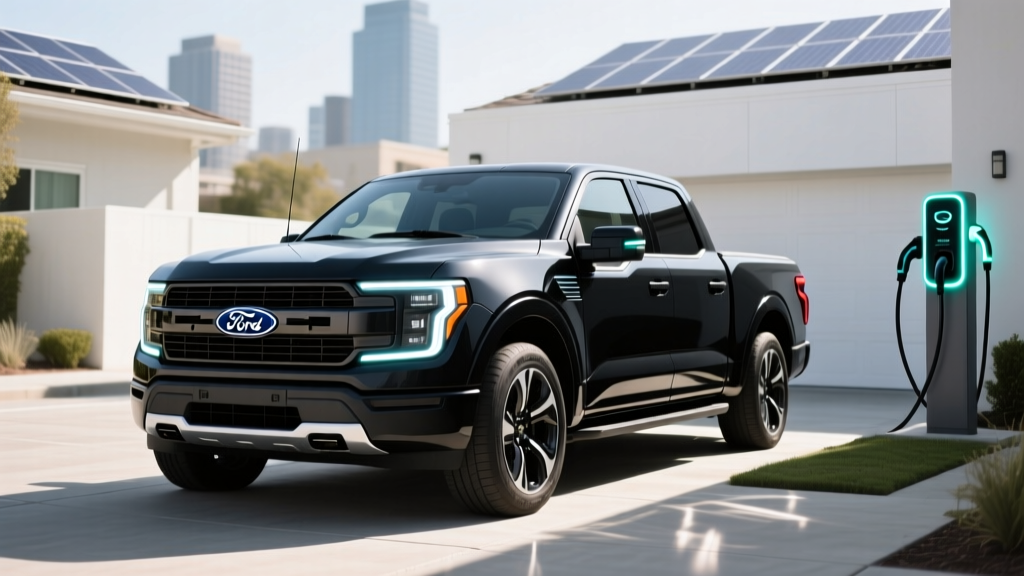
2026 Ford F-150 Lightning: The Cost Question, Answered
The Ford F-150 Lightning remains one of the few electric pickups that can credibly replace a gas truck for daily work and weekend towing. But with pricing that spans from the mid-$50,000s to over $90,000, understanding the true Ford F-150 Lightning cost requires digging past the sticker — into federal tax credits, home charging setup, efficiency in real-world conditions, and how it stacks up against rivals like the Rivian R1T and Chevrolet Silverado EV.
This review covers the 2026 model year with current IRS §30D credit rules, EPA range data, and real-world ownership economics. All pricing reflects manufacturer MSRP before destination and dealer adjustments.
Spec Table: 2026 Ford F-150 Lightning at a Glance
| Specification | Standard Range | Extended Range |
|---|---|---|
| EPA Range | 240 miles | 320 miles |
| Battery (usable) | 98 kWh (NMC) | 131 kWh (NMC) |
| Max DC Fast Charge | 150 kW | 150 kW |
| 10–80% DC Charge Time | ~44 min | ~41 min |
| Level 2 Home Charge Rate | 11.3 kW (30 mi/hr) | 11.3 kW (30 mi/hr) |
| Horsepower | 563 hp | 563 hp |
| Torque | 775 lb-ft | 775 lb-ft |
| 0–60 mph | ~4.0 sec | ~3.8 sec |
| Drivetrain | Dual-motor AWD | Dual-motor AWD |
| Max Towing | 7,700 lbs | 10,000 lbs |
| Max Payload | 2,235 lbs | 1,952 lbs |
| MPGe (combined) | 78 MPGe | 70 MPGe |
| Efficiency | 43 kWh/100mi | 48 kWh/100mi |
| Base MSRP (Pro trim) | $54,995 | N/A on Pro |
Source: fueleconomy.gov and Ford Motor Company specifications.
Real-World Range: What the EPA Number Doesn't Tell You
The Lightning's boxy aerodynamics and 6,500+ pound curb weight work against efficiency at highway speeds. Unlike a sedan-shaped EV, you'll see a pronounced efficiency penalty above 65 mph. City driving with frequent regenerative braking opportunities actually gets you closer to — or occasionally above — the EPA combined figure.
If you tow, plan aggressively: towing a 5,000-lb trailer can cut range by 40–50%, putting the Extended Range model at roughly 160–180 miles between charges under load. This is physics, not a Ford flaw — every electric truck behaves similarly under tow.
Charging Speed: DC Fast Charging and Home Level 2
The Lightning uses a CCS1 connector for DC fast charging (with NACS adapter availability expanding through Ford's Tesla Supercharger access agreement). Peak charge rate tops out at 150 kW on both battery sizes — competitive but not class-leading compared to 800V architectures that push 250+ kW.
| Charging Level | Power | Speed (mi/hr added) | Notes |
|---|---|---|---|
| Level 1 (120V) | 1.4 kW | ~3 mi/hr | Emergency/trickle only |
| Level 2 (240V, 48A) | 11.3 kW | ~30 mi/hr | Full charge in 8–10 hours |
| DC Fast Charge | 150 kW peak | ~230 mi/hr at peak | 10–80% in ~41 min (Ext.) |
Charging curve reality: The 150 kW peak is not sustained across the full session. Expect peak rates between 10–40% state of charge, with tapering beginning around 50% and significant slowdown above 80%. A 10–80% session on a 150 kW charger takes roughly 41 minutes for the Extended Range pack. Charging from 80–100% adds another 25–30 minutes — plan accordingly on road trips and avoid charging past 80% unless you genuinely need the electrons.
At home, the onboard 11.3 kW charger means a full overnight replenishment is realistic for most daily driving. Ford includes a Mobile Power Cord with each Lightning, but a dedicated Level 2 wall connector ($500–$700 for equipment, plus $800–$2,000 for professional installation depending on your panel) unlocks the full 30 miles-per-hour charge rate. Homes with 200A electrical panels generally accommodate this without a service upgrade; 100A panels may require a $2,000–$4,000 panel upgrade.
Ford F-150 Lightning Cost by Trim (2026 Pricing)
| Trim | Battery | MSRP | Est. After §30D Credit |
|---|---|---|---|
| Pro (Standard Range) | 98 kWh | $54,995 | ~$47,495* |
| XLT (Standard Range) | 98 kWh | $59,995 | ~$52,495* |
| XLT (Extended Range) | 131 kWh | $69,995 | ~$62,495* |
| Lariat (Extended Range) | 131 kWh | $76,995 | ~$69,495* |
| Platinum (Extended Range) | 131 kWh | $91,995 | Not eligible (MSRP cap) |
*After $7,500 point-of-sale transfer under IRS §30D. Eligibility depends on buyer income, battery sourcing, and MSRP caps. See tax credit section below.
Federal Tax Credit Eligibility (§30D Rules for 2026)
- MSRP Cap: Vans/pickups must be under $80,000. The Pro, XLT, and Lariat trims qualify. The Platinum ($91,995) exceeds the cap and is not eligible.
- Buyer Income Cap: AGI must not exceed $150,000 (single), $225,000 (head of household), or $300,000 (joint filers).
- Battery Sourcing: The full $7,500 requires meeting both critical-mineral ($3,750) and battery-component ($3,750) thresholds. Ford has worked to localize Lightning battery supply chains, but verify current-year sourcing compliance on the IRS §30D page or at the point of sale.
- Point-of-Sale Transfer: As of 2024, buyers can transfer the credit to the dealer for an immediate price reduction at purchase — you don't need to wait until tax filing.
Consult a tax professional and verify at irs.gov before purchase. Rules are subject to legislative change.
Performance, Towing, and Capability
Every 2026 F-150 Lightning comes with dual-motor all-wheel drive producing 563 horsepower and 775 lb-ft of torque. The 0–60 mph sprint takes roughly 3.8–4.0 seconds depending on battery pack — quicker than any gas F-150 short of the Raptor R. The instant torque delivery makes merging and passing effortless even when loaded.
Towing capacity reaches 10,000 pounds with the Extended Range battery and the Max Trailer Tow Package (standard on Lariat, available on XLT). Standard Range models max out at 7,700 pounds. The Lightning's Pro Power Onboard system is a standout: up to 9.6 kW of exportable power through bed-mounted 240V outlets, enough to run job-site tools, tailgate appliances, or serve as emergency home backup during outages (with the Ford Intelligent Backup Power system and a compatible home transfer switch).
Cargo and Passenger Dimensions
- Bed Length: 5.5 ft (67.1 inches)
- Mega Power Frunk: 14.1 cu ft (400 lbs payload capacity, lockable, drainable)
- Max Payload: 2,235 lbs (Standard Range) / 1,952 lbs (Extended Range)
- Rear Legroom: 43.6 inches (SuperCrew cab)
- Front Headroom: 40.8 inches
The front trunk (frunk) is a genuine differentiator vs. gas trucks — weatherproof and lockable, it's ideal for tools, groceries, or gear you don't want bouncing around the bed.
Technology and Driver Assistance
The Lightning features Ford's SYNC 4A infotainment system on a 12-inch touchscreen (15.5-inch portrait screen on Lariat and Platinum). Wireless Apple CarPlay and Android Auto are standard. Over-the-air updates continue to refine the software, and Ford's BlueCruise hands-free highway driving system is available on mapped divided highways.
Standard safety equipment includes automatic emergency braking with pedestrian detection, lane-keeping assist, blind-spot monitoring with trailer coverage, and rear cross-traffic alert. The Lightning has earned strong marks from NHTSA, achieving a 5-Star Overall Safety Rating.
Pros and Cons
- Pro Power Onboard (up to 9.6 kW exportable) — best-in-class for job-site and emergency use
- Mega Power Frunk adds 14.1 cu ft of secure, weatherproof storage
- Strong §30D tax credit eligibility on trims under $80,000
- AWD and 775 lb-ft torque standard on every trim
- Competitive 10,000-lb max towing (Extended Range)
- Comfortable ride quality with independent rear suspension
- 150 kW peak DC charge rate trails rivals with 800V architectures
- Real-world highway range drops significantly vs. EPA estimate
- Towing cuts range by 40–50% — requires careful route planning
- Platinum trim exceeds §30D MSRP cap ($80,000 for trucks)
- Bed is 5.5 ft only — shorter than many gas F-150 configurations
- Cold-weather range loss is substantial (25–35% in freezing temps)
Who Should Buy the F-150 Lightning?
- You need a work truck with onboard power export (Pro Power Onboard is unmatched)
- Your daily commute is under 150 miles round-trip and you can charge at home
- You want truck capability without daily fuel costs (~$0.12/mi at $0.14/kWh vs. ~$0.22/mi for a gas F-150)
- You value the frunk for secure, weatherproof gear storage
- You qualify for the §30D credit and are buying a trim under $80,000
- You regularly tow long distances (>200 miles) — range under tow remains a hard constraint
- You need a long bed (6.5 ft or 8 ft) for large cargo
- You lack reliable home charging access and your area has sparse DC fast-charging infrastructure
- You want the longest electric range in a truck — the Rivian R1T (Max pack, ~400+ mi) or Silverado EV (450 mi) may fit better
2026 F-150 Lightning vs. Key Competitors
| Attribute | Ford F-150 Lightning (Ext.) | Rivian R1T (Dual Max) | Chevy Silverado EV (4WT) |
|---|---|---|---|
| EPA Range | 320 mi | ~410 mi | ~450 mi |
| Max DC Charge | 150 kW | 200+ kW | 350 kW |
| 0–60 mph | ~3.8 sec | ~3.5 sec | ~4.5 sec |
| Max Towing | 10,000 lbs | 11,000 lbs | 10,000 lbs |
| Bed Length | 5.5 ft | 4.5 ft (w/ Gear Tunnel) | 5.11 ft |
| Base MSRP | $54,995 | ~$75,900 | ~$55,000 (work truck) |
| §30D Eligible | Yes (trims <$80k) | Yes (MSRP <$80k) | Yes (trims <$80k) |
The Lightning's strongest advantage is its balance of price, Pro Power Onboard, and the frunk — a combination no competitor fully replicates. The Rivian R1T offers superior range and off-road capability but starts significantly higher. The Silverado EV promises more range and faster charging at comparable pricing but has a shorter bed and more limited retail availability as of early 2026.
Frequently Asked Questions
What is the real-world range of the Ford F-150 Lightning?
The Extended Range model carries a 320-mile EPA estimate, but expect 260–280 miles in real-world highway driving and 200–230 miles in freezing weather. The Standard Range model's 240-mile EPA figure translates to roughly 190–210 miles highway. Towing can reduce range by 40–50%.
How fast does the F-150 Lightning charge?
On a 150 kW DC fast charger, the Extended Range battery charges from 10–80% in approximately 41 minutes. At home on a Level 2 (240V, 48A) charger, the onboard 11.3 kW system adds about 30 miles per hour, fully replenishing the Extended Range pack in roughly 10 hours.
How much does the F-150 Lightning cost after tax credits?
The Pro trim starts at $54,995 MSRP. If you qualify for the full $7,500 federal §30D credit (meeting income, MSRP, and battery-sourcing requirements), the effective price drops to approximately $47,495. The XLT Extended Range at $69,995 falls to roughly $62,495. The Platinum at $91,995 exceeds the $80,000 truck MSRP cap and does not qualify.
Does the 2026 F-150 Lightning qualify for the federal EV tax credit?
Yes — trims with an MSRP under $80,000 (Pro, XLT, Lariat) qualify for the §30D credit, provided the buyer meets income caps ($150k single / $300k joint) and the vehicle meets battery-sourcing requirements. The credit can be transferred to the dealer at point of sale for an immediate price reduction. Always verify current eligibility at irs.gov or with a tax professional.
Is the F-150 Lightning worth buying vs. competitors?
For buyers prioritizing value, onboard power export, and the practical frunk, the Lightning is the strongest choice in the electric truck segment. If maximum range or off-road capability is your priority, the Rivian R1T or Silverado EV may serve you better. For fleet and work-truck buyers, the Lightning Pro at ~$47,500 after the credit is difficult to beat.
What is the battery warranty on the F-150 Lightning?
Ford covers the Lightning's battery and electric powertrain for 8 years or 100,000 miles, whichever comes first. The warranty guarantees the battery will retain at least 70% of its original capacity during the coverage period.