Ford F-150 Lightning Bolt Pattern: Complete Wheel Fitment Guide
If you're researching the bolt pattern 1994 Ford F150 or any F-150 generation for wheel upgrades, understanding lug specifications is critical — especially when comparing classic trucks to modern electric platforms like the Ford F-150 Lightning. While the 1994 F-150 used a 5-lug bolt pattern designed for a lighter, gas-powered work truck, today's F-150 Lightning demands a completely different wheel architecture to handle its 6,500+ pound curb weight and instant electric torque.
This guide breaks down the exact bolt patterns across F-150 generations, explains why the Lightning's wheel specs matter for EV efficiency and range, and covers everything from aftermarket wheel options to how wheel weight directly impacts your electric truck's real-world driving range.
The 1994 Ford F-150 Bolt Pattern vs. Modern F-150 Lightning
The bolt pattern 1994 Ford F150 is 5×139.7mm (also expressed as 5×5.5 inches), with a center bore of approximately 87mm and typical lug nut thread size of 1/2"-20. This five-lug pattern served Ford's light-duty trucks from the 1980s through the 1996 model year. It was adequate for a truck weighing roughly 4,000-4,500 pounds with a modest V6 or V8 producing 150-205 horsepower.
The modern Ford F-150 Lightning (2022-2026 model years) uses a 6×135mm bolt pattern with a center bore of 87.1mm and M14×1.5 lug nuts. Ford transitioned the entire F-150 line to this six-lug pattern starting with the 2004 model year to improve load capacity and safety. The Lightning's heavier platform — with a curb weight ranging from 6,171 to 6,893 pounds depending on trim and battery — requires the additional lug point for structural security.
| Model Year / Generation | Bolt Pattern | Center Bore | Lug Thread | Typical Curb Weight |
|---|---|---|---|---|
| 1994 Ford F-150 (9th Gen) | 5×139.7mm (5×5.5") | ~87mm | 1/2"-20 | 4,000-4,500 lbs |
| 2004-2020 F-150 (11th-13th Gen) | 6×135mm | 87.1mm | M14×1.5 | 4,500-5,500 lbs |
| 2022-2026 F-150 Lightning | 6×135mm | 87.1mm | M14×1.5 | 6,171-6,893 lbs |
Key takeaway: Wheels from a 1994 F-150 will not fit a modern F-150 Lightning. The lug count, bolt circle diameter, and load ratings are entirely different. Even among six-lug F-150 wheels from 2004 onward, you must verify load rating compatibility with the Lightning's significantly heavier platform.
F-150 Lightning 2026: Full EV Specs, Range, and Charging
For the 2026 model year, the Ford F-150 Lightning continues with two battery options and multiple trims. Here's the complete specification breakdown buyers need:
| Specification | Standard Range | Extended Range |
|---|---|---|
| Usable Battery Capacity | 98 kWh (NMC) | 131 kWh (NMC) |
| EPA Estimated Range | 240 miles | 320 miles |
| Real-World Highway Range | ~195-215 miles | ~265-290 miles |
| Real-World Cold Weather (20°F) | ~170-190 miles | ~230-255 miles |
| Horsepower | 580 hp | 580 hp |
| Torque | 775 lb-ft | 775 lb-ft |
| 0-60 mph | ~4.0 seconds | ~3.8 seconds |
| Drivetrain | Dual-Motor AWD | Dual-Motor AWD |
| Max DC Fast Charge | 150 kW | 150 kW |
| 10-80% DCFC Time | ~41 minutes | ~41 minutes |
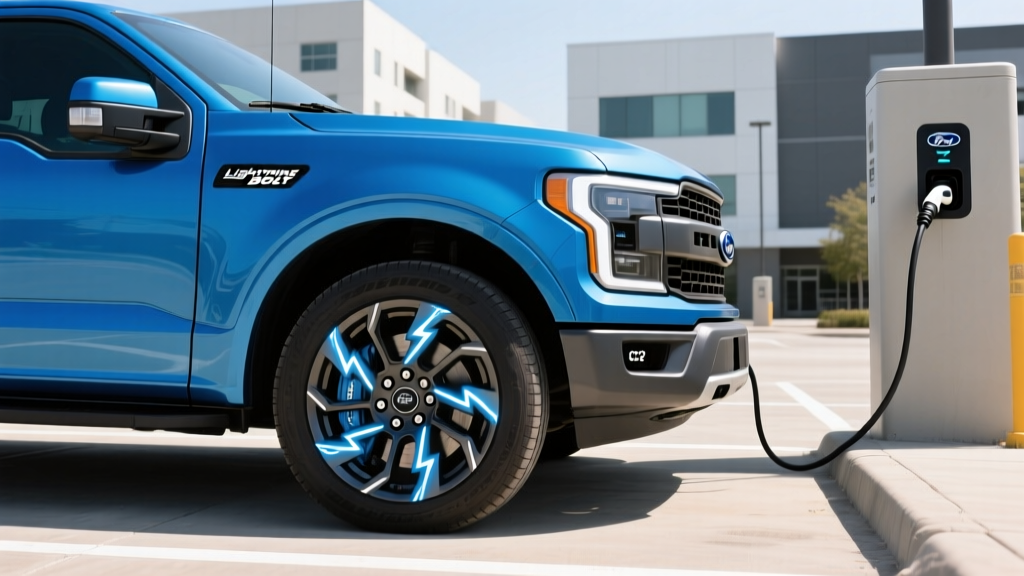
| Level 2 Home Charge Rate | 11.3 kW (~28 mi/hr) | 11.3 kW (~28 mi/hr) |
| MPGe (Combined) | 68 MPGe | 70 MPGe |
| Efficiency | 49 kWh/100mi | 48 kWh/100mi |
| Max Towing Capacity | 7,700 lbs | 10,000 lbs |
| Payload Capacity | 2,235 lbs | 1,800 lbs |
Charging the F-150 Lightning: Home and Public Infrastructure
Charging speed is where the F-150 Lightning faces its most common criticism. At a maximum DC fast-charge rate of 150 kW, the Lightning trails competitors like the Rivian R1T (which supports over 200 kW on newer models) and the Hyundai Ioniq 5 (which peaks at 240 kW). Here's what charging looks like in practice:
| Charge Level | Power (kW) | Miles Added per Hour | Typical Use Case |
|---|---|---|---|
| Level 1 (120V outlet) | 1.4 kW | ~2-3 miles/hr | Emergency/overnight trickle |
| Level 2 (240V, 32A) | 7.7 kW | ~19 miles/hr | Standard home charging |
| Level 2 (240V, 48A) | 11.3 kW | ~28 miles/hr | Ford Mobile Power Cord / Wall Charger |
| Level 2 (240V, 80A)* | 19.2 kW | ~47 miles/hr | Ford Charge Station Pro (Extended Range only) |
| DC Fast Charge | Up to 150 kW | ~185 miles in 30 min | Road trips (Electrify America, etc.) |
*80A charging requires the Ford Charge Station Pro hardwired to a 100A circuit and is only available on Extended Range models with the dual onboard charger option.
The Lightning's charging curve peaks near 150 kW between approximately 15-40% state of charge, then tapers progressively. Above 80%, charging slows dramatically to protect battery longevity — expect the final 20% to take as long as the first 50%. For daily use, Ford recommends charging to 90% to extend battery life, using the truck's built-in charge limit setting.
For home installation, budget $500-$2,500 for a Level 2 setup depending on your electrical panel. A 48A charger needs a 60A dedicated circuit; the 80A Ford Charge Station Pro requires a 100A circuit, which may necessitate a panel upgrade ($1,500-$3,000+) in older homes. Always consult a licensed electrician for final specifications.
Pricing, Tax Credits, and Ownership Cost
The 2026 Ford F-150 Lightning starts at approximately $54,995 for the Pro trim with Standard Range and climbs to over $95,000 for a fully loaded Platinum Extended Range. Here's the trim breakdown:
| Trim | Standard Range MSRP | Extended Range MSRP | §30D Tax Credit Eligible? |
|---|---|---|---|
| Pro | $54,995 | $64,995 | Varies — see below |
| XLT | $59,995 | $69,995 | Varies — see below |
| Lariat | — | $76,995 | Varies — see below |
| Flash | — | $71,995 | Varies — see below |
| Platinum | — | $95,995 | Varies — see below |
The F-150 Lightning's eligibility for the full $7,500 federal tax credit depends on multiple factors that change frequently under current IRS rules:
- MSRP Cap: Trucks/SUVs/vans must have an MSRP at or below $80,000 (Pro, XLT, Flash, and some Lariat builds qualify; Platinum typically exceeds the cap)
- Buyer Income Limits: Modified AGI must not exceed $300,000 (joint), $225,000 (head of household), or $150,000 (single)
- Battery Sourcing: Critical minerals and battery components must meet escalating domestic-content thresholds that tighten annually through 2032
- Point-of-Sale Transfer: Eligible buyers can apply the credit as an immediate dealer discount rather than waiting for tax filing
Always verify current eligibility at IRS.gov and consult a tax professional before purchasing. Battery sourcing requirements have disqualified several previously eligible EVs, and rules can shift mid-year.
Wheel and Tire Considerations for the Lightning's Weight
The F-150 Lightning's 6,000+ pound curb weight creates unique demands on wheels and tires that go far beyond what the bolt pattern 1994 Ford F150 was ever engineered to handle. When selecting aftermarket wheels for the Lightning, consider:
- Load Rating: Each wheel must support at minimum 1,750 lbs (based on ~6,900 lb max loaded weight ÷ 4 wheels, plus safety margin). Look for wheels rated 2,000+ lbs per corner.
- Weight Impact on Range: Heavier aftermarket wheels increase unsprung mass and rotational inertia. Testing shows that adding 5-8 lbs per wheel can reduce range by 3-7 miles on the Extended Range model. Lighter forged wheels can marginally improve efficiency.
- Tire Specification: The Lightning uses specific high-load EV tires (typically 275/60R20 or 275/50R22). Standard truck tires may not carry the load rating required. Look for tires with the HL (High Load) designation.
- Offset and Backspacing: The Lightning's wheel offset ranges from approximately +44mm to +52mm depending on wheel size. Incorrect offset affects bearing wear and suspension geometry on this heavy platform.
Stock wheel sizes for the 2026 Lightning include 18-inch (Pro), 20-inch (XLT, Lariat, Flash), and 22-inch (Platinum). All share the 6×135mm bolt pattern. Ford uses a NACS (North American Charging Standard) port on 2025+ models, and the truck supports V2L (Vehicle-to-Load) through the Pro Power Onboard system, providing up to 9.6 kW of exportable power.
Pros and Cons: The F-150 Lightning as a Daily Driver
Pros
- Massive 420-liter (14.7 cu ft) front trunk (frunk) with powered lid
- Pro Power Onboard turns the truck into a mobile generator (up to 9.6 kW)
- Quiet, smooth, instant-torque driving experience
- BlueCruise hands-free driving on approved highways (Level 2 ADAS)
- Low running costs: ~$0.04-0.06/mile on home electricity vs. $0.15-0.20/mile on gas
- Strong towing capacity (10,000 lbs with Extended Range)
- Spacious crew cab with 43.6 inches of rear legroom
Cons
- 150 kW max DC charge rate is slow for a 131 kWh battery
- Real-world range drops significantly when towing (100-150 mi)
- Heavy curb weight accelerates tire wear — expect 25,000-35,000 mi on OEM tires
- Cold-weather range loss of 20-30% is substantial
- Extended Range trims often exceed the $80,000 tax credit MSRP cap
- 22-inch Platinum wheels add cost, reduce range, and increase tire replacement expense
- Large footprint makes urban parking challenging (232.7 inches long)
Who Should Buy the F-150 Lightning?
The F-150 Lightning excels for specific use cases and falls short for others. Here's the honest buyer framework:
Choose the Lightning if: You need a full-size truck for daily commuting, job-site power (Pro Power Onboard is genuinely useful), or weekend towing under 7,000 lbs. You have reliable Level 2 home charging. You value the frunk for secure, weatherproof storage. You drive primarily in moderate climates where cold-weather range loss is manageable.
Look elsewhere if: You regularly tow over 7,000 lbs long-distance (range becomes impractical). You live in an apartment without charging access. You need a truck primarily for off-road use (the Lightning's weight and ground clearance limit serious trail capability). You want the fastest possible road-trip charging — consider the Rivian R1T or wait for future platforms with 350+ kW charging capability.
Frequently Asked Questions
Will wheels from a 1994 Ford F-150 fit a modern F-150 Lightning?
No. The 1994 F-150 uses a 5×139.7mm (5×5.5") bolt pattern, while the Lightning uses a 6×135mm bolt pattern. The lug count, bolt circle, and load ratings are completely different. Even with adapters (which are not recommended for safety on a 6,500+ lb vehicle), the 1994 wheels would not safely support the Lightning's weight.
What is the real-world range of the F-150 Lightning?
The EPA rates the Extended Range at 320 miles and Standard Range at 240 miles. In real-world mixed driving, expect 265-290 miles (Extended) and 195-215 miles (Standard). Highway driving at 75 mph, cold weather, and towing all reduce range significantly. Plan for 20-30% less than the sticker in challenging conditions.
How fast does the F-150 Lightning charge?
On a DC fast charger, it peaks at 150 kW and charges from 10-80% in approximately 41 minutes. At home on a 48A Level 2 charger, it adds about 28 miles per hour, meaning a full charge from empty takes roughly 8-9 hours for the Standard Range battery and 11-12 hours for Extended Range.
Does the F-150 Lightning qualify for the $7,500 federal tax credit?
It depends on the trim, your income, and current battery-sourcing rules. Trims under the $80,000 MSRP cap (Pro, XLT, Flash, some Lariat) can qualify if your modified AGI is within limits ($150K single / $300K joint) and the battery meets critical-mineral sourcing thresholds. Always verify at IRS.gov before purchasing — rules change and vary by model year and build date.
What bolt pattern does the F-150 Lightning use?
The F-150 Lightning uses a 6×135mm bolt pattern with an 87.1mm center bore and M14×1.5 lug nuts. This is the same pattern used on all F-150 models from 2004 onward, though you must verify load ratings are sufficient for the Lightning's heavier curb weight when selecting aftermarket wheels.
Is the F-150 Lightning worth buying vs. the Rivian R1T?
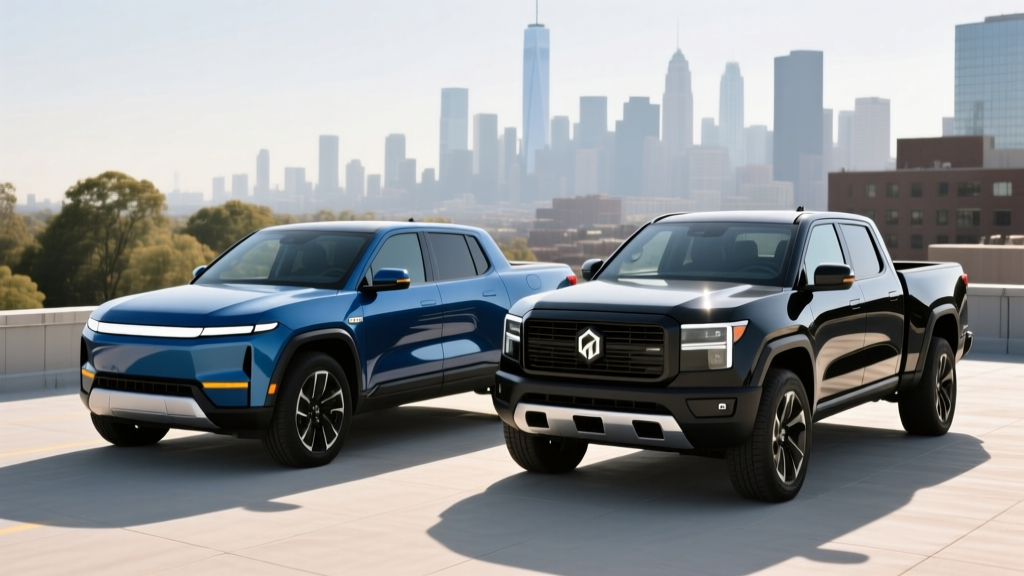
The Lightning wins on price (starting ~$55K vs. ~$70K for the R1T), frunk space, and Pro Power Onboard utility. The R1T wins on charging speed, off-road capability, and a more innovative quad-motor option. If you need a traditional truck experience at a lower price point, the Lightning is the stronger value. If you prioritize adventure capability and faster charging, the R1T edges ahead.
Sources: EPA Fuel Economy, IRS Clean Vehicle Credits, Ford F-150 Lightning