Quick Verdict: The F-150 Lightning in 2026
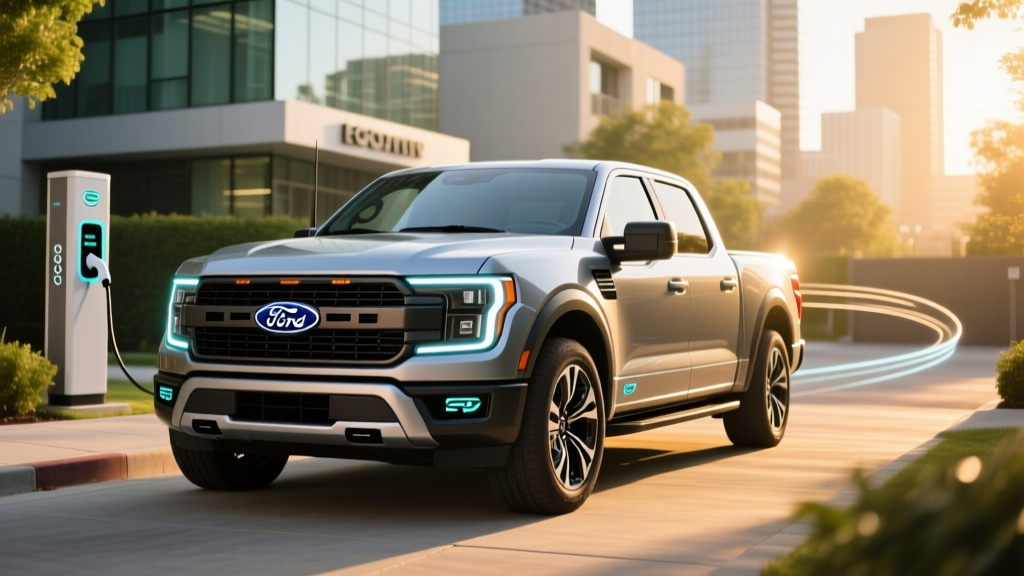
The Ford F-150 Lightning remains one of the most practical electric trucks on the market in 2026, blending full-size utility with a usable 230–320 mile EPA range depending on battery pack. If you've landed here searching for the bolt pattern 2017 F150 — that's a 6×135 mm (6-lug, 135 mm bolt circle) layout, and yes, the 2026 F-150 Lightning shares the same 6×135 mm bolt pattern as its gas-powered F-150 siblings and the 2017 model year, meaning many aftermarket wheel options carry over. But the Lightning is a fundamentally different machine underneath. This review covers everything an EV truck buyer needs: real range, charging speeds, pricing after federal tax credits, and how it stacks up against the Rivian R1T and Chevrolet Silverado EV.
Standard Range: EPA 230 mi | Extended Range: EPA 320 mi
Expect ~190–210 mi highway (Standard) and ~260–280 mi highway (Extended). Cold-weather drops of 20–30% are typical below freezing, reducing Extended Range to roughly 220–250 mi in winter conditions.
Range, Battery, and Efficiency
The 2026 F-150 Lightning offers two battery options. The Standard Range pack uses a 98 kWh usable lithium-ion NMC (nickel manganese cobalt) chemistry, while the Extended Range pack bumps capacity to 131 kWh usable, also NMC. Ford has not switched to LFP (lithium iron phosphate) for the Lightning, meaning you get higher energy density but should avoid routinely charging to 100% for daily use — set your charge limit to 80–90% for longevity.
| Spec | Standard Range | Extended Range |
|---|---|---|
| Battery (usable) | 98 kWh (NMC) | 131 kWh (NMC) |
| EPA Range | 230 mi | 320 mi |
| Real-World Highway | ~190–210 mi | ~260–280 mi |
| MPGe (combined) | 68 MPGe | 70 MPGe |
| kWh/100 mi | ~49 | ~48 |
Efficiency hovers around 2.0–2.1 kWh/mile. That's thirstier than a Tesla Model Y (~3.5 mi/kWh) but expected for a 6,500+ lb truck with the aerodynamics of a brick. Towing cuts range dramatically — expect a 40–50% reduction when pulling a 5,000 lb trailer, dropping the Extended Range model to roughly 160–180 real-world miles.
Charging Speed: DC Fast, Level 2, and Level 1
Charging speed is where Lightning owners need realistic expectations. The truck peaks at 150 kW on DC fast charging — competitive but not class-leading. The Rivian R1T hits 200+ kW, and the Silverado EV pushes toward 350 kW on its top pack.
| Charging Level | Power | Speed / Time |
|---|---|---|
| Level 1 (120V) | ~1.4 kW | ~3 mi/hr |
| Level 2 (240V, 48A) | 11.5 kW | ~22 mi/hr (Standard) / ~30 mi/hr (Extended) |
| Level 2 (240V, 80A dual-charger) | 19.2 kW | ~44 mi/hr (requires upgraded onboard charger) |
| DC Fast Charge (peak) | 150 kW | 15–80% in ~41 min (Extended Range) |
The 150 kW peak only holds briefly before the charge curve tapers. From 15% to 80%, you'll average closer to 100–110 kW sustained on the Extended Range pack. That translates to a real-world 10–80% session of roughly 41 minutes at a capable 150+ kW station. Standard Range models complete 15–80% in about 36 minutes thanks to the smaller battery.
At home on a 48-amp Level 2 charger (the most common residential install), plan on 10–14 hours for a full charge on the Extended Range pack. The optional 80A dual onboard charger cuts that significantly but requires a 100-amp circuit — check with a licensed electrician before committing.
Performance and Drivetrain
Every 2026 F-150 Lightning comes with dual motors and standard AWD. There's no RWD option. Power output depends on your battery choice:
- Standard Range: 452 hp, 775 lb-ft torque, 0–60 mph in ~4.0 seconds
- Extended Range: 563 hp, 775 lb-ft torque, 0–60 mph in ~3.8 seconds
Those are sports-sedan numbers in a full-size truck. The instant torque delivery makes merging and passing effortless, and the low center of gravity (battery pack under the floor) keeps body roll surprisingly controlled. Payload tops out around 2,235 lbs and max towing reaches 10,000 lbs (Extended Range, Max Trailer Tow Package), though remember that towing range penalty.
Pricing, Trims, and Federal Tax Credit Eligibility
The 2026 Lightning lineup starts at $54,995 for the Pro trim with Standard Range. Here's the full trim breakdown:
| Trim | Battery | MSRP | §30D Credit Eligible? |
|---|---|---|---|
| Pro | Standard (98 kWh) | $54,995 | Up to $7,500 (check sourcing) |
| XLT | Standard | $59,995 | Up to $7,500 |
| XLT | Extended (131 kWh) | $69,995 | Up to $7,500 |
| Lariat | Extended | $76,995 | Up to $7,500 |
| Platinum | Extended | $86,995 | Up to $7,500 |
Tax credit rules matter. Under IRS §30D, the F-150 Lightning qualifies as a truck (MSRP cap: $80,000), so Pro, XLT, and Lariat trims clear the price ceiling — the Platinum at $86,995 does not. Buyer income caps also apply: $300,000 joint / $225,000 head of household / $150,000 single. Battery component and critical mineral sourcing requirements determine whether you receive the full $7,500 or only $3,750. As of 2026, Ford's battery sourcing has met partial requirements on some configurations. Always verify current eligibility on the IRS site or consult a tax professional before purchasing. The point-of-sale transfer option lets you apply the credit as a discount at the dealer if you qualify.
Cargo, Passenger Space, and the Mega Power Frunk
The Lightning's independent rear suspension (a departure from the solid axle on gas F-150s) enables a massive front trunk — Ford calls it the Mega Power Frunk. It offers 14.1 cu ft of lockable, drainable storage with 400 lbs of payload capacity. That's more cargo volume than many compact SUV trunks.
Interior dimensions remain generous:
- Front legroom: 43.9 in
- Rear legroom: 43.6 in (SuperCrew)
- Rear headroom: 40.4 in
- Bed length: 5.5 ft (standard on all Lightning trims)
- Bed volume: 52.8 cu ft
The 5.5-foot bed is shorter than the 6.5-foot option on gas F-150s, which is a legitimate trade-off for buyers who haul lumber or motorcycles. The SuperCrew cab is the only configuration available — no Regular Cab or SuperCab.
Bolt Pattern, Wheels, and Compatibility
For those cross-referencing the bolt pattern 2017 F150: the 2026 F-150 Lightning uses a 6×135 mm bolt pattern (6 lugs on a 135 mm circle) — identical to the 2017 F-150 and all current-generation gas F-150s. Center bore is 87.1 mm, and the thread size is M14×1.5. This means many aftermarket wheels designed for 2015–2025 F-150s will physically bolt on, but keep in mind:
- The Lightning is significantly heavier (~6,500–6,800 lbs curb weight vs. ~4,800 lbs for a gas F-150), so ensure aftermarket wheels are load-rated for the Lightning's GVWR.
- Wheel offset and width affect range — larger, heavier wheels with aggressive tires can reduce efficiency by 5–10%.
- Ford's OEM 20-inch and 22-inch wheel options are optimized for the Lightning's weight and regen braking characteristics.
Tech, Driver Assistance, and Notable Drawbacks
The 2026 Lightning runs Ford's SYNC 4A infotainment on a 12-inch touchscreen (15.5-inch portrait screen on Lariat and Platinum). Wireless Apple CarPlay and Android Auto are standard. The truck supports Ford BlueCruise, a SAE Level 2 hands-free driver-assist system approved for use on mapped divided highways. This is not self-driving — you must remain attentive, and the system monitors your eyes via an infrared camera.
BlueCruise is SAE Level 2, not autonomous. It operates only on pre-mapped divided highways (~130,000+ miles of approved roads in the US and Canada). The driver must remain alert and ready to take over at all times. It does not handle construction zones, unmapped roads, or severe weather autonomously.
Pro Power Onboard is a standout feature: the Lightning can output up to 9.6 kW of AC power (7.2 kW on Pro trim) from outlets in the bed, frunk, and cabin. That's enough to run power tools at a job site, appliances during an outage, or even a small welder. With the 131 kWh Extended Range pack, Ford estimates up to 3 days of backup power for an average home during an outage (via the optional Ford Intelligent Backup Power home integration system).
- 14.1 cu ft Mega Power Frunk is genuinely useful
- Pro Power Onboard (up to 9.6 kW) turns the truck into a mobile generator
- 563 hp / 3.8-sec 0–60 is thrilling for a work truck
- 10,000-lb max towing capability
- Spacious SuperCrew cabin with flat rear floor
- Same 6×135 mm bolt pattern as gas F-150s (2015+)
- 150 kW DC fast-charge peak trails Rivian R1T and Silverado EV
- 5.5-ft bed only — no long-bed option
- Towing cuts range by 40–50%
- Heavy curb weight increases tire wear
- Platinum trim exceeds $80K tax-credit MSRP cap
- Efficiency drops significantly in cold weather (~20–30% range loss)
Warranty and Battery Longevity
Ford backs the Lightning's battery and electric powertrain with an 8-year / 100,000-mile warranty, with a minimum 70% capacity retention guarantee. The basic vehicle warranty is 3 years / 36,000 miles. Real-world degradation data from 2022–2024 Lightning owners suggests roughly 5–8% capacity loss over the first 50,000 miles, which is in line with NMC packs in this class. Ford's thermal management system (liquid cooling and heating) helps mitigate degradation, but avoid habitual DC fast-charging and routine 100% charges to maximize long-term battery health.
Who Should Buy the F-150 Lightning?
Choose the F-150 Lightning if: You need a full-size truck for work or family, want onboard power output (Pro Power Onboard), value the frunk for secure storage, and charge primarily at home. The XLT Extended Range at ~$69,995 (before credit) is the sweet spot for most buyers.
Look elsewhere if: You need a long bed (consider Rivian R1T's 4.5-ft bed or wait for Silverado EV's longer options), prioritize fast DC charging (Rivian R1T Dual-Motor hits 200+ kW), or regularly tow long distances (the range penalty is severe on any electric truck).
How Does It Compare to Key Competitors?
Against the Rivian R1T (starting ~$69,900): the Rivian charges faster (200+ kW), offers a quad-motor option with 800+ hp, and has a more adventure-oriented design, but it's a midsize truck with less rear seat room and no frunk. Against the Chevrolet Silverado EV (2026 models from ~$55,000): the Silverado EV offers up to 400 miles of EPA range on the top pack and 350 kW DC charging capability, but availability has been limited and the rear bed configuration is less conventional. The Lightning remains the most mainstream, dealer-supported electric truck option.
For official efficiency data, see the EPA's F-150 Lightning page on fueleconomy.gov, and check NHTSA safety ratings before purchasing.
Frequently Asked Questions
What is the real-world range of the 2026 F-150 Lightning?
The Extended Range model is EPA-rated at 320 miles, but expect 260–280 miles in real-world highway driving and 220–250 miles in freezing temperatures. Standard Range delivers about 190–210 real-world highway miles.
How fast does the F-150 Lightning charge at home and on the road?
On DC fast charging, it peaks at 150 kW with a 15–80% time of ~41 minutes (Extended Range). At home on a 48-amp Level 2 charger (11.5 kW), a full charge takes 10–14 hours depending on pack size. The optional 80A onboard charger cuts home charging time roughly in half.
Does the 2026 F-150 Lightning qualify for the $7,500 federal tax credit?
Most trims qualify under the §30D truck MSRP cap of $80,000 — the Platinum trim at $86,995 does not. Buyer income limits ($150K single / $300K joint) and battery sourcing requirements apply. The credit can be transferred at the point of sale as a purchase discount. Verify current eligibility at irs.gov.
Is the F-150 Lightning bolt pattern the same as the 2017 F-150?
Yes. Both use a 6×135 mm bolt pattern with an 87.1 mm center bore and M14×1.5 lug nuts. Many aftermarket wheels for 2015–2025 F-150s will fit, but verify load ratings for the Lightning's heavier curb weight (~6,500–6,800 lbs).
Is the F-150 Lightning worth buying over the Rivian R1T or Silverado EV?
The Lightning wins on dealer network support, frunk utility, Pro Power Onboard, and mainstream pricing. The Rivian R1T charges faster and offers more adventurous capability. The Silverado EV promises longer range and faster charging but has limited availability. For most truck buyers wanting an EV from a familiar dealer, the Lightning is the safest choice.