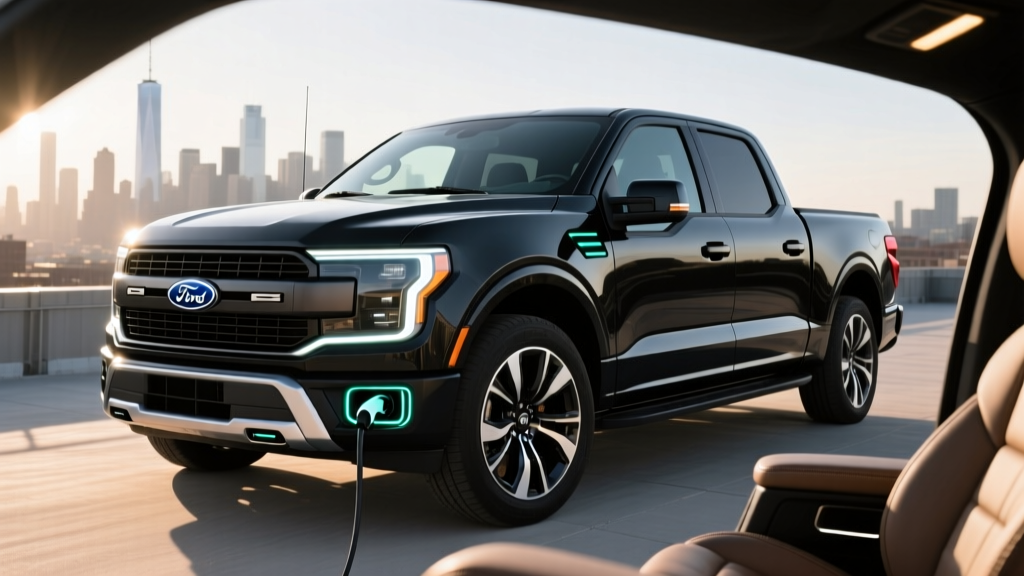
The Ford F-150 Lightning enters the 2026 model year with incremental but meaningful updates that address the two biggest complaints from early adopters: charging speed and highway efficiency. While the platform remains fundamentally the same truck that debuted for 2022, Ford has refined the thermal management system, slightly expanded the Extended Range battery pack, and rolled out software improvements that sharpen both the driving experience and the BlueCruise hands-free system. If you're researching Ford F-150 Lightning updates to decide whether now is the right time to buy, this review covers every spec, real-world number, and ownership cost that matters.
What's New for 2026: Key Ford F-150 Lightning Updates
Ford's 2026 changes are evolutionary, not revolutionary. The headline updates include:
- Extended Range battery bump: Usable capacity rises to approximately 135 kWh (up from ~131 kWh), achieved through cell-level energy-density improvements rather than a pack redesign.
- Improved DC charge curve: Peak charge rate remains 150 kW on the Extended Range pack, but Ford has widened the sustain window — the truck now holds above 120 kW longer before tapering, shaving roughly 2–3 minutes off 10–80% times.
- BlueCruise 1.5: The latest version of Ford's hands-free driver-assist system (SAE Level 2) adds lane-change assist on approved divided highways and improved merge recognition.
- Pro Power Onboard refinements: The available 9.6 kW onboard generator system now includes enhanced circuit-level monitoring through the FordPass app, letting you track individual outlet loads in real time.
- New exterior color and wheel options across the Lariat and Platinum trims, plus a revised center-stack software layout on the 15.5-inch portrait touchscreen.
The Standard Range battery (98 kWh usable, NMC chemistry) and the dual-motor AWD powertrain carry over unchanged. No single-motor RWD variant is offered — every Lightning is AWD.
Range, Efficiency, and Real-World Expectations
The 2026 F-150 Lightning is offered with two battery options. Here's how they stack up on the EPA cycle and in real-world driving:
| Configuration | Battery (Usable kWh) | Chemistry | EPA Range (mi) | MPGe (Combined) | kWh/100 mi |
|---|---|---|---|---|---|
| Standard Range (Pro / XLT) | 98 | NMC | 240 | 68 | 49 |
| Extended Range (XLT / Lariat / Platinum) | 135 | NMC | 320 | 70 | 48 |
The Lightning's efficiency is hampered by physics: it's a 6,500+ lb truck pushing a large frontal area. At 48–49 kWh/100 mi, it consumes significantly more energy per mile than a sedan or crossover EV. This matters most on road trips, where DC fast-charging stops will be more frequent than in a Tesla Model Y or Hyundai Ioniq 5.
Charging Speed: DC Fast Charging and Home Level 2
Charging remains a mixed bag — adequate for most owners, but not class-leading. Here are the exact numbers:
| Charging Level | Standard Range (98 kWh) | Extended Range (135 kWh) |
|---|---|---|
| Level 1 (120V / 12A) | ~2 mi/hr (1.4 kW) | ~2 mi/hr (1.4 kW) |
| Level 2 (240V / 48A) | ~14 mi/hr (11.5 kW) | ~14 mi/hr (11.5 kW) |
| Level 2 (240V / 80A — dual charger) | ~23 mi/hr (19.2 kW) | ~23 mi/hr (19.2 kW) |
| DC Fast Charge (peak) | 120 kW | 150 kW |
| DC 10–80% time | ~44 min | ~41 min |
The Extended Range pack's peak 150 kW rate puts it behind rivals like the Rivian R1T (which can accept over 200 kW on its newer pack) and the Chevrolet Silverado EV (350 kW peak on Max Range trims). Ford's 2026 charge-curve update helps — the truck sustains higher rates deeper into the session — but 10–80% in roughly 41 minutes is still a long stop on a road trip.
At home, the dual onboard charger option (80A / 19.2 kW) is a smart upgrade if your electrical panel supports a 100A circuit. It cuts overnight charging time nearly in half compared to the standard 48A setup. Most Lightning owners will need a Ford Charge Station Pro or equivalent hardwired Level 2 unit installed by a licensed electrician. Budget $1,200–$2,500 for a typical home installation, more if your panel needs an upgrade to 200A service.
The Lightning uses the CCS1 connector for DC fast charging and the J1772 connector for Level 2 AC. Ford has confirmed that future models will adopt the NACS (Tesla) connector, but the 2026 Lightning retains CCS1. Adapters are available for Tesla Supercharger access at V3 stalls (limited to ~150 kW via adapter).
Performance, Towing, and Payload
| Spec | Standard Range | Extended Range |
|---|---|---|
| Powertrain | Dual-motor AWD | Dual-motor AWD |
| Horsepower | 452 hp | 580 hp |
| Torque | 775 lb-ft | 775 lb-ft |
| 0–60 mph | ~5.0 sec | ~3.8 sec |
| Max Towing (w/ Max Tow Pkg) | 7,700 lb | 10,000 lb |
| Max Payload | 2,235 lb | 1,800 lb |
The Extended Range model's 580 hp and 3.8-second 0–60 time make it genuinely quick — quicker than any F-150 short of the Raptor R. But performance buyers should note the payload trade-off: the heavier Extended Range battery drops max payload to 1,800 lb, roughly 400 lb less than the Standard Range truck.
Towing reality check: The 10,000-lb max tow rating is legitimate, but towing at or near that limit crushes range. In independent testing and owner reports, towing a 7,000–8,000 lb trailer at highway speeds reduces range to roughly 100–130 miles on the Extended Range pack. If you tow frequently over long distances, the Lightning works — but plan your charging stops carefully and expect to spend 40+ minutes at each DC fast charger.
Interior, Cargo, and Technology
The Lightning's cabin mirrors the gas F-150's layout, which means it's spacious, functional, and built to a mainstream-truck standard rather than a luxury one.
- Front legroom: 43.9 inches
- Rear legroom (SuperCrew): 43.6 inches
- Bed length: 5.5 ft (standard for all Lightning trims)
- Mega Power Frunk: 14.1 cu ft of lockable, drainable front-trunk storage with 400 lb payload capacity — a genuine differentiator for job-site tool storage or tailgate gear
- Infotainment: SYNC 4A on a 12-inch touchscreen (Pro/XLT) or 15.5-inch portrait screen (Lariat/Platinum), wireless Apple CarPlay and Android Auto
- Driver assist: Ford Co-Pilot360 2.0 standard; BlueCruise 1.5 available on Lariat and standard on Platinum (hands-free driving on 130,000+ miles of pre-mapped divided highways — SAE Level 2, driver must remain attentive)
Pro Power Onboard remains one of the Lightning's most compelling features. The available 9.6 kW system can power tools, appliances, or even serve as a backup home generator (with the Ford Intelligent Backup Power system and a compatible home transfer switch). This transforms the truck into a mobile power station — a capability no gas truck can match without a separate generator.
Drawbacks include a rear seat that doesn't fold flat (it flips up for cargo but doesn't create a level load floor), and interior materials that feel dated compared to the Rivian R1T's more premium cabin. Road noise is noticeable at highway speeds, a byproduct of the truck's size and the absence of engine sound masking.
Pricing, Trims, and Federal Tax Credit Eligibility
The 2026 F-150 Lightning is available in four trims. Pricing reflects MSRP before destination charges:
| Trim | Battery | MSRP | Est. After §30D Credit |
|---|---|---|---|
| Pro (Standard Range) | 98 kWh | $54,995 | ~$47,495* |
| XLT (Standard Range) | 98 kWh | $59,995 | ~$52,495* |
| Lariat (Extended Range) | 135 kWh | $74,995 | ~$67,495* |
| Platinum (Extended Range) | 135 kWh | $94,995 | ~$87,495* |
*Estimated prices assume full $7,500 federal tax credit eligibility. Actual credit depends on individual tax liability, income caps, and battery-sourcing compliance. See details below.
- MSRP cap: Trucks/vans/SUVs must have an MSRP at or below $80,000. The Pro, XLT, and Lariat qualify; the Platinum ($94,995) exceeds the cap and is not eligible.
- Buyer income cap: Modified AGI must not exceed $300,000 (married filing jointly), $225,000 (head of household), or $150,000 (single).
- Battery sourcing: A portion of the credit ($3,750) depends on critical minerals sourcing; another $3,750 depends on battery component manufacturing. Ford sources NMC cells from SK On (Georgia). Sourcing compliance changes annually — verify current-year status on IRS.gov before purchasing.
- Point-of-sale transfer: Eligible buyers can transfer the credit to the dealer at purchase, reducing the out-of-pocket price immediately rather than waiting for tax filing.
How It Compares: Lightning vs. Rivals
The Lightning competes in a growing electric-truck segment. Here's how it stacks up against the two most direct competitors:
| Spec | Ford F-150 Lightning (Ext. Range) | Rivian R1T (Dual-Motor Max) | Chevy Silverado EV (4WT Extended) |
|---|---|---|---|
| EPA Range | 320 mi | 352 mi | 390 mi |
| Peak DC Charge | 150 kW | 220 kW | 350 kW |
| 0–60 mph | 3.8 sec | 3.5 sec | 4.5 sec |
| Max Towing | 10,000 lb | 11,000 lb | 10,000 lb |
| Starting MSRP | $54,995 | $75,900 | $59,900 |
| Frunk | 14.1 cu ft | 11.0 cu ft | 10.7 cu ft |
Warranty and Long-Term Ownership
Ford backs the 2026 Lightning with the following coverage:
- Battery/Powertrain: 8 years / 100,000 miles (whichever comes first), with a capacity-retention threshold of 70% — if the battery degrades below 70% of original capacity within the warranty period, Ford will repair or replace it.
- Bumper-to-bumper: 3 years / 36,000 miles
- Roadside assistance: 5 years / 60,000 miles
The 70% retention threshold is industry-standard and matches what GM and Hyundai offer. Real-world data from 2022–2024 Lightning owners suggests NMC degradation is modest — most trucks are retaining 93–96% of original capacity after two years and 30,000–40,000 miles, based on owner-reported telemetry on forums. Long-term projections at 150,000+ miles remain limited, but the trajectory is encouraging.
For context on battery longevity and chemistry trade-offs, see fueleconomy.gov's EV technology guide.
Frequently Asked Questions
What is the real-world range of the 2026 Ford F-150 Lightning?
The Extended Range model's EPA estimate is 320 miles. In real-world highway driving at 70–75 mph, expect 260–280 miles. In cold weather (below freezing), plan for 210–240 miles. The Standard Range model nets about 190–200 miles on the highway.
How fast does the F-150 Lightning charge?
On a DC fast charger, the Extended Range model peaks at 150 kW and charges from 10–80% in approximately 41 minutes. At home on a 48A Level 2 charger (240V), it adds about 14 miles of range per hour, or 23 mi/hr with the optional 80A dual charger. A full overnight charge on Level 2 takes roughly 10 hours (Standard Range) or 14 hours (Extended Range) at 48A.
Does the 2026 F-150 Lightning qualify for the federal EV tax credit?
The Pro ($54,995), XLT ($59,995), and Lariat ($74,995) trims fall under the $80,000 MSRP cap for trucks and may qualify for up to $7,500 under IRS §30D, subject to buyer income limits and battery-sourcing requirements. The Platinum trim ($94,995) exceeds the MSRP cap and does not qualify. Always verify current-year eligibility on IRS.gov or with a tax professional before purchasing.
Is the F-150 Lightning worth buying vs. the Rivian R1T or Silverado EV?
It depends on your priorities. The Lightning offers the lowest starting price, the largest frunk, and the unique Pro Power Onboard system. The Rivian R1T provides more range, faster charging, and a more refined interior, but costs $20,000+ more. The Chevy Silverado EV charges dramatically faster (up to 350 kW) and offers up to 390 miles of range, but its crew-cab/short-bed configuration is less versatile for some buyers.
Can I tow a trailer with the F-150 Lightning?
Yes — up to 10,000 lb with the Extended Range model and the Max Tow Package. However, towing at or near max capacity cuts range roughly in half (to 100–130 miles on the Extended Range pack). For frequent long-distance towing, an electric truck requires careful route planning around DC fast chargers.
What connector does the 2026 Lightning use?
The 2026 F-150 Lightning uses the CCS1 connector for DC fast charging and J1772 for Level 2 AC charging. Ford has committed to transitioning to NACS (Tesla's connector) on future models, but the 2026 Lightning retains CCS1. A Ford-approved adapter enables access to Tesla V3 Superchargers at up to ~150 kW.