Quick Verdict: Is the 2022 F-150 Lightning Worth It in 2026?
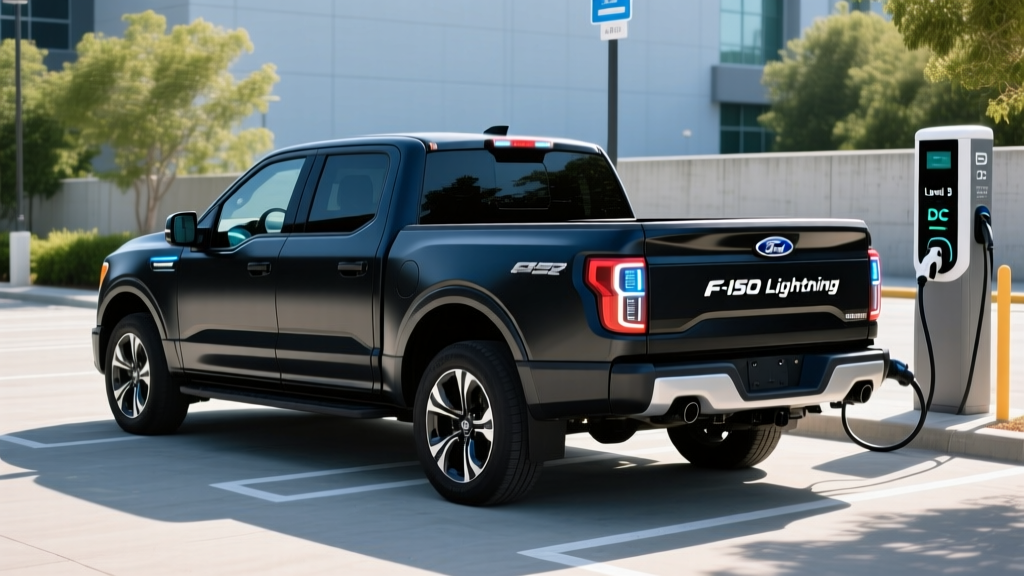
The 2022 Ford F-150 Lightning remains the most practical full-size electric truck on the used market. With EPA ranges of 230 miles (Standard Range, 98 kWh usable) or 320 miles (Extended Range, 131 kWh usable), a 7,700–10,000 lb towing capacity, and a Pro Power Onboard generator, it bridges work utility and daily driving. Expect to pay $32,000–$52,000 on the used market in 2026 depending on trim and battery. It qualifies for the federal used-EV tax credit (up to $4,000) if you meet income caps and the sale price is under $25,000 — a threshold some base trims now approach. Real-world highway range drops to roughly 190–210 miles (Standard) or 250–275 miles (Extended), and towing a 5,000 lb trailer cuts that roughly in half.
Range, Battery, and Real-World Efficiency
The 2022 Lightning shipped with two battery packs, both using NMC (nickel manganese cobalt) chemistry supplied primarily by SK On. The Standard Range pack holds 98 kWh usable; the Extended Range holds 131 kWh usable. Ford paired these with dual motors producing 452 hp / 775 lb-ft (Standard Range) or 580 hp / 775 lb-ft (Extended Range).
EPA Sticker vs. Real-World Range
| Configuration | EPA Range | Real-World Highway (70 mph) | Cold Weather (20°F) | Towing (5,000 lb trailer) |
|---|---|---|---|---|
| Standard Range (98 kWh) | 230 mi | ~190–210 mi | ~155–175 mi | ~100–120 mi |
| Extended Range (131 kWh) | 320 mi | ~250–275 mi | ~200–225 mi | ~135–160 mi |
Sources: fueleconomy.gov, real-world testing aggregation. Cold-weather and towing estimates based on observed 30–35% highway reduction and 45–55% towing reduction typical for full-size electric trucks.
Efficiency for the Extended Range model lands around 2.0–2.2 kWh/mile in mixed driving, translating to roughly 66 MPGe combined per EPA data. That's thirsty by EV standards — the aerodynamic penalty of a full-size truck is real — but competitive with the 2022 Rivian R1T (2.1–2.4 kWh/mile) and far cheaper per mile than a gas F-150 getting 19 MPG combined.
Charging Speed and Infrastructure Reality
Understanding charging requires separating kW (power — how fast energy flows) from kWh (energy — battery capacity). The Lightning's charging capability varies significantly by pack size:
| Charge Level | Standard Range (98 kWh) | Extended Range (131 kWh) |
|---|---|---|
| Level 1 (120V, 1.4 kW) | ~3 mi/hr | ~3 mi/hr |
| Level 2 (240V, 11.5 kW — included mobile charger) | ~16 mi/hr / ~10 hr full | ~16 mi/hr / ~14 hr full |
| Level 2 (240V, 19.2 kW — Ford Charge Station Pro) | ~30 mi/hr / ~5.5 hr full | ~30 mi/hr / ~8 hr full |
| DC Fast Charge (peak) | 120 kW peak / 10–80% in ~44 min | 150 kW peak / 10–80% in ~41 min |
The DC fast charging curve is where reality diverges from marketing. The Extended Range pack peaks near 150 kW only between roughly 15–40% State of Charge, then tapers to ~80 kW by 60% and ~40 kW above 80%. A 10–80% session takes approximately 41 minutes at a 150+ kW station, but a 10–90% session stretches past 60 minutes. This is slower than the Hyundai Ioniq 5 or Tesla Cybertruck, which sustain higher rates. For road trips, plan 35–45 minute stops every 200–250 miles (Extended Range).
Home charging is essential for Lightning ownership. The included 30-amp mobile charger works on a standard NEMA 14-50 outlet, delivering about 16 miles of range per hour — adequate if you drive under 80 miles daily. For faster replenishment, Ford's Charge Station Pro requires a hardwired 100-amp circuit (19.2 kW), which typically costs $1,200–$2,800 installed by a licensed electrician, potentially more if your panel needs a 200-amp service upgrade ($1,500–$3,500).
Towing, Payload, and Work Capability
The 2022 Lightning's headline numbers are impressive: 7,700 lb max towing (Standard Range) or 10,000 lb max towing (Extended Range with Max Trailer Tow Package), and 2,235 lb max payload (Standard Range). The Pro Power Onboard system — available in 2.4 kW or 9.6 kW outputs — turns the truck into a mobile generator, running job-site tools, a campsite, or essential home circuits during outages.
But towing with any electric truck demands honesty about range. Pulling a 5,000 lb enclosed trailer at highway speeds, expect roughly 100–120 miles of range (Standard Range) or 135–160 miles (Extended Range). The Lightning's onboard scale feature and range-recalculating navigation help manage expectations, but a 300-mile towing trip in the Extended Range model will require at least two DC fast-charge stops. For comparison, a gas F-150 with the 3.5L EcoBoost and a 36-gallon tank manages 450+ towing miles before refueling, and refueling takes 5 minutes.
If your work involves frequent heavy towing beyond 150-mile round trips, the Lightning is a compromise. If you tow occasionally or primarily within a 100-mile radius — landscaping, boat to the lake, equipment to a nearby job site — the instant torque, zero idle fuel burn, and onboard power outweigh the range penalty.
EV Truck vs. Gas F-150: Five-Year Cost Comparison
The financial case for the Lightning hinges on fuel and maintenance savings offsetting a higher purchase price. Here's a realistic 5-year / 75,000-mile comparison, using national averages:
| Cost Category | 2022 F-150 Lightning (Extended Range, XLT) | 2022 F-150 Gas (3.5L EcoBoost, XLT) |
|---|---|---|
| Purchase Price (2026 used market / new MSRP) | ~$42,000 (used) / was $71,990 new | ~$38,000 (used) / was $52,555 new |
| Federal Tax Credit | Up to $4,000 (used-EV credit, income-capped) | $0 |
| Fuel / Energy (75,000 mi) | $4,125 (home charging at $0.15/kWh avg) | $14,600 (gas at $3.65/gal, 19 MPG combined) |
| Maintenance (5 yr) | ~$1,800 (tires, cabin filter, wipers, brake fluid) | ~$4,200 (oil changes, filters, spark plugs, brakes, transmission fluid) |
| Insurance (5 yr avg) | ~$11,500 ($2,300/yr — EVs typically 15–20% higher) | ~$9,750 ($1,950/yr) |
| Estimated Depreciation | ~$18,000 (EV trucks depreciating faster currently) | ~$14,000 |
| 5-Year Total Cost | ~$63,425 | ~$66,550 |
Assumptions: 15,000 mi/yr, 80% home charging at $0.15/kWh, 20% DC fast charging at $0.40/kWh. Gas at $3.65/gal national average. Insurance from industry averages. Depreciation estimates based on 2024–2025 used-market trends. Actual costs vary by state, utility rates, and driving patterns.
The Lightning breaks even or slightly wins on total cost over five years, with the margin widening if you have access to cheap overnight electricity (under $0.10/kWh in many markets) or solar panels. The gap narrows if you rely heavily on public DC fast charging, which can cost $0.35–$0.55/kWh — approaching gas-equivalent fueling costs for a truck this heavy.
Battery Longevity, Warranty, and What First-Time Buyers Should Know
Ford warranties the Lightning's battery for 8 years / 100,000 miles against defects and capacity loss below 70% of original capacity, per Ford's official specifications. The NMC chemistry degrades faster in the first 1–2 years (typically 3–5%), then stabilizes to roughly 1–2% per year under normal use. At 100,000 miles, expect approximately 88–92% of original capacity — well above the warranty threshold.
To maximize longevity: avoid routinely charging to 100% on DC fast chargers (daily charging to 80–90% on Level 2 is ideal), minimize extended storage at very high or very low State of Charge, and use preconditioning before fast-charging sessions in cold weather.
Common Misconceptions About the 2022 Lightning
| Myth | Fact |
|---|---|
| "Electric trucks can't tow anything useful." | The Lightning tows up to 10,000 lbs — but range drops 45–55% while towing. Plan charging stops for long hauls. |
| "The battery will need a $20,000 replacement in 5 years." | NMC degradation data shows ~8–12% total loss over 8 years. Replacement is covered under warranty if it drops below 70%. |
| "You can charge it from any regular outlet." | Level 1 (120V) adds only ~3 miles per hour — 36 miles overnight. A 240V Level 2 circuit is practically mandatory for daily use. |
| "The $7,500 tax credit applies to used Lightnings." | The §30D new-vehicle credit doesn't apply to used sales. The used-EV credit (§25E) offers up to $4,000, capped at 30% of sale price, with income limits ($75K single / $150K joint) and a $25,000 max vehicle price. Check current IRS rules. |
| "It's self-driving with BlueCruise." | BlueCruise is an SAE Level 2 driver-assist system. You must remain engaged, hands may be off on pre-mapped highways, but eyes must stay on the road. |
Decision Framework: Is the 2022 Lightning the Right Truck for You?
Choose the 2022 F-150 Lightning If:
- You can charge at home. A Level 2 (240V) installation is nearly essential. Without it, daily ownership becomes frustrating.
- Your daily driving is under 200 miles round-trip. The Extended Range model handles this easily, even in cold weather, with range to spare.
- You tow occasionally within ~100 miles. Job-site runs, boat ramps, and local trailer hauls are ideal use cases.
- You value onboard power. The 9.6 kW Pro Power Onboard replaces a standalone generator for job sites, tailgating, or home backup.
- You want lower running costs. Electricity at $0.15/kWh costs roughly $0.055/mile vs. $0.19/mile for gas at 19 MPG — saving ~$2,000/year at 15,000 miles.
Look Elsewhere If:
- You regularly tow over 200+ miles. The charging-stop penalty (2–3 stops for a 400-mile towing trip) makes gas or diesel more practical.
- You lack home charging access and your area has sparse public infrastructure. Relying solely on DC fast charging erodes cost savings and adds daily friction.
- You live in extreme cold (frequent sub-10°F) and need full range. Expect 30–35% range loss. A PHEV or gas truck may serve you better in deep-winter climates without a garage.
- Bed payload is paramount. The Lightning's battery adds ~1,800 lbs, reducing payload to ~2,235 lbs max (Standard Range) vs. ~3,300 lbs for some gas F-150 configurations.
Frequently Asked Questions
What is the real-world range of the 2022 F-150 Lightning Extended Range?
The EPA rates it at 320 miles. In real-world highway driving at 70 mph, expect 250–275 miles. In cold weather (20°F), expect 200–225 miles. Towing a 5,000 lb trailer reduces range to approximately 135–160 miles.
How long does it take to charge the Lightning at home?
On a standard 240V / 30-amp outlet with the included mobile charger (11.5 kW), the Extended Range pack charges in roughly 14 hours from empty. With Ford's Charge Station Pro (19.2 kW, hardwired 100-amp circuit), that drops to about 8 hours. Most owners charge overnight and never start with an empty battery.
Does the 2022 Lightning qualify for any tax credit in 2026?
As a used vehicle, it may qualify for the federal used clean vehicle credit (§25E) — up to $4,000 or 30% of the sale price, whichever is less. Eligibility requires: buyer income under $75,000 (single) or $150,000 (joint), vehicle sale price at or below $25,000, purchase from a licensed dealer, and the vehicle must be at least 2 model years old. The $25,000 price cap limits eligibility to base Pro and some XLT trims on the used market. Consult a tax professional and review current IRS guidance.
How does the Lightning compare to the Rivian R1T or Chevy Silverado EV?
The 2022 Rivian R1T is more off-road capable and charges faster (peak 220 kW), but it's a smaller midsize truck with a smaller bed and higher used prices ($45,000–$65,000). The Chevy Silverado EV (introduced for 2024, not available as a 2022 model) offers up to 400 miles EPA in top trims and 200+ kW DC charging, but was not in production in 2022. The Lightning occupies a unique position as the only full-size, traditional-body electric truck from that model year.
What does maintenance cost compared to a gas F-150?
Significantly less. There are no oil changes, no spark plugs, no transmission fluid, no exhaust system, and regenerative braking extends brake-pad life to 100,000+ miles. Expect to spend roughly $350–$400/year on tires (EVs wear tires faster due to instant torque and weight), cabin air filters, wiper fluid, and brake inspections — versus $800–$1,000/year for a gas F-150's combined scheduled maintenance.
Can the Lightning power my house during an outage?
Yes, with the available Ford Intelligent Backup Power system and a compatible Home Integration System (installed by a licensed electrician, ~$3,500–$5,000 additional). The 9.6 kW Pro Power Onboard can supply up to 9,600 watts continuously to your home panel, running essentials (refrigerator, HVAC blower, lights, internet) for approximately 3 days on a full Extended Range battery, or indefinitely if paired with solar and managed load.