Quick Verdict: The Electric Truck That Still Sets the Bar
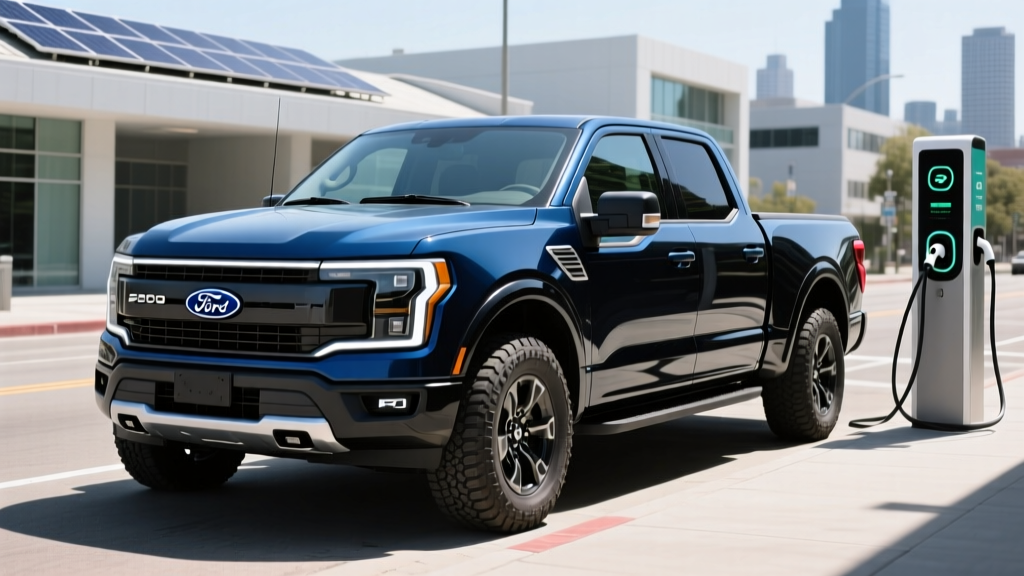
Three years after its debut, the Ford F-150 Lightning remains the benchmark full-size electric pickup — not because it's the longest-range or the quickest, but because Ford got the fundamentals right: a usable bed, a front trunk you can actually load, a ride quality that embarrasses the gas F-150, and DC fast-charging that holds strong on road trips. The 2026 model year brings minor trim reshuffling and updated BlueCruise mapping, but the powertrain story is unchanged. If you're shopping a Lightning today, here are the numbers that matter.
| Spec | Value |
|---|---|
| EPA Range | 320 miles (Extended Range); 240 mi (Standard Range) |
| Battery (usable) | 131 kWh (Extended); 98 kWh (Standard) |
| Chemistry | NMC (nickel-manganese-cobalt) pouch cells, SK On |
| Peak DC Fast Charge | 150 kW (Extended Range) |
| 10–80% DC Time | ~41 minutes (Extended Range) |
| Level 2 Home Charge | 19.2 kW / 80A (Charge Station Pro); ~30 mi/hr |
| 0–60 mph | ~3.8 seconds (Extended Range, dual-motor) |
| Horsepower / Torque | 580 hp / 775 lb-ft (Extended Range) |
| Drivetrain | Dual-motor AWD, standard on all trims |
| Max Towing | 10,000 lbs (Extended Range, Max Tow Pkg) |
| MPGe (combined) | 70 MPGe / 48 kWh/100mi (Platinum 20" wheels) |
| Base MSRP | ~$54,995 (Pro Std Range); ~$79,995 (Platinum Ext Range) |
| Battery Warranty | 8 years / 100,000 miles (≥70% retention) |
Range Reality Check: EPA Sticker vs. What You'll Actually See
The Extended Range Lightning carries an EPA-estimated 320 miles on a full charge. That number is measured on a mixed city/highway cycle at moderate temperatures — useful for comparison shopping, less useful for predicting your Tuesday commute in January.
- City/suburban, 55–65°F: 300–330 mi (regen-heavy driving recaptures energy)
- Highway, 70–75 mph, 70°F: 250–275 mi (aerodynamic drag dominates a 6,500-lb truck)
- Highway, 30°F, heater on: 200–230 mi (battery heating + cabin heat cut range ~30%)
- Towing 7,000-lb trailer, 65 mph: 130–160 mi (plan charging stops every 2 hours)
The Standard Range pack (240 mi EPA) compresses these figures proportionally — expect ~185–200 highway miles in fair weather, ~140 in winter.
The Lightning's resistance heat pump (standard on Lariat and above) helps in mild cold but doesn't match the efficiency of a full vapor-injection system like the Hyundai Ioniq 5's. If you live north of I-80, budget 25–30% off the EPA number for December through February.
Charging: DC Fast, Level 2, and the Curve You Need to Know
Ford quotes 150 kW peak DC fast-charge capability on the Extended Range pack. That peak holds roughly from 15% to 55% state of charge before tapering — a classic NMC charge curve. Expect 10–80% in about 41 minutes on a 150 kW or higher CCS/NACS station. Past 80%, the rate drops sharply to protect the cells; a full 80–100% top-off can add another 35+ minutes.
| Level | Power | Miles Added per Hour | Notes |
|---|---|---|---|
| Level 1 (120V outlet) | ~1.4 kW | ~2–3 mi/hr | Emergency/top-off only; ~100 hr for full charge |
| Level 2 (240V, 32A mobile) | 7.7 kW | ~13 mi/hr | Included mobile cord; overnight-friendly for low-mileage days |
| Level 2 (240V, 48A Wall Connector) | 11.5 kW | ~19 mi/hr | Good nightly routine for 60–80 mi/day drivers |
| Level 2 (240V, 80A Charge Station Pro) | 19.2 kW | ~30 mi/hr | Requires 100A dedicated circuit; full overnight fill |
| DC Fast (CCS/NACS) | 150 kW peak | ~200+ mi in 30 min (10–55%) | Tapers above 60% SoC |
Two practical notes from ownership. First, the Charge Station Pro's 80A draw demands a 100A breaker and likely a panel upgrade in older homes — budget $1,500–$3,500 for the full install (equipment + electrician + permit) if your panel is maxed at 200A. Second, Ford added NACS (Tesla-style) charge ports as standard for 2025+ models, unlocking the Supercharger network with no adapter. For 2022–2024 CCS-port Lightnings, Ford's Fast Charging Adapter is required for Supercharger access.
Performance, Ride, and the Weight Problem Nobody Talks About
The dual-motor AWD powertrain is standard across all trims — no rear-wheel-drive option. Standard Range models make 452 hp and 775 lb-ft; Extended Range bumps that to 580 hp with the same torque figure. The 0–60 sprint clocks in around 3.8 seconds for the Extended Range, which is genuinely startling in a truck that tips the scales above 6,500 pounds.
But mass is the Lightning's hidden tax. That curb weight — roughly 6,200 lbs Standard Range, 6,700+ lbs Extended Range — shows up in three places:
- Tire wear: Expect 25,000–35,000 miles from the OEM all-seasons, well below a gas F-150. Budget for premium replacement rubber.
- Brake feel: Regen handles most deceleration, but the friction brakes can feel grabby in the transition zone. One-pedal driving is available and effective.
- Payload/towing trade-off: Max payload tops out around 2,235 lbs (Pro Std Range). With a 7,500-lb trailer hooked up, you're near GVWR — plan cargo carefully.
The independent rear suspension, though, is the Lightning's secret weapon. Where the gas F-150 hops over expansion joints, the Lightning glides. Around town and on broken pavement, it rides better than any body-on-frame truck has a right to.
Cargo, Mega Power Frunk, and Interior Space
The 400-liter (14.1 cu ft) Mega Power Frunk remains the Lightning's most practical party trick. It's lockable, weather-sealed, drainable, and has four 120V outlets plus USB-C. Groceries, tools, a weekend's camping gear — it swallows what a gas truck's engine bay would never accommodate. Pro Power Onboard (available 2.4 kW or 9.6 kW) turns the truck into a mobile generator for job sites or tailgates.
| Measurement | Value |
|---|---|
| Frunk volume | 14.1 cu ft (400 L) |
| Bed length (5.5' Styleside) | 67.1 inches |
| Bed volume | 52.8 cu ft |
| Max payload | 2,235 lbs (Pro Std Range) |
| Max towing | 10,000 lbs (Ext Range + Max Tow Pkg) |
| Front legroom | 43.9 in |
| Rear legroom | 43.6 in |
| Seating | 5 passengers (SuperCrew only) |
One knock: Ford only offers the Lightning in SuperCrew with the 5.5-foot bed. If you need an 8-foot bed or a regular cab for fleet work, you're still shopping the gas F-150 or a competitor.
Pricing, Trims, and Federal Tax Credit Eligibility
The 2026 F-150 Lightning lineup spans four trims. Note that MSRP figures include destination but exclude dealer options and state fees:
| Trim | Battery | MSRP (est.) | §30D Credit Eligibility |
|---|---|---|---|
| Pro | Standard Range (98 kWh) | ~$54,995 | Eligible up to $7,500 — verify battery sourcing + income |
| XLT | Std / Ext Range | $62,995 – $77,995 | Eligible (under $80K truck MSRP cap) |
| Lariat | Extended Range | ~$76,995 | Eligible (under $80K truck MSRP cap) |
| Platinum | Extended Range | ~$79,995 | Borderline — options can push over $80K cap |
IRS §30D rules to verify before you buy:
- MSRP cap: Trucks/vans must be ≤$80,000 MSRP (base + factory options; destination excluded). A loaded Platinum with packages can cross this line.
- Buyer income cap: MAGI ≤$150K single / $300K joint / $225K head of household.
- Battery sourcing: Critical minerals and battery components must meet phased-in domestic/free-trade thresholds — percentages tighten yearly. Confirm current-year compliance at IRS.gov clean vehicle credits.
- Point-of-sale transfer: You can apply the credit as a down-payment reduction at the dealer (effective 2024+). The dealer must be IRS-registered.
- Assembly: Final assembly must be in North America (Lightning qualifies — built in Dearborn, MI).
Because sourcing rules shift annually, do not assume the credit applies. Ask the dealer for the vehicle's IRS eligibility report and cross-check with your tax professional before signing.
Tech, Driver Assists, and What's Missing
The 15.5-inch portrait touchscreen (SYNC 4A on Lariat/Platinum) handles infotainment cleanly, with wireless CarPlay/Android Auto and native EV route planning that factors in charger availability and battery preconditioning. The 12-inch digital cluster is legible in direct sun.
Ford BlueCruise — a Level 2 hands-free highway assist on pre-mapped divided roads — is standard on Platinum and available on Lariat. Important clarity: BlueCruise is not self-driving. The system requires an attentive driver with eyes on the road; a driver-facing camera enforces this. It's excellent on long interstate stretches, but it won't handle construction zones, surface streets, or unmapped routes. SAE Level 2 means you remain responsible for every input.
Notable drawbacks:
- No over-the-air range unlocks or meaningful powertrain updates since launch — Ford's OTA game lags Tesla and Rivian.
- The Intelligent Backup Power (V2H home backup) requires the Charge Station Pro + a separate Home Integration System (~$3,895 + install), which adds up fast.
- Rear camera mirror is unavailable; the traditional mirror blocks the bed when loaded.
- Best-in-class frunk volume (14.1 cu ft)
- Independent rear suspension = superior ride quality
- Pro Power Onboard (up to 9.6 kW) for job sites & backup
- Strong DC charging curve; NACS port on 2025+ models
- Qualifies for §30D credit on most trims
- Quiet, refined cabin at highway speeds
- Heavy curb weight eats tires and limits payload
- Towing range drops to ~130–160 mi at highway speeds
- Only SuperCrew / 5.5' bed configuration available
- Platinum trim risks exceeding $80K MSRP credit cap
- BlueCruise coverage area still limited vs. Super Cruise
- V2H home backup adds ~$5K+ in equipment + install
Who Should Buy the Lightning (and Who Shouldn't)
Buy it if: You commute 40–100 miles daily, have home Level 2 charging, want a true truck bed + frunk for gear, and rarely tow more than 5,000 lbs. It's also the right call for homeowners who want Pro Power Onboard as a soft generator substitute during outages.
Look elsewhere if: You regularly tow heavy (7,500+ lbs) over long distances — the Rivian R1T's tri-motor and the Silverado EV's larger pack handle towing duty with more range margin. If you need an 8-foot bed or commercial fleet upfitting, stick with the gas F-150 PowerBoost hybrid until Ford expands Lightning body styles. And if your budget caps at $45K, the used Lightning market or a Maverick hybrid may fit better.
Frequently Asked Questions
What is the real-world range of the F-150 Lightning?
The Extended Range (320 mi EPA) delivers ~250–275 highway miles in fair weather and ~200–230 in winter. Standard Range (240 mi EPA) scales down proportionally. City driving with regen often matches or beats the EPA sticker.
How fast does the Lightning charge at home and on the road?
DC fast-charging peaks at 150 kW, with a 10–80% session taking ~41 minutes on the Extended Range pack. At home on a 19.2 kW / 80A Charge Station Pro, you'll add about 30 miles per hour of charging — enough to fully replenish overnight.
How much does the Lightning cost after the federal tax credit?
A 2026 Pro Standard Range at ~$54,995 MSRP could net to ~$47,495 after the full $7,500 §30D credit, assuming you meet income limits, battery sourcing requirements, and the $80K truck MSRP cap. Always verify eligibility on IRS.gov and with a tax professional before purchase.
Is the F-150 Lightning worth buying vs. the Rivian R1T or Silverado EV?
The Lightning wins on price, frunk utility, and ride quality. The R1T offers more range (up to ~410 mi Max Pack), a gear tunnel, and better off-road chops but starts ~$15K higher. The Silverado EV (4WT and RST) offers a longer bed option and available 400+ mile range but is pricier and less refined in ride. For most suburban truck owners, the Lightning's value proposition still leads.
Does the F-150 Lightning qualify for the $7,500 federal EV tax credit?
Most trims qualify on MSRP (under the $80K truck cap) and North American assembly. Eligibility still depends on your MAGI (≤$300K joint / $150K single), the vehicle's battery critical-mineral and component sourcing percentages for the current tax year, and the dealer's IRS registration for point-of-sale transfer. Confirm via the IRS clean vehicle credit page.
What's the battery warranty on the Lightning?
Ford covers the high-voltage battery for 8 years or 100,000 miles against defects and capacity loss below 70% of original. The powertrain carries the same 8-year/100,000-mile coverage — competitive with the segment.
Can the Lightning power my house during an outage?
Yes, via Ford Intelligent Backup Power, but it requires the 80A Charge Station Pro plus the Home Integration System (~$3,895) and a licensed electrician to install a transfer switch. Total installed cost can exceed $7,000. At 9.6 kW output, a fully charged Extended Range pack can power an average home for roughly 3 days.