Quick Verdict: The F-150 That Eliminates Range Anxiety Entirely
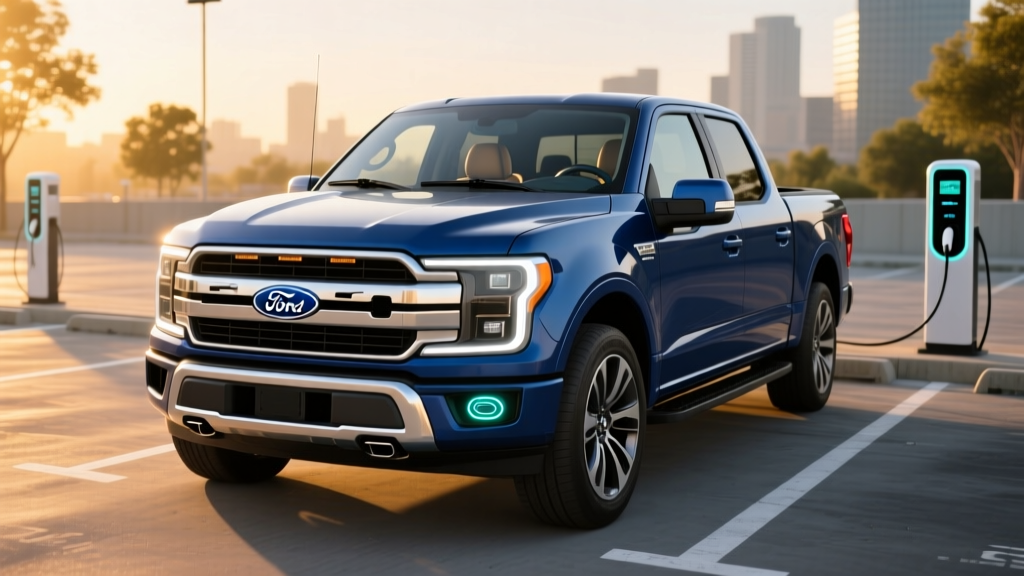
The 2026 Ford F-150 EREV (Extended-Range Electric Vehicle) is not a plug-in hybrid in the traditional sense, and it's not a battery-electric truck with a backup plan. It's a series-hybrid architecture where the wheels are always driven by electric motors, while a turbocharged 2.7-liter EcoBoost V6 acts exclusively as an onboard generator. The result: 42 miles of pure electric driving from a modest battery, plus a gasoline generator that extends total range past 700 miles — all while delivering the instant torque and one-pedal driving feel of a full BEV.
For truck buyers who need towing capability, job-site presence, and cross-country range without relying on charging infrastructure, the F-150 EREV occupies a unique niche. It's heavier and more complex than the F-150 Lightning, and it's thirstier than a conventional hybrid when the generator kicks in. But for the right use case — rural owners, fleet operators, and frequent towers who can't guarantee charger access — this powertrain solves problems that neither a pure EV nor a gas truck can address alone.
| Specification | 2026 F-150 EREV |
|---|---|
| Powertrain | Series-hybrid EREV: dual electric motors + 2.7L EcoBoost V6 generator |
| Total System Output | 563 hp / 775 lb-ft torque |
| Drivetrain | AWD (dual-motor) |
| 0–60 mph | 4.8 seconds |
| Battery Capacity | 38.0 kWh usable (NMC lithium-ion) |
| EPA Electric-Only Range | 42 miles |
| Total Range (Electric + Generator) | ~720 miles |
| EPA Combined Fuel Economy (generator active) | 24 MPG |
| MPGe (electric mode) | 82 MPGe |
| Max DC Fast Charge | 50 kW |
| 10–80% DC Charge Time | ~38 minutes |
| Level 2 Home Charge Rate | 11.5 kW (~25 mi/hr) |
| Max Towing Capacity | 10,200 lbs |
| Max Payload | 1,840 lbs |
| Starting MSRP | $59,995 (Lariat trim) |
| Battery Warranty | 8 years / 100,000 miles |
| Powertrain Warranty | 5 years / 60,000 miles |
Range, Efficiency, and the Real-World Reality
Real-World Expectation: 32–38 miles in mixed driving; 28–33 miles at sustained 70+ mph highway speeds; 25–30 miles in sub-freezing temperatures with cabin heat active.
Total System Range (EV + Generator): ~720 miles combined
Real-World Total Range: ~620–680 miles with mixed highway/towing use; drops to ~520–560 miles when towing 7,000+ lbs on the generator.
The F-150 EREV's 38.0 kWh NMC battery pack is intentionally modest. Ford engineered it for daily commuting and job-site electric operation, not for 200-mile electric road trips. On a full charge, most owners will see 35–38 miles before the 2.7L EcoBoost generator silently starts up to maintain the battery's state of charge. In city driving with frequent regenerative braking, you can stretch that to the full 42-mile EPA estimate — and some hypermilers report 45+ miles in stop-and-go traffic.
Once the generator engages, the truck operates as a series hybrid. The engine never mechanically connects to the wheels; it spins at its most efficient RPM to produce electricity that either feeds the motors directly or tops off the battery. This yields a respectable 24 MPG combined on gasoline — a meaningful improvement over the gas-only F-150 2.7L EcoBoost's ~22 MPG combined, according to fueleconomy.gov, though it falls short of the F-150 PowerBoost hybrid's 25 MPG combined.
Efficiency drops predictably under load. Towing a 6,000-pound trailer on the highway, expect the generator to consume fuel at roughly 14–16 MPG. That's still competitive with gas trucks under similar loads, but it's a scenario where the Lightning's all-electric drivetrain avoids fuel cost entirely — if you can find a charger at your destination.
Charging Speeds: Home, DC Fast, and the 50 kW Ceiling
Charging is where the EREV's smaller battery becomes both an advantage and a limitation. The 38.0 kWh pack charges fully in under two hours on a Level 2 home charger, making overnight top-ups trivial. But the 50 kW DC fast-charge ceiling means road-trip charging stops are longer than you'd expect from a modern BEV.
| Charging Level | Power | Charge Time (10–80%) | Miles Added per Hour |
|---|---|---|---|
| Level 1 (120V household) | 1.4 kW | ~18 hours | ~4 mi/hr |
| Level 2 (240V, 48A) | 11.5 kW | ~2.5 hours (full) | ~25 mi/hr (EV range) |
| DC Fast Charge | 50 kW peak | ~38 minutes | ~55 mi/hr (EV range) |
The 50 kW peak DC charge rate will disappoint buyers accustomed to the F-150 Lightning's 150+ kW capability. Ford limited the charge rate partly due to the smaller battery's thermal constraints and partly because the EREV's value proposition doesn't hinge on fast charging — the gasoline generator eliminates the urgency. In practice, most EREV owners will charge at home overnight and rarely use DC fast chargers, since the 42-mile electric range covers most daily errands.
For home charging, the 11.5 kW onboard charger is robust. A full charge from empty takes roughly 3.5 hours on a 48-amp Level 2 circuit (like the Ford Charge Station Pro), meaning you can easily replenish the battery during a workday or between evening errands. Installation of a 240V/60A circuit typically costs $800–$2,000 depending on panel proximity, according to typical electrician estimates — though older homes may require a $2,000–$4,000 panel upgrade to support the additional load.
Performance, Towing, and Drivetrain Dynamics
The dual-motor AWD system delivers 563 horsepower and a massive 775 lb-ft of torque to all four wheels. Because electric motors provide peak torque from zero RPM, the F-150 EREV launches with authority — the 4.8-second 0–60 mph time beats the gas-only F-150 3.5L EcoBoost and matches the Lightning XLT. The single-speed reduction gear means no shift interruptions, just a relentless surge of acceleration that makes highway merging effortless even with a loaded bed.
Towing capacity reaches 10,200 lbs when properly equipped (Max Tow Package, Lariat or higher trim), placing it between the Lightning's 10,000-lb limit and the gas F-150's 14,000-lb maximum. The EREV's advantage over the Lightning for towing is range security: you won't watch your range plummet at a mile-per-kilowatt-hour rate on a long haul. The generator ensures you'll reach your destination, though fuel stops will be more frequent under heavy loads.
Payload capacity of 1,840 lbs is adequate for most job-site duties, though the battery pack's weight (approximately 650 lbs) eats into what a gas-only F-150 can carry. The truck's curb weight of roughly 6,100 lbs also impacts tire wear and braking distances — expect slightly longer stops and more frequent tire rotations compared to lighter F-150 variants.
Pricing, Trim Levels, and Federal Tax Credit Eligibility
| Trim | Base MSRP | As-Tested (Typical Options) | Est. Price After §30D Credit |
|---|---|---|---|
| Lariat EREV | $59,995 | $64,500 | $52,495* |
| Platinum EREV | $69,995 | $76,200 | $62,495* |
| King Ranch EREV | $74,995 | $81,000 | $67,495* |
* Assumes full $7,500 §30D credit eligibility. Actual credit varies by buyer income, battery sourcing, and point-of-sale transfer rules. Consult a tax professional and review current IRS §30D guidelines.
The F-150 EREV launches exclusively in Lariat trim and above, reflecting Ford's positioning of the powertrain as a premium option. The $59,995 starting price places it $4,000–$6,000 above comparable Lightning trims but $5,000–$8,000 below the F-150 PowerBoost hybrid at equivalent trim levels.
- Vehicle MSRP Cap: Trucks/vans/SUVs must have an MSRP ≤ $80,000 (all EREV trims qualify at base; loaded Platinum/King Ranch may exceed cap)
- Buyner Income Cap: Modified AGI ≤ $150,000 (single) / $225,000 (head of household) / $300,000 (joint)
- Battery Sourcing: Critical minerals and battery components must meet phased-in percentages from US/FTA partners — verify current-year compliance on the VIN at fueleconomy.gov
- Point-of-Sale Transfer: Eligible buyers can transfer the credit to the dealer at purchase, reducing the purchase price directly rather than waiting for a tax refund
- One Vehicle Per 3 Years: §30D limits buyers to one new clean vehicle credit per 36-month period
The EREV's battery is smaller than the Lightning's, which may actually simplify compliance with §30D's critical-mineral sourcing requirements. However, credit eligibility changes annually as sourcing thresholds tighten. Always verify your specific VIN's eligibility before purchase.
Interior, Technology, and Daily Livability
The EREV shares the F-150's current-generation interior, which remains one of the most practical and tech-forward truck cabins on the market. The 12-inch touchscreen running SYNC 4A is standard, with wireless Apple CarPlay and Android Auto. A 12-inch digital instrument cluster includes a dedicated EREV power-flow display showing real-time energy routing between battery, generator, and motors — genuinely useful for understanding when you're burning fuel versus running on electrons.
Cargo dimensions match the gas and Lightning F-150: the 5.5-foot Styleside bed offers 52.8 cu ft of volume, while the 6.5-foot bed provides 62.3 cu ft. The EREV does not include a front trunk (frunk) — the generator and power electronics occupy that space. This is a meaningful trade-off versus the Lightning, whose 14.1 cu ft Mega Power Frunk is a standout feature for secure, weatherproof storage.
Passenger space is unchanged: 43.9 inches of front legroom and 43.6 inches of rear legroom in the SuperCrew configuration, with 66.7 cu ft of total passenger volume. Five adults fit comfortably for long trips.
Driver assistance comes via Ford's Co-Pilot360 2.0 suite, including adaptive cruise control with stop-and-go, lane centering, evasive steering assist, and intersection brake assist. BlueCruise hands-free highway driving is available as a subscription ($75/month or $2,100 for three years) on pre-mapped divided highways. This is SAE Level 2 automation — the driver must remain attentive and keep eyes on the road at all times. It is not self-driving.
Pros, Cons, and the Bottom Line
- 720+ mile total range eliminates charging dependency on long trips
- 42 miles of zero-emission electric driving covers most daily commutes
- 563 hp / 775 lb-ft with instant electric torque delivery
- 10,200-lb towing without range anxiety
- Pro Power Onboard (up to 7.2 kW) turns the truck into a mobile generator
- Home charging fully replenishes battery in ~3.5 hours
- F-150 parts availability and dealer network nationwide
- 50 kW DC fast-charge rate is slow by 2026 BEV standards
- No frunk — generator occupies front cargo space
- 42-mile EV range is shorter than most PHEV SUVs
- 24 MPG on generator is only marginally better than gas-only F-150
- $59,995 starting price is steep for a mid-trim F-150
- Added complexity: two powertrains to maintain long-term
- Heavier curb weight impacts tire wear and payload
Who Should Buy the F-150 EREV — and Who Shouldn't
Choose the F-150 EREV if:
- You live in a rural area or charging desert where DC fast chargers are sparse
- You tow frequently and can't risk running out of charge mid-haul
- You need a worksite power source (Pro Power Onboard) and daily electric commuting
- Your daily commute is under 40 miles round-trip, allowing mostly electric operation
- You want electric driving feel without committing to full BEV ownership
Choose the F-150 Lightning instead if:
- You have reliable home charging and your trips rarely exceed 230 miles
- You want a frunk and lower operating costs per mile
- You prioritize maximum DC fast-charge speed for road trips
- You want a simpler powertrain with fewer long-term maintenance points
Choose the F-150 PowerBoost Hybrid if:
- You want maximum towing (12,700 lbs) and don't need electric-only driving
- Your budget is tighter — PowerBoost starts ~$5,000 lower
- You prefer a proven, less complex hybrid system
Frequently Asked Questions
What is the real-world range of the Ford F-150 EREV?
The EPA rates the EREV at 42 miles of electric-only range and approximately 720 miles of total range (electric + generator). In real-world mixed driving, expect 35–38 electric miles and 620–680 total miles. Highway driving at 75+ mph and cold weather below 32°F reduce electric range to 25–33 miles. Towing significantly impacts total range, dropping it to 520–560 miles under heavy loads.
How fast does the F-150 EREV charge?
On a Level 2 home charger (11.5 kW), the 38 kWh battery charges fully in approximately 3.5 hours, adding about 25 miles of EV range per hour. DC fast charging peaks at 50 kW, reaching 10–80% in roughly 38 minutes. Level 1 (120V) charging is impractical for daily use at 1.4 kW, requiring about 18 hours for a full charge.
Does the F-150 EREV qualify for the federal EV tax credit?
The F-150 EREV may qualify for up to $7,500 under IRS §30D, depending on the buyer's income (≤$150K single / $300K joint), the vehicle's MSRP (≤$80,000 for trucks), and battery component/critical-mineral sourcing compliance. Eligibility thresholds tighten annually. Verify your specific VIN at fueleconomy.gov and consult a tax professional. The credit can be transferred to the dealer at point of sale to reduce your purchase price directly.
How does the EREV differ from the F-150 Lightning and PowerBoost Hybrid?
The Lightning is a battery-electric truck (78–230 miles EPA range, zero gas). The PowerBoost is a parallel hybrid (the gas engine can drive the wheels directly, 25 MPG combined, no plug-in capability). The EREV is a series hybrid: electric motors always drive the wheels, and the gas engine only generates electricity. This gives the EREV the driving feel of an EV with the range security of a gas truck.
Can I use the F-150 EREV to power my home or job site?
Yes. The EREV includes Ford's Pro Power Onboard system, offering up to 7.2 kW of exportable 120V/240V power through bed-mounted outlets. This can run power tools, lighting, and appliances on a job site, or provide emergency home backup power during outages. The generator and battery together can sustain 7.2 kW output for extended periods — far longer than the Lightning's battery-only Pro Power system.
What is the battery warranty on the F-150 EREV?
Ford covers the EREV's high-voltage battery for 8 years or 100,000 miles, whichever comes first, against defects and capacity loss below 70% of original capacity. The powertrain (including the generator engine and electric motors) is covered for 5 years or 60,000 miles. These terms are consistent with industry standards for electrified vehicles.
Is the F-150 EREV worth buying over key competitors?
The EREV has no direct competitor in the full-size truck segment as of 2026 — the Ram 1500 REV is battery-electric, and the Chevy Silverado PHEV has not materialized. Its closest rival is arguably the F-150 Lightning for EV-intent truck buyers and the F-150 PowerBoost for hybrid-intent buyers. The EREV earns its premium if you need guaranteed long range without charging stops, daily electric commuting, and robust worksite power. If any one of those needs doesn't apply, the Lightning or PowerBoost likely offers better value.