The Quick Answer: Is Ford Killing the F-150 Lightning?
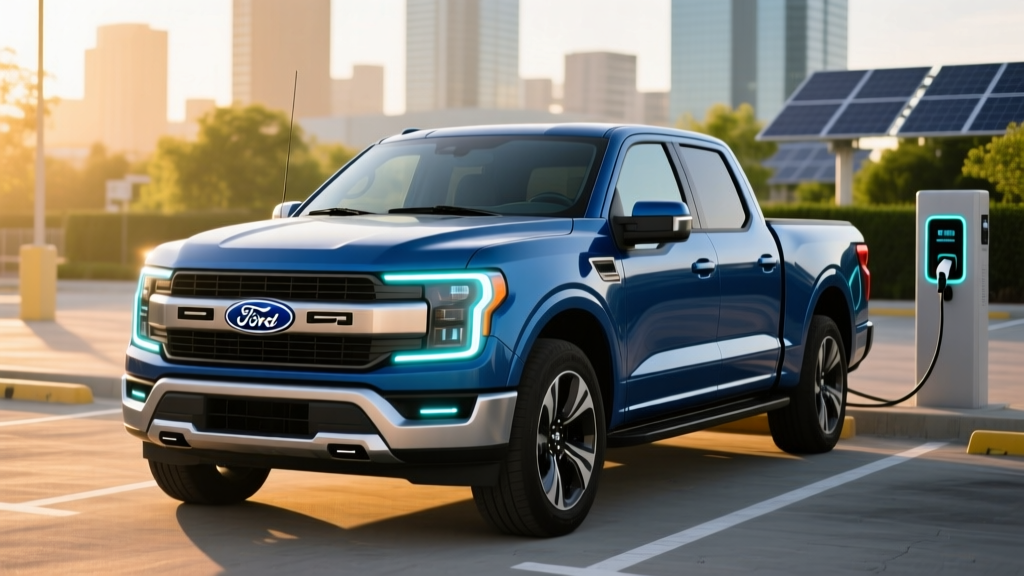
As of early 2026, Ford has not officially canceled the F-150 Lightning, but the company is actively restructuring its electric-vehicle strategy. Reports that Ford considers scrapping electric version of F-150 truck stem from the automaker's shift toward smaller, more affordable EVs and next-generation platforms. The current F-150 Lightning remains on sale for the 2026 model year with updated trims and pricing, but its long-term future is uncertain. If you're considering one, now may be the best window to buy before potential discontinuation shrinks inventory and incentives.
What's Actually Happening with the F-150 Lightning in 2026
Ford's EV division, Model e, has been under financial pressure. The company reported billions in EV-related losses through 2024 and 2025, driven by high battery costs and softer-than-expected demand for large electric trucks. CEO Jim Farley has signaled a pivot toward smaller, lower-cost electric vehicles built on a new universal platform — leaving the future of the current-generation Lightning in question.
Here's what we know for certain about the 2026 F-150 Lightning:
- It remains available in Pro, XLT, Lariat, and Platinum trims
- The Standard Range battery (98 kWh usable, LFP chemistry) and Extended Range battery (131 kWh usable, NMC chemistry) are both offered
- EPA range ratings carry over: 240 miles (Standard Range) and 320 miles (Extended Range)
- Starting MSRP for the 2026 Pro trim is approximately $54,995 before destination
What remains uncertain is whether Ford will greenlight a next-generation Lightning or redirect those engineering resources to smaller EVs and hybrid powertrains for the F-150 lineup.
2026 F-150 Lightning: The Numbers That Matter
Before making any purchase decision, you need the hard data. Here's a complete spec breakdown for the current Lightning lineup:
| Specification | Standard Range (LFP) | Extended Range (NMC) |
|---|---|---|
| Battery Capacity (usable) | 98 kWh | 131 kWh |
| Battery Chemistry | LFP (Lithium Iron Phosphate) | NMC (Nickel Manganese Cobalt) |
| EPA Range | 240 miles | 320 miles |
| Real-World Highway Range | ~195–215 miles | ~260–285 miles |
| Real-World Cold-Weather Range | ~170–190 miles | ~225–250 miles |
| Horsepower | 452 hp | 580 hp |
| 0–60 mph | ~4.5 seconds | ~3.8 seconds |
| Max DC Fast Charge Rate | 150 kW (peak) | 150 kW (peak, sustained ~115 kW) |
| 10–80% DC Fast Charge Time | ~44 minutes | ~41 minutes |
| Level 2 Home Charging (max) | 11.3 kW (~25 mi/hr) | 19.2 kW (available, ~42 mi/hr) |
| Max Towing Capacity | 7,700 lbs | 10,000 lbs |
| MPGe (combined) | 68 MPGe | 66 MPGe |
| Battery/Powertrain Warranty | 8 years / 100,000 miles | 8 years / 100,000 miles |
Real-World Range Reality Check
The EPA sticker says 320 miles for the Extended Range model, but that number assumes ideal conditions. In real-world highway driving at 70+ mph, expect 260–285 miles in mild weather. If you're towing a 5,000-lb trailer, range drops dramatically — testing shows 100–140 miles depending on terrain and speed. In sub-freezing temperatures (below 32°F), plan for a 20–30% range reduction unless you precondition the battery while plugged in. Source: EPA fueleconomy.gov.
F-150 Lightning vs. Gas F-150: Real Cost Comparison
If Ford does eventually scrap the electric F-150, buyers will default to the gas or hybrid F-150. Here's how the Lightning stacks up against the gas-powered F-150 on total cost over five years of ownership:
| Cost Factor | 2026 F-150 Lightning XLT (ER) | 2026 F-150 XLT 3.5L EcoBoost (Gas) |
|---|---|---|
| Base MSRP | $62,995 | $47,495 |
| Estimated Federal Tax Credit (§30D) | Up to $7,500* | $0 |
| Effective Purchase Price | ~$55,495 | $47,495 |
| Fuel/Energy Cost (15,000 mi/yr, 5 yrs) | ~$4,875 (home charging at $0.14/kWh) | ~$13,125 (20 MPG avg, $3.50/gal) |
| Maintenance (5 yrs) | ~$1,200 | ~$3,800 |
| Insurance (5 yrs, avg) | ~$11,500 | ~$9,000 |
| Estimated Depreciation (5 yrs) | ~$28,000 | ~$20,000 |
| Total 5-Year Cost | ~$101,070 | ~$93,420 |
*Federal EV tax credit eligibility under IRS §30D depends on MSRP caps ($80,000 for trucks), buyer income limits ($300K joint / $150K single), and battery component/critical mineral sourcing requirements. Credits can now be transferred to the dealer at point of sale. Consult a tax professional for your specific situation.
The Lightning saves substantially on fuel and maintenance — roughly $8,250 in fuel and $2,600 in maintenance over five years. But those savings are partially offset by higher insurance premiums (EV collision repair costs remain elevated) and steeper depreciation, which is particularly uncertain if Ford discontinues the model. The gas F-150 still wins on pure five-year economics by about $7,650, though the gap narrows if gas prices rise or you qualify for state-level incentives.
Who Should Still Buy the Lightning — And Who Shouldn't
The uncertainty around Ford's EV truck strategy doesn't mean the Lightning is a bad buy. It means your personal use case matters more than ever.
Decision Framework: Is the F-150 Lightning Right for You?
Buy the Lightning if:
- You have home Level 2 charging (240V, 40–80A circuit) and drive under 250 miles round-trip daily
- You want a truck for commuting, job-site visits, and light towing (<7,000 lbs) where electric torque and quiet operation shine
- You can take advantage of the $7,500 federal tax credit at point of sale, bringing the effective price closer to a well-equipped gas F-150
- You value the Lightning's frunk (14.1 cu ft), Pro Power Onboard (up to 9.6 kW V2L), and instant torque for daily drivability
- You live in a region with reliable public DC fast-charging infrastructure (Electrify America, Tesla Supercharger with NACS adapter) for road trips
Wait or choose the gas/hybrid F-150 if:
- You regularly tow over 7,000 lbs — the Lightning's range drops to 100–140 miles under heavy towing loads
- You lack access to home charging and would rely entirely on public infrastructure
- You live in a region with extreme cold (frequent sub-10°F days) and drive long distances
- You're concerned about resale value if the model is discontinued — orphan vehicles can depreciate faster
- You need maximum range flexibility without planning charging stops — consider the F-150 PowerBoost hybrid (25 MPG combined, 700+ mile range)
Common Misconceptions About the F-150 Lightning
Misinformation about EV trucks runs rampant. Let's address the claims you'll hear with actual data:
| Myth | Fact |
|---|---|
| "The Lightning can't tow anything useful." | The Extended Range model is rated for 10,000 lbs max towing. The limitation isn't capability — it's range while towing. Expect 100–140 miles per charge under a heavy trailer. |
| "EV batteries won't last and cost $30K to replace." | Ford warranties the Lightning battery for 8 years/100,000 miles with a 70% capacity retention threshold. LFP batteries (Standard Range) typically show less than 10% degradation at 150,000 miles. Full replacement is rare and costs $15,000–$22,000, not $30K+. |
| "If Ford kills it, I won't be able to get parts or service." | Federal law requires manufacturers to provide parts for at least 10 years after discontinuation. The Lightning shares many components with the broader F-150 platform. Service networks remain intact. |
| "Charging takes forever on road trips." | The Lightning peaks at 150 kW DC fast charging, adding ~100 miles in 20 minutes (10–80% in ~41 min). That's slower than the Hyundai Ioniq 5 or Tesla Cybertruck, but adequate for most highway stops. |
| "The tax credit is gone." | The §30D credit remains available for the 2026 Lightning, subject to MSRP caps, buyer income limits, and battery sourcing rules. The point-of-sale transfer option lets you take it as an instant discount at the dealer. |
What to Know About Charging Before You Buy
The Lightning's ownership experience rises and falls on your charging setup. Here's what each level delivers:
| Charging Level | Power | Miles Added per Hour | Best For |
|---|---|---|---|
| Level 1 (120V household outlet) | ~1.4 kW | ~3 miles/hr | Emergency/overnight top-ups only |
| Level 2 (240V, 48A home charger) | ~11.3 kW | ~25 miles/hr | Daily home charging (Standard Range) |
| Level 2 (240V, 80A Ford Charge Station Pro) | ~19.2 kW | ~42 miles/hr | Daily home charging (Extended Range) |
| DC Fast Charging (public) | Up to 150 kW | ~300+ miles/hr (peak) | Road trips, quick top-ups |
Home charging installation for a Level 2 charger typically costs $1,200–$3,500, including the charger unit ($500–$800), electrician labor ($500–$2,000), and permits ($50–$250). If your home's electrical panel needs upgrading from 100A to 200A service, add $2,000–$4,000. Always get a quote from a licensed electrician before committing to a purchase.
For road trips, the Lightning uses the CCS1 connector natively, with access to Electrify America, EVgo, and ChargePoint DC fast-charging networks. Ford also provides a NACS adapter for Tesla Supercharger access, which significantly expands the available fast-charging network — particularly important in rural areas where Superchargers often outnumber other networks.
The Bottom Line: Should You Buy Now or Wait?
The reports that Ford considers scrapping electric version of F-150 truck don't mean the Lightning is a bad vehicle — it means the market window may be narrowing. Here's the practical calculus:
If you buy now: You lock in current pricing, available federal tax credits, and full dealer inventory selection. Ford's potential discontinuation could actually work in your favor short-term, as dealers may offer aggressive discounts to clear stock. The 8-year/100,000-mile battery warranty remains fully backed regardless of the model's future.
If you wait: Ford may introduce a next-generation electric truck on a more cost-efficient platform by 2028–2029, potentially with better range and lower pricing. But you also risk losing current incentives, and there's no guarantee a successor will materialize. The F-150 PowerBoost hybrid (25 MPG combined, ~$48,000 starting) or the upcoming F-150 range-extended EV variant could fill the gap.
The Lightning remains one of the most capable and practical electric trucks on the market. The question isn't whether it's a good truck — it is. The question is whether Ford's corporate strategy will give it the long-term support you want behind a $55,000+ purchase. If your use case fits and the numbers work, buying in 2026 offers concrete financial advantages. If you need maximum certainty about the model's future, the gas or hybrid F-150 is the safer bet.
Is the Ford F-150 Lightning being discontinued in 2026?
No official discontinuation has been announced for the 2026 model year. The Lightning remains on sale. However, Ford has signaled strategic shifts away from large, expensive EVs toward smaller, more affordable models, putting the Lightning's next generation in question.
How much does it cost to charge an F-150 Lightning at home?
At the US average electricity rate of $0.14/kWh, fully charging the Extended Range battery (131 kWh) costs about $18.34. For 15,000 miles of annual driving, expect roughly $975 per year in home electricity costs — compared to about $2,625 in gasoline for an equivalent gas F-150 at 20 MPG and $3.50/gallon.
Will I still get warranty service if Ford discontinues the Lightning?
Yes. Ford is legally obligated to honor all existing warranties regardless of production status. The battery and powertrain warranty covers 8 years/100,000 miles with a 70% capacity retention guarantee. Ford's dealer service network will continue to support the vehicle.
Does the F-150 Lightning qualify for the $7,500 federal tax credit?
The 2026 Lightning qualifies under IRS §30D rules, subject to buyer income limits ($300K joint / $150K single modified AGI), the $80,000 MSRP cap for trucks, and battery component/critical mineral sourcing requirements. The credit can be transferred to the dealer at point of sale for an instant price reduction. Check IRS.gov for the latest eligibility details.
How does the Lightning's range compare to gas F-150 range?
The gas F-150 with the 36-gallon tank achieves roughly 540–630 miles per fill-up at 15–17.5 MPG combined. The Lightning Extended Range delivers 260–285 real-world highway miles per charge. For daily commuting under 200 miles, the Lightning covers most needs with home charging. For long road trips, the gas F-150 retains a clear range advantage.